facebook-pixel

Voices: As a veteran and federal employee, I’ve supported efforts to reduce government size and spending. But this reduction is heartless and brutal.

I worry about my coworkers at the Veterans Affairs Medical Center, who have kids to raise and families to care for.
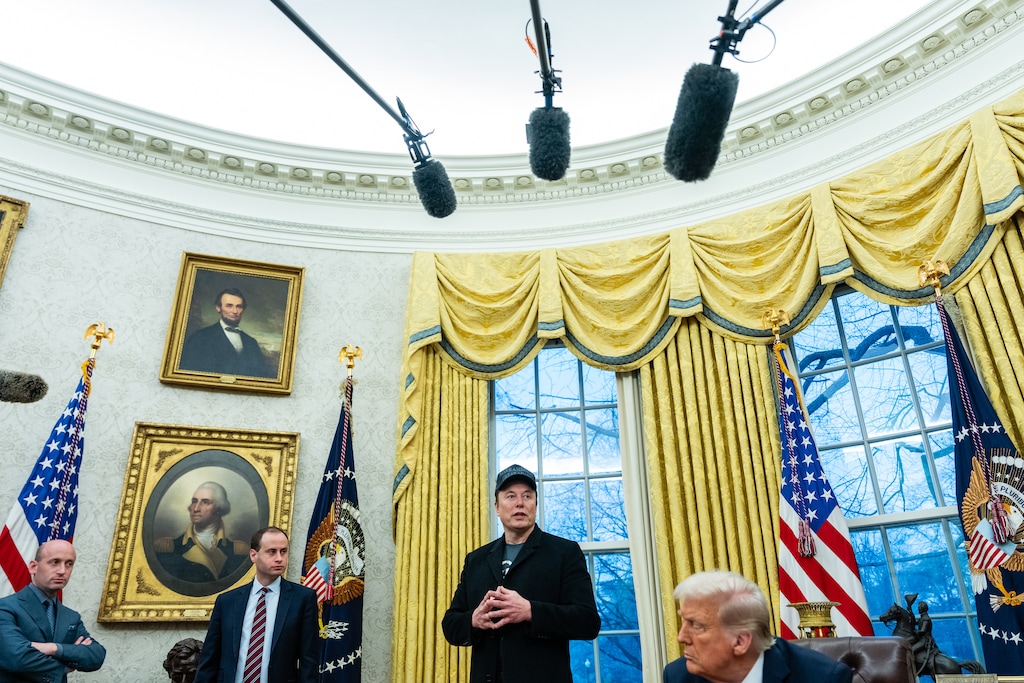
(Eric Lee | The New York Times) President Donald Trump and Elon Musk explain the administration’s cost-cutting efforts in the Oval Office of the White House in Washington, on Tuesday, Feb. 11, 2025.

I am a federal employee. I am also a combat-directed veteran who served 25 years on active duty with the Air Force and retired with full honors in 2010. In 2014, I enrolled at the University of Utah using my post-9/11 GI bill and earned an undergraduate degree in philosophy — class of 2018. By November 2018, I had secured employment with the Department of Veteran Affairs (VA).

I’ve experienced reductions in both the civil service and the military in the latter part of the ‘80s and again in the early ‘90s while serving in the Air Force. The reductions in force in the ‘80s were brutal and uncaring. The reductions in force in the ‘90s came with a lot more compassion and financial support. The current reductions in force are more heartless and brutal than I’ve ever seen and experienced.

I have been a registered Republican since I turned 18. Being a free-minded person, I have consistently voted on issues and people as I feel they would best contribute to my ambitions and beliefs while never voting strictly along party lines just because the GOP said so. I fully agree with the need to reduce the federal government’s overall size and restructure departments, and I believe automation and consolidation of leadership and management roles will generate cost savings. I hope these savings are used to pay the national debt — not handed out as refunds or rebates to taxpayers.

Admittedly, it is easy for me to say, “If I lose my job, so be it.” There is work for me out there, and the VA has programs which would help me find and train for a new job. The Utah Department of Workforce Services also has some exceptional opportunities for veterans.

I worry about other federal employees, though — my coworkers at the Veterans Affairs Medical Center who are not veterans but have kids to raise and families to care for and will only have the Utah Job Services programs for support. Many of my colleagues were blocked by the VA from taking the “fork in the road” — the chance to resign but get paid through September — because they are health care providers or, like in my case, provide quantitative administrative support to care providers.

Concerning federal cuts, I wonder the following:

  • Why have we not been told how many staffers for Utah senators and representatives have been cut, both in Washington, D.C., and in Utah offices?
  • Likewise, by how much has President Donald Trump reduced his staff? After all, what is good for the goose is good for the gander.
  • Lastly, the timekeeping and payroll system the VA uses experienced several complete shutdowns recently, and the VA had to resort to emergency processes to ensure VA employees’ time cards were processed on time. Could this have resulted from the Department of Government Efficiency snooping around or tracking who, what, where and when VA employees are at work or on paid time off?
  • Nearly every veteran and federal employee I’ve known desires to and strives for the most significant contribution they can muster for the American people and our nation. I believe the federal civil service is an abstract composite of everything good, grand, evil and suboptimal that our country is or has to offer and, therefore, some workers need to be removed. But slash and burn is not the correct approach, and DOGE has gone about its endeavor in the worst possible way.

    DOGE would have been better off reviewing the Office of Personnel Management records for poor performance reports generated by an employee’s supervisory chain as the first round of attrition. They should have offered more than a couple of weeks for federal employees to decide about a “fork in the road” option so it could be discussed with family members and financial advisors.

    DOGE very well may have had more volunteer departures had it extended more compassion and humility with their task.

    (Jeff Heyman) Jeff Heyman was born in Salt Lake City in 1964 and moved back in 2013.

    Jeff Heyman was born in Salt Lake City in 1964 and moved back in 2013 after working in law enforcement in California and serving 25 years in the Air Force.

    The Salt Lake Tribune is committed to creating a space where Utahns can share ideas, perspectives and solutions that move our state forward. We rely on your insight to do this. Find out how to share your opinion here, and email us at voices@sltrib.com.