 Megan Banta
Note to readers • Click here to find an interactive map where you can enter your address to see all the races on your ballot that have a voter guide from The Salt Lake Tribune.
In Utah’s Senate District 9, incumbent Jen Plumb and one of her challengers see eye-to-eye on affordability challenges.
Plumb, a pediatric E.R. doctor, and J. Lowry Snow, the Forward Party candidate in the race, shared concerns in The Salt Lake Tribune’s candidate questionnaire about the cost of housing and childcare.
Thaddeus Evans, the Republican running for the seat that represents central and eastern parts of Salt Lake County, did not respond to the questionnaire.
Election Day is Nov. 3. Mail-in ballots must be dropped off at a ballot dropbox by 8 p.m. on Election Day or, if returned by mail, must be received by the county clerk by 8 p.m. on Election Day.
Candidates submitted photos and answers through a questionnaire. Answers may have been edited for style and clarity. Candidate responses are listed in alphabetical order by last name.
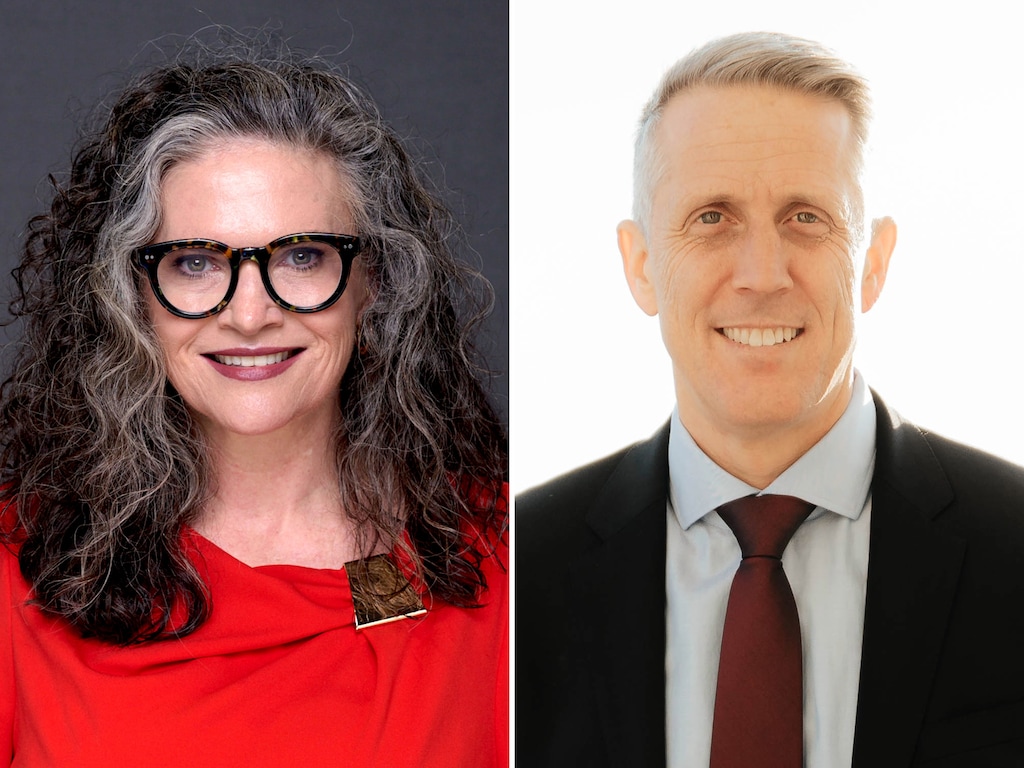
(Campaign photos) Jen Plumb, left, and J. Lowry Snow, candidates for the 2026 Senate District 9 election.
Utah voters told us government corruption is their top concern in this year’s election. Why do you think voters feel this way? And why should Utahns trust you to represent them?
Thaddeus Evans: Did not respond.
Jen Plumb: I understand why voters are concerned. When people feel decisions are made behind closed doors, accountability is lacking or their voices aren’t heard, trust erodes.
I don’t think any elected official should simply ask voters to trust them. We have to earn it. I work to do that by listening, being transparent about where I stand, following the evidence, and making decisions in good faith. Public office is a public trust, and I take that responsibility seriously.
J. Lowry Snow: Utahns are witnessing corruption firsthand: Lawmakers voting on bills that benefit their own interests, weakening public records laws, ignoring voter-approved district maps, green-lighting data centers and water projects with no public input. Decisions that benefit few and hurt many.
I’m not a career politician. I’m running for Utah Senate because I’m angry, too. I will fight corruption by operating transparently, inviting community input on major issues, and voting based on constituent feedback.
Utahns told us affordability is their second-highest priority in this election. How would you help Utahns afford housing, groceries, gas and other day-to-day expenses?
Evans: Did not respond.
Plumb: Utah families are feeling squeezed, and there isn’t one simple fix. I will keep working to increase the supply of attainable housing, support first-time buyers and renters, and remove unnecessary barriers that drive up housing costs. We also need good jobs with wages that keep pace with the cost of living, affordable healthcare and childcare, and responsible tax policies. My focus is simple: Help Utahns keep more of what they earn and make it possible to build a life here.
Snow: Utahns are facing real economic pain. Prices are up 20% in five years, and only 9% of new homeowners can afford a median-priced home. Areas I will focus on to improve affordability include making it easier to build homes on approved land; lowering childcare costs; blocking noncompete contracts that trap Utahns in lower-paying jobs; and bringing down healthcare costs for working families. Every vote I cast will focus on improving affordability for all Utahns.
Water resources were also a top concern for voters. What policies would you support as Utah looks to balance growth with preservation of the Great Salt Lake and the Colorado River?
Evans: Did not respond.
Plumb: Utah cannot plan for growth without planning for water. I support stronger conservation, tying new development to realistic water availability, investing in agricultural and municipal efficiency, and ensuring conserved water actually reaches the Great Salt Lake.
We must also protect our share of the Colorado River through responsible use and regional cooperation. Growth and a healthy environment are not mutually exclusive, but we have to be willing to plan for both.
Snow: Utah faces an existential water crisis. Great Salt Lake is shrinking, Colorado River storage is at an all-time low, and lakebed dust pushed Salt Lake Valley air to four times the healthy limit in 2026. We pledged to restore the lake by 2034, but current bills, funding and government action are falling short.
This isn’t a lack of ideas. It’s a lack of leadership. Utah families deserve better. No state has ever brought a saline lake back. Utah can be first. This is what I’ll fight for in the Utah Senate.
What is another topic you care about and want to address if elected to public office?
Evans: Did not respond.
Plumb: I’ve spent my career caring for kids and families, and their safety and well-being will always be deeply important to me. I want Utah to be a place where every child is safe, supported and able to thrive. That means protecting their health, their privacy and their individual rights, and making sure the systems meant to care for them actually do. Kids deserve to grow up knowing they are valued, protected and supported for exactly who they are.
Snow: The rise of A.I. is impacting Utahns today, and A.I. safety is a real and growing concern. Utah ranks second in the nation for A.I. use at work, and 69% of Utahns say data centers take more than they give.
Utah needs legislators who understand A.I. technology and offer leadership to protect Utahns: Transparency from A.I. labs and accountability when A.I. harms people. I work in this industry and will bring leadership and legislation to regulate A.I. and protect Utah families and communities.
How will you vote on Constitutional Amendment A? If passed, the amendment will stop the practice of publishing the full text of amendments and ballot questions by lawmakers in a newspaper for 60 days ahead of an election and instead require that text to be published on two state websites.
Evans: Did not respond.
Plumb: Against.
Snow: Against.
How will you vote on Constitutional Amendment B? If passed, citizen-proposed laws that increase taxes would need to be approved by 60% of voters, instead of a simple majority.
Evans: Did not respond.
Plumb: Against.
Snow: Against.
What’s your favorite book and why?
Evans: Did not respond.
Plumb: “Jurassic Park” by Michael Crichton. It was the first book I remember truly not being able to put down. I loved the mix of science, imagination and suspense, and the feeling of getting completely lost in a story.
Snow: My favorite book is “The Brothers Karamazov” by Fyodor Dostoevsky. It explores faith, morality, freedom, responsibility and the complexity of human nature. I appreciate its universal themes and invitation to reflect on ourselves and our families.