 Tony Semerad
Note to readers • Click here to find an interactive map where you can enter your address to see all the races on your ballot that have a voter guide from The Salt Lake Tribune.
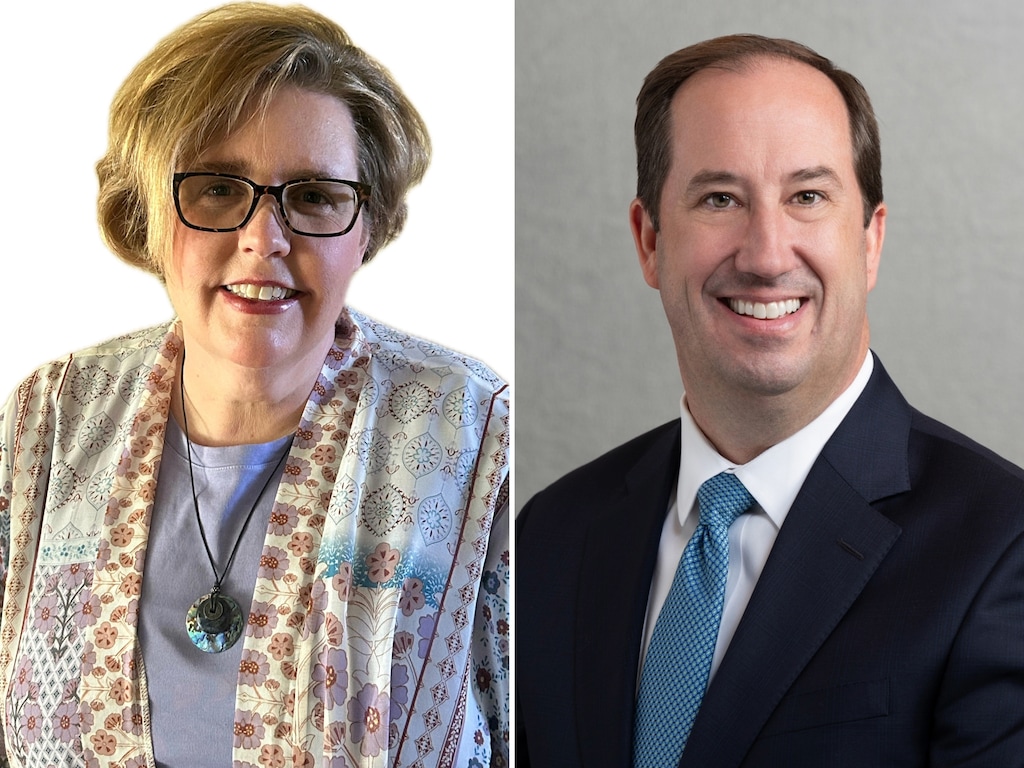
Republican Stephen L. Whyte is running for a second term in a three-way race to represent House District 63, which takes in parts of Mapleton, Springville and Spanish Fork in Utah County.
Whyte, who previously represented District 65 from 2021 to 2023, faces Democratic challenger Mark Youngquist and candidate Julie Smith of the Forward Party of Utah.
Whyte is a former tenured professor at Utah Valley University and a small business owner who currently works as executive vice president of university relations at Rocky Mountain University of Health Professions, his website says.
Youngquist is a software product manager who attended UVU and is also co-owner of a small business, according to his online resume, while Smith is a historian and educator, as listed on the Forward Party’s website.
With a focus on Utah County’s growing population, Whyte is making priorities, according to his campaign website, of business growth; attainable housing; protecting natural resources; aligning Utah’s public education system with workforce development; reforming health care and promoting mental wellness; and supporting affordability in the state’s transportation systems.
Smith’s campaign site emphasizes the notion of civic virtue and cultivating a willingness toward individual sacrifice for the benefit of the community.
Youngquist did not participate in The Salt Lake Tribune’s voter guide survey.
Answers may have been edited for style and clarity. Candidate responses received are listed in alphabetical order by last name.
Election Day is Nov. 3. Mail ballots must be dropped off at a ballot dropbox by 8 p.m. on Election Day or, if returned by mail, must be received by the county clerk by 8 p.m. on Election Day.
Utah voters told us government corruption is their top concern in this year’s election. Why do you think voters feel this way? And why should Utahns trust you to represent them?
Smith: Our elected leaders have forgotten civic basics like the use of checks and balances and the rule of law. Across-the-aisle cooperation is gone. Transparency has been lost. Without truth, democracy will not stand. Without everyone’s perspective, we don’t have complete truth. We need to see people and follow our united ethical principles over our party alignment, so we can come together to preserve and protect truth. We change us, we change America. Why me? I live my principles.
Whyte: Restoring confidence in government through transparency, accountability and a commitment to serve people is why I am running to represent House District 63. … My priorities are to listen to your concerns, understand the issues, innovatively solve problems, stand up for our community, report back and be accountable. This is what I’ve done, and this is what I will continue to do.
Youngquist: Did not respond.
Utahns told us affordability is their second-highest priority in this election. How would you help Utahns afford housing, groceries, gas and other day-to-day expenses?
Smith: Fix housing: expand the 2023 law for new homeowners (3% down on a new starter home) and enlarge it to include any house under $500,000 and give 20% down as a silent second with a portion that falls off each year. Funding comes from the rainy-day fund. This makes first-time homeownership possible, gives the economy a boost, and stabilizes families. Create community garden grants to supplement grocery bills and increase neighborhood cooperation. Promote ride share/public transit as a gas boycott to D.C.
Whyte: In the past five years serving in the Legislature, I have collaboratively worked, advocated and helped pass legislation to lower household costs. I’ve helped reduce the state income tax rate by 11% (saving $1 billion in taxes); reduced the gas tax by 15% (saving $40 million); supported childcare options through tax credits; and cut Social Security taxes, saving retirees $24 million annually. My focus is to let Utahns keep more of what they earn and lower costs where it matters most.
Youngquist: Did not respond.
Water resources were also a top concern for voters. What policies would you support as Utah looks to balance growth with preservation of the Great Salt Lake and the Colorado River?
Smith: Civic virtue is when individuals act on their integrity and sacrifice for the good of the community. It is doing what is right because it is the right thing to do. It is giving of yourself to build others. Civic virtue requires individuals to use their agency positively to unite and build. The community is strengthened due to the sacrifice of the people within it. As more choose civic virtue, its power spreads, strengthening the community, state and nation. Civic virtue works.
Whyte: As one of the driest and fastest-growing states, Utah must balance growth with responsible water conservation and management. I have championed legislation to strengthen conservation, transparency and long-term planning. Preserving the Great Salt Lake and protecting our Colorado River supply are top priorities. Over four years, we’ve allocated $300+ million to the Great Salt Lake projects, built key partnerships, and secured historic water donations to protect Utah’s water for generations.
Youngquist: Did not respond.
What is another topic you care about and want to address if elected to public office?
Smith: Saving the Great Salt Lake and preserving our water is imperative. We must educate the public and businesses on water scarcity and provide incentives for its wise use. Data centers are needed for future technological growth but we must address their use of water before they are planned. We need to develop effective, non-water cooling alternatives and find innovative ways to preserve water within. Both agribusiness and residences can also be incentivized with rebates for cutting down on water use.
Whyte: Preparing the rising generation to lead with knowledge, integrity and innovation is a top priority. I am committed to providing every Utah child a quality education and a bright future. Over five years, the Legislature has increased public education funding by $1.8 billion (44.2% increase). We’ve raised teacher salaries to fourth-highest in the nation and provided school districts funding to support students, educators and classrooms. I will continue advocating for students and educators.
Youngquist: Did not respond.
How will you vote on Constitutional Amendment A? If passed, the amendment will stop the practice of publishing the full text of amendments and ballot questions by lawmakers in a newspaper for 60 days ahead of an election and instead require that text to be published on two state websites.
Smith: For.
Whyte: For.
Youngquist: Did not respond.
How will you vote on Constitutional Amendment B? If passed, citizen-proposed laws that increase taxes would need to be approved by 60% of voters, instead of a simple majority.
Smith: Against.
Whyte: For.
Youngquist: Did not respond.
What’s your favorite book and why?
Smith: One of my current faves is “The Correspondent.” A woman comes to terms with her life by recognizing the good she has done, learning to forgive herself, and figuring out how to find joy. Her journey is our journey - societally and individually.
Whyte: “1776” by David McCullough. As our nation celebrates it 250th anniversary, I re-read this remarkable account of our founding. Its stories of courage, sacrifice and providence remind me of the privileges and responsibilities we share as Americans.
Youngquist: Did not respond.