 Carmen Nesbitt
Note to readers • Click here to find an interactive map where you can enter your address to see all the races on your ballot that have a voter guide from The Salt Lake Tribune.
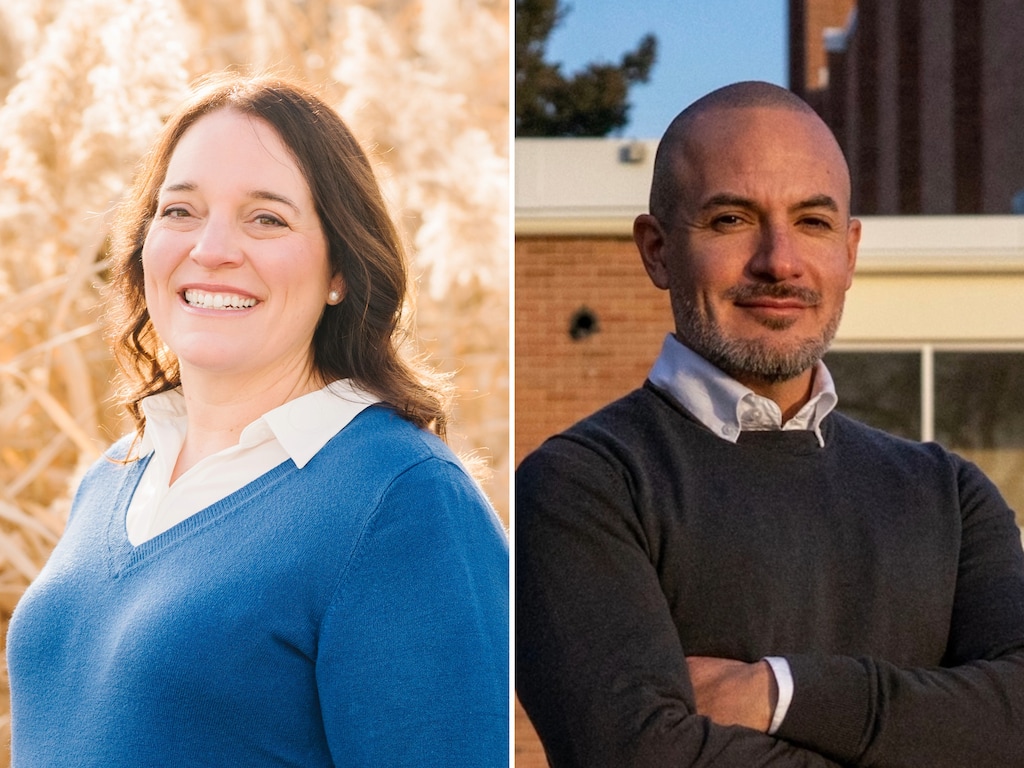
Two newcomers are facing off for the Utah State Board of Education District 8 seat this November.
Republican Nicole McDermott is running against Democrat Araueni Olivares. Both have ties to the Granite School District, according their campaign websites.
There, Olivares supported multilingual learners. He’s also worked with several other districts in various education roles, and for the past 14 years, he’s worked for the Utah Department of Workforce Services.
McDermott currently serves as president of the Granite School District’s school board. Before her 2019 election, she spent 25 years teaching music and orchestra in the Granite and Jordan school districts.
The District 8 seat encompasses parts of Taylorsville, Kearns and West Jordan and has been held by Christina Boggess since 2022. In January, Boggess announced she would not seek re-election.
Ahead of the Nov. 3 general election, The Salt Lake Tribune sent a survey to McDermott and Olivares asking for their thoughts on several education issues.
The candidates submitted photos and answers through a questionnaire. Answers may have been edited for style and clarity. Candidate responses are listed in alphabetical order by last name.
Election Day is Nov. 3. Mail ballots must be dropped off at a ballot dropbox by 8 p.m. on that day or, if returned by mail, must be received by the county clerk by 8 p.m. on Election Day.
What do you see as the biggest challenge facing Utah’s public education system over the next four years?
McDermott: We face complex challenges: student attendance, AI, declining enrollment, falling proficiency rates, and increased behavior issues. The biggest challenge is non-experts pushing one-size-fits-all solutions. We need to start listening to experts and fixing the problems on the lowest level possible. We believe in local control and we need to solve problems locally, because often the issues we face are local and not statewide. We need leaders who understand education and will hold local education agencies accountable.
Olivares: Utah is growing and changing, and our schools are serving students with increasingly diverse academic, social, and emotional needs. Educators are being asked to do more while dealing with shortages and increasing workloads. Over the next four years, we need to focus on ensuring that every school has the resources they need to serve our students well. This requires a commitment to investing in all the people who make our schools work.
What are your thoughts on Utah’s sensitive materials law, which created a process to remove books from all public schools in the state?
McDermott: It is well established that pornography has harmful and lasting effects on developing minds, which is why Utah law restricts it in schools. Those laws exist to protect students and should be enforced consistently. At the same time, students benefit from access to a wide range of age-appropriate literature and viewpoints as part of a well-rounded education. Families should have options on other subjects and materials, but pornography has no place in our schools and should never be condoned.
Olivares: Freedom, responsibility, and local control are Utah values. Supporting intellectual freedom in schools honors those values and the Constitution, which protects the right to receive information and ideas. Students need access to representation and diverse viewpoints in order to become critical thinkers. I believe in partnering with parents to guide their own children’s education, and also trusting our educators as dedicated and responsible professionals.
Do you support the use of taxpayer dollars for the Utah Fits All program, which gives selected private school and homeschool students with up to $8,000 in public money to use on educational expenses, with certain restrictions? Why, or why not?
McDermott: Families deserve choice, but public funds require strict accountability. Anyone receiving tax dollars must adhere to standard fiscal oversight and reporting of those funds. Funding should be limited to the Weighted Pupil Unit (WPU) without capital allocations. Also, any entity receiving public funds should meet the same learning accountability and academic standards. Unless all those measures are fully met, public money should remain funding public entities.
Olivares: The Utah Fits All voucher program hurts public schools, students, and educators by diverting public education funds to private school tuition and homeschooling. These providers aren’t required to meet the same academic standards or services as Utah’s public schools. Utahns are spending $95 million mostly on private school tuition, and setting our public schools up to fail. This money would be better spent investing directly in the public schools serving the overwhelming majority of Utah students.
What role do you feel immigration enforcement has in schools, if any?
McDermott: Under federal policy, schools are “protected areas” where immigration enforcement has no place absent an imminent threat or risk of violence. The Fourteenth Amendment guarantees all students equal access to education. Our job is to educate, not police. While we ensure compliance with laws and policies, active immigration enforcement creates disruptions to the learning environment and harms student development.
Olivares: The role of schools is to educate children, keep them safe, and support their families. Students cannot learn effectively if school becomes a place where they fear losing a parent. A child did not choose their immigration status, their parents’ immigration status, or the circumstances into which they were born. We should never make children carry the weight of those circumstances into the classroom. Schools should always be a place where families come together, not where they are torn apart.
Utah lawmakers this year introduced a host of new literacy supports and interventions to help curb the state’s dismal reading scores. That included a plan to hold struggling third grade readers back starting in 2030. Do you support third grade retention, yes or no?
McDermott: No.
Olivares: No.
Do you support Utah’s bell-to-bell cellphone bans in schools, yes or no?
McDermott: Yes.
Olivares: Yes.
What’s your favorite book and why?
McDermott: This is like picking a favorite child. ONE of my favorites is “Frindle.” I love this story because it shows what an inspiring teacher can do, what creativity and power our students are capable of, and that words really do have power.
Olivares: “The Count of Monte Cristo” by Alexandre Dumas. It has it all; betrayal, transformation, justice, and redemption. It reminds me that circumstances can change, people can change, and even after a devastating chapter, a new one is waiting to be written.