 Colton Lochhead
Note to readers • Click here to find an interactive map where you can enter your address to see all the races on your ballot that have a voter guide from The Salt Lake Tribune.
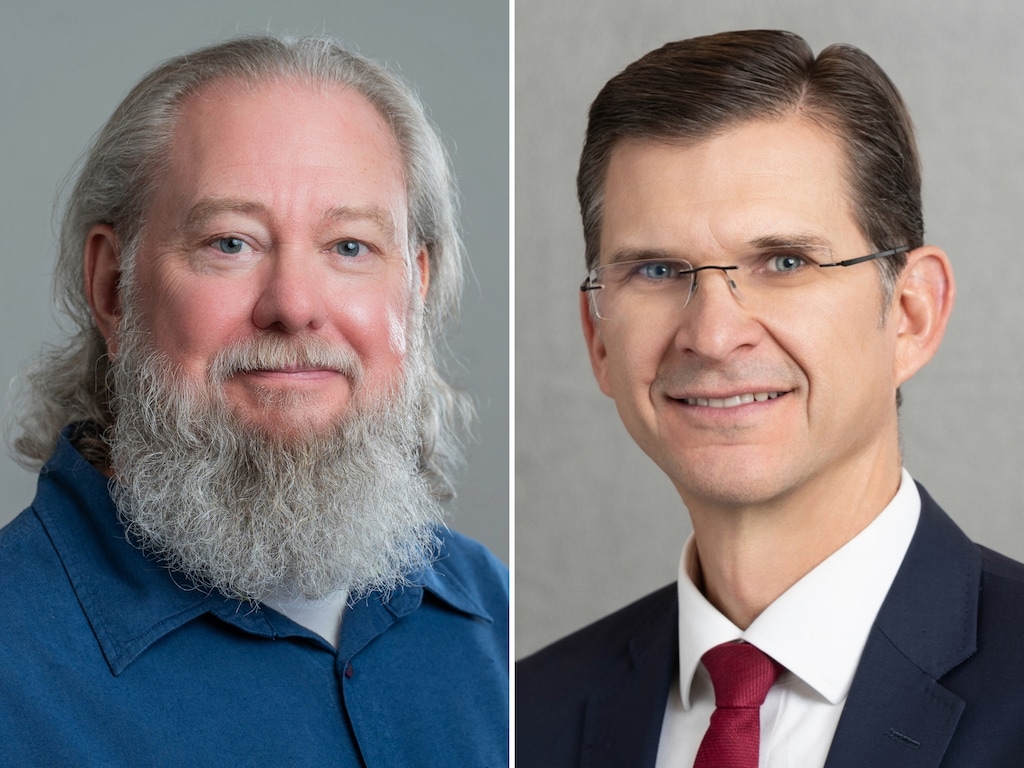
Utah House Rep. Neil Walter, R-Santa Clara, is running for his third term representing Utah’s House District 74, and will face a challenger in the general election for the first time.
Democrat Jeffrey Lipe is challenging the two-term Republican to represent the district, which covers much of southwestern Washington County, including Santa Clara and Ivins.
The Tribune posed a series of questions, based on a reader survey about the issues Utahns felt were most important this election season, to each candidate.
Candidates submitted photos and answers through a questionnaire. Their answers may have been edited slightly for length and clarity. Candidate responses are listed in alphabetical order by last name.
Election Day is Nov. 3. Mail ballots must be dropped off at a ballot dropbox by 8 p.m. on Election Day or, if returned by mail, must be received by the county clerk by 8 p.m. on Election Day.
Utah voters told us government corruption is their top concern in this year’s election. Why do you think voters feel this way? And why should Utahns trust you to represent them?
Lipe: Corruption is openly celebrated by one of our two major political parties. We dislike the immorality of this unaccountable, shameless behavior. Then we see the negative impacts of corruption on our economic and families’ well-being in our wages, at the store, at the gas pump, in our housing costs and in our healthcare bills. It’s a government by the rich, for the rich. I’m an everyday person, with the same concerns, running solely to represent the best interests of all the people of Utah.
Walter: Voters expect transparency, oppose self-dealing, and expect Utah citizens to be included in the process. I have passed five bills that increase transparency and accountability. HB10 (2024) and HB475 (2025) required cash balances in government to be disclosed. SB206 (2026) reformed the transparency and accountability of [Public Infrastructure Districts], [Tax Increment Financings] and other tax incentive transactions. HB535 (2026) and HB 483 (2025) increase transparency of government ownership and sale of real estate.
Utahns told us affordability is their second-highest priority in this election. How would you help Utahns afford housing, groceries, gas and other day-to-day expenses?
Lipe: I’d expand Utah’s First-Time Homebuyers Assistance Program to add more families, and to cover pre-existing and medium-density homes. I’d eliminate the food tax. I’d replace our flat income tax with one where high earners pay proportionally more. I’d phase in a minimum wage that adjusts based on a percent of living wage. I’d demand that data centers and other large projects support themselves, without taxpayer subsidies, and guarantee tangible economic benefits to affected communities.
Walter: We have to prioritize housing and cost of living if we want to make a difference. When economic development conflicts with housing and cost of living by driving up home prices, electricity prices, gas prices and groceries, we should choose Utah residents over incentives and promotion of economic development policies that create higher prices for Utahns.
Water resources were also a top concern for voters. What policies would you support as Utah looks to balance growth with preservation of the Great Salt Lake and the Colorado River?
Lipe: I’d demand an intense focus on development of sustainable energy and water use. For example, smart placement of solar panels can provide shade for livestock and reduce water evaporation in farm irrigation and canals. I’d phase in stricter water conservation policy and encourage state-of-the-art water recycling projects. I’d treat climate change like the emergency it is. We live in the desert, and we have to acknowledge the benefits and limitations that go with it.
Walter: No water user in Utah has the right to increase the amount of water consumed. We have to support water policies that reinforce these principles. We have to protect Utah’s water in the Colorado River and not forfeit them to Nevada and California. We can accommodate growth through efficiency in our water systems, higher quality infrastructure, and continuing to work with farms, recreation and agriculture to support efficiency and new technology that will stretch our water resources further.
What is another topic you care about and want to address if elected to public office?
Lipe: I respect the rule of law. I’m confident Utah’s elections are free, fair and accurate. I applaud the lieutenant governor in her efforts to preserve Utah’s constitutional right to administer elections. I’ll oppose voter suppression and will defend voting by mail. I’ll oppose further efforts by Utah’s Legislature to get rid of citizen ballot initiatives or to make them harder to get on ballots. The Legislature must serve us, not rule us. I intend to serve.
Walter: My policy focuses are education, housing, energy and economic development. I believe getting public education and higher education right in Utah is critical to our future. We must be responsible in our efforts and hold education organizations accountable for learning outcomes. I support parent choice in education. If we improve reading and math in elementary schools, it will improve behavior, increase graduation rates and improve college readiness.
How will you vote on Constitutional Amendment A? If passed, the amendment will stop the practice of publishing the full text of amendments and ballot questions by lawmakers in a newspaper for 60 days ahead of an election and instead require that text to be published on two state websites.
Lipe: Against.
Walter: For.
How will you vote on Constitutional Amendment B? If passed, citizen-proposed laws that increase taxes would need to be approved by 60% of voters, instead of a simple majority.
Lipe: Against.
Walter: For.
What’s your favorite book and why?
Lipe: As a retiree, I now read mostly for pleasure. I enjoy the “Sigma Force” series by James Rollins because it gives me hope that truth, justice and science can triumph over our most serious global crises.
Walter: Its not my favorite book, but maybe the most influential. “The End of Average” written by Todd Rose reminds us that people are individuals, not statistics. Recognize individuals for who they are instead of trying to force them to conform to a “norm”.