 Megan Banta
Note to readers • Click here to find an interactive map where you can enter your address to see all the races on your ballot that have a voter guide from The Salt Lake Tribune.
The candidates running to represent a large part of the Wasatch Back share concerns about Utah’s water supply and the state preempting local government.
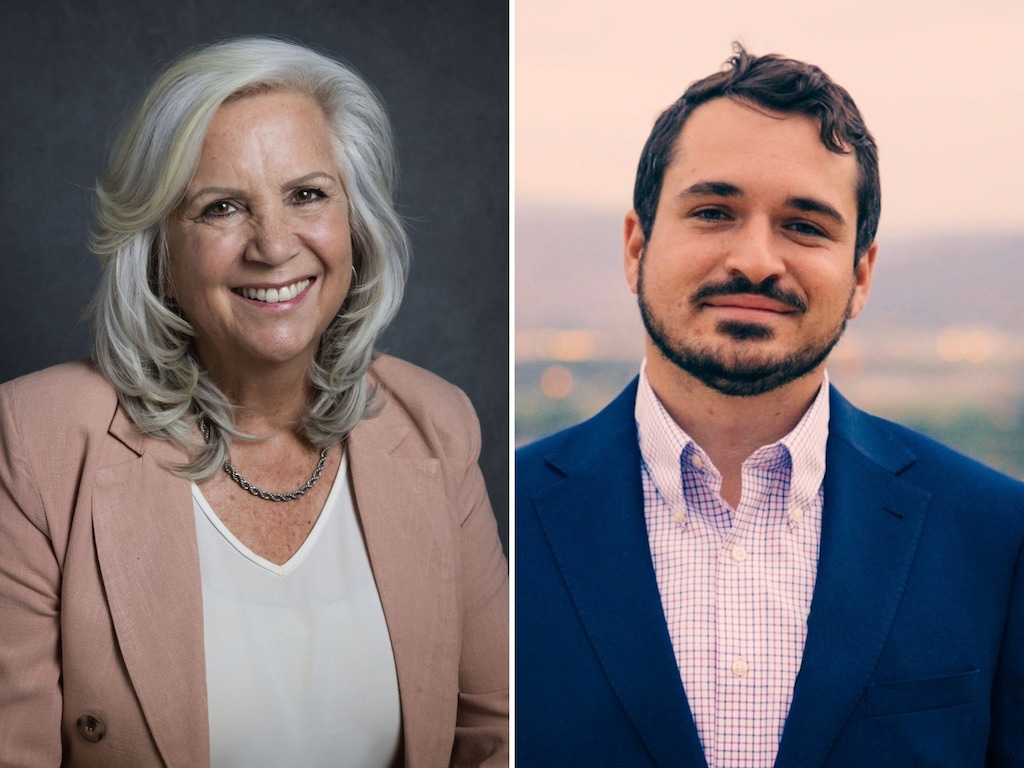
But Democrat Celeste Johnson and Republican Luke Searle differ over how Utah should address its biggest issues.
The two candidates for the Utah House District 59 seat, which covers Wasatch County and parts of Summit County in and around Park City, also disagree on the two constitutional amendments on this year’s ballot.
Election Day is Nov. 3. Mail-in ballots must be dropped off at a ballot drop box by 8 p.m. on Election Day or, if returned by mail, must be received by the county clerk by 8 p.m. on Election Day.
Candidates submitted photos and answers through a questionnaire. Answers may have been edited for style and clarity. Candidate responses are listed in alphabetical order by last name.
Utah voters told us government corruption is their top concern in this year’s election. Why do you think voters feel this way? And why should Utahns trust you to represent them?
Celeste Johnson: When decisions are made behind closed doors and public input isn’t included or respected, trust is lost. When state organizations and laws override local authority, trust is lost. When pandering to political parties, corporate donors, out-of-state interests, or powerful lobby groups instead of representing constituents, trust is lost.
I will always be transparent, listen and respect those who elected me and vote in a way that represents those voters.
Luke Searle: I believe voters feel this way because too often they find out about a decision after it’s already made. That’s when distrust starts, and I don’t work that way.
On the Wasatch County Council, I hold regular town halls, keep an open door, show my reasoning and am honest even when it’s unpopular. Even if we disagree, I’ll listen, and I won’t shy away from the issues. That’s how I’ve earned trust and how I intend to keep it.
Utahns told us affordability is their second-highest priority in this election. How would you help Utahns afford housing, groceries, gas and other day-to-day expenses?
Johnson: Housing affordability cannot be addressed in a one-size-fits-all state mandate.
I oppose state solutions like SB258 (a bill that created a pilot program for developers to incorporate “preliminary municipalities”) and the Utah Military Installation Development Authority that strip local governments of zoning and planning authority.
I support requiring counties to submit a long-term housing plan to the state, reflecting their own growth trajectory, water limits, etc. The state’s role should be setting goals and providing resources, not dictating local land use. I also support no sales tax on groceries.
Searle: Cut taxes, especially property taxes, by working with local governments and getting government out of the way. We should stop incentivizing economic development along the Wasatch Front that drives up costs here.
Lower taxes and less red tape let families keep more of what they make to be able to afford their mortgages, groceries, and gas.
Water resources were also a top concern for voters. What policies would you support as Utah looks to balance growth with preservation of the Great Salt Lake and the Colorado River?
Johnson: Water is our most limited resource, and decisions about who gets to use it shouldn’t be made by state-created entities like MIDA that override local review.
I support requiring large industrial water users to publicly disclose projected use before any project moves forward. I favor incentive-based conservation for agriculture.
Protecting the Great Salt Lake has to guide every water policy decision the Legislature makes.
Searle: Stop incentivizing runaway growth that strains our water. Beyond that, we can optimize our systems in partnership with agriculture to save water without hurting producers.
Critically, we must ensure paper water is wet water, that the water rights on paper actually exist in reality.
I believe we need to start by protecting the Great Salt Lake and our share of the Colorado River, which means managing what we truly have, not what’s promised on paper.
What is another topic you care about and want to address if elected to public office?
Johnson: Utah consistently ranks in the lower 20% of our nation on domestic violence, sexual assault and child abuse. We rank 49th for what we spend on victims of these crimes. And for 12 years in a row, we rank 50th for women’s equity!
These statistics are unacceptable! Excellent work has been done by the Women and Leadership Project to study why Utah does so poorly as compared to other states and what needs to be done to improve the lives of so many women and children. I support their work.
Searle: Local control and unfunded mandates. Local communities and local governments should determine what is best for their communities.
I won’t vote yes on bills that ask local governments to do more without the resources to do it. Our state has grown and will keep growing, and local government should manage that growth.
We need to empower local government and communities without cuts to the funding communities depend on.
How will you vote on Constitutional Amendment A? If passed, the amendment will stop the practice of publishing the full text of amendments and ballot questions by lawmakers in a newspaper for 60 days ahead of an election and instead require that text to be published on two state websites.
Johnson: Against.
Searle: For.
How will you vote on Constitutional Amendment B? If passed, citizen-proposed laws that increase taxes would need to be approved by 60% of voters, instead of a simple majority.
Johnson: Against.
Searle: For.
What’s your favorite book and why?
Johnson: I must list two: “Cry, the Beloved Country” by Alan Paton and “Les Misérables” by Victor Hugo.
They are both beautifully written and powerfully portray social injustice as well as the timeless nature of redemption, hope, forgiveness and mercy.
Searle: “The Last Lecture” by Randy Pausch. It had a big impact on me when I was young and shaped how I try to live life to the fullest.