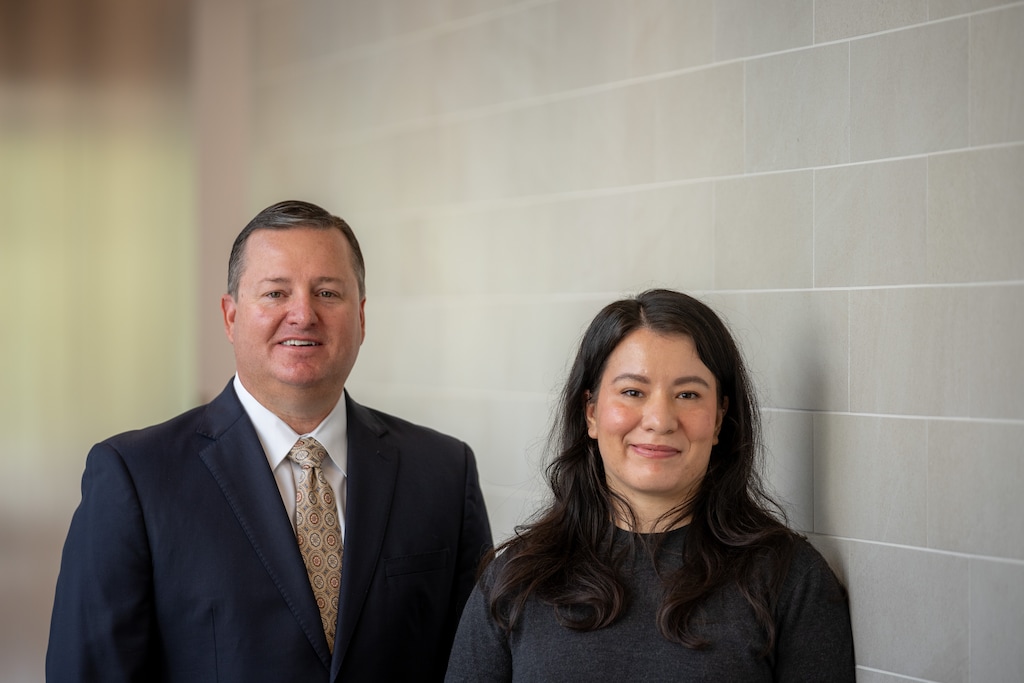
 Robert Gehrke
When journalists demanded to see security footage and plans in the aftermath of the killing of conservative commentator Charlie Kirk last year, it was Lonny Pehrson who told them no.
When the University of Utah refused to release certain records citing federal student privacy laws, it was Pehrson who said they needed to cough them up, and now the university is suing over it.
When reporters wanted to see how much St. George paid to settle a lawsuit over the city’s ban on drag performances, he said yes and no — agreeing it should be public once it was unsealed by the court.
Pehrson has been on the job as Utah’s first government records officer for just over a year now, refereeing disputes between government entities and members of the public and the press trying to get information about how the state functions.
He took the new position, moving from his role as records officer for the Utah Attorney General’s office, after Republican lawmakers disbanded the State Records Committee, a seven-member panel that had grappled with the nuanced records issues for more than three decades.
The aim of dissolving the committee, said Sen. Mike McKell, R-Spanish Fork, who sponsored the legislation, was to put the decision-making in the hands of an experienced attorney rather than the appointed group of citizen representatives and to speed up the hearings process, which could take months to resolve.
Now, after a year under the new system, the data shows it has largely done just that.
When Pehrson arrived on the job, there was a backlog of more than 100 cases waiting for him, partly a result of open records appeals being filed faster than the committee could clear them and partly because Republican lawmakers refused to fill vacancies on the panel for several months, making it impossible for the committee to do its work.
Now, Pehrson has cleared out the backlog and managed to keep up with an unprecedented 372 records appeals he has received since the office was created.
An analysis of decisions by The Salt Lake Tribune found that Pehrson issued 147 rulings in cases where government entities denied records requested by the public in his first 12 months, not including appeals that were dismissed, withdrawn or postponed.
The committee managed about half that many, 74, in its final year of existence, despite being hampered by the vacancies. It averaged about 65 a year in the three years since the COVID pandemic.
“Things have gone great,” Pehrson told The Tribune. “I feel like we’ve managed to get right up to speed, start tackling that backlog as the first thing, and managed to get through that. And, of course, as soon as we did that, we saw a huge influx of new appeals. So we’re kind of working through that now.”
Currently, Pehrson said, he is on pace to meet the legal requirement that all appeals be heard within 64 days of being filed and ruled upon within 73 days. Under the committee, it would often take six months or more for appeals to be decided.
“I feel really good about the outcome,” said Sen. Mike McKell, R-Spanish Fork, the sponsor of the legislation. “I think what the results show today is we absolutely have expedited [appeals] in a really positive way. I think the numbers speak for themself.”
“Each one on their merits”
(Trent Nelson | The Salt Lake Tribune) Lonny Pehrson, the judge appointed last year to adjudicate GRAMA disputes, in Taylorsville on Friday, Aug. 14, 2026.
So the new system is faster, but is the public and the press prevailing in their pursuit of records more now than it did with the State Records Committee? Not exactly.
During the final three years of the committee’s existence, citizens appealing record denials prevailed — fully or in part — 40% of the time. In the 147 decisions Pehrson has issued, the appellants succeeded a third of the time.
And overall, the new records officer said, he doesn’t see any red flags. He said that the committee had the ability to dismiss requests it deemed to lack merit — for example, if there was no indication the requested records exist. Pehrson said he no longer does that.
“Another thing also is the huge increase in the total number of appeals,” he said. “I think as you get higher quantity, you tend to get a little less quality. People are willing to appeal something that might be a little less meritorious, just because they can get to a hearing quickly.”
And media outlets have generally fared substantially worse in front of Pehrson, winning just one appeal out of every five over his first year. Appearing before the committee, journalists won more than half the time, although it is a small data set that may be skewed by denials of multiple requests related to the Kirk shooting.
“I certainly don’t try to approach them differently,” Pehrson said of requests from citizens versus news outlets. “I feel like I try to take each one on the merits.”
The Government Records Access and Management Act, or GRAMA for short, exists so that the public can have insight into how their government functions and so citizens can meaningfully engage in democracy, said attorney Jeff Hunt, who helped craft the original GRAMA law in 1991.
At the time, it was a model for the rest of the nation, Hunt said. But in recent years, he said, lawmakers have consistently whittled away at its foundation, exempting more and more records from public disclosure and making it harder for citizens to get access.
“It’s our window into government and it’s the ability to participate in government,” Hunt said of Utah’s transparency laws. “So whenever the Legislature starts tinkering with it, usually in a way that doesn’t make [government] more open, that doesn’t make it more accountable, people should be concerned.”
The dismantlement of the records committee in favor of a single records officer, he said, seemed to be in response to decisions before the committee and in court that lawmakers didn’t like — for example, an order that certain investigative files from police shootings and calendars of officeholders should be public.
After the government lost those appeals, Hunt said, Republican legislators changed the law to keep those records secret and dissolved the records committee.
Sydnee Chapman, a reporter with the Utah Investigative Journalism Project, is one of a dozen individuals who have argued appeals before Pehrson and the prior records committee.
“I feel like, with the committee, there was a lot more discussion. With the director, it feels more like he has his mind made up before the hearing and maybe he’ll ask some follow-up questions,” she said. “For me, because of that, I feel like the committee was preferable, because it felt like there was a better opportunity to get my appeal listened to. But he is a lot quicker. I’m not waiting six months to get my appeal heard anymore.”
Chapman has had two appeals before Pehrson — one for deleted donations to state legislators, another seeking the disbursement of opioid settlement funds by Summit County. Both appeals, to her chagrin, were denied.
“There’s been a few that I thought would be a slam dunk, like clearly way out of bounds here, that were not decided in my favor and I’ve talked to some other reporters who feel similarly,” she said. “Obviously I’m biased toward my appeal.”
The strength of the records committee, in Hunt’s eyes, was that it brought together average citizens from many backgrounds to grapple with the issues, rather than designating the power to a single government employee.
The new, single judge is clearly more efficient, he said, but if that was the only goal, it could have been met by expanding the records commission without losing the benefit of a group of Utahns wrestling with matters of public interest.
For his part, Pehrson said he was surprised when he learned the Legislature was considering jettisoning the committee.
“It’s great to have a consensus decision-making process if it’s possible. I feel like, in this case, it really just kind of, over time, outgrew that capability,” he said.
And not every appeal that is filed ends up in front of Pehrson. Dozens are resolved through negotiations involving Monica Minaya, the state records ombudsman. The position existed before Pehrson took over, but the pace has picked up, with 64 mediation meetings since last July and 20 requests for mediations in just the last six weeks.
Minaya said her goal is to see if the parties can work together. “Even if it doesn’t get fully resolved, we may get it whittled down to just one thing” for Pehrson to ultimately decide.
“As fair as he can be”
One member of the public who has appeared before both the records committee and the administrative law judge is Michael Clara. He appeared before the records committee four times between 2022 and when it was disbanded in 2025 and has gone before the new records judge twice in the past year — both times seeking information about signatures on Cox’s petitions to qualify for the ballot in 2024.
Clara alleges Cox should not have qualified for the 2024 ballot and former Rep. Phil Lyman should have been the GOP nominee.
In an interview, Clara said he testified against Pehrson’s confirmation because, while Pehrson was still at the attorney general’s office, he had denied several of Clara’s records requests. Clara testified against Pehrson during his Senate confirmation hearing.
Pehrson recused himself from both of the hearings that Clara had before the records officer in the past year. This month, Pehrson rejected a petition from the lieutenant governor’s office to have Clara and three others, including Lyman, branded as “vexatious requestors” — a designation for individuals who submit repetitive or harassing GRAMA requests and allows the state agency to ignore future requests.
“At the end of the day, I can remove my feelings toward Lonny,” Clara said. “Overall, my impression is he’s trying to be fair. I don’t think there’s any bias, at least in the spot checks I’ve done, and I think he’s being as fair as he can be. … It’s just as fair as it was with the records committee.”
Correction, 3:20 p.m. • The story has been updated to reflect that appeals must be heard in 64 days and ruled upon in 73 days.
Robert has spent more than 20 years primarily covering government and politics in Utah and the West, including seven years in Washington, D.C.