 Megan Banta
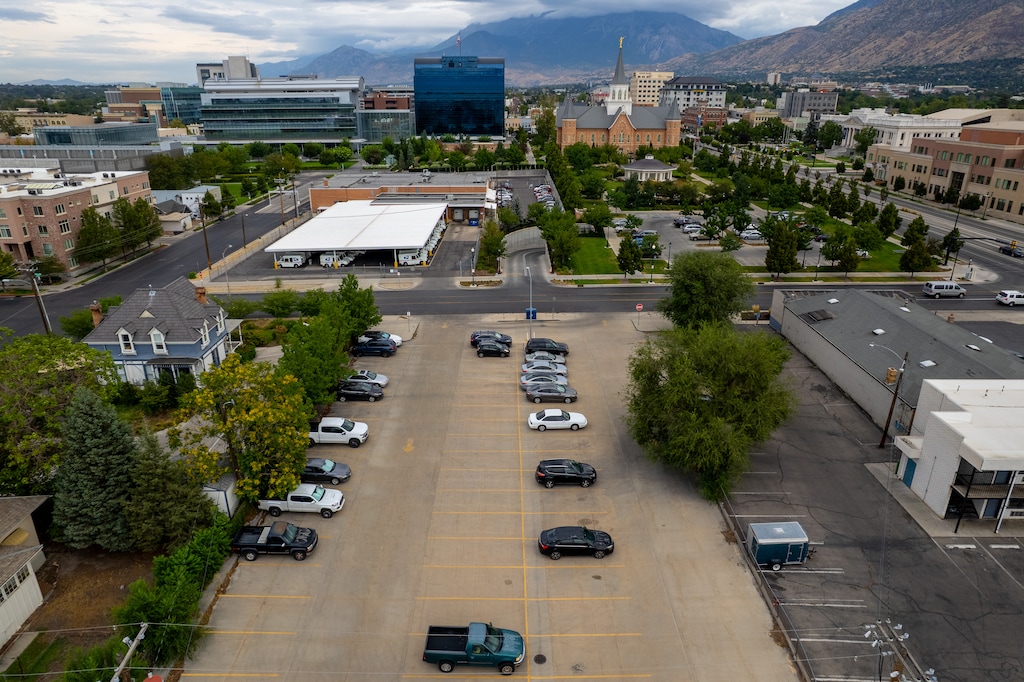
Provo • Next to Nu Skin’s downtown Provo offices and a Church of Jesus Christ of Latter-day Saints temple is a one-story post office. A half-acre employee parking lot sits across the street.
The U.S. Postal Service owns the office and lot smack in the middle of the city center; real estate U.S. Sen. John Curtis called “prime land for housing,” a spokesperson said.
Amid record-breaking housing costs, Curtis, a Utah Republican, was joined by a Maryland Democrat in introducing the Delivering Americans Affordable Homes Act, a bill the pair says will allow local communities to lease USPS property rights to construct new affordable housing.
President Donald Trump has championed the idea of using federal land to develop housing but, along with Sen. Mike Lee, has primarily focused on U.S. Bureau of Land Management lands.
A recent analysis by the Washington, D.C.-based Brookings Institution said USPS land is a better option for housing because those properties are “embedded within existing communities” and already have access to transportation, utilities and other services.
The federal agency owns more than 8,500 properties, according to that analysis, and redeveloping underutilized sites could produce as many as 237,000 units nationwide – including around 117,000 in areas with housing demand and urgent need.
It’s not clear yet how many Postal Service properties in Utah the bill may apply to.
People “frequently” approach the agency with ideas for alternative uses for post office facilities, a USPS spokesperson said.
“The primary and nearly exclusive consideration for us always must be the active operational role our locations play in mail processing, retail, or delivery,” the spokesperson said in an emailed statement. “This is the mission on which the American people expect us to remain focused.”
The bill includes language arguing that developing housing on USPS-owned land is consistent with that long-standing mission.
“It is in the public interest for the postal service to pursue opportunities to lease to state, local, and tribal governments and their development partners those real property rights which would facilitate housing development and which would create new sources of revenue for the postal service,” the bill reads.
(Trent Nelson | The Salt Lake Tribune) The post office in Midvale on Thursday, Aug. 13, 2026.
Redeveloping underutilized post office sites — of which an audit last year by the Postal Service’s inspector general found several — would generate money that USPS desperately needs. The Brookings analysis estimates building housing on the parcels with at least medium demand could generate $2.2 billion in annual rent.
Curtis’s bill would capitalize on that idea while also putting in guardrails. It allows for the lease, but not the sale, of USPS property for housing.
It also would require 20% of the units in any housing development constructed on post office properties to include affordability restrictions.
The bill would take care of two needs, Curtis said in a statement, by generating housing supply alongside a new source of revenue for the Postal Service.
“By giving USPS the authority to lease underutilized property for housing development, we can put unused land to work, expand the housing supply, and strengthen an institution that millions of Americans rely on every day,” he said.
Curtis’s team didn’t say how many locations the bill would apply to in Utah or identify other properties that could be good for development.
Sen. Chris Van Hollen, the Democratic co-sponsor, called it a win-win for the “far too many” Americans who can’t afford housing and the federal agency that faces the possibility of running out of money to operate.
The idea isn’t new, the Brookings analysis shows, and is working in places like Canada and Japan. The researchers recommended that USPS conduct another audit of its land holdings to look for housing opportunities.
The Terner Center for Housing Innovation at UC Berkeley did that to an extent for California and found hundreds of sites that USPS should evaluate closely, said Managing Director Ben Metcalf.
Not every site will be feasible, Metcalf said, but “underutilized postal properties could offer one solution to policymakers who are looking for ways to increase their affordable housing stock.”
The National Housing Crisis Task Force, which Utah Gov. Spencer Cox co-chairs, also encouraged USPS to “investigate the use of its properties for the construction of housing, while maintaining a post office presence at that location” in a blueprint released in late 2024.
Colin Higgins, who heads the task force’s staff, said the hope is for officials to “chart a path to build homes on underused public land” while letting post offices keep their footprint and earn revenue.
The proposal has been numbered and referred to the Committee on Homeland Security and Governmental Affairs but hasn’t yet received a hearing or vote. Lawmakers are on an extended summer break until mid-September.
Note to readers, 11:30 a.m. • This story has been updated to include a statement from the Postal Service.
Megan is a data and policy nerd with a passion for holding officials accountable and finding solutions. She’s originally from the Midwest and comes to Salt Lake City from the Willamette Valley.