 Emily R. Anderson
For years, Stephanie Foster worked in Utah schools as a substitute teacher — through a pandemic and staffing shortages — without health insurance. That changed when Foster’s income hit a level that qualified her for Medicaid, she said.
But Foster is worried about keeping that coverage when Utah implements a new federal rule requiring some Medicaid recipients to meet strict work mandates.
A spokesperson for the Utah Department of Health and Human Services told The Salt Lake Tribune in an email it currently estimates more than 40,000 Utahns who rely on Medicaid to pay for healthcare will have to document whether they are meeting “community engagement” expectations to continue accessing insurance, but noted “this estimate is subject to change.”
With affirmative votes from all six members of Utah’s federal delegation, Congress approved tacking on the requirement last year in the “One Big, Beautiful Bill Act” pushed by President Donald Trump.
Utah has on multiple occasions asked the federal government for a waiver to put in place its own work requirements. Those waivers have so far not been granted.
The U.S. Centers for Medicare and Medicaid Services stopped receiving comments on the rule Friday, and states must begin implementing it this month. The new work requirements must be in place by the first of the year.
According to a spokesperson for Utah’s health agency, the state’s Medicaid program began sending letters to warn members of the change July 15. The Utah Department of Workforce Services will start enforcing the rule in 2027.
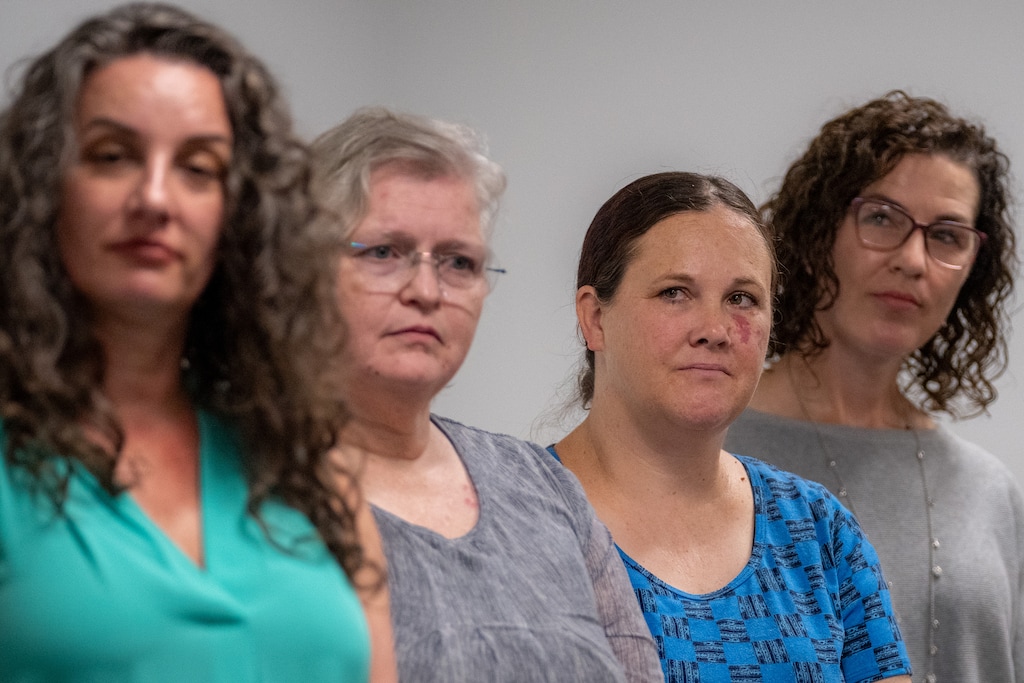
“Teachers are not working during the summer,” Foster said at a news conference Protect Utah Medicaid Coalition held Thursday, “and as I am not contracted like a regular teacher is, it shows that I am not working. I have tried to get jobs over the summer, but that was really hard.”
Foster said she finds herself competing with teenagers for seasonal employment. The substitute teacher added that it’s difficult to meet the 80 hours or $580 monthly time and income thresholds through her typical summertime gig work — like driving for ride-hailing services or delivering food.
(Trent Nelson | The Salt Lake Tribune) Substitute teacher Stephanie Foster speaks during a news conference at Sacred Circle Healthcare in Salt Lake City on Thursday, July 30, 2026.
Federal money at stake
While speaking to the Utah Legislature’s Health and Human Services Interim Committee last month, Utah Medicaid Director Julie Ewing said portions of the rule’s text published at the beginning of June are “causing states a lot of confusion.”
Those exempt from the rule include people who are pregnant, the primary caretakers of children and individuals who are “medically frail” due to a condition “significantly impairing their ability to comply” — and states are unsure how to determine who qualifies for the latter category, Ewing noted during the hearing.
Amid the confusion, the 2025 federal legislation is also bringing closer audits and steeper financial penalties for states the agency overseeing Medicaid determines are not adequately following its rules.
Ewing warned lawmakers that Utah could face “large federal disallowances” if the agency considers the state “too lenient or incorrectly applying policy.”
Earlier this year, the Legislature passed HB471, Social Services Amendments, codifying portions of this and other new federal rules that further limit access to safety net programs in state law. The Democratic minority opposed the bill.
Its sponsor, Rep. Logan Monson, R-Blanding, said the bill’s intent was to protect Utah’s federal funds by helping ensure the state complies with the new rules.
“Utah Medicaid has been developing a list of medically frail conditions, as well as a self-screener and medical form as options for members,” a DHHS spokesperson told The Tribune. “We will share these with community stakeholders in the coming months to ensure our preparedness with the statutory requirements. Utah Medicaid does not have current questions [about the rule].”
In the email, the spokesperson noted both DHHS and DWS will have to hire additional staff to implement the rule.
Hurting Utahns experiencing homelessness
One key population left out of the rule’s exemptions has some Utah Republicans concerned. The rule explicitly states that experiencing homelessness is not enough to qualify for an exemption.
(Chris Samuels | The Salt Lake Tribune) Rep. Steve Eliason, R-Sandy, makes remarks during the opening of the Kem and Carolyn Gardner Mental Health Crisis Care Center in South Salt Lake, Friday, March 28, 2025.
“I work with a lot of people in my private life that have other mental health issues that greatly limit their ability to hold employment,” said Rep. Steve Eliason, R-Sandy, who works for University of Utah Health and leads The Road Home’s board of trustees. “And losing Medicaid is going to put them into the proverbial downward drift even further.”
Two major law enforcement groups — the Utah Chiefs of Police Association and the Utah Sheriffs Association — have come out against federal changes that will end Utah’s Targeted Adult Medicaid program for people experiencing homelessness, fighting addiction or needing mental health treatment, Utah News Dispatch reported in May.
“From a public safety perspective, TAM has proven to be an effective and practical tool in addressing some of the most persistent challenges facing law enforcement across our state,” Kane County Sheriff Tracy Glover, president of the Utah Sheriffs’ Association, wrote in a letter asking for Ewing’s help saving the program.