 Robert Gehrke
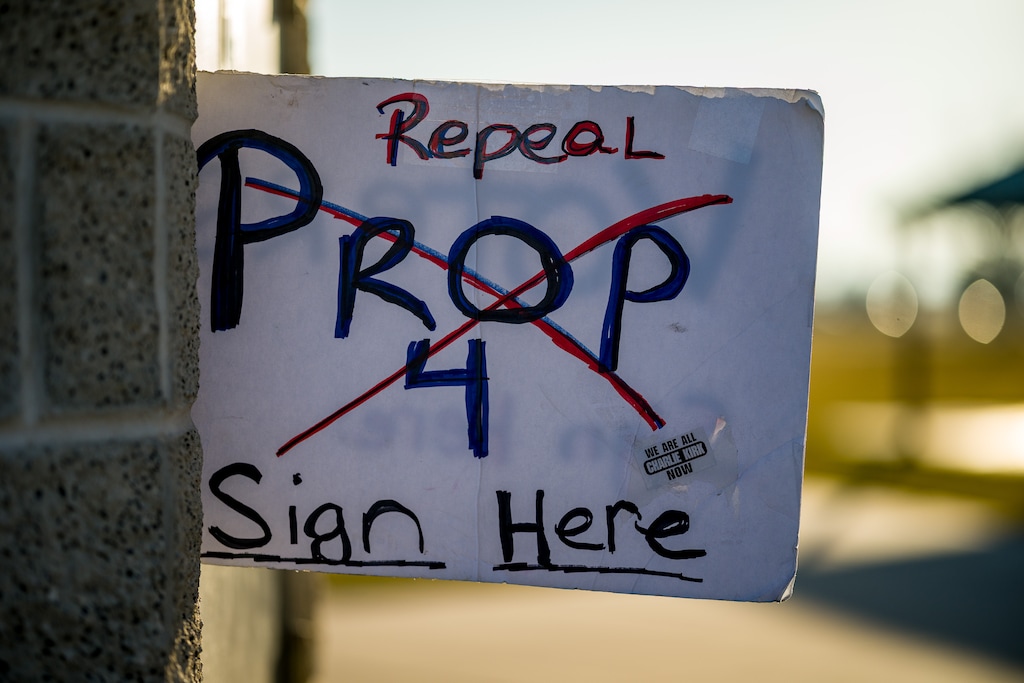
It may not matter much now, but the effort to repeal Proposition 4’s ban on partisan gerrymandering fell even farther from the 2026 ballot Wednesday.
Backers of the initiative lost another district, as enough voters in Senate District 12 removed their signatures for that area to fall under the required threshold of support.
State law requires backers of an initiative to get signatures from 8% of the registered voters in 26 of the state’s 29 Senate districts.
Last month, the Republican-led Utahns for Representative Government had met their goals and the initiative seeking to repeal Proposition 4 — the 2018 voter-passed initiative that created an independent redistricting commission and banned partisan gerrymandering — looked like it would make it onto the 2026 ballot.
But a push by opponents to have voters remove their signatures has led to an unprecedented number of removals — nearly 10,500 as of Wednesday. And two weeks ago, UFRG dropped below the required threshold in Senate District 15, meaning they had met the requirement in 25 districts, one short of the legal requirement.
On Wednesday, the lieutenant governor’s office reported 19 more voters in Senate District 12 — an area in Salt Lake County represented by Sen. Karen Kwan, a Democrat, and includes Kearns and parts of Taylorsville and West Valley City — withdrew their signatures, pushing that district below the mark as well, leaving UFRG qualifying in 24 districts.
With two weeks left to remove signatures, the next district that could slip under the threshold is Senate District 8, Republican Sen. Todd Weiler’s district spanning from Bountiful to the northern portion of Salt Lake City.
It currently is 255 signatures above the goal, making it less likely that it will fall. If it does, it would be the only Republican-held district in the state short of the target.
In a statement Wednesday, Elizabeth Rasmussen, executive director of Better Boundaries, said the group would “continue to work and make sure that anyone across the state who was tricked or misled into signing the repeal of Proposition 4 has the opportunity to remove their signature.”
Had the repeal initiative made the November ballot and been approved by voters, it would not have impacted the court-imposed congressional boundaries for the 2026 election, but would have enabled the Legislature to redraw them for 2028.
UFRG’s repeal effort had the backing of President Donald Trump, Vice President JD Vance, U.S. Sen. Mike Lee, Gov. Spencer Cox, state legislative leaders and other political influencers, as well as more than $4 million from a Trump-affiliated group.
Republican legislators have floated the possibility of putting a constitutional amendment on the ballot that would give lawmakers the power to repeal or amend ballot initiatives, but did not do so during the 2026 election. They could convene a special session to put such a measure before voters.
Rob Axson, UFRG leader and Utah GOP chair, wrote to Republicans in a newsletter this week that the party will continue its efforts.
“Whether now or in the future, by litigation or initiative, we will Repeal Prop 4,” Axson said. “This fight is not over but just beginning.”