 Leia Larsen
Note to readers • This story is made possible through a partnership between The Salt Lake Tribune and Grist, a nonprofit environmental media organization.
Boaters and paddleboarders at the popular Pineview Reservoir may soon be calling the lake “mudview” as it gets drained to facilitate replacement of an aging pipeline.
Ogden City officials are working to upgrade a 55-year-old waterline that runs beneath the reservoir to the city’s wells in Ogden Valley, as well as a 100-year-old pipe running through Ogden Canyon. But the reservoir will need to drop by 50 feet to complete the work, which has water managers nervous following Utah’s driest winter on record.
“It’s stressing us out,” said Scott Paxman, general manager for the Weber Basin Water Conservancy District, which operates the Pineview Dam.
The reservoir typically has about 40,000 acre-feet leftover when summer and irrigation seasons wrap. With the required drawdown to support Ogden City, however, Paxman said he expects there will be about 2,000 acre-feet of water left by Oct. 1, or about enough water to support the basic needs of 4,000 households. That’s the lowest Pineview will have dropped since the 1970s, Paxman said.
“Their perspective is it’s going to be low anyway, might as well do it,” Paxman said, referring to the city. “Well yes, but that might be the only water we have left next year.”
Weber Basin typically has enough water storage to meet the needs of Weber County and parts of Box Elder County for two years’ worth of drought. Paxman said they will try to keep water otherwise stored in Pineview in Echo Reservoir, which lies higher in the watershed, or in Willard Bay, a reservoir downstream and next to the Great Salt Lake.
The water district began upping its releases around a month ago to meet Ogden City’s needs. It is losing about 500 acre-feet a day, Paxman said, or 2% of its capacity. Pineview currently sits at about 4,885 feet above sea level, and plans call to drain it to 4,835 feet.
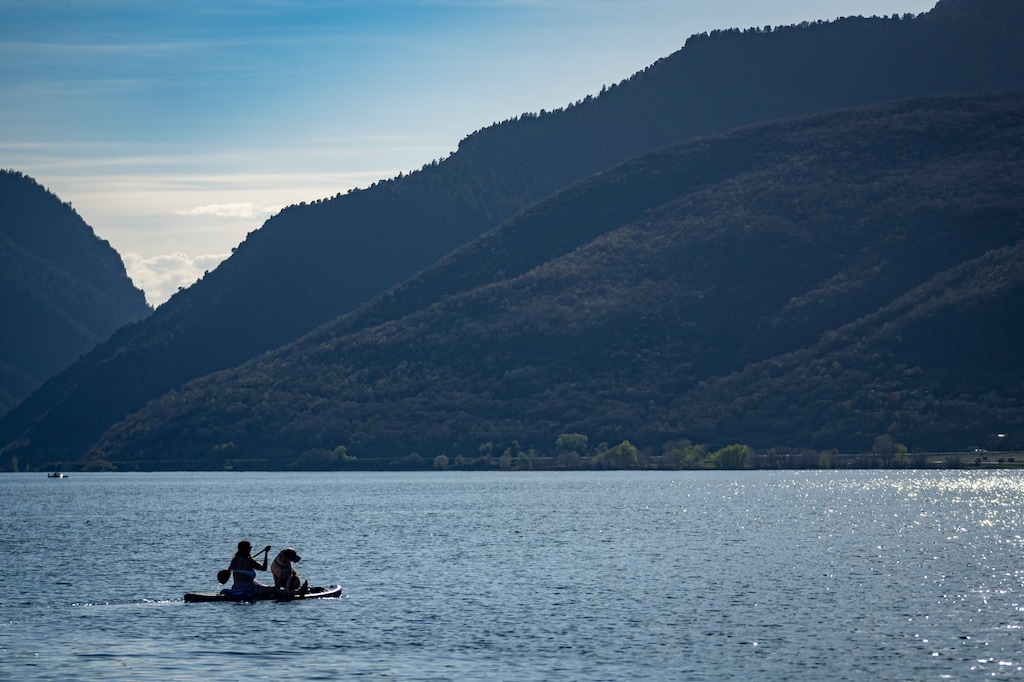
(Rick Egan | The Salt Lake Tribune) Pine view Reservoir, on Monday, April 20, 2026.
“Replacing it now protects long-term water reliability, preserves the integrity of a vital public asset, and takes advantage of a rare opportunity created by naturally low reservoir levels,” Justin Anderson, the city’s executive director of Public Services, said in a news release.
Ogden City officials say the old pipeline currently leaks about 1 million gallons of drinking water each day. Total cost for the project is around $100 million, which the city will pay for with federal loans from the Environmental Protection Agency, the Drinking Water State Revolving Fund and other state and federal grants. Weber Basin warned that the city’s work needs to be completed no later than Jan. 15, Paxman said.
The water pipeline serves around 120,000 people in the Ogden area, according to city information. The city will replace 6.4 miles of pipeline at completion.
When the reservoir will refill depends on next winter’s snow conditions, the city notes.
Draining the reservoir to meet Ogden City’s needs comes at the frustration of some boaters.
“Ogden City doesn’t give a crap about how much it will affect us,” said Ryan Bosley, commodore of the Ogden Pineview Yacht Club. “We’re in scramble mode.”
Bosley worries the drawdown will leave the club’s wave breaks and boat slips stranded in the mud, potentially causing hundreds of thousands of dollars’ worth of damage, if not millions. He said his members are working with out-of-state vendors to minimize impacts.
“We still don’t know how well it’s going to work,” Bosley said.
The club will start pulling boats from its marina in three weeks so managers can begin grappling with the docks.
“The biggest fear for us, if we don’t get a really good winter,” Bosley said, “we’ll be back [stuck] in the ground next year. I’m amazed Ogden City is taking that risk.”
Biologists with the Utah Division of Wildlife Resources expect minimal impacts to fish living in the reservoir. But they plan to double the amount of fish anglers can harvest sometime in early July to mitigate any potential impacts.
“Water will recede slow enough for fish to find deeper water,” a division spokesperson said.
The state stocks tiger muskellunge, which are sterile, each year to maintain populations. The division expects all other fish species populations to rebound naturally in the reservoir.
More information on the Ogden City water pipeline replacement project is available at ogdencitypipeline.com.
Leia Larsen is a sixth generation Utahn and a water and land use reporter reporter for The Salt Lake Tribune. She has covered environment, energy and political issues throughout the West. When she’s not chasing the news, Leia can be found exploring the Wasatch Mountains, sleeping in the desert or rooting around her garden.