 Leia Larsen
Note to readers • This story is made possible through a partnership between The Salt Lake Tribune and Grist, a nonprofit environmental media organization.
The first time a hyperscale data center project in Utah was discussed in public, a state official was explicit: It would be powered “100% off the Ruby Pipeline,” the natural gas line that crosses the area.
After two weeks of outcry about the fossil fuel plan, project developer and “Shark Tank” star Kevin O’Leary seemed to announce a potential pivot — or the possibility of one.
He described other technological advances — such as turbines cooled with air rather than water — before turning to the power question.
“We can also put a percentage of the power generation through solar, wind and batteries, because the battery technology is 10x more efficient than it was just five years ago,” he shared on X this week. “So that’s very helpful, because it makes the cost of energy lower.”
O’Leary didn’t commit to actually using any of the renewables.
The seemingly contradictory statements are now causing confusion about how the celebrity-backed data center campus slated for Box Elder County will be powered and how it would impact the climate.
Natural gas is almost entirely comprised of methane, a potent greenhouse gas that fuels climate change. Burning it releases carbon dioxide, another greenhouse gas.
While one scientist celebrated the potential change, another doubted whether the power plan would change at all.
Utah scientists weigh in on climate impact
(Christopher Willard | Disney) Kevin O'Leary, one of the investors on ABC's "Shark Tank," has become the public face of the proposed "hyperscale" data center campus in Box Elder County, Utah.
“Sustainability is at the heart of what we do in terms of all these proposals,” O’Leary wrote in his X post and said in a video, “not just Utah.”
The first phase of the project is expected to consume 3 gigawatts of electricity. By comparison, the entire state of Utah currently uses about 4 gigawatts. At full build, the data complex is expected to use 9 gigawatts, project boosters have said.
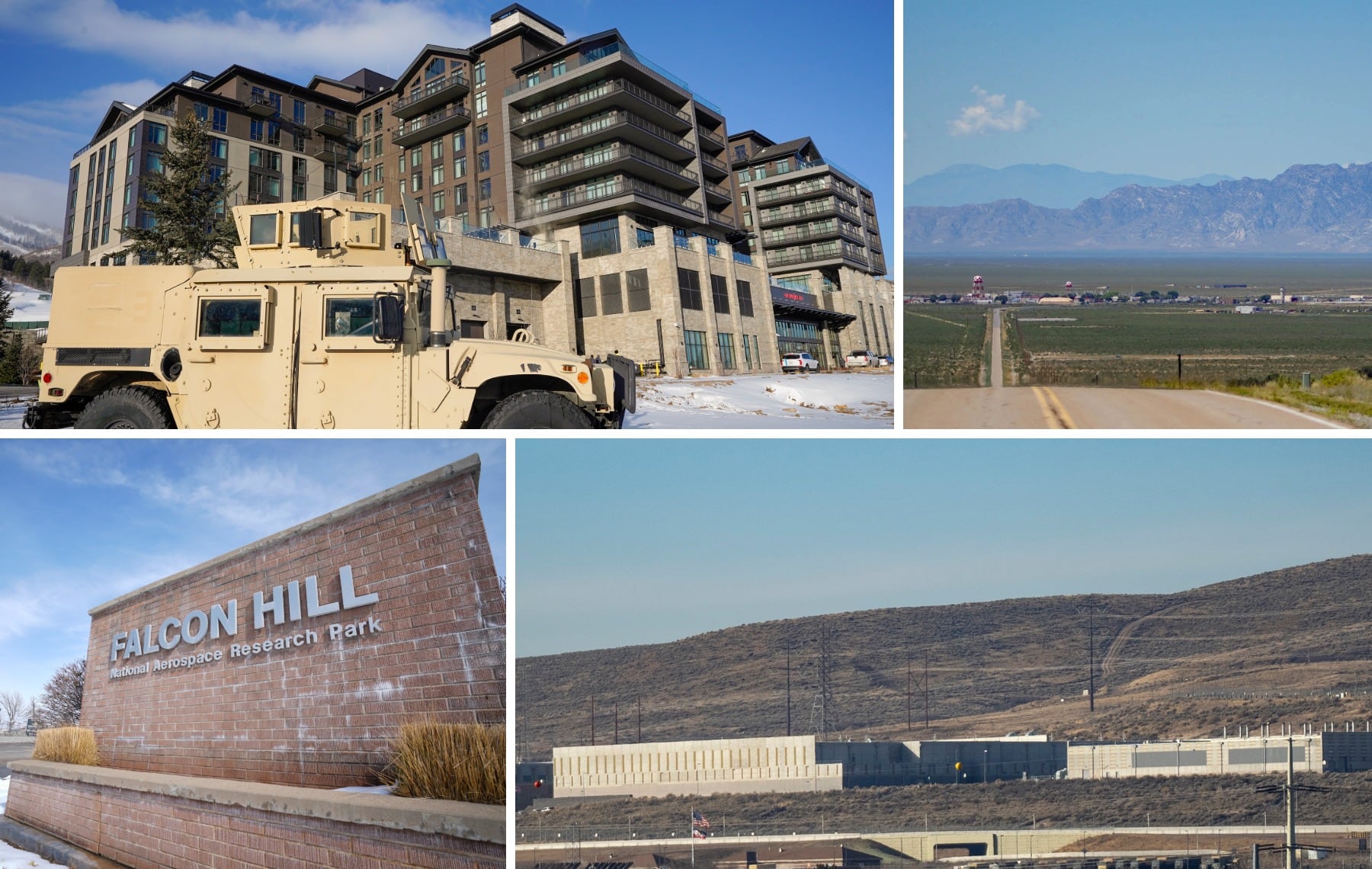
Representatives with Utah’s Military Installation Development Authority, or MIDA, which is cheerleading the project, also noted the Ruby Pipeline’s route through the county’s Hansel Valley is the primary reason why O’Leary selected the site.
“It could generate power at a significant level,” said MIDA Executive Director Paul Morris added during the April meeting. “This location was picked because of the gas pipeline.”
A spokesperson with MIDA did not immediately respond to a request for comment.
Logan Mitchell, a climate scientist and analyst with Utah Clean Energy, calculates an unprecedented 9-gigawatt natural gas power plant will produce around 35 million metric tons of carbon emissions each year.
By comparison, the entire state of Utah generates 55 million metric tons annually, according to the U.S. Energy Information Administration. That’s more carbon emissions than the state’s entire transportation sector.
It’s enough to raise Utah’s current emissions by about 64%.
“That’s massive,” Mitchell said. “That also does not account for any additional methane leakage” from piping and using the natural gas.
Kevin Perry, an atmospheric sciences professor with the University of Utah, and Robert Davies, a physics professor at Utah State University, said they came up with similar numbers.
“Climate footprint is HUGE,” Perry said in a text message to The Salt Lake Tribune, confirming Mitchell’s calculations.
With that in mind, Mitchell said he was pleased to hear O’Leary mention the possibility of including renewable energy.
“It’s nice he’s finally talking about alternatives,” Mitchell said, “because it’s very clear powering a data center with a diverse set of resources — especially ones with zero fuel costs — are going to be the most cost-effective way of delivering power to a data center.”

Renewables like solar, wind and geothermal have eclipsed fossil fuels, including natural gas, in terms of affordability, even without federal subsidies. They’re also not subject to wild price swings brought by global politics and conflict.
“One of the things that is a huge head-scratcher about his project, is why it would be fueled by natural gas,” said Ben Abbott, an ecology professor at Brigham Young University who also studies global energy systems.
“This commitment to natural gas is one of the biggest red flags,” Abbott added.
David Tarboton, a professor of Water Resources Engineering at Utah State University and member of the state’s Great Salt Lake Strike Team, wrote an email to Box Elder County’s commissioners Sunday floating the idea of placing solar panels across the neighboring Great Salt Lake to help power the data center complex.
“Floating solar panels offer the opportunity to generate non-fossil fuel power,” Tarboton said in an email, “and reduce evaporation from lakes, thus saving water.”
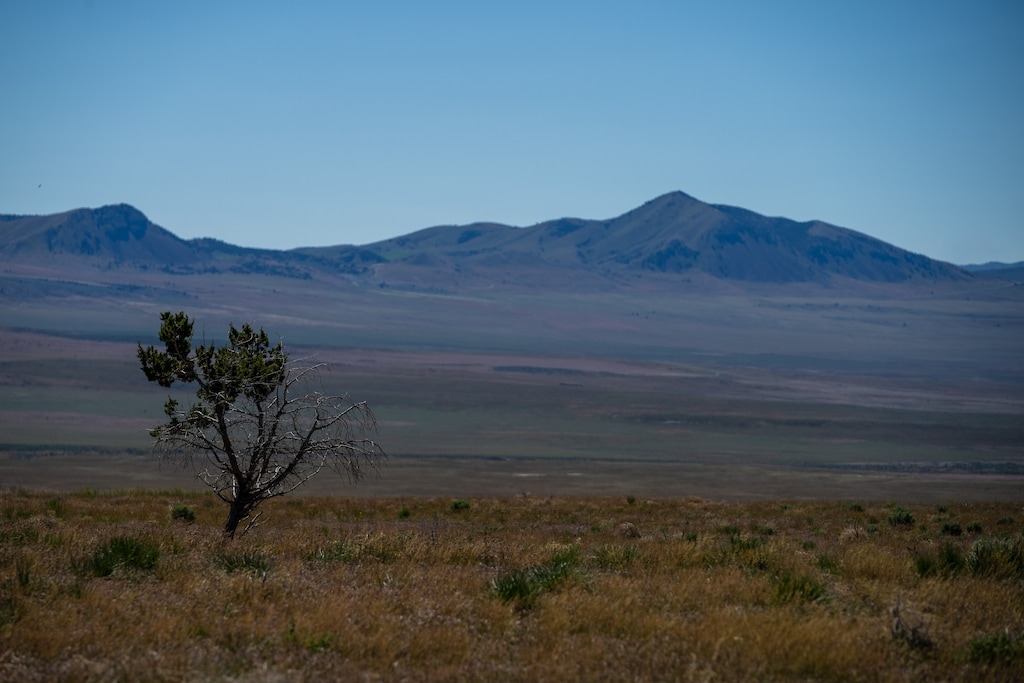
(Trent Nelson | The Salt Lake Tribune) The north shore of the Great Salt Lake at Hansel Valley on Friday, May 1, 2026.
Floating solar is also an idea Utah lawmakers explored earlier this year, but the concept did not gain much traction during the legislative session.
In a follow-up email sent to The Tribune, Tarboton calculated it would take around 40,000 acres of solar panels to generate enough energy for the project. That’s enough to cover around 16% of the lake’s shriveled north arm, the professor said.
But some environmental advocates doubt O’Leary will pivot to renewables, or whether state and county officials would push it.
“That is certainly not the way they have presented it in any of their materials, and we’ve read through all of it,” said Deeda Seed, a senior campaigner with the Center for Biological Diversity. “They’re absolutely talking about a gas-powered plant.”
In 2024, Utah lawmakers also approved SB 132, allowing private companies with energy demands of 100 megawatts or more to build their own generating stations that operate off the public grid used by nearly everyone else. That has sent data centers across the state clamoring to build natural gas plants, from Tooele to Salt Lake to Millard counties.
“These are cropping up like cancer,” Seed said. “But what we need to do is have a conversation about how many data centers are needed in Utah. How many can we reasonably support?”
Correction 8:07 a.m., May 7 • This story has been updated to correct the spelling of David Tarboton’s name.