facebook-pixel

Salt Lake City E-bikers may face new restrictions on trails like the 9 Line and Jordan River Parkway

The ordinance would establish a 15 mph speed limit on city trails.

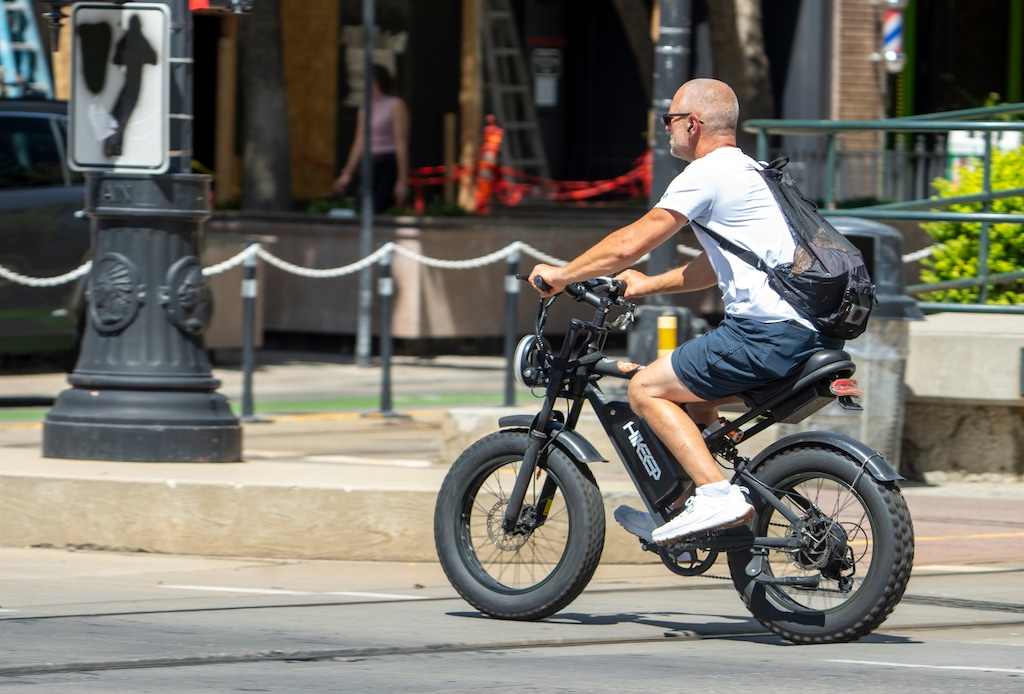
(Rick Egan | The Salt Lake Tribune) A man rides an e-bike on Main Street on Wednesday, Aug. 26, 2026. The Salt Lake City Council plans to consider new regulations on e-bikes in its meeting on Tuesday.

(Rick Egan | The Salt Lake Tribune) A man rides an e-bike on Main Street on Wednesday, Aug. 26, 2026. The Salt Lake City Council plans to consider new regulations on e-bikes in its meeting on Tuesday.

E-bikers who zip and zoom past pedestrians on trails in Utah’s capital could face a crackdown from the Salt Lake City Council.

Council members are scheduled to weigh new rules Tuesday that would establish a 15 mph speed limit for all classes of bikes and e-bikes on city-managed trails like the 9 Line and Jordan River Parkway.

The proposal would also ban certain classes of e-bikes, electric motorcycles and other high-powered electric devices on sidewalks, paths and trails under city jurisdiction.

That ban would apply to electric motorcycles and other devices that are capable of exceeding 20 mph using the power of an electric motor alone, along with those that are powered by electric motors of more than 750 watts.

Under the proposal, e-bikers also would be required to yield to pedestrians and other trail users.

Breaking the rules could lead to a warning and potentially a fine of up to $299.

The council is considering the ordinance to reduce conflicts among pedestrians, protect natural resources and establish clear rules for e-bike use across the city’s trail network, city documents show.

Residents can provide feedback on the proposal during a public hearing at Tuesday’s City Council meeting at 7 p.m.


Support free news for Utah

sltrib.com is now free to access — no subscription required. We made this decision because we believe access to trustworthy, independent news shouldn’t depend on what you can afford — especially as misinformation and AI-generated content continue to rise.

Free to read doesn’t mean free to produce. Our reporters show up every day to ask hard questions and hold powerful institutions to account. That work takes resources. As a nonprofit newsroom, we rely on support from people who believe it matters. Make a donation today to fund local news that serves Utah communities.

You can help us bring more local news to more communities today.