This article is published through the Utah News Collaborative, a partnership of news organizations in Utah that aim to inform readers across the state.
With millions visiting Utah’s national parks each year, snagging a coveted hiking permit or campground reservation has become a pressure cooker.
“It’s like getting Taylor Swift tickets,” said Jonathan Hughes, an economics professor at the University of Colorado, Boulder.
“You logged on, you hit refresh right away, and you still didn’t get one,” he said, describing a common experience for users when reservations are released at Recreation.gov. “That’s because there were thousands of other people doing exactly the same thing.”
So, Hughes set out to quantify how the National Park Service’s increasingly competitive online reservation system influences who is able to enjoy America’s crown jewels. The results indicate it tends to favor higher-income users.
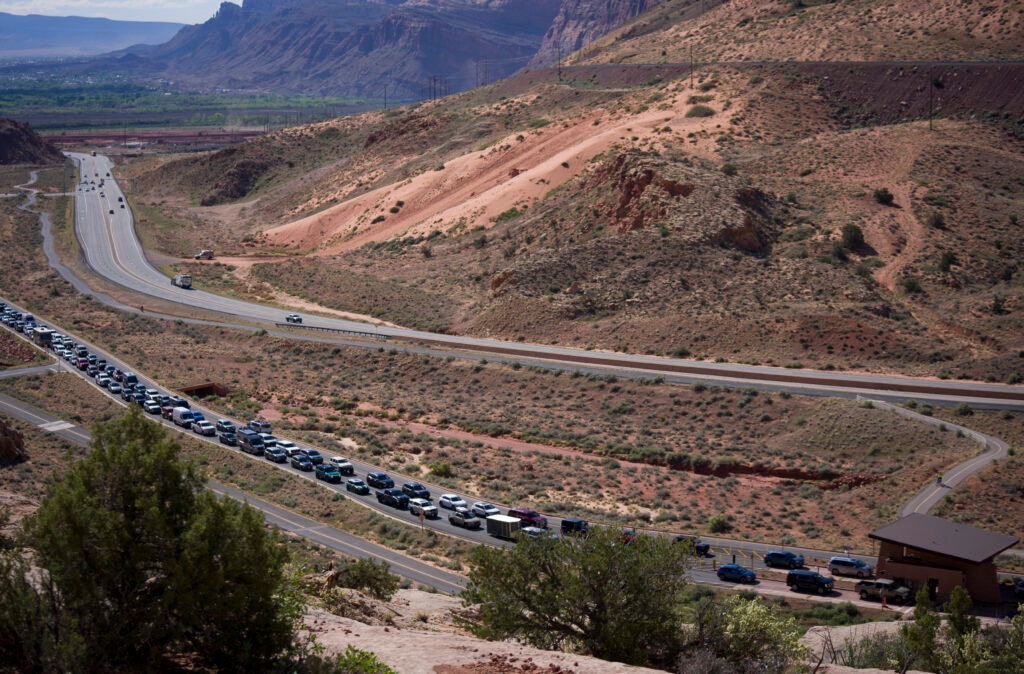
Data Hughes pulled from Arches National Park in southeast Utah showed more than 5,000 timed-entry reservations routinely got snapped up the day they were released in 2022-2024. Arches’ timed entry pilot ended in early 2026, and a Moab area shuttlesystem launched in its place. Still, a similar competitive dynamic remains with reservations for park campsites and permits to hike Arches’ Fiery Furnace and Zion’s Angels Landing.
It highlights the tricky balancing act park managers face, Hughes said. Preventing overcrowding benefits visitors, landscapes and ecosystems, but his study suggests the current system creates barriers that keep some lower-income guests on the outside.
Read the full story at KUER.org.