 Brock Marchant
If you bought Caffe Ibis coffee in the front stretch of this year, you might qualify for caffeinated compensation.
To avoid the tangled web that is tariff policy in the United States right now, the short version goes like this:
• The Logan coffee company tried to absorb the cost of tariffs for a while but ultimately ended up passing the cost along to customers.
• The U.S. Supreme Court struck down the tariffs those customers were paying for earlier this year.
• Caffe Ibis got credits for the tariffs it paid and is passing along those savings to customers who bought coffee from Jan. 9 to July 31.
And while all of this shakes out, the coffee shop is setting expectations: The price of coffee won’t go down long term.
How the tariff relief works
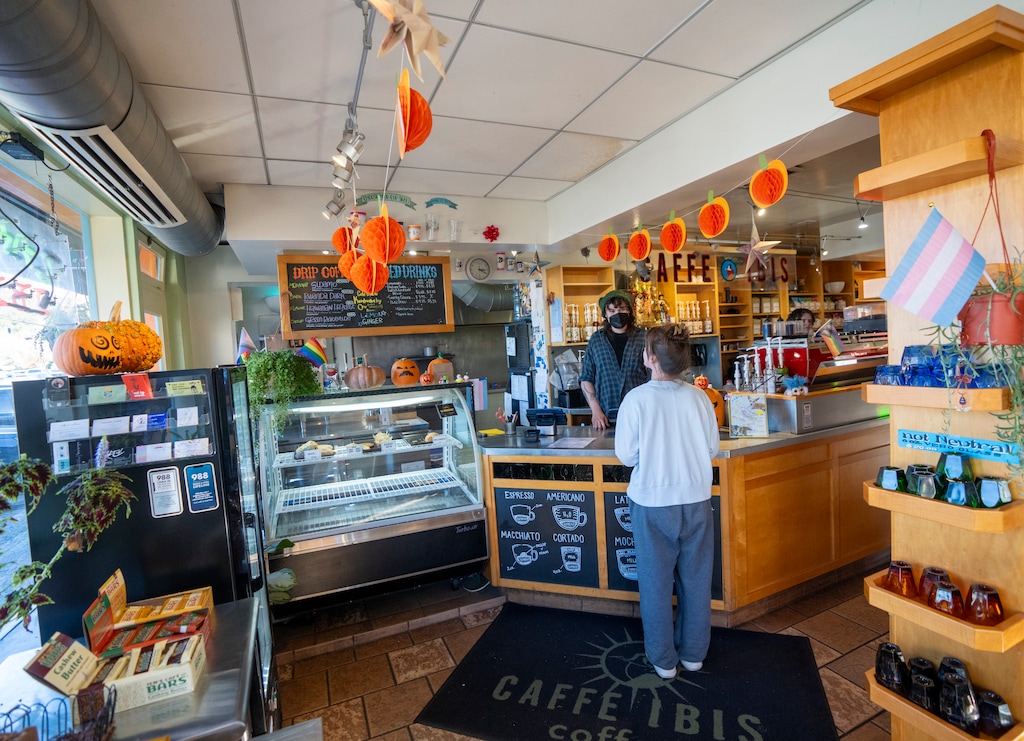
(Rick Egan | The Salt Lake Tribune) Caffe Ibis in Logan on Wednesday, Nov. 11, 2026. As part of the company's efforts to pay customers back for tariffs, the coffee shop is currently offering a 50-cent discount on all coffee-based drinks.
The company gave credits to online accounts that bought packaged coffee. Those credits can be used for future purchases.
This goes both for wholesale buyers, and retail coffee buyers with accounts at caffeibis.com. Credits depend on which exact coffee was ordered and when. Caffe Ibis looked at purchases between Jan. 9 and July 31 to see who would qualify.
Some customers couldn’t be tracked down. In lieu of giving those accounts credits, the coffee shop is donating $400 to the American Civil Liberties Union.
And to make up for tariff expenses that in-store customers paid, the company is offering a 50-cent discount on all coffee-based drinks purchased at Caffe Ibis Gallery Café for 30 days. The deal started on Nov. 5.
If someone bought Caffe Ibis coffee through a different store rather than from the company directly, the Logan shop isn’t able to issue any credits or refunds directly, according to Edie DeVilbiss, the company’s director of sales and marketing.
“That’s one step further beyond us,” she said. “Our wholesale partners have the option, then, of passing that value back to their customers.”
Coffee calculations
(Rick Egan | The Salt Lake Tribune) Caffe Ibis in Logan on Wednesday, Nov. 11, 2026. Though the company wanted to return tariff expenses to consumers, it does not plan to lower coffee prices.
In a news release, Caffe Ibis Coffee Roasters explained that it faced increased prices for unroasted coffee after the federal government imposed a baseline 10% tariff in April 2025.
Before the company increased prices on Jan. 9, DeVilbiss said Caffe Ibis absorbed the cost.
In February, the U.S. Supreme Court ruled that President Donald Trump didn’t have authorization to impose the tariffs. Importers were eventually able to recoup the funds they paid toward unauthorized tariffs, according to Caffe Ibis’ news release.
As Caffe Ibis began receiving credits from its importers, the company decided to take the returns a step further and distribute the refunds among its consumers who had fronted the cost.
“There was no mandate for us to return that money to customers,” said DeVilbiss. “But it’s just who Caffe Ibis is and the values that we stand for. It just felt like the right thing to do.”
Tariffs may fall, prices will not
The news release specified that Caffe Ibis coffee prices are not going to see a permanent dip.
This, DeVilbiss explained, is because Caffe Ibis’ Jan. 9 price increase was not just the result of tariffs, but also factors like rising shipping costs and climate change that contribute to higher costs in producing coffee.
“We could have used the tariff recovery to lower prices on future purchases, but we chose to trace it back to qualifying past purchases and issue credits to the customers who had already paid those tariff costs,” DeVilbiss said in an email. “We feel confident that our current prices reflect what it costs us to source and produce our coffee, so we’re keeping them steady.”
If coffee production prices come down, she said Caffe Ibis would happily lower prices.
Note to readers • This reporting position is a partnership with Utah Public Radio, a division of Utah State University.
 I’m Brock Marchant, The Salt Lake Tribune’s Cache Valley reporter in partnership with Utah Public Radio. As a valley native, I’ve seen firsthand the issues that people face everywhere from Richmond to Avon — unaffordable housing, dwindling open space and a rapidly increasing population that has cities struggling to keep up. I want to explore local problems by reporting on the ground, not just quote elected officials and news releases. As residents work diligently to overcome challenges, I want to tell their stories and share their solutions. Smart, hard-working people have built the valley’s history, and I’m certain they will frame its future.
As a nonprofit newsroom we rely on donations from readers like you to make this work possible. Donate today to support this reporting.