 Isabel Meléndez-Rivera
Sandy and Fidel Arrieta first started selling empanadas from their home, along State Road 26 between Roy and Ogden, around eight years ago.
When they noticed customers kept coming back, craving another bite of their Venezuelan cuisine, the couple decided to open their first restaurant location in downtown Salt Lake City. Together, they named it Arempas.
Arempas grew steadily, eventually expanding to six locations and becoming one of the most recognized Latino restaurant enterprises in the Wasatch Front. But in the last year, the owners have been forced to close down three of their restaurants — in Orem, South Jordan and Sandy.
Why the “catastrophic” shift in business? They point to the federal immigration crackdown under President Donald Trump.
It’s left some loyal customers afraid to eat out and led to about half their workforce disappearing, either choosing to abandon work out of fear or in some cases, deciding to self-deport.
“We started finding ourselves with empty restaurants,” Fidel Arrieta told The Salt Lake Tribune in Spanish. “It was lethal.”
“In general, Latinos are not eating outside of their homes, and that’s affecting us a lot,” Sandy Arrieta added.
As far as their employees, she said, “people are scared to work even if they have their documents.”
“We had a wonderful team, really extraordinary, but since last year, it started dropping and dropping,” Fidel Arrieta said.
The drop follows a surge between fall 2018 and summer 2025 that saw Venezuelan immigrants in particular increasingly choosing to move to the suburbs of Salt Lake City, The Associated Press reported last month.
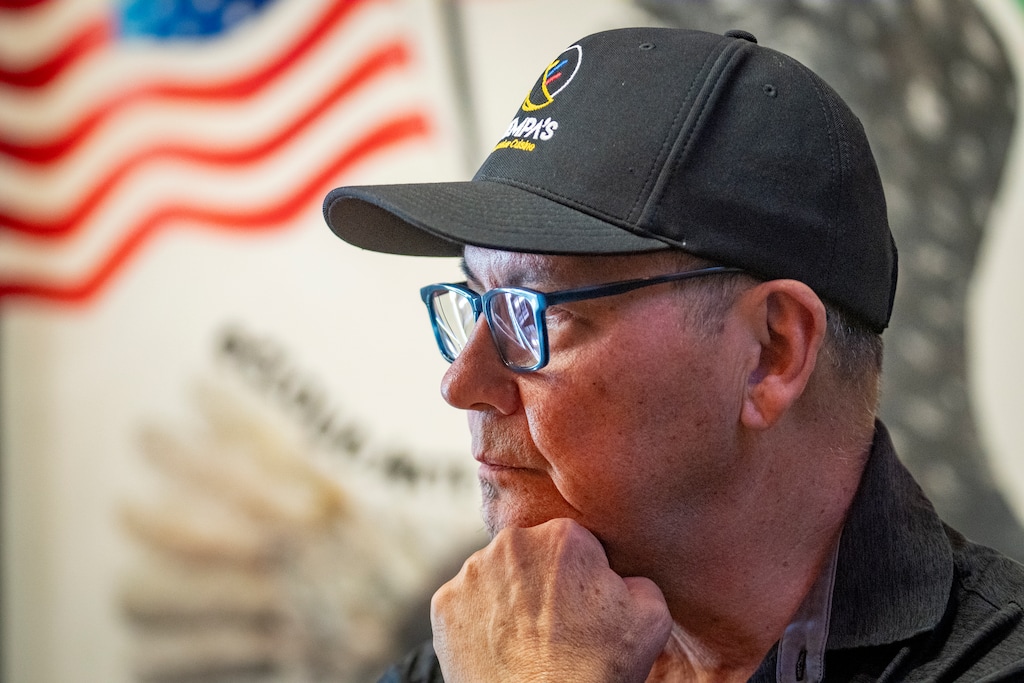
(Rick Egan | The Salt Lake Tribune) Fidel and Sandy Arrieta, owners of Arempas restaurant, at their downtown Salt Lake City location.
(Leah Hogsten | The Salt Lake Tribune) From left, beef, chicken and potato empanadas are among the menu items at Arempas.
The restaurant owners are not alone. The organizers of the Facebook group Utahzolanos, which shares news and builds community among Venezuelans in Utah, told The Tribune they’ve heard from at least 100 Venezuelan families throughout the state in the last year who have either self-deported or are considering it.
“There is a lot of fear in the community, because people thought they were in the country legally — because they had their open asylum case, and because they had employment authorization and were paying taxes,” one of the organizers, Patricia Quiñones, told The Tribune in Spanish.
“But this administration,” she feels, “unfortunately considers anyone without permanent residence ‘illegal,’ and so that has made a lot of families chose self-deportation.”
In 2021 and 2023, Venezuelan immigrants were granted Temporary Protected Status, which allows people who can’t safely return to their home country to work in the U.S. and exempts them from immigration enforcement.
About a year ago, though, the U.S. Department of Homeland Security revoked TPS for Venezuelan immigrants.
Earlier this year, the 9th U.S. Circuit Court of Appeals found DHS did that unlawfully for some Venezuelan and Haitian nationals. But this week, the Supreme Court vacated and returned that ruling for review, in light of a separate case that set new precedent.
Throughout Trump’s second term, immigration enforcement agents have arrested Venezuelans more frequently, according to a Tribune analysis of federal data from 2025.
Since his second inauguration alone, 629 Venezuelan citizens have been detained in Utah and removed by immigration enforcement agents, according to the Deportation Data Project.
At Arempas’ downtown Salt Lake City location, where Sandy Arrieta spoke with The Tribune, she said she calls her workers her “kids.” The closures have left her shaken.
“I didn’t want to leave the house, and it felt like my world was ending, but I told myself, ‘We have to keep going with the other restaurants,’” she said in Spanish.
(Rick Egan | The Salt Lake Tribune) Sandy Arrieta, co-owner of Arempas, at the couple's downtown Salt Lake City location.
(Leah Hogsten | The Salt Lake Tribune) The downtown location is dotted with fachadas, or "facades" — little wooden store and house fronts. Murals and picturesque scenes of Venezuela's Caribbean Coast also fill the eatery.
Here, longtime customers have seemed shocked to learn the couple’s been forced to close three locations, she said.
Before all of this, Arempas’ success peaked around four years ago, including a feature on an episode of Guy Fieri’s “Diners, Drive-ins & Dives” on Food Network in 2021. Around that time, thousands of Venezuelans were arriving in Utah, and the Arrietas started opening more locations.
The downtown restaurant, especially, was “overflowing” with customers, they said in Spanish. Late at night, when other spots had closed for the day, Arempas was one of the only places open and bustling, they said.
“People come into this location with a party vibe, and it’s much more relaxed,” Sandy Arrieta said.
Soon, it could be their only full-service restaurant. Between the challenges they’ve faced, and the shifting economy, the couple may need to shut down their Midvale location, too, she said.
They turned half that restaurant into a bar area about a year ago for parties, karaoke and more — a “creative” way to try and turn extra profit.
They also operate a food truck, which they are working to schedule more often, as well as a shop in Salt Lake Community College’s cafeteria, where they got approval to open last year after the school’s Student Association president, who was Venezuelan, led efforts to bring Venezuelan food to campus.
Fidel Arrieta acknowledged it’s a tough time for restaurants in general.
“But the Latino businesses, we are hit with double the strength,” he said.
Isabel Meléndez-Rivera is a Syracuse grad who joined The Tribune as a reporting intern in September 2026. She's happiest in a city she's never been to, trying food she's never had and listening to music she's never heard. She loves watercolor painting, reading, swimming and playing guitar.