 Jessica Schreifels
 Robert Gehrke
 Jose Davila IV
Ronald Tait lay in a hospital bed last September, wires crisscrossing his bare chest, a breathing tube in his mouth, a white towel draped across his forehead.
Earlier that night, he said, he had gone with a friend to State Street looking for heroin, but instead they found fentanyl.
Tait said he took one hit. Then he overdosed.
Tait had been sober for about three years before that night, he said. He and his friend were former participants at the recovery program The Other Side Academy, where, Tait said, he’d been kicked out a few weeks earlier because he had been caught smoking cigarettes at work.
As paramedics rushed Tait to a hospital, his friend contacted an Other Side Academy staff house manager, hoping she could help him learn where Tait would be treated. She called area hospitals until she found where he had been admitted, Tait said. When the friend got to the hospital, he snapped a photo of Tait lying unconscious in the hospital bed and texted it to the house manager.
“He sent the picture to basically be like, ‘Oh my gosh, look at how bad this is,’” Tait said he learned later. “He sent it out of true concern.”
But according to Tait, The Other Side Academy’s executive director Dave Durocher later projected that photograph onto a screen at the academy for roughly 180 people to see. The message, Tait said, was “this is what’s going to happen to you if you don’t do what they say.”
Tait’s experience is an example of what some former participants describe as a broader effort by The Other Side Academy to demean and sabotage people after they leave. The Salt Lake Tribune interviewed seven former residents and recovery advocates who described academy leaders publicly sharing participants’ personal setbacks, warning that those who left would relapse and die, attempting to interfere with former residents’ jobs and criticizing people who offered addiction support outside of the academy.
The Tribune asked Other Side Academy leaders to respond to each allegation in this article. In response, leaders wrote that they would not apologize for their approach, nor involve the academy “in a tit-for-tat game of ‘he said, she said’ with former students or current critics.”
They also suggested a headline: “FORMER CONVICT DRUG ADDICT DISLIKES STRUCTURE AND ACCOUNTABILITY!!!”
“If The Salt Lake Tribune’s ‘Big Reveal’ is that sometimes long time addicts, many with long criminal histories, who with full knowledge enroll themselves into a demanding program sometimes become unhappy with our demands, chafe at accountability, quit the program and blame us for their failure, we’ll just have to hitch up our trousers and try to soldier on through the ‘bad press,’” they wrote.
The Other Side Academy differs from a traditional drug treatment center. Under its therapeutic community approach, it doesn’t have licensed therapists or doctors on staff who would be subject to medical privacy laws and other regulations. It doesn’t offer medication-assisted therapy and doesn’t accept applicants who are using mental health medications.
Tait said he never gave his permission for the photo to be shared. He said he didn’t know his friend had photographed him in the hospital until months later, when another academy participant recognized him at an Alcoholics Anonymous meeting and told him everyone at the academy had seen the image and believed he had died.
He shared text messages with The Tribune that he said were from the academy house manager, who told him Durocher had displayed the photograph. The thread showed the sender also shared a copy of the image with Tait.
“They had no right,” Tait said. “When I found out they put that picture up, I was so upset. I could not believe it.”
Academy leaders asserted that Durocher had “no direct role” in displaying the photo without elaborating, but added “that kind of thing” is often shared widely in recovery communities as “a reminder that sobriety happens one day at a time and that all of us are subject to relapse.”
“Anyone who complains that their mistakes are used as teaching opportunities for our larger community is pretending not to know that this is precisely how our therapeutic community works,” they wrote. “We learn both from each other’s successes and failures.”
“Mr. Tait knew that when he came,” they continued. “He knew that the entire time he was with us.”
Transforming lives
Inside the academy’s entrance, there’s a dark wooden bench. Anyone who wants to join the program can walk in, sit there and be interviewed. But for about half of participants, the path starts somewhere else: in jail and facing prison time. They plead guilty, enter The Other Side Academy instead of serving a sentence, and if they don’t complete the 2 ½ year program, they return to court, where a judge can impose the original sentence.
(Rick Egan | The Salt Lake Tribune) The Other Side Academy in Salt Lake City.
Participants live at the academy and work, unpaid, in one of its businesses — which include a moving company, thrift store and a construction operation — in exchange for housing and other services. The program’s therapeutic community mode relies on peer accountability, which includes, at times, confrontation. Group feedback sessions are intentionally intense, according to participation forms, with participants encouraged to give one another raw feedback that may be “loud and include profanity.”
At the center of the program is Durocher, its executive director, who has said he spent years in and out of prison before turning his life around at Delancey Street, a San Francisco therapeutic community which was the blueprint for The Other Side Academy. Durocher speaks passionately about recovery, arguing that accountability and blunt peer confrontation can transform lives. He lives and works at the academy, and has become one of its most visible leaders.
(Bethany Baker | The Salt Lake Tribune) Dave Durocher, the executive director of The Other Side Academy, speaks in a panel discussion in June 2024.
The academy says its tough love approach works. During a recent visit, Durocher and other academy leaders gathered graduates who are staff members and invited them, in quick succession, to tell Tribune journalists versions of their life stories. Each had a concise account of how the academy transformed them: a woman who said she began using heroin at 16 and lost custody of her children; a man who said he learned how to rebuild trust after years of poor decisions; another who said he once expected prison to define his life until he found community at the program.
But according to the nonprofit’s own data, most people who enter The Other Side Academy don’t graduate. In the decade since it opened in 2015, about 40% of participants have completed the program.
‘You deserve to rot in prison’
Academy leaders say they may have “the most restrictive, most demanding and difficult program of its kind in Utah.”
“It may not work for some,” they wrote in their statement to The Tribune, “but for those who do the work and pay the price, our program pays off.”
One former participant, Brayden King, said he knew almost immediately the program wasn’t for him — he decided to leave last October after six hours. He said Durocher told him that if he left the building he was “going to die” and that he’d be “lucky” if he made it back to prison.
Durocher wouldn’t let him call his parole officer, either, King said — which put him in danger of going back behind bars. Durocher promised that program staff would put in a call for him, but King left with doubts.
“I’m trying to do the right thing,” King said. “My first day out of prison, I’m trying to call [Adult Probation and Parole] to let them know what’s going on.”
After he walked out the door, King said, he wasn’t able to make it to the agency’s building before it closed to tell his parole officer what had happened. With nowhere else to go, King said he relapsed.
In the morning, King made contact with his parole officer, who helped him get into a program with Volunteers of America, and then a halfway house. King said he now has his own place, his own car and a job doing junk removal. “And now I’m doing good,” he said, “better than I’ve ever done.”
Others who spoke with The Tribune described Durocher yelling at them as they left the academy, like Tait, who recalled Durocher loudly scolding and threatening to have him sent to prison and fired from the construction job which The Other Side Academy had lined up for him.
“You’re a low-level dirtbag,” Tait recalled Durocher saying. “You deserve to rot in prison.”
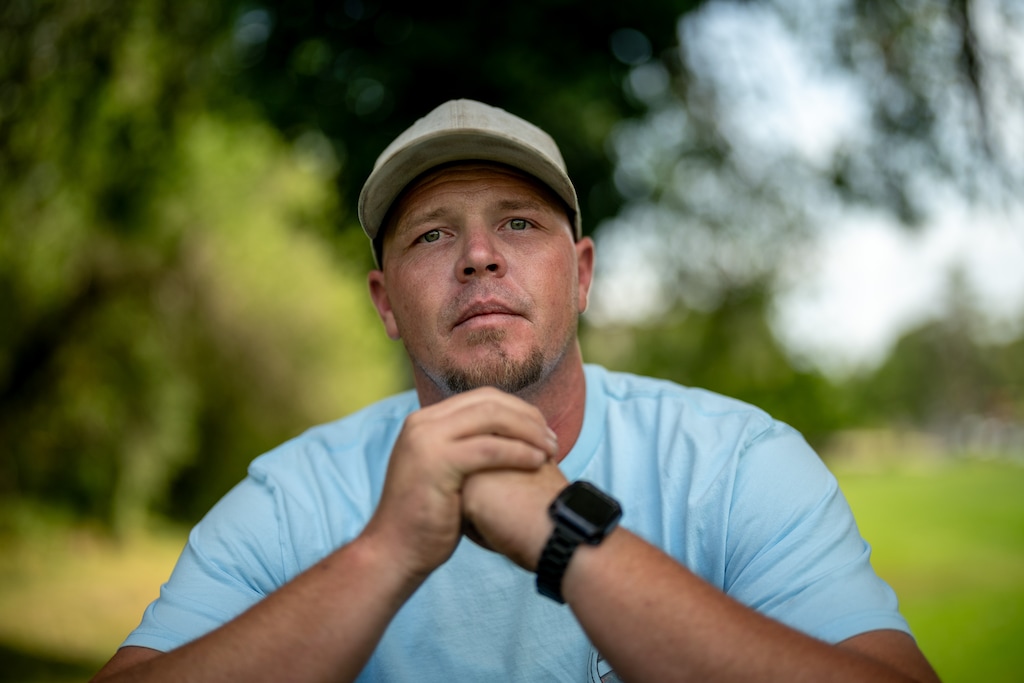
(Trent Nelson | The Salt Lake Tribune) Ron Tait in Salt Lake City on Tuesday, July 14, 2026.
Tait said academy staff later contacted his boss in an effort to get him fired — but he kept the job and his employer instead helped him with temporary housing.
Amy de la Garza is a distinguished fellow of the American Society of Addiction Medicine and the past president of the Utah chapter. She said that standard practice for staff when someone leaves a traditional treatment setting is to try to arrange the next level of care the patient needs and, at the very least, give them a Naloxone kit or instructions on how to get one at a public library — “but there is no legal mandate for this,” she added. Naloxone is a life-saving medication that can quickly reverse the effects of an opioid overdose.
De la Garza added that treatment providers are strictly forbidden under federal medical privacy law from sharing any information about a patient’s care without consent, but acknowledged that The Other Side Academy is not a treatment center.
Academy leaders said participants are made aware early in their stays that harsh language will be used to reinforce “norms and restrictions.”
“When a student makes destructive and even life-threatening decisions, might you hear loud and even profane language when passing our campus? Yes. Absolutely and without fail,” they wrote. “Is it done out of hate or vengeance? Just ask the hundreds whose lives were saved from their own worst impulses from this very radical honesty.”
“Our foundation principles are truth and love,” they continued. “For people with problems like ours, sometimes love means high-volume truth.”
Forcing ‘a rock bottom’
But some former participants said the academy’s tough-love tactics extended after they left the academy, with staffers taking steps to make their lives after The Other Side Academy more difficult.
Mark Dalley came to The Other Side Academy in 2019 as he was facing a lengthy prison sentence. He thrived in his three years as a student before he was hired on as a staff member.
He said he saw staff threaten to call a student’s probation officer or hurl insults at them if they left.
“They’ll tell them the doors are always open, but it comes with very heavy consequences,” he said. “They don’t try to get you into another program, or somewhere that might suit your needs a little bit better, or might [address] mental health stuff.”
(Trent Nelson | The Salt Lake Tribune) Mark Dalley in Lehi on Wednesday, July 15, 2026.
Then, Dalley said, he became one of those who faced threats and ultimatums.
Dalley said he had to have hernia surgery while he was a student at The Other Side Academy, and was directed to return to work with its moving company immediately after. After he graduated and became a staff member, he said, he had medical complications and was taking pain pills he had been prescribed — but after the prescription ended, he said he relapsed and started taking heroin.
He was fired, but staff promised he could return to his spot at The Other Side Academy after finishing a short-term drug treatment program, Dalley said. But he said staff later withdrew that promise.
Dalley said he later overdosed on fentanyl, which he thought was a pain pill. He had been working at a welding shop at that time, and soon after, he said, an Other Side Academy staffer called his boss to tell him about the overdose. He lost his job.
“They were trying to force a rock bottom,” he said of The Other Side Academy. “Because if they force a rock bottom, and I don’t have anywhere else to turn, I have to go back there.”
The Other Side Academy said its students are told that staff will inform their employer if they are “failing to live up to their commitments,” such as using drugs. “To do otherwise would be for the Academy to destroy opportunities for future Academy students who DO keep their commitments,” they wrote.
Dalley said he did return to The Other Side Academy, but he ran into problems when staff started to pressure him to end his relationship with his girlfriend, who also works in the recovery community and supported a different approach to sobriety. (Academy leaders say it’s common for addiction treatment programs to discourage forming new romantic relationships during treatment.)
Dalley ended up leaving the program last September after he said one of the staff had insisted he needed to admit that he sought out his girlfriend at a recovery event to speak with her.
He said he sat on the bench near the academy’s entrance all day, pressured to admit he did something wrong, but ultimately decided to leave.
“Just go down the street and die,” Dalley said Durocher told him. “That’s all you’re going to do.”
The Other Side Academy’s legal coordinator later wrote a letter to the judge in Dalley’s criminal case, notifying the courts that he didn’t finish the program. The letter details how Dalley ran into his girlfriend at a recovery event and “his story of how it all went down did not align with several others.”
“Mark would not take accountability for his actions or tell the truth of the matter,” the letter reads. “He was placed on the bench, got feedback from several people but decided to leave.”
A week after he left, Dalley said he was with his girlfriend, Brooke Rushton, who was working at Salt Lake City’s Recovery Day, a large community event celebrating those who have recovered and their family members and service providers who supported them.
He said that Durocher spotted him at the event, and after initially having a cordial conversation alongside another Other Side Academy staff, he returned alone and started yelling at Dalley, his face red, his finger pointed in Dalley’s face. Dalley recalled that Durocher yelled “that I was a piece of crap addict, and I’ll never be anything else but that.”
Rushton corroborated this confrontation in an interview with The Tribune, saying she was “mortified” as Durocher yelled at them during the crowded event.
Without specifying a particular interaction, academy leaders said in a statement that Durocher “doubts that some of those who related their own creative recollections of interactions with him would really want him to fully disclose the specific details behind those interactions at the time.”
“Regardless,” they added, “he feels it would be an ethical breach to do so.”
‘I don’t believe recovery is one-size-fits-all’
De la Garza said she thinks The Other Side Academy is doing a lot of things well.
But in a medical setting, she said, it’s best practice to utilize medications like Vivitrol, methadone and buprenorphine, which help address withdrawal symptoms and can reduce mortality for people with opioid disorder by half. This is called medication-assisted therapy.
“We know that type of treatment improves outcomes,” De la Garza said. “So if we’re living in that kind of climate” — with high rates of people returning to drug use and incarceration — “and we’re not offering people lifesaving medications, then we’re not really taking care of people with best practices.”
The Other Side Academy told The Tribune it “recognizes that research shows benefits from medication-assisted therapy for the general population of those with substance use disorder in early recovery.”
But academy leaders added they’re “unaware of any research that demonstrates benefits outweighing risks for participants in a rigorous, abstinence-based recovery community like The Other Side Academy. Should research specific to our context prove otherwise, we will reconsider that policy.”
Early in her time as an advocate in the recovery community, Malory Jacobs said she and Durocher were kindred spirits — both having been incarcerated for substance use and now working to help others rebuild their lives. In time, however, their different recovery philosophies divided them.
Jacobs recalled Durocher once told her over coffee that The Other Side Academy was the only model that works — a meeting which Durocher denied having.
But Jacobs disagrees.
“I respect that Dave is passionate about what he believes works, and I know The Other Side Academy has helped people,” Jacobs said. “Where we differ is that I don’t believe recovery is one-size-fits-all.”
She said that being drug-free is important, “but I also believe we have to understand what is underneath the addiction — trauma, pain, shame or whatever that may be for that individual.” An approach that relies on confrontation and breaking a person down “can reinforce the shame they already carry,” Jacobs said.
While they had philosophical differences, Jacobs said tensions grew between them after Durocher started contacting speakers scheduled for Jacobs’ events and encouraging them not to participate. The disagreements carried over into interactions with members of her team, she said, and Durocher began criticizing her group on social media.
Former Other Side Academy students who had volunteered with Jacobs said Durocher told them they could no longer be involved with her organization, she added.
“It became increasingly difficult, and at times it felt very personal,” Jacobs said. “I found myself trying to protect my team while also standing behind what I believed about recovery.”
In the academy’s response, it said Durocher “is not accountable for another person’s perception of a particular past conversation” and declined to comment further.
The Other Side Academy leaders said they reject the idea that their methods are harmful and said they do not intend to change their approach.
Academy leaders acknowledge the program isn’t for everyone. And when participants leave or relapse, they defend contacting employers and probation officers, saying those actions protect opportunities for those who follow the academy’s rules.
For that approach, academy leaders say, they make no apologies.