 Samantha Moilanen
 Andy Larsen
Less than a year ago, Austin Campbell took a job at Tyson Foods’ meat processing plant in Eagle Mountain, where he worked his way up to a lead technician role and recently applied for another position.
But earlier this month, when Campbell opened his email expecting an update on the position, he instead learned he would lose his job by Oct. 12, when the plant shuts down.
The news came as a “shock,” the father of two said. He never expected the U.S. food giant’s Utah plant to close, especially after it had only been open for five years.
Now, he’s one of 723 Tyson Foods workers that will soon be left without a paycheck.
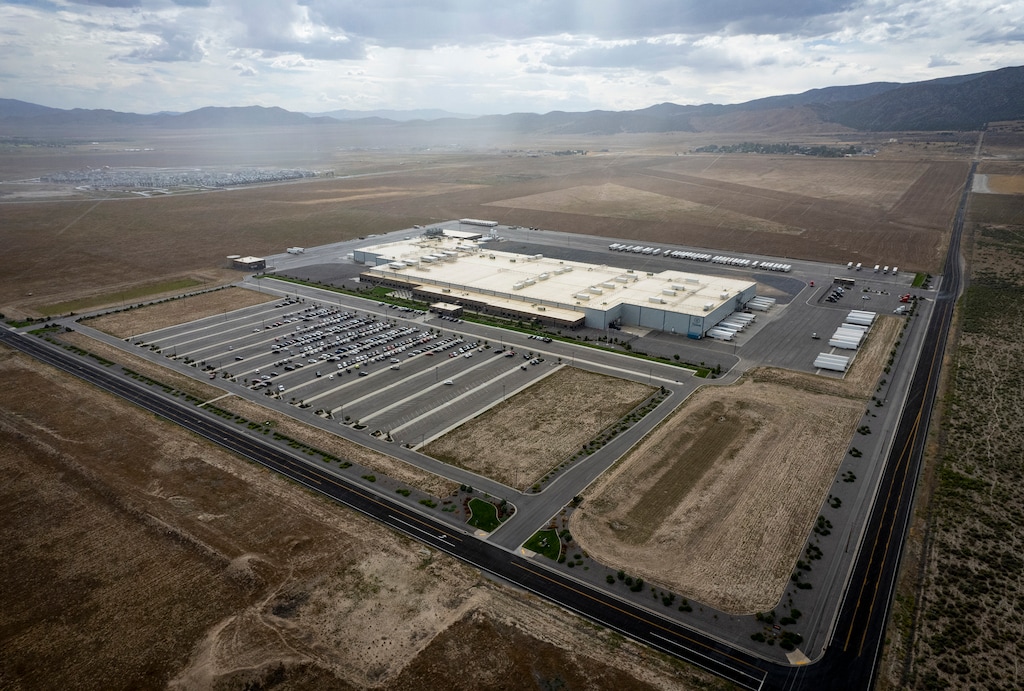
(Rick Egan | The Salt Lake Tribune) The Tyson Foods meat processing plant in Eagle Mountain.
The plant closure is just one example of a reality thousands of Utah workers face each year: a job they rely on disappearing with little notice, leaving them scrambling.
On average, about 236,000 Utah workers lose their jobs each year, according to federal estimates from the U.S. Bureau of Labor Statistics. That data indicates roughly 7% of the state’s population involuntarily lost their job in both 2024 and 2025, including layoffs, firings, the termination of seasonal work and more.
More specific statistics are available through the Utah Department of Workforce Services’ WARN database, which tracks notices of relatively mass layoffs and closures at Utah companies with more than 100 employees. (WARN stands for Worker Adjustment and Retraining Notification.)
So far this year, 1,683 Utah workers have been affected by WARN-eligible layoffs, on pace for more than any year since 2020.
Campbell moved to Eagle Mountain with his wife, Jessi, and their two children about a year ago. The Tyson plant was minutes from their home.
Now, he’s weighing how much income he can afford to lose and how far he is willing to commute as he applies for new jobs. Each extra minute means less time with 2-year-old Piper and 5-year-old Quinn.
Jessi, who stays at home with the children and creates social media content part-time, has already upped the amount of work she produces, too, to bring in more money.
When you lose your job, what’s next?
(Kylee Lynn Photo) Austin and Jessi Campbell with their children, 2-year-old Piper and 5-year-old Quinn. Austin worked at Tyson’s Eagle Mountain plant for 10 months before learning he will lose his job when the plant closes Oct. 12.
Those types of shifts are decisions that many families suddenly met with uncertainty often aren’t prepared to make, said Jenny Groberg, a Utah mother who runs an accounting firm and works with people starting businesses, changing careers or navigating periods between jobs.
Workers should give themselves time to process and grieve the loss of a job — something that can be closely tied to one’s identity, Groberg said.
Soon, though, they should start working toward their next opportunity, which can take time.
That can mean updating a resume, reaching out to professional connections, networking and using platforms such as LinkedIn to find new roles, she said.
They also need to take a hard look at their budgets, Groberg said.
(Rick Egan | The Salt Lake Tribune) Tyson Foods Eagle Mountain meat processing plant on Friday, Aug. 21, 2026.
That means determining how much money is coming in, how long their savings will last and cutting back wherever possible, which can be difficult when there’s already little wiggle room.
For some, that could mean canceling subscriptions, eating out less or putting off a family vacation until another job is lined up.
Workers should also apply for unemployment as soon as they’re eligible and find out what will happen to their health insurance and other benefits, Groberg said.
Can you join a spouse’s health insurance plan, for instance? Separately, COBRA allows eligible workers to temporarily continue employer-sponsored health coverage after losing a job, but they generally have to pay the full premium themselves.
Finding a new job could mean making compromises for a quicker paycheck, but taking a role that isn’t the right fit long term can still provide stability as you keep searching, Groberg said.
Campbell said he’s doing what he can. But trying to figure out what comes next hasn’t left him much room to process.
“I’ve had to almost maintain this level of like strength for everybody else, and optimism,” Campbell said, “which I’ve been trying to do and has been exhausting.”