 Sean P. Means
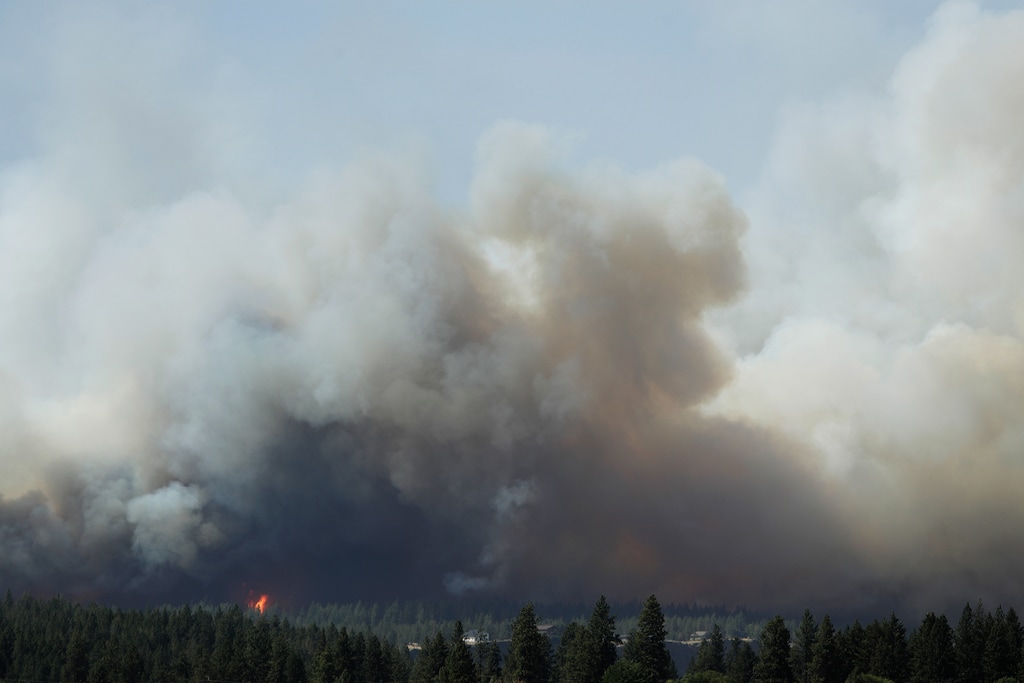
The smoke hovering over the Salt Lake Valley isn’t likely to leave any time this week, according to the National Weather Service, and it’s coming from out of state.
“We basically have fires all around us,” said Hayden Mahan, a meteorologist with the weather service.
The weather patterns for this week show winds coming from the northwest, bringing smoke from wildfires in Washington state down into Utah, Mahan said. “We’re going to keep these northwesterly winds at least through this week,” he said.
No major storm systems are forecast for this week, Mahan added, so smoke should be noticeable around the Salt Lake City area for several days.
The amount of smoke and density of the smoke will likely fluctuate “day to day”, Mahan said, adding that the smoke may thin out a bit Tuesday.
Smoke from fires burning in southern Utah, notably the Widemouth 2 Fire in Millard County, isn’t being seen in the Salt Lake Valley. The winds there are westerly and northwesterly, meaning the smoke from that fire is moving to the east and southeast, he said.
The Widemouth 2 Fire had grown to more than 36,000 acres as of Sunday afternoon, and was threatening some 1,000 structures, fire officials said.
Predicting smoke patterns is tricky, Mahan said. “Our models don’t have a good handle on what the smoke is going to do, because they don’t have a good handle on what the fires are going to do,” he said.
If there’s a silver lining to the smoke over Utah, Mahan said, it’s that it blocks enough of the sun’s rays to keep temperatures lower — and smoke doesn’t trap solar heat in the atmosphere the way cloud cover does, so evening temperatures don’t stay higher.
The National Weather Service is predicting high temperatures of 91 degrees Fahrenheit on Monday and Tuesday. The current forecast says high temperatures will go back over 100 degrees by the weekend, but Mahan said that forecast doesn’t take into account the effect of smoke — because forecasters don’t know how much smoke will still be in the air.