 Jessica Schreifels
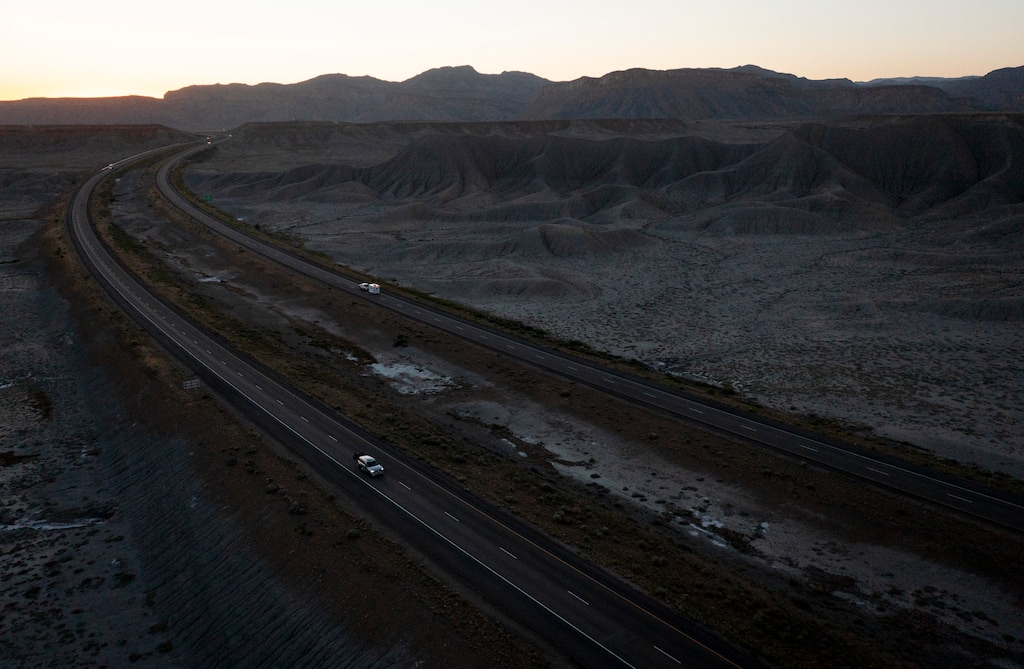
In the dark of night on a desolate stretch of Interstate 70, a Grand County Sheriff’s deputy pulled over a silver SUV in 2023 and uncovered what appeared to be a major drug trafficking bust — more than 50 pounds of methamphetamine and 13 kilograms of cocaine.
Prosecutors filed charges. But the case unraveled.
Interviews and documents reviewed by The Salt Lake Tribune show the case became the most serious dispute in a broader pattern of turmoil within the Grand County Sheriff’s Office, with employees accusing Sheriff Jamison Wiggins of pushing to have the charges dropped at the behest of a local defense attorney — and claiming he retaliated against those who questioned him.
Concerned, three sheriff’s office deputies and a prosecutor wanted someone to investigate. But what they found was a system in Utah hesitant to take action against a sheriff, an elected official whose role became enshrined in the state’s constitution under a little-debated amendment that was on the ballot in 2024.
They brought their concerns to the Utah attorney general’s office. Two of the whistleblowers told The Tribune that A.G. investigators later told them directly that there was probable cause to pursue criminal charges against Wiggins, but the office — which, at the time, was roiled in its own controversy over Sean Reyes’ spending and ties to embattled anti-sex-trafficking crusader Tim Ballard — weren’t going to file a case.
In written responses to questions sent by The Tribune, Wiggins said he felt he was cleared by the A.G. investigation, saying that it concluded “I acted lawfully and there was nothing to investigate.”
(Grand County Sheriff's Office) Sheriff Jamison Wiggins
Neither characterization — that investigators found probable cause or cleared Wiggins — can be corroborated or contradicted because the attorney general’s office declined to comment, and the investigative report is heavily redacted.
One of the deputies then turned to Utah’s police oversight agency, yet it wouldn’t investigate: The agency’s investigator suggested taking the complaint to the Grand County Commission, according to an email reviewed by The Tribune.
The commission has not taken up its own inquiry.
“Who holds sheriffs accountable?” questioned Mike Miller, a former Grand County sheriff commander who helped file the complaint.
The Tribune spoke to seven current and former Grand County sheriff deputies, who described a workplace where they felt criticism of leadership was viewed as disloyalty and where even small symbols of status — such as a directive that only Wiggins and his chief deputy wear cowboy hats in staff photos — became points of resentment among employees.
Wiggins told The Tribune that some of his actions have been misunderstood. The restriction on wearing cowboy hats, for example, he said was a stylistic decision made by a photographer that day, not a reflection of rank or importance. And his intention in becoming involved in the drug bust case, he said, was not to have the case tossed — but to make sure a prosecutor was aware of concerns he said that the defense attorney had raised. He denied retaliating against those who filed complaints in connection to the case.
When asked about morale in his office, Wiggins said that law enforcement work is demanding, and that, like any agency, the Grand County sheriff’s office has “experienced periods of disagreement, personnel challenges, and a transition that can affect morale.”
“We have also recently come through a period where those dynamics were more pronounced,” he wrote. “A Sheriff’s first term is always the hardest; everybody is transitioning into their new roles, which will always come with its own challenges.”
A home-grown sheriff
Wiggins, a sixth-generation Grand County resident, spoke on the campaign trail in 2022 about wanting to work in law enforcement since he was a child, and dreaming of becoming sheriff.
When voters elected him in his mid-30s, he promised to bolster staff numbers and modernize a department responsible for policing a unique Utah county: nearly 4,000 square miles of sparsely populated desert that’s also home to Moab, Arches National Park and some of the state’s busiest outdoor recreation tourist spots.
Wiggins told The Tribune that deputies in his office respond to some of the most remote and rugged terrain in the American West — leading search-and-rescue operations, helping tourists and doing more traditional law enforcement in residential areas in Moab.
“That environment,” he said, “requires deputies who are adaptable, well trained, and capable of making sound decisions in very different settings and circumstances.”
(Doug McMurdo | The Times-Independent) The Grand County Sheriff’s Office in Moab.
Around the time he was elected, Wiggins started recruiting. The Tribune spoke with several former employees who said he made promises — which they say went unfulfilled — to bring more specialized training and better patrol cars. One of those recruits was Miller, who had built a reputation for big drug busts on I-70 during his three-decade career at a neighboring Colorado sheriff’s office.
Miller said Wiggins was looking to start a similar effort in Grand County, going after drug traffickers driving through Utah’s portion of I-70, and Highway 191. “There are a lot of drugs that filter through,” Miller said.
He was offered a commander role, and Miller said the sheriff promised him he would lead a drug team without having to spend hours patrolling himself. In his mid-50s and after a decorated career, Miller didn’t want to be working on the interstate — a physically taxing and, at times, dangerous job.
A drug bust, questioned
Grand County Sheriff Deputy Joshua Stalpes was patrolling I-70 on a clear April evening in 2023 when he noticed a silver Chevy Equinox slow down just after it passed his patrol car, the deputy later wrote in a request for a search warrant. He pulled the car over after he says he observed a traffic violation, and eventually, he searched the car and found boxes full of methamphetamine and cocaine, he alleged in charging documents.
(Bethany Baker | The Salt Lake Tribune) Grand County Sheriff Deputy Joshua Stalpes stopped the couple along this stretch of I-70.
The couple in the car were charged with drug distribution, but the husband’s defense attorney, Happy Morgan, felt there were problems with the traffic stop. She later filed a motion to suppress evidence, alleging Stalpes used data from a license plate reader to learn their route when he wasn’t supposed to, and detained the couple for more than two hours by asking them unrelated questions while dispatchers did a “highly invasive” online search for their criminal history and driver license information.
While Morgan — a longtime Moab defense attorney who also once served as the Grand County Attorney — was fighting to suppress evidence in court, Wiggins now acknowledges she had also raised concerns with him directly.
Stalpes told The Tribune that the sheriff had told him to “get this case dismissed” and that it “wasn’t worth it.” Then, he said, Wiggins started pressuring the prosecutor: The sheriff at one point texted Stalpes, “I’m trying to convince [the prosecutor] to drop your case tomorrow.”
The deputy said he began to doubt himself after the sheriff’s sustained questioning, and spoke to the prosecutor, who he said told him the case could move forward. He said the prosecutor told him that he didn’t believe any laws or policies were violated. (That prosecutor has since left his role in Grand County, and declined to be interviewed for this story.)
“He felt very strongly about the case, which was good, it was what I needed to hear, because I did too,” Stalpes said. “I thought this case was a slam dunk.”
(Grand County Sheriff's Office) Deputy Joshua Stalpes with his police dog, Zora.
Wiggins denied pressuring Stalpes or the prosecutor. He said that he did speak about the case with Morgan, who had called him after the deputy had testified and recommended that the sheriff look into it.
“When defense counsel raised concerns about the case, I could not simply disregard that information,” he said. “My responsibility was to review the concerns, determine whether they had merit, and ensure that any relevant information was provided to the prosecuting attorney, who independently decides how the case should proceed.”
Morgan has had “professional interactions” with Wiggins’ family, the sheriff said, and the defense attorney donated $450 to his 2022 sheriff campaign. But, he emphasized, “those prior professional or political interactions did not affect how I handled this matter.”
In an email to The Tribune, Morgan said she has a “professional and respectful” relationship with Wiggins, as she said she has had with every sheriff who has been in office since she began practicing law in Moab in 1998.
“At the same time,” she wrote, “I have always been willing to challenge law enforcement agencies when I believe officers have violated citizens’ rights or failed to follow the law.”
In her email, she echoed similar evidentiary concerns which she outlined in her motions filed in court — particularly concerning Stalpes’ use of license plate reader data to determine where her client had traveled. She accused the deputy of “data mining” license plate data looking for vehicles of interest traveling near the California border before approaching Grand County, rather than only doing that search after pulling over the couple and finding other evidence.
This license plate reader system, she said, creates “significant privacy concerns” because it allows law enforcement to “reconstruct a person’s movement over time.”
“Used improperly, they can reveal where individuals worship, seek medical treatment, attend support meetings, socialize, or engage in other lawful and private activities,” she said.
Morgan said that after she believed Stalpes gave inconsistent testimony at a preliminary hearing, she brought her concerns “to every supervisory authority available to me and requested corrective action.”
Stalpes said he used data mining and the license plate reader system consistent with the law at that time, which required only that a police officer access the data for general public safety reasons. Now, Utah law more clearly defines the type of “active criminal investigation” that police must be conducting in order to use the system.
With a critical suppression hearing in the case looming, Miller said he started mentoring Stalpes about testifying in court. He said he was in the sheriff’s office one morning in December 2023 and started talking with Wiggins and Chief Deputy Mike Palmer about the case. The two expressed doubt in Stalpes’ testimony, Miller remembered, then the sheriff said, “Happy was going to make him look bad.”
He said Wiggins then added: “But she offered two hours of free legal advice, like one-on-one with Josh on how to testify if we got the case dismissed.” Miller said Palmer remarked that it was maybe something they should consider.
“I’m [thinking], ‘You’ve got to be freaking s—ting me,’” Miller said. “Like, really — this is normal practice? We’re just going to get a case dismissed and get two free hours of legal advice?”
Miller said he pushed back, telling the sheriff that it was their job to mentor Stalpes — not a defense attorney.
Wiggins said there was never “any offer or discussion of legal services in exchange for dismissal of the case.” He said he does not recall this specific conversation, but remembered speaking with the prosecutor about previous conversations he had with Morgan about potentially training deputies on how to give strong testimony, which he said defense attorneys had done under the previous sheriff. But he said that never came to fruition.
Morgan also said she never did any formal or informal training for Wiggins, but said she had discussed training officers in the past in her roles as both a defense attorney and the county’s former top prosecutor.
‘I am not going to share a jail cell with you’
Miller said tensions with Wiggins weren’t limited to disagreements over the drug case.
The sheriff frequently belittled him in front of other deputies, Miller said, calling him names like “old man,” “ding dong” and “butthole.”
“I watched how he got treated and it was horrendous,” said Grand County Sheriff Deputy Craig Nelson of Miller, who is his brother-in-law. “Wiggins just was openly mocking him, calling him names in front of everybody.”
Wiggins said this name-calling was done in “informal, joking exchanges” and that “if someone felt disrespected by a joke I made, I take that seriously and apologize.”
Miller said there was another, larger ethical concern: he said Wiggins had been asking him to go arrest or target certain people — sometimes without an arrest warrant or without following their normal processes. In January 2024, Wiggins sent him a text message asking him to go “get” someone he suspected of selling drugs.
According to text messages reviewed by The Tribune, when Miller asked him why, Wiggins responded, “Personal reasons first and foremost,” adding that he always wanted to arrest the suspected dealer but never had a police dog available.
Miller said this was the fourth time Wiggins had made a similar request, and he confronted him about it.
“I am not going to share a jail cell with you,” Miller said he told the sheriff. “... How’s that going to look if I go to court? If a defense attorney asked how I got on that client, do I lie? Or do I say because the sheriff wanted me to go get him for ‘personal reasons’?”
(Grand County Sheriff's Office) Sheriff Jamison Wiggins administers an oath to Mike Miller in 2023.
Wiggins told The Tribune that when Miller joined the sheriff’s office, he shared background on the local drug trafficking environment and people who had been investigated previously. Any investigatory efforts, he said, aligned with policy and were based on “facts, evidence and lawful law enforcement priorities.”
“Any reference to ‘personal’ motivation was in that broader context that I had personally worked drug interdiction in this community,” he wrote, “and I had lots of personal knowledge of known drug dealers and users.”
Going to the A.G.’s office
In early February 2024, Stalpes said the prosecutor in the drug trafficking case had suggested that they report Wiggins’ alleged interference to the attorney general’s office. So the prosecutor, Stalpes, Miller and another concerned deputy met with A.G. investigators.
Both Stalpes and Miller recalled that an A.G. investigator told them that there was “probable cause” to bring witness tampering charges against Wiggins — but that their office was declining to file the charge.
“One of their main focal points was getting a conviction of a sitting sheriff in the county that he is a sheriff over,” Stalpes said he remembered about the conversation.
The other deputy who reported did not hear this directly, but recalled in an interview with The Tribune that both Stalpes and Miller relayed this conversation to him at the time the A.G.’s office closed its investigation.
The Tribune first sought the A.G. office’s report in 2024 but the records request was initially denied because the investigation was still pending; the news organization obtained the record after renewing its request in April.
The document is heavily redacted, but it indicates that investigators spoke with Wiggins in June 2024 at his home in Moab.
The public portions don’t divulge any further investigative efforts made, or include any findings about the sheriff’s alleged actions. The complaint was closed that same month after an investigator wrote it did not reach the standard necessary for their office to pursue it.
The news organization asked the attorney general’s office about its investigation — including whether it disputed the claim that an investigator said there was “probable cause” — and a spokesperson declined to comment, saying the office does not speak about ongoing or closed investigations. The spokesperson referred the news organization to the office’s prosecution policies, which says prosecutors should file a case if they believe the evidence most likely could convict a defendant.
The prosecutor, the policy says, “must believe that the defendant will more likely than not be found guilty beyond a reasonable doubt by an unbiased trier of fact and that the conviction will be upheld on appeal.”
Another ask for an investigation
In the months that followed, both Miller and Stalpes said their jobs changed in ways that felt to them like retaliation for going to the attorney general’s office. Stalpes was moved to a patrol shift, he said. Miller’s drug task force had already been dismantled in February 2024 after Wiggins accused him of disloyalty, Miller said, and then, that June, he was required to report to a lieutenant — effectively demoting him from the role he was hired for.
And, Miller said, he was assigned to patrol I-70 alone — the exact type of work he had told Wiggins he didn’t want to do if he took the job. He said he tried to stay near the Colorado border, knowing that if he were in a shootout or needed help, law enforcement from Grand Junction were nearby.
“I did not feel comfortable,” he said. “I don’t think Palmer or Wiggins would respond if I needed help.”
Miller said he medically retired from the sheriff’s office in February 2025; Stalpes still works in the sheriff’s office and has since been promoted to task force commander.
Stalpes also tried reporting the sheriff to Utah’s Peace Officer Standards and Training (POST), the regulatory body that licenses and disciplines police officers. In an August 2024 email shared with The Tribune, an investigator told his attorney that they would not investigate the case and suggested they bring their complaint to the county commission.
POST director Travis Rees said he could not comment about the complaint against Wiggins. Speaking generally, he said that his division can investigate a sheriff and has done so in the past.
Rees said they prefer that law enforcement agencies conduct an internal investigation first when officer misconduct allegations arise before contacting POST. He acknowledged that can be more challenging when the complaint is against a sheriff or someone running the agency.
“The same rules apply to any law enforcement officers for their license,” Rees said, but added that, with sheriffs, “the law gives them a lot of leeway.”
“To run a department, a department head has quite a bit of say,” Rees added. “But does it get [past] the line that violates their licensing? And that’s what POST deals with.”
None of Grand County’s commissioners responded to an email asking whether they were aware of the complaint considered by the attorney general’s office or had reviewed it themselves. No public action has been taken, and Wiggins said he’s never been contacted by any commissioners about the allegations.
The commission chair and Grand County Attorney Stephen Stocks were told about the allegations after Jim Winder met with them in late April, Winder confirmed. He’s both a former Salt Lake County sheriff and one-time Moab police chief, and said he’s planning to run for Grand County sheriff.
And these allegations were previously brought to Stocks in November 2024, when he received a letter from an employment attorney hired by Miller and Stalpes. The eight-page letter raised concerns about Wiggins interfering with the drug case, as well as broader concerns about a “toxic work environment,” along with allegations that he had not paid them proper overtime for caring for their police dogs as is required under federal law. “I have great concern,” the lawyer wrote, “about the ongoing conduct of Sheriff Wiggins.”
Nothing happened after the letter was sent, Miller said. Stocks declined to comment about personnel issues.
After the complaint to the Utah attorney general’s office, Davis County Attorney Troy Rawlings took over prosecuting the couple that Stalpes pulled over to avoid any conflict of interest. He filed a motion to dismiss the charges last January, questioning whether a judge would allow evidence in the case to be shown to a jury. Without elaborating, he wrote, “a lack of admissible evidence negates a reasonable probability of conviction.”
The judge did not rule on Morgan’s motion to suppress before the case was dismissed.
Stalpes said there was never any internal investigation, and he was never disciplined, in connection to the case. He asserted that he followed all of his department policies and state law during that traffic stop.
The man that Stalpes stopped that April evening was arrested in Ohio in February after he allegedly shot and killed his wife in front of four of her daughters.
A campaign for re-election
Wiggins is now running for re-election.
He told The Tribune that since he became sheriff, he’s strengthened training, reinforced accountability and ensured that “prosecutors receive all relevant information necessary to make independent decisions.”
“The public should evaluate my leadership based on the professionalism of the Grand County Sheriff’s Office,” he said, “the quality of service we provide to the community, and how we handle difficult and complex situations.”
(The Times-Independent) Sheriff Jamison Wiggins holds a press conference at Canyonlands Regional Airport following a plane crash that killed four people in October 2023.
He’s being challenged by not just Winder, but two other deputies in his office who say they are working to collect signatures to get on the ballot before the June 15 deadline.
One of those deputies is Craig Nelson, who said he decided to run because he sees a department that’s “almost non-functional” — where, he said, some are favored, calls for help languish because no one will respond, and deputies often aren’t given back-up on dangerous calls. Nelson said he’ll leave if Wiggins is re-elected.
“I will not stay around and watch people either lose their careers,” he said, “or possibly lose their lives.”
Wiggins said the department’s goal is to provide backup on high-risk calls whenever resources allow, but acknowledged there are times in a rural county when a deputy arrives without support due to “distance and coverage demands.” He said he doesn’t believe deputies are routinely sent into dangerous situations without support.
One former deputy said tension with Wiggins continued even after she left Grand County. Natasha Bowen told The Tribune that after she voiced her support for Nelson on social media in May, Wiggins emailed her sheriff at the Colorado agency she now works for — which is 300 miles away from Moab — to complain that she was speaking badly about his department.
“It’s been almost a year since I left Grand County,” Bowen said. “I think that he’s continuing to try to alter my life in some way, and I’ve had enough of it.”
Bowen said she left the Utah agency last July, concerned about her career and reputation. She said she felt that she was passed up for promotions or training opportunities. And, she said, she was reprimanded for doing traffic stops on I-70 alone — something her male counterparts did often.
After Wiggins emailed her current sheriff about the social media post, Bowen sent a complaint to the county’s human resources department and the Grand County Commission. She said she hasn’t yet heard from anyone on the commission, and the HR department has only verified they received the complaint.
“It’s concerning,” she said, “for somebody in this position of power to act this way and think that he can get away with it.”
Wiggins confirmed he did reach out to leadership at Bowen’s agency, saying he believed it was warranted because public allegations made about a “neighboring law enforcement agency” can affect public trust and cooperation between agencies. (Four Colorado county sheriff’s offices lie between Grand County and Bowen’s department in Clear Creek County.)
“The concern was not her political activity or her support for any candidate,” he said. “She has every right to express her views and support any candidate she chooses. It was the tone and accuracy of statements being made about the Sheriff’s Office and its employees.”
Wiggins is running as an unaffiliated candidate, and will appear on the November ballot.
After calls for outside review produced little action, the questions raised by his critics remain largely unresolved. Now, accountability returns to the place where sheriffs ultimately answer for their actions: the ballot box.