 Samantha Moilanen
Utah has a new tool that could help solve several decades-old cold cases that investigators have long suspected were linked to infamous serial killer Ted Bundy.
For each of those cases, DNA evidence largely collected in the 1970s has sat idle for decades. Much of it was degraded or mixed with DNA from multiple people, making it difficult to use, said Amy Newman, the director of the Utah Bureau of Forensic Services.
State testing methods could only produce partial DNA profiles from the samples, which then weren’t strong enough to compare with the FBI’s national DNA database, called CODIS, she said.
But that changed in 2023, when the state crime lab began using new genotyping technology that allowed investigators to reconstruct a full DNA profile capable of being entered into the FBI database, Newman said.
From there, DNA collected in Utah was finally compared to a complete DNA profile of Bundy in Florida.
The result: Utah now has a full profile for Bundy, which can be used to compare against evidence from other cases.
The breakthrough comes as investigators announced last week they closed a more than 50-year-old cold case involving the killing of Utah teen Laura Ann Aime, who was found dead in American Fork Canyon in 1974.
The DNA profile for Bundy was pieced together from samples collected from Aime’s body at the time, Newman said.
Now, it could help solve other killings long believed to be tied to Bundy but never definitively proven, said Detective Ben Pender, who leads the Salt Lake County Sheriff’s Office cold case unit.
“Maybe even cases that we’re not aware of that are Bundy cases,” Pender added. “I think it is significant.”
(Trevor Christensen | The Salt Lake Tribune) Michelle Impala, younger sister of Laura Ann Aime, who was found dead in 1974 in what was long considered a cold case, speaks at a news conference after Utah County Sheriff Mike Smith announced that Ted Bundy is now considered the Utah teen's killer, pointing to evidence he called definitive on April 1, 2026.
What cases could it help solve?
Before Bundy was executed in Florida in 1989, he confessed to killing at least 30 young women, including eight in Utah. Some of their bodies have never been found.
There are currently four known cold cases in Utah that Bundy is said to be involved in, according to the Utah Department of Public Safety’s cold case database and a department spokesperson.
It’s not clear when Bundy first began killing, but by 1974, young women were disappearing in Washington state.
Those cases were still unfolding when he moved to Salt Lake City that September, before investigators believe he went on to kill multiple women across Utah, Idaho and Colorado.
At the time that Aime was killed, Bundy was a law student at the University of Utah.
Among the cases still under investigation in the killing of Nancy Wilcox, a 16-year-old cheerleader from Salt Lake County believed to be Bundy’s first Utah victim.
She went missing in 1974, and Pender said her body was never found.
(Francisco Kjolseth | The Salt Lake Tribune) Detective Ben Pender speaks during a news conference on Nov. 7, 2025. Pender is still working to close the 51-year cold case for the death of Utah teen Nancy Wilcox.
Pender, who continues to investigate the case, said Bundy confessed to killing Wilcox, but investigators have never been able to independently confirm it.
Bundy told authorities to search near Capitol Reef National Park, but those efforts came up empty, Pender said.
He believes the confession may have been a ploy to delay Bundy’s execution in Florida — one reason he said a confession alone was never enough to close the case.
Bundy also confessed to killing Susan Curtis, a 15-year-old who disappeared in 1975 while attending a youth conference at Brigham Young University in Provo, according to the state cold case database. Her body also was never found.
Without physical evidence to compare against the new DNA profile, those cases can’t be resolved with the new tool. But it can help in others.
Two more Utah cold cases believed to be tied to Bundy include the killing of Melissa Smith, who disappeared in October 1974 and was later found dead in Summit Park, and the killing of Deborah Smith, whose body was found near Salt Lake City International Airport in 1976, according to DPS spokesperson Stephanie Dinsmore.
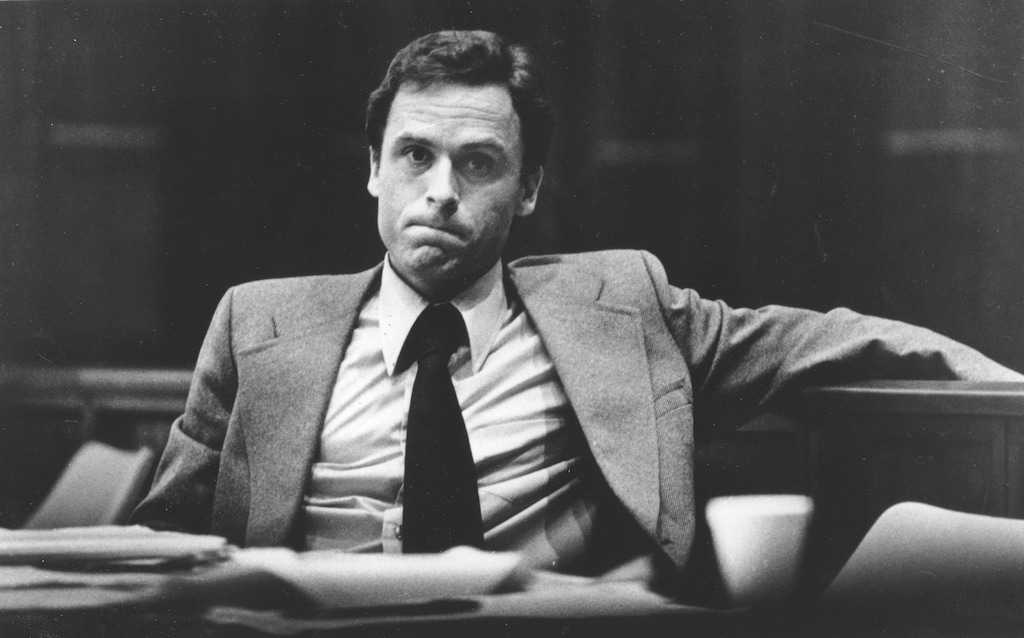
(Glenwood Springs Post Independent file photo via Associated Press) In this 1977 photo, convicted serial killer Ted Bundy, center, is escorted out of court in Pitkin County, Colo. Bundy is believed to have killed at least eight women and girls in Utah.
Though the Bundy profile is a milestone, Newman said the new technology could also help solve other cases not connected to the serial killer.
There are 444 unsolved cases in the state, Dinsmore said, including 258 homicides, 146 missing persons and 40 unidentified human remains, with more that may not be logged in the database.
And while DNA can often help solve and prosecute crimes, it can also help clear those who were wrongly accused.
“One of the cool things about DNA is it exonerates people as much as it might convict somebody,” Newman said. “DNA doesn’t have a side.”
Correction • April 10, 3:55 p.m.: The story has been updated to correct Ben Pender’s title.