 Megan Banta
After weeks of balmy spring blooms, it’s time for Utahns – and some of their plants – to bundle up again.
Utah has faced an abnormally warm and dry winter, but portions of the state are now under a freeze warning for Thursday and Friday nights.
Along the Wasatch Front, Tooele Valley, San Rafael Swell and Western Canyonlands, temperatures will drop as low as the mid 20s both nights. Rush Valley will see temperatures in the mid-teens.
Cities from Snowville to Provo to Moab are included in the warning, and other portions of the state should be prepared for wintry weather and wind.
The big swings in temperature aren’t unusual this time of year, said Katie Wagner, an associate professor of horticulture with USU Extension in Salt Lake County.
“Getting a storm like this, this time of year, is not terribly atypical for us,” Wagner said – and it can be a good thing for gardeners.
Plants are starting to wake up, she said, and the winter storm will push moisture deeper into the soil, which they can draw upon in the summer.
It also makes gardeners hit pause, she said, and wait until the right time to plant.
People get excited in the springtime, Wagner said, and sometimes get too early a jumpstart on planting.
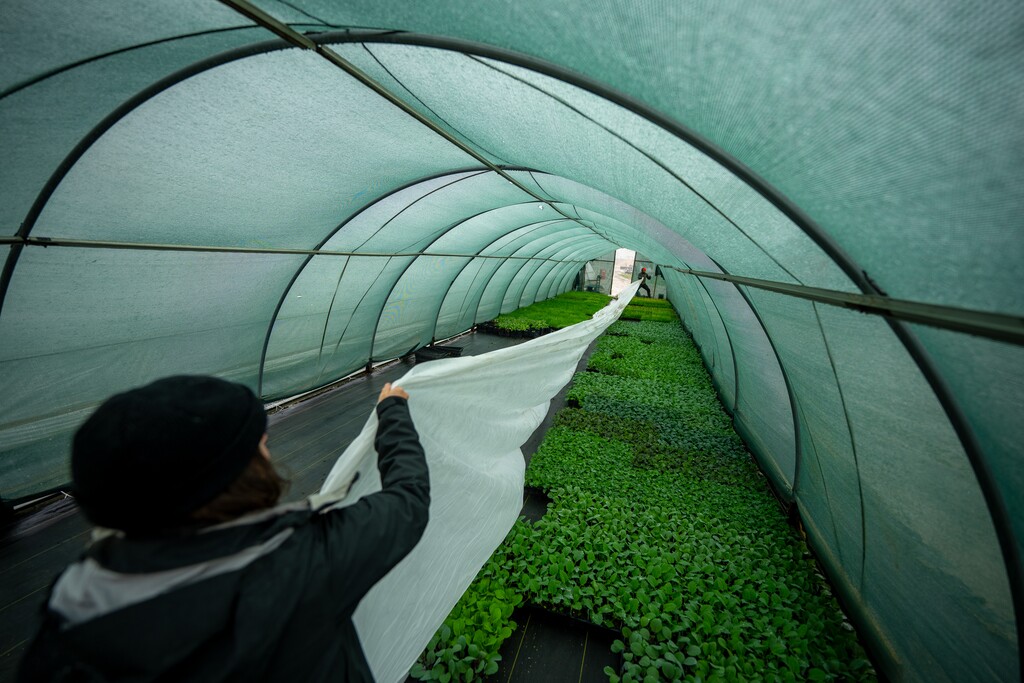
Utahns generally should wait until after the usual last day of frost to plant -- which in most parts of the state is late April or early May. But for those who have already done so, Wagner and Kim Walsh-Clark, who co-owns Lambert Growers, recommend people use a frost cloth to protect plants that don’t tolerate the colder temperatures.
Covering plants can raise the ambient air temperature by three to five degrees, Wagner said. The cover should be cloth, she said, and be affixed to the ground with anchor points or heavy items to weigh down corners.
Not everything needs the protection, she said, but tender plants like peppers, tomatoes, cucumbers and beans do. Those coverings should go on during the day while it’s warm, Wagner said, and come off when it heats up again.
(Trent Nelson | The Salt Lake Tribune) Snow falls in West Valley City on Thursday, April 2, 2026.
Even people who followed the recommended planting schedule like Walsh-Clark did at Lambert Growers might need to cover some things.
“We’re still focusing on cold-weather things right now,” she said, and they’re growing fast, but even so, the nursery to cover a few of their greenhouses.
Some plants will be fine, Wagner said, or even thrive. Anything that’s already bloomed is “loving this,” she said.
For those gardeners who do lose some vegetation, she said, the good news is that the plants are “highly replaceable” and gardeners can start over again.