 Paighten Harkins
Two years ago, Colin Conner walked out of the Salt Lake County jail. A judge had ordered the 32-year-old, who struggled with substance misuse, to be released to a treatment facility, and a bed was available for him at a local center.
Instead, Conner was released at 5 a.m. on a Saturday, alone, into no one’s care but his own. Six days later, he was found alone, again — dead of an apparent overdose at a construction site in Salt Lake City’s now-bustling Central Ninth District.
Cases like Conner’s are at the center of action taken last week by the Salt Lake County Council, which unanimously approved a five-year, $29.7 million plan to increase jail medical treatments and address gaps in care at release. The funds, which will be appropriated annually, are also expected to support staff, grant programs and community resources to stave off substance misuse before it begins and aid community members in recovery.
The sweeping proposal outlines how the county will spend a portion of the $91 million it stands to gain as part of settlements in nationwide litigation against opioid manufacturers and distributors. Funds from these settlements began flowing into Utah in 2021 and will continue through 2037, amounting to $542.9 million. The plan will invest in “all the different pieces” — prevention, treatment and recovery — to treat this issue, said Kelly Colopy, the county’s Human Services Director, at the March 24 council meeting.
More than $8.3 million will be spent on community and school resources designed to stop addiction in its earliest stages. That includes funding for screening and intervention services for at-risk youth and expanding existing programs aimed at building resilience and family skills.
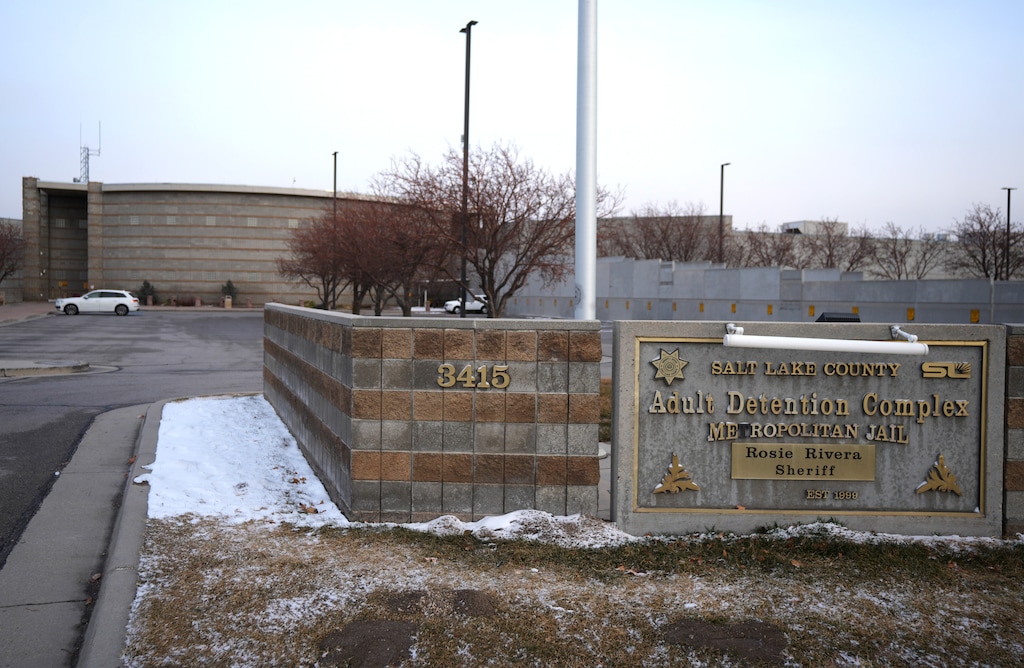
In the county jail, more than $2 million in new funding will supply 500 spots for medication-assisted treatment, known as MAT, for incarcerated people with substance-use issues, up from its current capacity of 100. An additional $7.3 million will be used to hire a dozen staffers to manage inmates’ reentry into society and help ensure “warm handoffs” to service providers, so high-risk people like Conner will get the housing, transportation and treatment help they need.
(Conner family) Colin Conner, photographed in 2015.
“There are a lot of Colins out there,” county councilmember Jiro Johnson told The Salt Lake Tribune. He has seen many of them in his work as a public defender, and he said it’s “unfortunate” the county did not always have the resources to help those people.
Conner’s father, Jon Tyler Conner, declined to comment on the new funding. He sued the county last year and asked for an injunction to stop the jail from “continuing its practice whereby it ignores court orders to release inmates to residential treatment,” the lawsuit states. Salt Lake County representatives also declined to comment, given that the litigation is pending. They have responded to the lawsuit in court, but those documents were filed under seal.
The county’s strategy to address addiction
The state has seen a steady increase in overdose deaths since 2000, reaching 606 in 2023, the highest on record. The number of deaths per capita is also near the highest recorded over the past decade in the state, according to a Utah Office of the Medical Examiner report.
This proposal to reduce opioid deaths had been more than a year in the making, and included feedback from the Salt Lake County Sheriff’s Office and District Attorney’s Office.
In the last quarter of 2024, the jail screened more than 1,300 for opioid withdrawal. Of those experiencing symptoms, just 193 were enrolled in MAT. The jail has said that it didn’t have the money to pay for medications and expand infrastructure to treat more patients.
That discrepancy is significant, because the jail’s data also indicate that patients who receive medication-assisted treatment have an 18% recidivism rate, compared to about a 70% recidivism rate in the normal jail population.
Staff from Salt Lake County Criminal Justice Services, Salt Lake Legal Defenders and Valley Behavioral Health will continue running the jail’s Resource and Reentry Program from their desks near the jail exit, to help those leaving with issues like charging cell phones and getting referrals to other community services, Colopy said.
Colopy said funds will be distributed in mid-April. “From there, our team is ready to start hiring.”
She anticipates that many of the proposal’s programs and services will be in operation in about three months. They are funded for five years, after which time the council will decide where to allocate the remaining opioid settlement funds.
Colopy said after that time, the county aims to build out these programs and fund them through their annual budget, and will also seek alternative sources, such as state or federal grants, so they don’t end when the opioid funds run out. She added that the remaining settlement funds could be used to extend some programs as needed.