 Tony Semerad
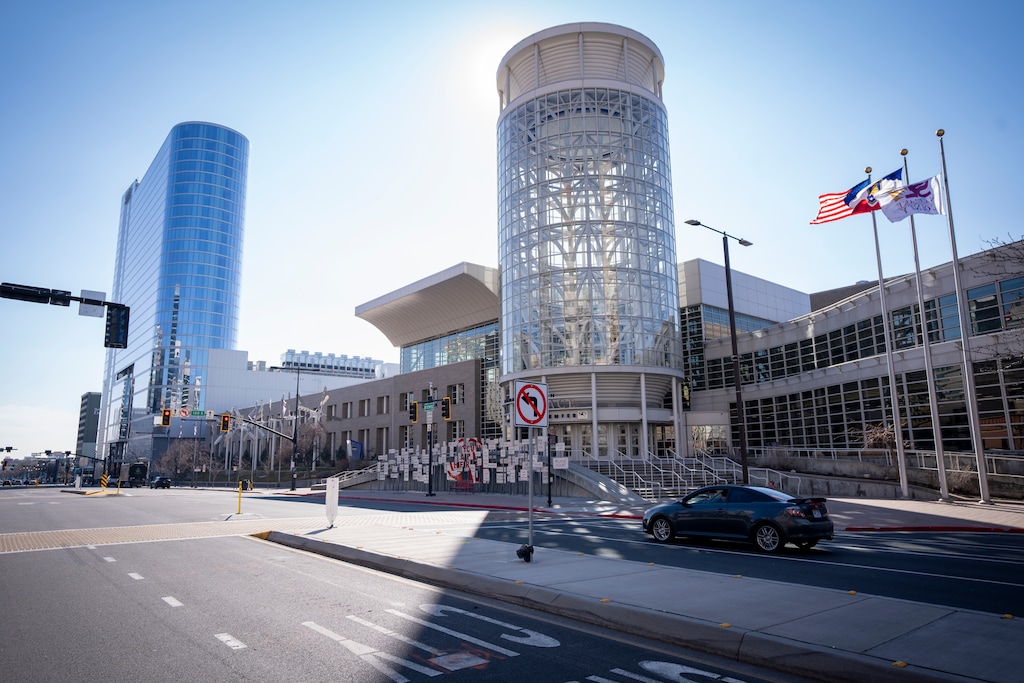
Salt Lake County Mayor Jenny Wilson is praising a new “financial safety net” for reconstructing the Calvin L. Rampton Salt Palace Convention Center created by Utah lawmakers in the final hours of the legislative session that ended Friday.
The budget moves — tucked into a sprawling bill, HB492, that dealt with roads, housing and infrastructure spending — effectively divert $50 million from the state’s transportation investments to a special account that will help pay for refurbishing the downtown convention center “and surrounding revitalization projects.”
The bill, which spurred intense wrangling among House and Senate negotiators in the session’s last hours, also freed up another $5 million in tax revenues once devoted to highway projects that will now go toward the convention center rebuild, with that cash to start flowing sometime after mid-2030 and before 2060.
In a social media post Saturday afternoon, after legislators wrapped their 2026 session, Wilson thanked GOP leaders and sponsoring lawmakers Sen. Kirk Cullimore and Rep. Calvin Roberts, both R-Draper, for their support of the Salt Palace-related measures in HB492. Wilson also thanked officials in Salt Lake City and with Smith Entertainment Group, owners of the Utah Jazz and Utah Mammoth.
“We are excited to move forward with the revitalization of the Salt Palace,” Wilson wrote, “and the surrounding area!”
The bill otherwise dealt with a state spending program meant to help cities pay for certain kinds of utility and infrastructure improvements intended to foster more affordable housing construction.
A spokesperson for Salt Lake City did not offer any immediate comment Monday on the bill, saying officials were still reviewing the late-breaking measure.
The Salt Palace overhaul has been envisioned alongside a massive remake of the Delta Center and creation of a multibillion dollar downtown sports, entertainment, culture and convention district being pursued over multiple blocks by Utah Jazz owner Ryan Smith and executives with SEG.
On the floor of the Senate Friday night, Cullimore said the Salt Palace money had been added to the bill to address a shortfall in the county’s budget for the renovations.
“We’re looking to obviously revitalize our downtown with the Salt Palace and an entertainment district there,” Cullimore said. However, he said, new financing numbers indicated “there’s a little bit of gap that we’re trying to solve.”
Rep. Roberts said later that night on the House floor, as negotiators worked toward a final compromise, that the bill had been tweaked to, in effect, move money once allocated for work on 300 West as part of the downtown district to fund the Salt Palace remake instead.
After advancing on voice votes for most of the evening, the final compromise version of HB492 passed the House on a vote of 66 to 5, with a handful of Republicans voting against it and four lawmakers absent.
In creating that special reserve account for the convention center at about 100 South and West Temple in downtown Lake City, the language of HB492 also contemplates letting county officials uses cash in the fund for securing up to $1.6 billion in county borrowing toward the project.
The county has tentatively set early 2027 for when major overhauls of the Salt Palace, Abravanel Hall and the Utah Museum of Contemporary Art will begin.
Last year, just months after Salt Lake City approved a sales-tax package worth $900 million to help fund the new convention district, lawmakers OK’d an additional proposal to funnel $900 million more in future tax revenues toward the upgrade. Some of that money, approved in 2025 as part of SB26, was also made available for upgrades to Salt Lake County-owned Abravanel Hall.
That cash came from future property taxes from new development, half of the state’s portion of new sales tax revenue within the emerging convention district — and a piece of the city and county’s own share of sales taxes from the new zone.
The Salt Palace originally opened in 1969, and its Acord Arena was home to the Utah Jazz from 1979 to 1991, when the Delta Center opened. Its last major remodel was completed in 1996.