facebook-pixel

Sundance Institute’s workers form a union — and use Robert Redford’s words to make their case

Employees say they are not being heard when management makes major decisions — such as the Sundance Film Festival’s move to Colorado in 2027.
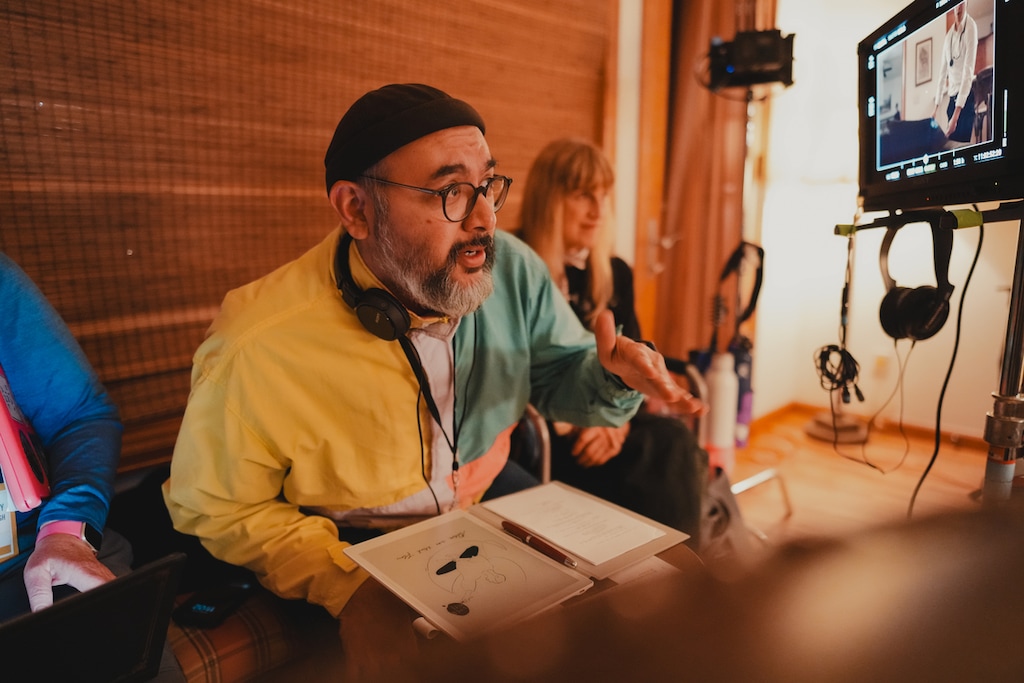
(Gabe Rovick | Sundance Institute) Filmmaker Diffan Sina Norman, center, directs a scene from his script, "Sitora," at the 2025 Sundance Institute Directors Lab, at the Stanley Hotel in Estes Park, Colorado. Institute staffers have formed a union, and are seeking the institute's recognition.

Employees at the Sundance Institute have filed notice that they are forming a union — and using the words of the institute’s late founder, actor-director-activist Robert Redford, to make their case.

The Sundance Institute Workers Union, represented by the Communication Workers of America Local 9003, delivered a petition Monday to the institute’s leadership, the CWA announced in a news release. The employees have asked Sundance to recognize the union voluntarily by Friday. (Update: On Friday, the union announced on Instagram that Sundance Institute’s leadership has committed to voluntarily recognizing the union.)

“We have decided that if we’re going to preserve the legacy that Sundance has built, we need to have a say in what happens moving forward, as the people who it affects the most,” Sara Kenrick, a coordinator for event operations at Sundance and one of the organizers of the unionization effort, told The Salt Lake Tribune on Monday.

One area where employees had no input in Sundance’s future, Kenrick said, was the decision, announced in March, to move the Sundance Film Festival to Boulder, Colorado, starting in 2027.

“We had no open conversations with leadership about how staff would like to see the festival move forward,” said Kenrick, a lifelong Utahn who works in Sundance’s Park City office. “We had no vote on where [the festival] was going to move after Park City. We had the opportunity to strongly voice our opinions, and we were ignored.”

(Eddie Clark | Sundance Institute) Eugene Hernandez, director of the Sundance Film Festival, talks to a Colorado reporter outside the Boulder Theatre in Boulder, Colorado, on Thursday, March 27, 2025, at a celebration to mark the impending move of the Sundance Film Festival to Boulder starting in 2027.

Kenrick added that “it’s extremely frustrating to have people in our leadership who don’t live here, neither Utah nor Boulder, tell us what would be best for us and the festival that we run.”

Staffers also argue, Kenrick said, that the institute is “severely understaffed,” adding that “we’re left extremely spread thin. We are often scrambling on multiple projects at once, and when we bring up these concerns to our leadership, they are disregarded.”

The Sundance Institute offers labs to independent filmmakers, where new writers and directors can workshop their scripts with professional actors — overseen by advisers who are industry veterans. The festival showcases completed films, and is the institute’s most public-facing event.

In a statement issued Monday, the institute’s board and leadership said it acknowledged “the decision from a group of staffers to organize as a union.”

“We strongly support unions and their contributions to American society,” the institute management’s statement continued. “We respect staff’s ability to organize collectively, value their dedication to the Institute’s vision, and we are committed to working collaboratively with them. Sundance Institute looks forward to engaging with staff in this process to support the needs of our employees and look forward to working together to continue to carry our mission forward.”

According to its 990s, the forms that nonprofit groups must file with the Internal Revenue Service, Sundance Institute took in just over $42 million in revenue in the fiscal year ending August 2024, and had net assets of more than $66 million. Two weeks ago, the institute signed a partnership deal with Rolex, the luxury watch manufacturer, which will become Sundance’s “official partner and exclusive timepiece;” the value of that deal was not announced.

The employees, in their union’s mission statement, quote Redford, who died in September at age 89. The mission statement says that one of Redford’s core principles when he founded the Sundance Institute in 1981 was to “protect our people.”

(Rick Egan | The Salt Lake Tribune) Robert Redford says a few words at the opening news conference for the 2019 Sundance Film Festival at the Egyptian Theatre in Park City, Thursday, Jan. 24, 2019.

“The staff of the Institute has been and always will be its greatest asset,” Redford wrote, according to the union’s mission statement. “It is important that we provide the team with the support to execute and thrive in their positions. If things get out of balance and team members are spread thin, we are not serving any purpose properly. The Institute nurtures and supports artists — the same should be true with our team members.”

About 100 institute employees would be eligible to join the union, Kenrick said, and about 70 signed on to the unionization effort. About a third of those eligible employees live and work in Utah, she said; the rest live largely in and around Los Angeles and New York, with a few scattered across the country.

“Since we’re so separate, working remotely, working in different states all across the country, we’re pretty siloed,” Kenrick said. “I think that’s made it so that any individual can be told one thing, and someone else can be told another, and we won’t cross-check. So we are now cross-checking.”

Kenrick said Utah institute employees are concerned that the festival leaving for Colorado could mean more of the institute could relocate as well — even with Sundance leadership issuing reassurances, as festival director Eugene Hernandez did last week, that the institute “is still anchored in Utah.”

“I know many Utah staff have been concerned since the [Boulder] announcement that Sundance is no longer concerned with their history or their place in Utah,” Kenrick said. “Staff have moved to Utah specifically for their jobs with Sundance, and have built homes, families, communities here — and then have no say in whether this festival would move out of state. … We don’t want to feel invisible or blindsided any more.”

When the institute announced the festival’s new location in March, acting CEO Amanda Kelson said the three finalists — Boulder, Cincinnati and a combined Salt Lake City/Park City bid — “were all so close.” Boulder won out, she said, “because we felt like it was a place where we could continue to grow and expand the festival.”

Sundance Institute has experienced major leadership shifts in the last five years. Keri Putnam, who served as CEO for a decade, stepped down in August 2021. Her successor, Joana Vicente, held the job for less than three years, abruptly quitting in March 2024. Kelso, a former top executive at Instagram, was named acting CEO — a post she still holds.

With those changes in leadership, Kenrick said, “we’ve noticed that the way the festival looks, the way the institute feels, and the way that staff are supported can change drastically based off of who is in charge. We wanted a union to protect not only what we love about the Sundance Institute, but what we want to change.”