 Jason Batacao
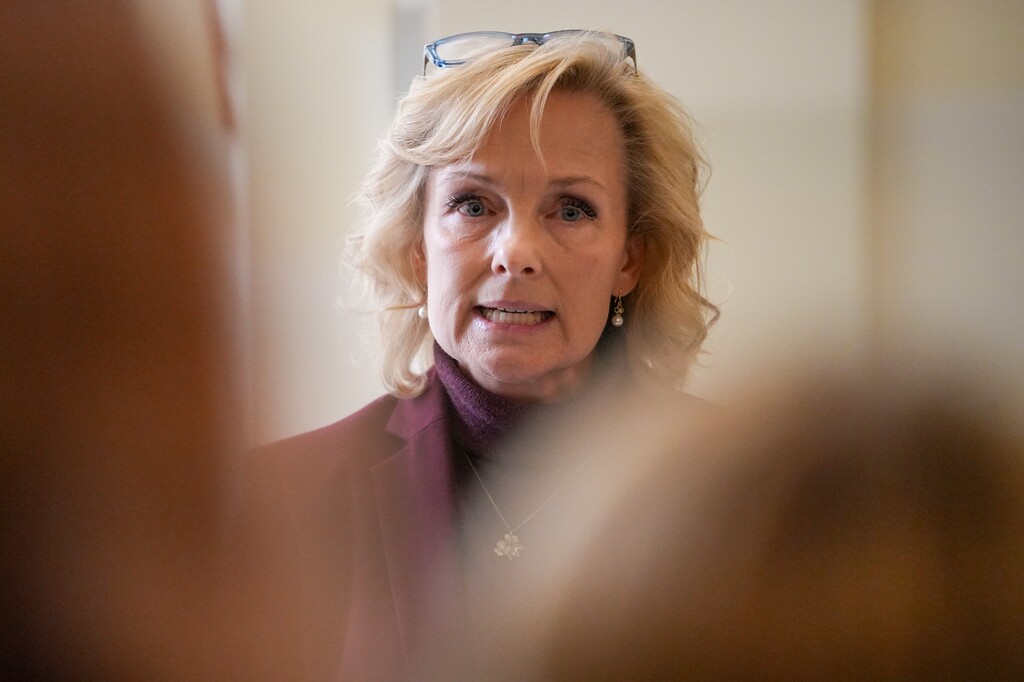
After sending a letter expressing her concerns about Utah’s private-equity deal with Otro Capital on May 19, state auditor Tina Cannon on Thursday addressed the assertions made in the document and the need for continuing oversight.
In the letter to the University of Utah board of trustees, which was obtained by The Salt Lake Tribune, Cannon predicted that the millions provided to the U. via its capital deal will be “inevitably depleted,” leaving Utah’s long-term financial issues “unresolved.”
“We’re very familiar with the university, and the staff is also familiar with the NCAA,” Cannon said at a news conference on Thursday, organized to discuss publicly available information regarding the Military Installation Development Authority, or MIDA.
“We’ve interviewed the board of trustees, we’ve interviewed staff, and we felt like it was appropriate to point out areas — based on on the goals of the board of trustees — and to put that in writing to remind them as this deal is finalized, these are the areas of concern and the areas that we will review in the final signing of the documents."
The University of Utah board of trustees officially approved the athletic department’s private-capital deal in December, which is expected to infuse hundreds of millions in immediate cash for the Utes to use.
Utah will move revenue assets — such as ticketing, media rights, corporate sponsorships and more — from the university to the newly created LLC called Crimson Brand Partners once the deal is officially finalized.
(Trent Nelson | The Salt Lake Tribune) University of Utah President Taylor Randall speaks at a celebration of the installation of Robert Indiana’s LOVE sculpture at the Utah Museum of Fine Arts in Salt Lake City on Saturday, Feb. 7, 2026.
Cannon found multiple issues in her review of several drafts of the deal, which she confirmed at her news conference.
“We have seen several iterations of what that looks like, and we have expressed those concerns over again,” Cannon said. “We’re getting into some complex accounting issues, but an influx of cash is not necessarily an increase in revenue. We understand the difference. We were pointing some of that out [in the letter] that an influx of cash doesn’t solve an overarching concern.
She continued: “We do think that anytime a public university is having an asset appraised that it is subject to public oversight, and to keep that [happening] in a transparent way is the primary goal here. You’re dealing with a public asset and a reputation of a public entity, and the deal will impact both of those.”
Asked if she believes state officials or lawmakers should have more oversight over deals like the University of Utah’s moving forward, Cannon put it plainly.
“Yes, it’s a public asset,” she said. “That is why the board of trustees is put into place. The board of trustees at the university, ultimately, has the responsibility of approving that deal. ... And that’s who we would hold responsible for the terms of that deal.”