There was always an air of anticipation when apostle Jeffrey R. Holland stood to offer millions of eager Latter-day Saints the good word of God.
The genial general authority in The Church of Jesus Christ of Latter-day Saints had a gift for language, a potent presence, and a reputation for tackling tough, and occasionally controversial, topics with tenderness. Even when Holland chastised his listeners, they mostly came away feeling uplifted.
That’s because Holland, who died early Saturday, was, at his core, a teacher. He was 85.
He died from “complications associated with kidney disease,” the church announced in a news release, “while surrounded by his family.” He had been hospitalized on Christmas Eve.
Holland’s wife, Patricia, died July 20, 2023 at age 81, after a brief hospitalization. He is survived by their three children, 13 grandchildren and several great-grandchildren.
Plans for funeral services have not been announced.
From his days as a popular St. George high schooler — athletic, witty, gregarious, friendly — through his time as president of the faith’s flagship university, to his apostleship, Holland saw his classroom continue to enlarge across the globe. His students were the millions of Latter-day Saints, and his lectern was the church’s pulpit.
“Jeffrey Holland is, by nature, a teacher,” Marion D. Hanks, Holland’s mission president and fellow general authority, once remarked. “He is a gentleman, a scholar and a diplomat — but in all those things he is a teacher.”
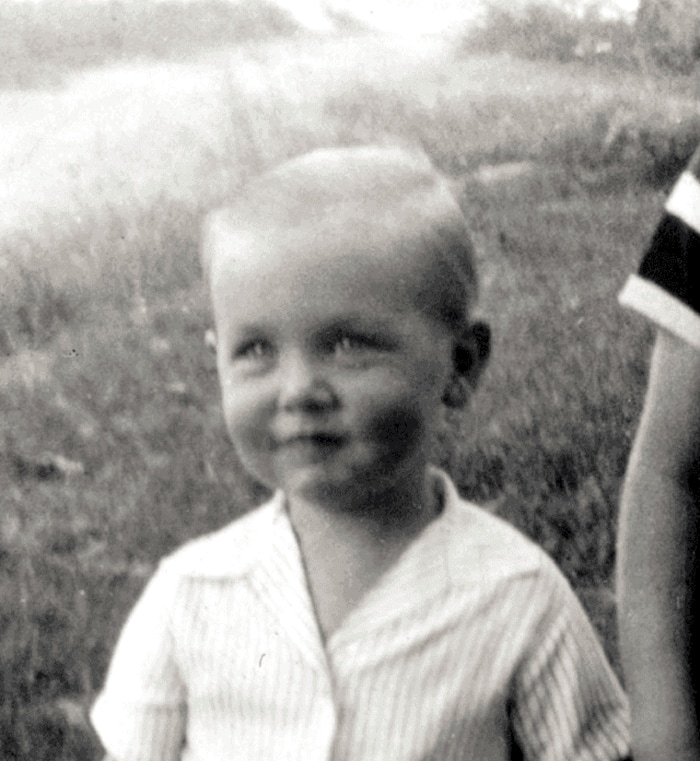
(The Church of Jesus Christ of Latter-day Saints) Jeffrey R. Holland as a young child in 1943.

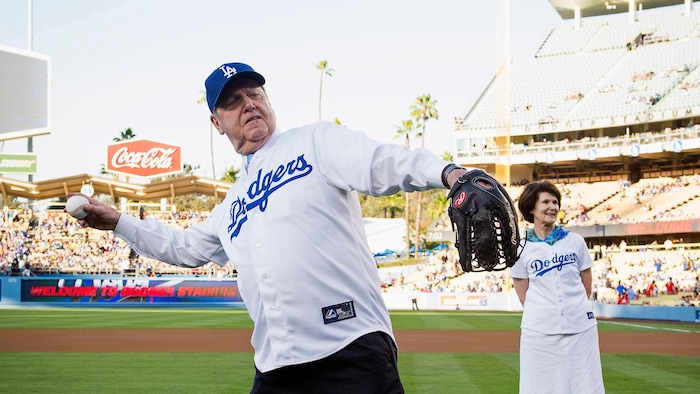
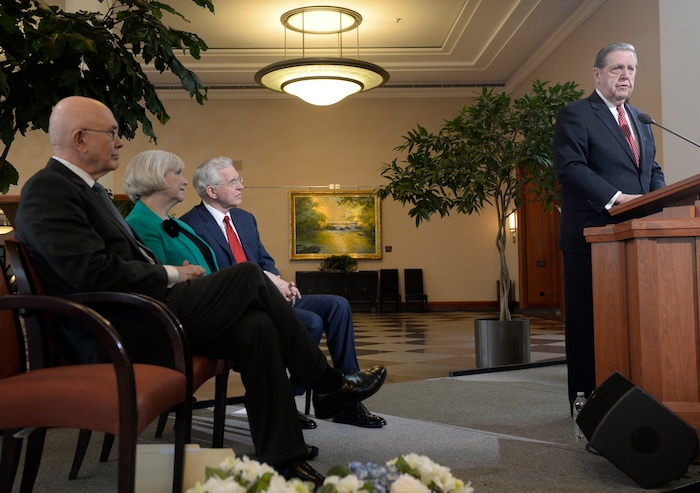
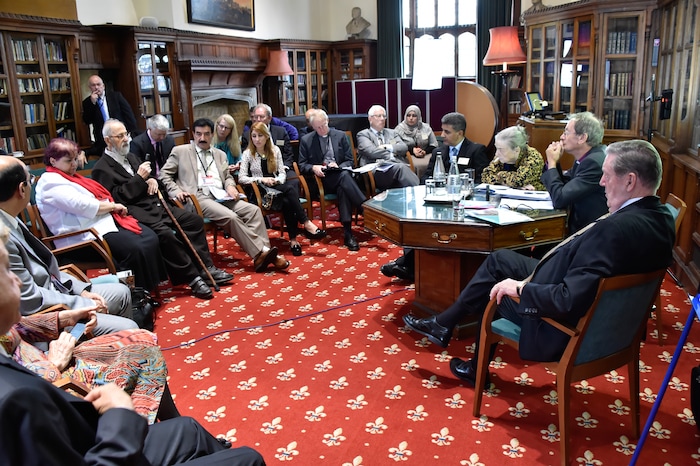
That continued to be true for several generations, said Spencer Fluhman, former executive director of Brigham Young University’s Neal A. Maxwell Institute for Religious Scholarship.
“Elder Holland stood as perhaps the tradition’s most influential teacher and most impactful preacher,” Fluhman said. “I know I’m not alone when I say that he was the most significant mentor in my career.”
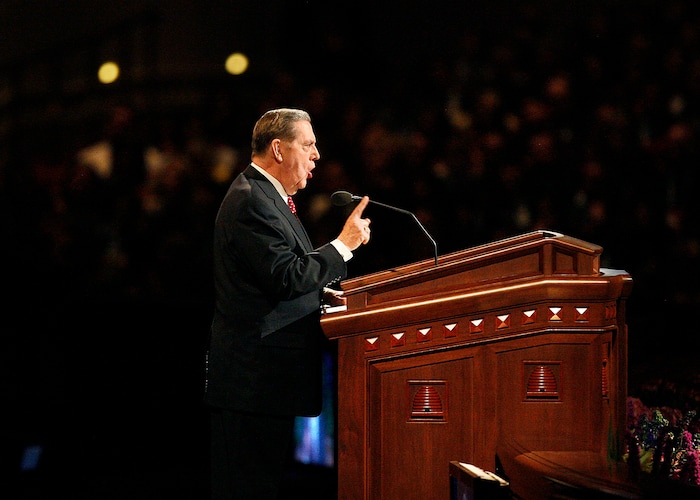
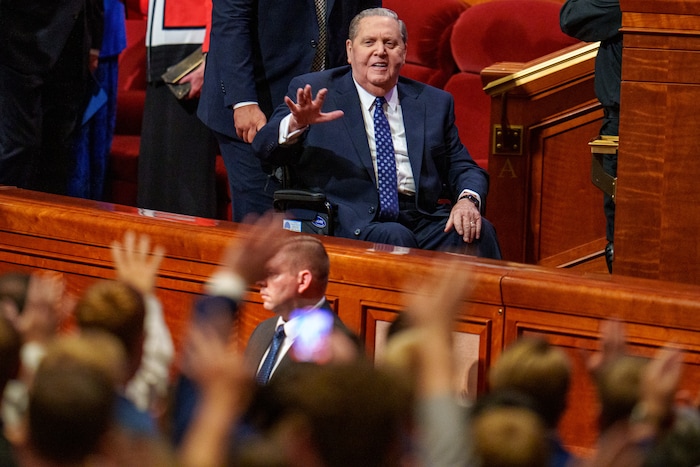
(Chris Samuels | The Salt Lake Tribune) Apostle Jeffrey R. Holland speaks at General Conference in October 2025.
Fluhman said he had seen the apostle “on occasion roar like a lion in defense of some good thing but, more often, it was that twinkle in his eye, that warm embrace, and that remarkable rhetorical arsenal that inspired me and everyone else around him.”
And, friends and observers say, the ardent apostle — who rose to president of the Quorum of the Twelve Apostles and was next in line to lead the worldwide church — maintained his small-town values, warmth and connection to the end.
Declining energy
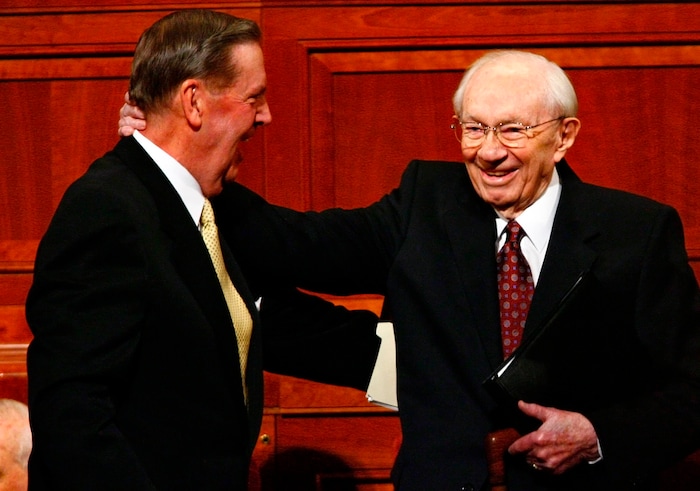
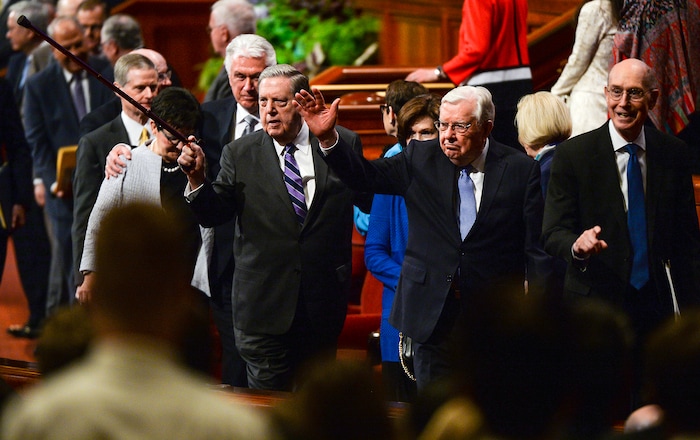
(Trent Nelson | The Salt Lake Tribune) Apostle Dieter F. Uchtdorf leans in to kiss apostle Jeffrey R. Holland at General Conference in April 2024.
When Holland approached and entered his 80s, he began to experience health challenges.
In June 2020, during the coronavirus pandemic, he was hospitalized to undergo diagnostic tests for an undisclosed illness not related to COVID-19.
[The famous and not-so-famous react to news of Holland’s death.]
He bounced back, thanks to a “miraculous” recovery.
“All at once ... I had a number of health issues, but I’m doing fine,” Holland told Church News Editor Sarah Jane Weaver in a December 2020 podcast reported at LDS Living. “And (for) some of these, the recovery has been really miraculous. I don’t use that word lightly. I don’t use it lightly at all. But that’s the only word I could use for the recovery I’ve had from some of these issues.” In spring 2021, during a video appearance for a family history conference, the church leader used a walker after a previous illness had left him with numbness in his legs.
At 82, Holland missed speaking and appearing at 2023’s April General Conference after he and his wife tested positive for COVID-19. Days after the global gathering, he was “excused” from all church duties for “at least” two months. The faith also announced that he had begun undergoing kidney dialysis.
He “slowly” returned to work in June, but Pat, his wife of 60 years, died a month later, which was a devastating blow.
Throughout his ordeals, he responded with his innate good nature and a deep well of gratitude.
“I’m staggering toward the finish line,” Holland said in a June 2023 video. “I refuse to get off the track. I’m still in the race. And I’m grateful to the Saints for that, for those prayers.”
But his wife’s death, he said, left him devastated and he was hospitalized within a week.
“I am heartbroken,” he wrote in prepared remarks delivered by son Matthew at her funeral. “She was everything a companion could be in this world, and I thank God that we will have each other in the next… Because of [Christ’s] atoning victory with its attending sealing power, there is no end to the love that Pat and I have shared, a love that has made our home feel like heaven and will someday make heaven feel like home.”
(The Church of Jesus Christ of Latter-day Saints) Apostle Jeffrey R. Holland with his eldest son, general authority Seventy Matthew Holland, in front of the St. George Temple before the first session of the rededication in December 2023.
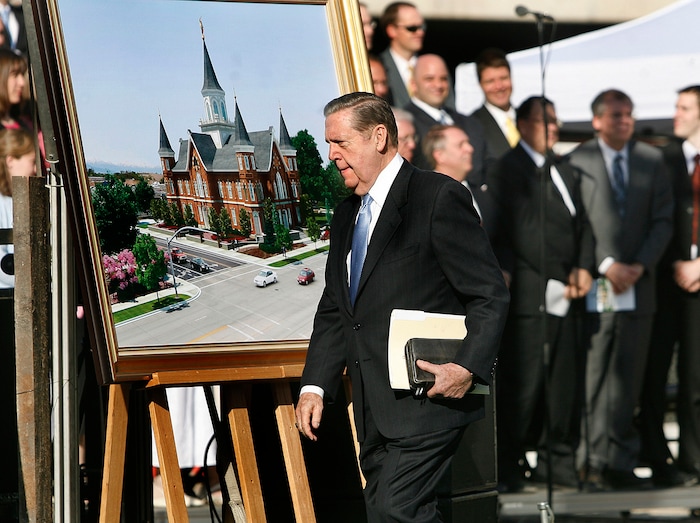
He did enjoy what he called an unexpected “crowning moment” in December 2023, when he returned to his hometown and rededicated the renovated St. George Temple.
“This is surely a special experience,” Holland said at the time. “[This opportunity is] unanticipated, not expected, but dearly, deeply appreciated. … This is special to me because it’s the temple I grew up with as a child. And it’s where I was baptized, it’s where I was endowed, it’s where my wife and I were sealed.”
He bled BYU blue
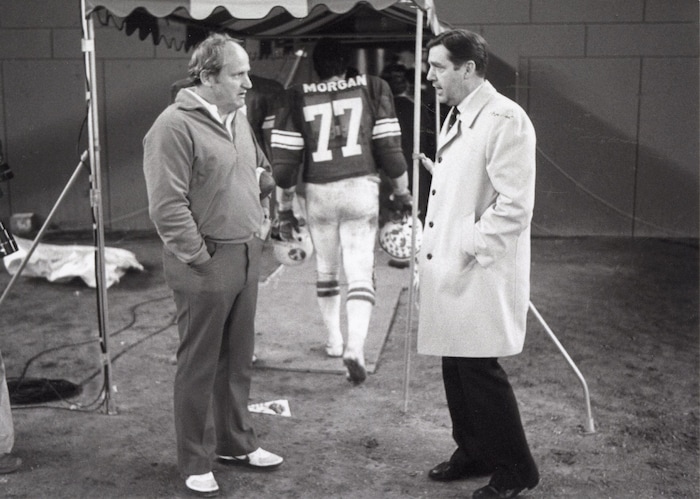
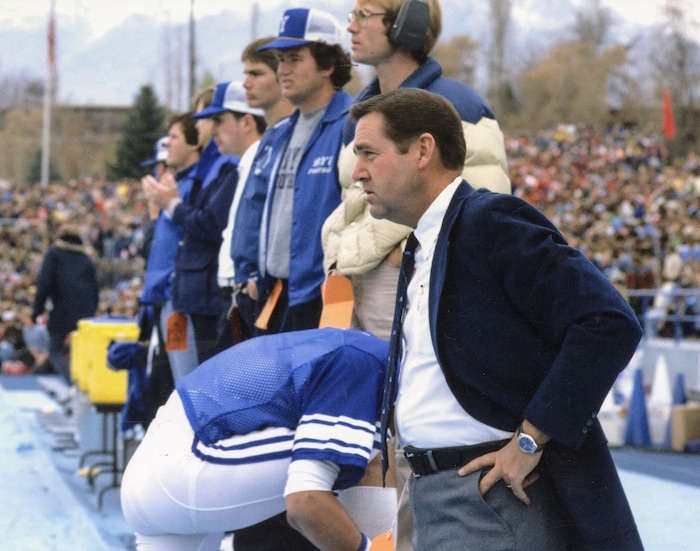
(The Church of Jesus Christ of Latter-day Saints) Jeffrey R. Holland, right, then president of Brigham Young University, speaks with BYU football coach LaVell Edwards in an undated photograph.
Holland was the ninth president of Provo’s BYU, where he helped establish the school’s Jerusalem Center and became an expert on the Middle East. He supervised the faith’s missionary efforts in Africa, venturing multiple times to countries of that vast continent and developing a real bond with their peoples. He spent two years in Chile, learning Spanish, and navigating the complicated, even messy, question of member retention.
He spoke eloquently to young intellectuals, dealing with some of the faith’s more controversial aspects, to believers suffering from mental illness, mentioning his own bout of depression, to the devout yearning for in-depth theological explorations, and to women longing for connection to a feminine deity.
“To all of our mothers everywhere, past, present, or future, I say, ‘Thank you. Thank you for giving birth, for shaping souls, for forming character, and for demonstrating the pure love of Christ,’” he said in fall 2015. “To Mother Eve, to Sarah, Rebekah, and Rachel, to Mary of Nazareth, and to a Mother in Heaven, I say, ‘Thank you for your crucial role in fulfilling the purposes of eternity.’”
Holland encouraged his listeners not to yield to discouragement.
“Don’t give up when the pressure mounts. You can find an apartment. You can win over your mother-in-law. You can sell your harmonica and therein fund one more meal. It’s been done before,” he counseled in 1999. “Don’t give in. … Master your fears. ‘Cast not away therefore your confidence.’ Stay the course and see the beauty of life unfold for you.”
During the coronavirus pandemic of 2020-21, Holland prodded humanity to confront and conquer other plagues on the planet.
“May we be equally committed to freeing the world from the virus of hunger and freeing neighborhoods and nations from the virus of poverty,” he said in April 2020. “May we hope for schools where students are taught — not terrified they will be shot — and for the gift of personal dignity for every child of God, unmarred by any form of racial, ethnic or religious prejudice.”
He wrote more than a dozen books about Christ’s suffering on the cross and Atonement, the sacrament, and finding solace and resolve during times of trouble.
“Christianity is comforting, but it is often not comfortable,” Holland preached in October 2020. “The path to holiness and happiness here and hereafter is a long and sometimes rocky one. It takes time and tenacity to walk it.”
Through it all, the ebullient educator found lessons in often ordinary experiences. But it was also at the church-owned school he had loved and led that he gave his most controversial speech.
In August 2021, he addressed the faculty at his beloved BYU and made headlines for famously — or infamously — pointing to professors who challenge church teachings.
BYU instructors should take up their intellectual “muskets” to defend the faith, especially “the doctrine of the family and … marriage as the union of a man and a woman,” the apostle said, but some choose to aim “‘friendly fire’ — and from time to time the church, its leaders and some of our colleagues within the university community have taken such fire on this campus. And sometimes it isn’t friendly — wounding students and the parents of students who are confused about what so much recent flag-waving and parade-holding on this issue means.”
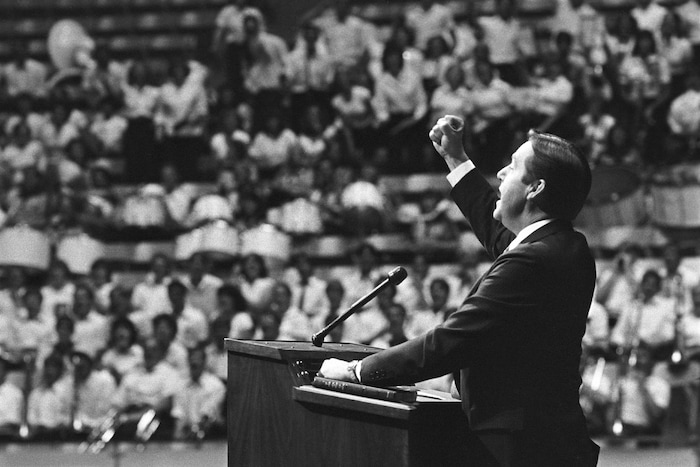
(The Church of Jesus Christ of Latter-day Saints) Apostle Jeffrey R. Holland delivers his "musket" speech at BYU on August 2021.
Even amid this uncharacteristically public rebuke, though, Holland offered his more characteristic compassion.
“Let me go no farther before declaring unequivocally my love and that of my brethren for those who live with this same-sex challenge and so much complexity that goes with it,” he said. “Too often the world has been unkind, in many instances crushingly cruel, to these our brothers and sisters. Like many of you, we have spent hours with them, and wept and prayed and wept again in an effort to offer love and hope.”
Several years later, Holland acknowledged the pain that address caused others.
“Now, if anybody was hurt, and I know some were in that exchange, then I was hurt,” Holland said in a 2024 church-published podcast. “And I have wept. I have wept for those three years.”
He stopped short of an apology, though, and explained that his goal was “to get the supporting doctrine of the church across.”
A southern Utah boy
(The Church of Jesus Christ of Latter-day Saints) Jeffrey R. Holland during his high school basketball playing days in St. George.
The future apostle was born Dec. 3, 1940, to Frank D. Holland, a recent Latter-day Saint convert, and Alice Bentley Holland of Mormon pioneer stock.
The senior Holland was not a practicing Latter-day Saint for most of his kids’ childhood, but the hardworking dad — who never finished high school — helped instill in his son a thirst for education the father never had.
Plus, he was playful.
“There was not a more fun-loving guy than Frank Holland,” said Steven Snow, an emeritus general authority who also grew up in St. George. “He was Irish and really enjoyed life. You can see the same traits in Elder Holland.”
Holland met his future wife, Patricia Terry Holland, in high school.
“Everybody loved Pat,” Snow recalled. “She was nice to everyone and was everyone’s friend. There were no airs about her. Most of the boys had a crush on her.”
That included a young athlete named Jeff.
“The central joy of my life while I was growing up was sports,” Holland once said. “I played on every kind of team that could have been assembled.”
He lettered in four sports — baseball, basketball, football and tennis — in part, he once said, to get the attention of Pat, one of the cheerleaders.
Even though she “couldn’t stand him at the time,” Pat told an interviewer, “I especially liked to watch him play basketball. I admired his ability… and besides that, he had cute legs.”
Eventually, the two became romantically involved. Then came graduation and the question of serving a two-year mission for the church.
Holland wasn’t sure he wanted to go since no one in his family had been a missionary, but, to his future wife, a mission was essential. So he put in his “papers” (application) and got a call to Great Britain.
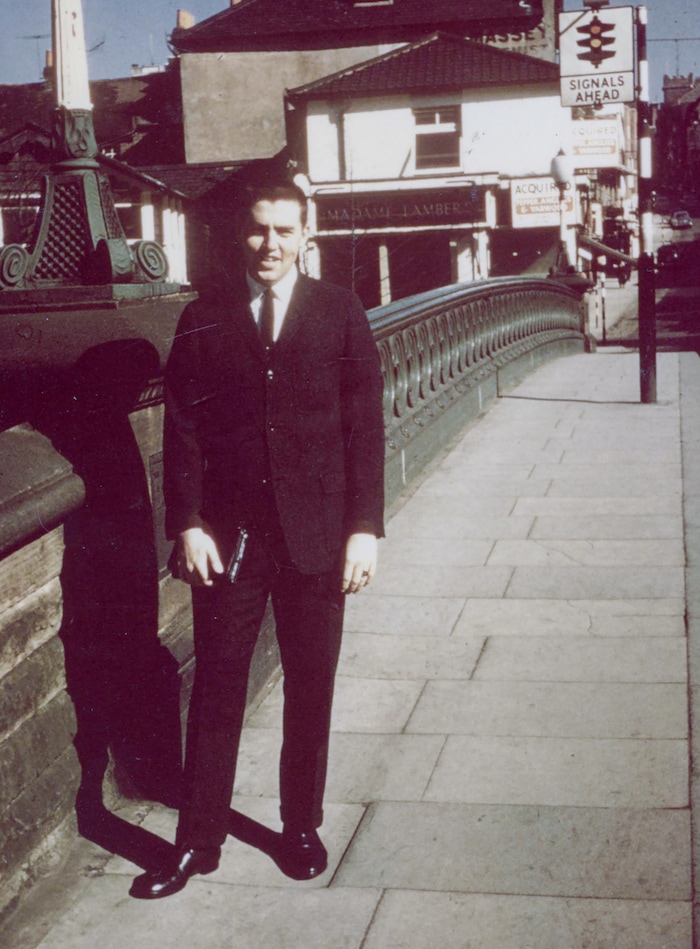
Upon departing in 1960 for two years, the newbie proselytizer had no idea “what to do or how to be a missionary,” Snow said, even wearing “a green corduroy suit to the mission field,” rather than the traditional black or brown.
As luck, destiny or inspiration would have it, Holland was assigned to a mission led by Hanks, also a wordsmith with a love for literature, books and God — or a mix of all three.
The impact on the young evangelizer was electric.
(The Church of Jesus Christ of Latter-day Saints) Jeffrey R. Holland serving as a missionary in England in 1961.
Holland gave up all thoughts of being a doctor, as he had previously intended, and dedicated his future to teaching — with Hanks, who died in 2011, as a mentor, guide and friend.
“My mission was unquestionably the single most important, most pivotal,” he told the Ensign magazine, “most persuasive experience in my life.”
One of his missionary companions would also become a future apostle: Quentin L. Cook.
(The Church of Jesus Christ of Latter-day Saints) Apostles Quentin L. Cook, left, and Jeffrey R. Holland greet each other at General Conference in 2022. The two were missionary companions as young men.
The two, along with senior apostle M. Russell Ballard, went back in the fall of 2021 to Britain, where all three had served missions, to meet with members and present proselytizers.
“I hope they all feel about their mission the way I feel about mine,” Holland told a batch of young elders and sisters he met with from the England Manchester Mission and those studying at the Preston Missionary Training Center. “I want them all to love it so much. I want them to have that kind of mission.”
Holland had a “fabulous” talent for teaching the Latter-day Saint gospel, along with “enormous spiritual depth,” Cook said in a Saturday news release. “..There [was] nobody better in the church at teaching.”
A journey in education
(The Church of Jesus Christ of Latter-day Saints) Jeffrey R. Holland while serving as president of Brigham Young University in 1980.
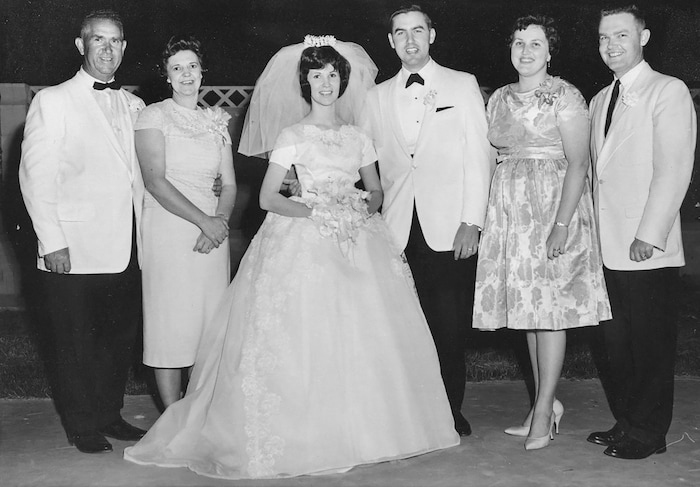
As a young man, Holland returned from his cherished mission, eager to wed Patricia Terry, who had been waiting for him. The pair married in the St. George Temple in 1963, then moved to Provo for Holland to complete his bachelor’s in English and a master’s degree in religious education.
To pay for his schooling, Holland became a salesman.
“I sold thousands of dollars’ worth of skis and — to this day — I have never been on a pair of skis,” he said in a 1983 profile.
“It’s his Irish gift of blarney,” Pat explained. “Jeff has always had a real way with words.”
(The Church of Jesus Christ of Latter-day Saints) Jeffrey R. Holland and Patricia Terry with family at their wedding in 1963.
In 1969, he went to Yale for a doctorate in American studies, writing his dissertation on Mark Twain’s religious sense.
Then it was back to the Beehive State, where Holland taught at several Latter-day Saint Institutes of Religion. In 1974, he was named dean of Religious Education at BYU and, barely two years later, was appointed as the church’s commissioner of education.
No matter how busy he was, however, his three children — Matthew, Mary Alice and David — remember Holland as an engaged father.
“Every night [around the dinner table] was a kind of family home evening filled with laughter, compliments, interesting conversation, testimony, teaching and expressions of love,” Matthew Holland, who became a general authority Seventy, said in a church profile of his father. “You always knew Dad was happiest when he was home with his family.”
In 1980, 39-year-old Holland got a call from then church President Spencer W. Kimball, who offered him the job as BYU president, replacing Dallin H. Oaks, a future colleague in the apostleship and eventual church president.
Holland’s stunned reply, according to the biography, “President Kimball, you’ve got to be joking.”
To that, Kimball deadpanned, “Brother Holland, in this room, we don’t joke very much.”
On social media Saturday, the 93-year-old Oaks noted that he and Holland had a “long and loving relationship in the work of the Lord” that stretched back for more than five decades.
“During my service as president of Brigham Young University, I had the privilege of inviting him — then a young scholar in his early 30s — to serve as dean of religious education," Oaks wrote. “From the beginning, his influence strengthened the university’s sacred mission to unite spiritual purpose with academic excellence.”
The faith’s prophet-president also praised Holland’s “unwavering devotion” as an apostle and how he “lifted the weary, encouraged the faithful, and bore a powerful witness of the Savior — even through seasons of significant personal trials."
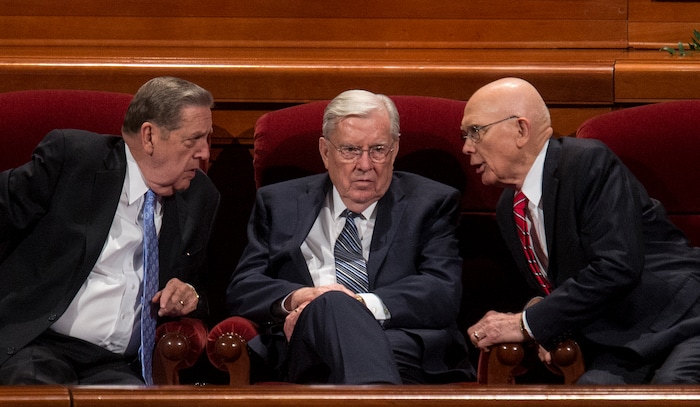
(Chris Samuels | The Salt Lake Tribune) Dallin H. Oaks, left, and Jeffrey R. Holland converse at General Conference in October 2025.
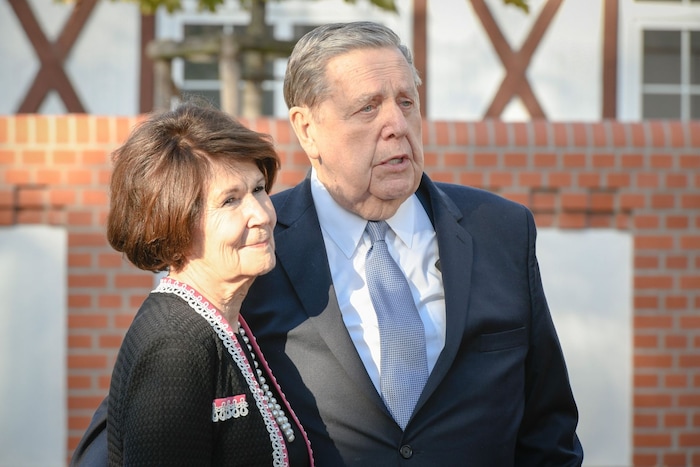
(The Church of Jesus Christ of Latter-day Saints) Jeffrey R. Holland and Patricia Holland during a visit to refugees in Hannover, Germany, in 2022.
The Lord’s university
The youthful president made his priorities clear right away, according to a history of BYU presidents: “to increase significantly BYU’s academic vitality and accomplishments, while strengthening and emphasizing its unique religious nature.”
To that end, Holland raised funds to upgrade academic programs, hire more faculty, and raise salaries for those already there, according to “Brigham Young University: A House of Faith,” as well as to buy more library and research materials, and increase student scholarships.
A signature achievement during Holland’s tenure was the founding of the BYU Jerusalem Center on the Mount of Olives.
Dealing with Israeli politics about the land required careful diplomacy.
In 1980, after lengthy negotiations, the university was given a 49-year lease on the sacred land, with an option to renew. But as construction began, Orthodox Jews worried that the Utah-based church with its proselytizing emphasis would try to convert the Jews. They pleaded, protested and picketed for nearly four years, gaining widespread attention to their opposition.
Finally, in 1988, Holland and then-apostle Howard W. Hunter (who became church president in 1994) signed a document, agreeing that the center would not be used for missionary work.
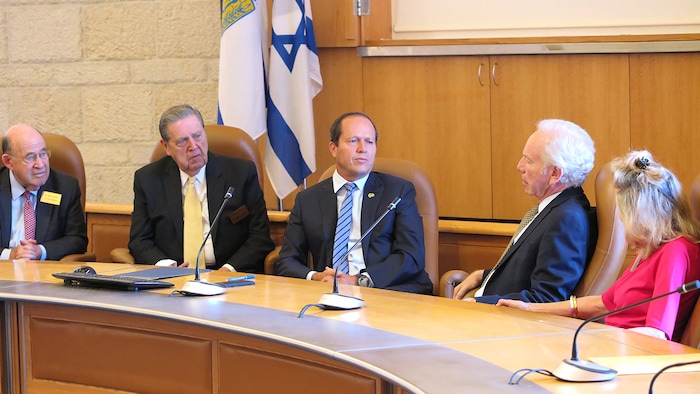
(The Church of Jesus Christ of Latter-day Saints) Apostle Jeffrey R. Holland speaks at the BYU Jerusalem Center in 2018 as part of a worldwide tour by then-church President Russell M. Nelson.
“Elder Holland’s love for the Holy Land and all of its peoples — Jews, Christians and Muslims — was one of the major reasons for the Jerusalem Center’s success,” said Eric Huntsman, professor of ancient scripture at BYU and academic director of the BYU Jerusalem Center. “He was involved with it from the beginning, from his time as president of BYU when it was being built, until the end of his life, working closely with its administration and always caring about its operation, its students and his staff. His vision for the center was a motivation and model for all of us involved with it.”
Working on the center began Holland’s long-standing attachment to the Middle East, Snow said. He became the church’s go-to expert on the region, helping the faith in Israel and Jordan, as well as Saudi Arabia and other countries in the region.
It also solidified Holland’s relationship with Hunter, which led to his call as an apostle.
Joining the quorum
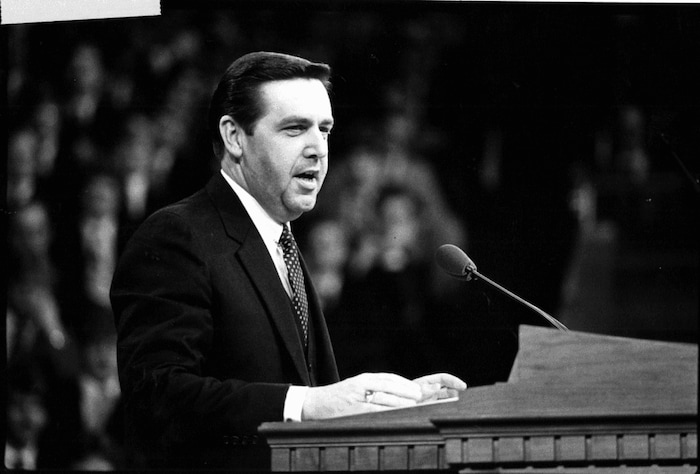
(The Church of Jesus Christ of Latter-day Saints) Jeffrey R. Holland during General Conference in the 1990s.
In June 1994, Holland, by then a general authority Seventy, got another prophetic call — this one was from Hunter, his friend and mentor, who had become the church president with the death of Ezra Taft Benson.
Hunter was summoning him to an early-morning meeting. “It wasn’t an unusual request, and I didn’t ask questions,’’ Holland told reporters. But, he added, “I didn’t have a terrific sleep.”
The new “prophet, seer and revelator” asked Holland to serve as an apostle, a lifetime appointment filling a vacancy in the Quorum of the Twelve.
Holland accepted, and the two men cried and prayed together.
“I have an overwhelming sense of responsibility and unspeakable respect for the office,” Holland said at the time.
He was 53.
Less than a year later, Hunter died and the energetic and far-reaching Gordon B. Hinckley took on the leadership mantle.
In 1998, Holland accompanied the globe-trotting Hinckley on a historic trip across six countries of sub-Saharan Africa, which launched the apostle’s long-held affection for the continent and began his regular assignments there.
Four years later, Hinckley called Holland into his office and said, simply, “You’ll love Chile. Pack your bags.”
Holland was dumbfounded. “‘I didn’t know a thing about Chile and couldn’t lay claim to a word of Spanish.”
Within a week, the shocked apostle and his wife were on a plane bound for the South American country they would call home for the next two years.
The assignment was twofold: Build strength into the church’s local leadership, which then might improve membership retention, and experience the church in an international setting.
During his stint there, Holland reduced the number of stakes (like a regional diocese) from a little more than 100 to 74. He revised policy to insist that prospective converts attend church three weeks in succession before joining. He encouraged the missionaries to focus for 25 hours a week on bringing back inactive members while slowing down in their baptisms.
“We need to teach toward establishing the church, not just adding numbers,” Holland told them. “Look past the baptismal font.”
The personal touch
From the beginning of his church leadership, Holland maintained a vibrant and frequent correspondence with friends and family. With each step forward in his call, he added more and more people to the list of regular emails. By the time of his death, his voluminous exchanges took up much of his days.
“Of all the senior brethren [Latter-day Saint authorities], Jeff Holland probably communicates with a broader spectrum of the church than any other,” Snow said. “Everyone thinks he’s their best friend.”
In 2012, Thomas Griffith, former BYU general counsel and retired appellate judge, helped arrange Holland’s visit to Harvard Law School, where he spoke at an event titled “Mormonism 101.”
It was staged by Latter-day Saint students as an effort to explain the church’s beliefs and practices to their friends and acquaintances.
Holland’s presentation “was masterful. He was personable, witty, erudite, profound and clear,” Griffith recalled. “Watching him interact with these bright and ambitious law students, I thought that he represented the church at its best.”
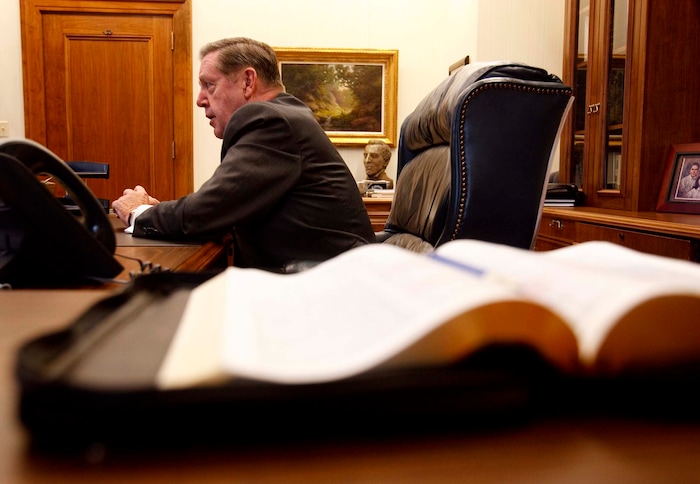
(Trent Nelson | The Salt Lake Tribune) Jeffrey R. Holland during an interview in 2009.
The eloquent apostle “combined the life of the mind and the life of the spirit wrapped up in a deep commitment to caring for those on the margins of society,” the judge said. “He cared deeply for the poor, the hungry, the refugee, the sick, the lonely. He worked hard to make the church a more comforting place for women and minorities, be they cultural, racial, or sexual minorities.”
Griffith also mentioned working with Holland on reaching out to members experiencing “a faith crisis.”
While visiting Holland’s office once, the attorney noticed a copy of Tara Westover’s book “Educated,” an acclaimed memoir of growing up as a conservative Latter-day Saint in Idaho. It is moving but critical about her experience with the church and its members.
Griffith asked the apostle if he had read the book, and Holland replied that he had.
“In fact, he thought so much of the book that he gave copies to every other member of the Twelve,” Griffith noted. “Then he gave me his copy to read (autographed, no less).”
At his core, Holland was “a disciple of Christ who loved ideas. He was constantly asking people for their thoughts and suggestions for how to improve the church,” Griffith said. “He worked hard to get outside what some have called ‘the bubble’ of church headquarters.”
Holland believed “that much change was needed for the church to become all it needs to be,” Griffith added. “He inspired countless numbers of people to stay actively engaged in the life of the church so that they could help bring about that change.”
Everything was open to discussion “except for the truth claims. They were nonnegotiable,” Griffith said. “He had such confidence in them that he was unafraid to embrace change.”
While Holland’s public ministry was “legendary,” Fluhman of the Maxwell Institute said, his personal care is no less significant.
After a particularly intense meeting years ago, Fluhman was making his way out of the building only to hear Holland’s voice booming down the corridor, saying, “Spencer Fluhman, are you still in the building?”
And there the apostle was, literally jogging down the Church Administration Building hallway to catch the historian at the elevator to express his love and support.
Tamu Smith, one of the famed Sistas in Zion and co-author of “Diary of Two Mad Black Mormons,” had a similar moment with the apostle.
Around 2006, Smith was invited to participate in a diversity workshop. She wasn’t sure what it would be but recalls she went dressed much like a Black Panther, with black turtleneck and boots.
When she got there, most everybody else was in church attire. Holland spied her as she walked in, gave her a big hug and said he was happy to see her.
“To feel that immediately from a church leader was overwhelming,” Smith said, “when weeks earlier I had prayed to God, asking why don’t they [church leaders] hear us?”
During the training, the Black Latter-day Saint felt Holland was speaking directly to her again and again.
It was a spiritual high, she recalled. “I wanted to shout hallelujah and do a Holy Ghost dance.”
At the meeting’s conclusion, Holland was surrounded by people who wanted to talk with him, so Smith quietly slipped out the door.
Holland darted into the hallway, calling her name.
“He was a shepherd willing to leave the 99 for me,” she said, getting teary at the memory.
The apostle grabbed her face, stared into her eyes and said, “Heavenly Father loves you. I love you. You are loved. We appreciate everything you do.”
That caused Smith to break into “ugly crying,” and her “chocolate makeup” started running down her face. Holland handed her his white handkerchief to wipe it.
At that moment, Smith knew they had a “soul connection.”
Richard Hanks, son of Marion Hanks, Holland’s mission president, knew Holland his whole life, starting when he was a toddler.
“He focuses on the individual right in front of him,” Richard Hanks said. “When you are there, you are everything to him.”
That’s “an incredible trait,” he said, “and it is not common among people who become famous.”
Even though thousands clamored for him, Richard Hanks said, he was always “focused on the one.”
Snow summed up what many thought of the man: “There was nobody like Jeff Holland.”
Note to readers • Senior Managing Editor David Noyce contributed to this story.
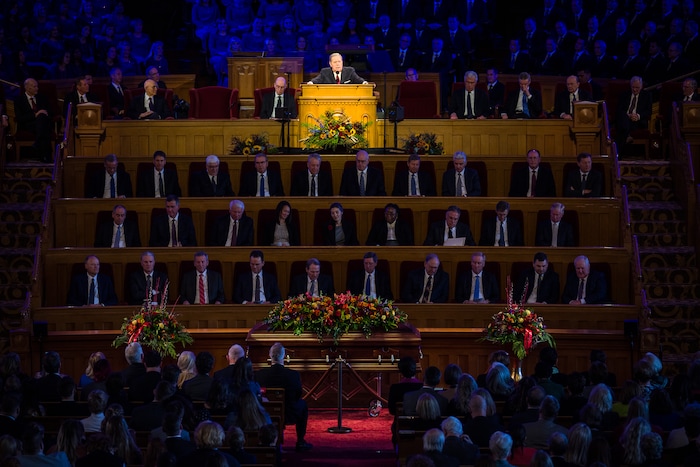
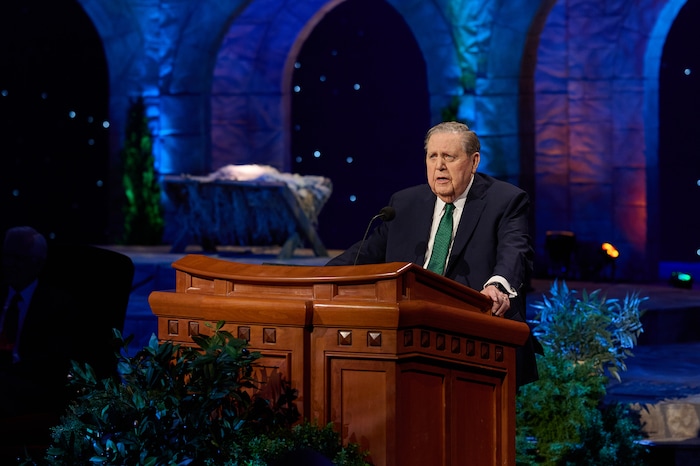
(The Church of Jesus Christ of Latter-day Saints) Apostle Jeffrey R. Holland gives an address during the Christmas devotional on Dec. 7, 2025.
Correction • Dec. 27, 9:30 a.m.: Thomas Griffith worked as BYU’s general counsel. His previous position with the Provo school was misidentified.