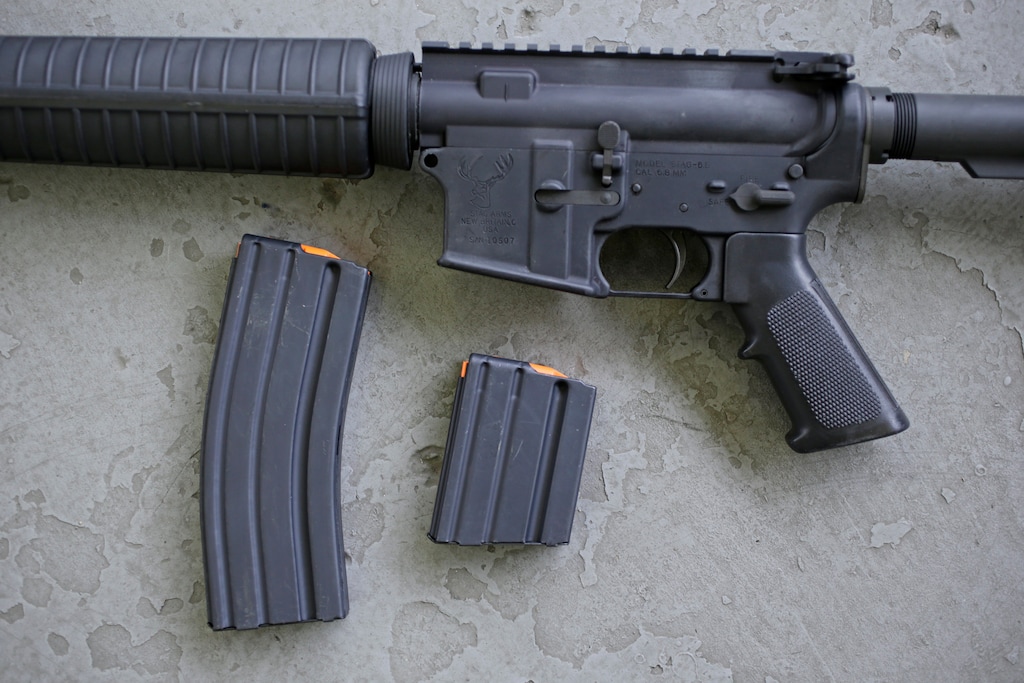
Regarding Ron Molen’s good letter to the editor Nov. 16, “Stricter gun laws,” Mr. Molen is right about our current uncontrolled gun availability. I’d like to add some history.
When the Second Amendment was ratified in 1791, we should remember that a musket could fire one to three or four rounds per minute, requiring the gunman to stop between each shot and reload gunpowder, add a patch and a ball, use the ramrod to clean the barrel, and then seat the round bullet properly. Oh, and fill the flashpan with gunpowder. There was no standing army. The amendment reads, “A well-regulated militia, being necessary to the security of a free State, the right of the people to keep and bear arms shall not be infringed.”
Things have changed. So, should it be legal in this day and age that anyone old enough to buy a weapon can flaunt and potentially fire an AR-15 (which fires 45 or more rounds per minute) in a public setting? Or carrying current-day “arms” at a public event? Really, the Second Amendment was not meant for assault weapons. Bear in mind that “arms” also means bombs, rockets, bazookas and machine guns, to name a few. Perhaps the issue for the assault rifle proponents is to possess all that power.
Interestingly, James Madison was the most influential framer of the Second Amendment. He intended the amendment to guarantee the right of each state to resolve its internal problems; for him especially, this included the problems of a large slave population, as he was a slaveholder.
Loraine Brandt, Salt Lake City