 Isabel Meléndez-Rivera
Note to readers • Click here to find an interactive map where you can enter your address to see all the races on your ballot that have a voter guide from The Salt Lake Tribune.
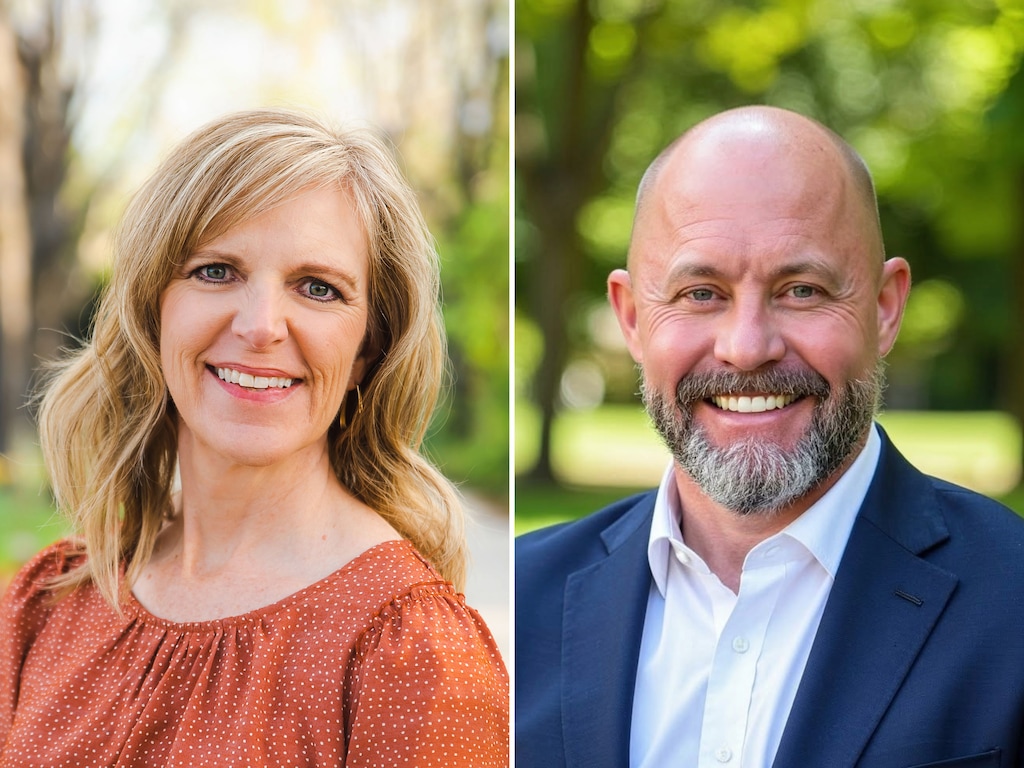
Republican Rep. Tracy Miller will face a political newcomer for a chance to continue representing parts of South Jordan and Sandy. Miller was elected in 2024 as District 45’s representative, and is running for reelection.
Miller’s Democratic challenger, Rod Moser has worked for 30 years selling houses in Utah, according to his website.
In a questionnaire response, Moser told The Salt Lake Tribune he cares about protecting and maintaining public land. Meanwhile, Miller wants to continue introducing legislation geared toward improving education.
Both candidates said they recognized the need for accountability and transparency in government.
Mail ballots must be dropped off at a ballot dropbox by 8 p.m. on Election Day, Nov. 3, or, if returned by mail, must be received by the county clerk by 8 p.m. on Election Day.
Candidates submitted photos and answers through a questionnaire. Answers may have been edited for style and clarity. Candidate responses are listed in alphabetical order by last name.
Utah voters told us government corruption is their top concern in this year’s election. Why do you think voters feel this way? And why should Utahns trust you to represent them?
Miller: Trust in government suffers when people feel decisions are being made without enough transparency or public input. That’s why I have worked hard to increase transparency and involve constituents in the decision-making process. I read my email, answer my phone, hold town halls, seek feedback through surveys and show up in my community. I know I am accountable to the people I represent. My record is one of listening, asking hard questions and collaborating to find common-sense solutions.
Moser: People see appointed boards spend public money and take land without ever facing a voter. They see lawmakers undo initiatives they passed. It looks like a system built to protect itself. I’m a Realtor, and a Republican legislator told me to run after a housing town hall. I’ve spent two years documenting Utah’s development authorities and publishing it at utahgrit.com so anyone can check my work. I’ll vote in the open and explain every vote. If I get one wrong, you’ll know where to find me.
Utahns told us affordability is their second-highest priority in this election. How would you help Utahns afford housing, groceries, gas and other day-to-day expenses?
Miller: Families across the state are feeling the effects of inflation and I am committed to helping Utahns keep more of their hard-earned money. I voted to lower income taxes, decrease the gas tax and expand the Social Security tax credit. I sponsored and passed a bill to expand the child tax credit. I will continue to support responsible budgeting that keeps taxes low while investing in our community’s future.
Moser: I see the gap between what families earn and what things cost every week. I’d open the door to starter homes on smaller lots and require infrastructure district debt to be paid off as each home sells, so buyers never carry it. I’d take the sales tax off groceries instead of cutting income taxes for top earners again. And I’d tie state tax breaks for big employers to pay a livable wage. Prices are only half of affordability. Paychecks have to catch up too.
Water resources were also a top concern for voters. What policies would you support as Utah looks to balance growth with preservation of the Great Salt Lake and the Colorado River?
Miller: As one of the fastest-growing and driest states, we must be thoughtful about how we grow while protecting our water. I support incentives for innovative and efficient agricultural irrigation, water-wise landscaping for new development, and programs that help homeowners and businesses conserve. I support stronger water use restrictions for data centers. We must plan growth around the water we have and continue to invest in practical solutions that protect the Great Salt Lake and Colorado River.
Moser: Growth only works if there’s water for it. I’d write a trigger into state law so conservation steps kick in automatically when the Great Salt Lake drops too low. I’d pay farmers fairly to lease water to the lake, finish installing outdoor water meters, and fund Utah’s share of Colorado River savings. Data centers should follow the same water rules as everyone else. The lake supports about $2.5 billion in our economy, and when it dries up, the dust ends up in our lungs.
What is another topic you care about and want to address if elected to public office?
Miller: As the mother of three children who graduated from public schools, I strongly support public education and value the many options available for parents to guide their child’s education path. I served for eight years on the Jordan School Board, where I focused on student achievement, supporting teachers and ensuring education funding reached the classroom. As a legislator, I have successfully increased education funding, reduced administrative burdens and strengthened parental involvement.
Moser: Keeping public land public. About 64% of Utah is public land, and it’s where we hunt, fish and camp. I’d put it in state law that this land can’t be sold off. Before Utah spends millions suing for control of it, lawmakers should show taxpayers the full price tag of managing it. And I’d fund the parks we already own. Visits to our state parks have more than doubled in 10 years, and they need upkeep. Once land is sold, we never get it back.
How will you vote on Constitutional Amendment A? If passed, the amendment will stop the practice of publishing the full text of amendments and ballot questions by lawmakers in a newspaper for 60 days ahead of an election and instead require that text to be published on two state websites.
Miller: For.
Moser: Against.
How will you vote on Constitutional Amendment B? If passed, citizen-proposed laws that increase taxes would need to be approved by 60% of voters, instead of a simple majority.
Miller: Against.
Moser: Against.
What’s your favorite book and why?
Miller: I love to read and it’s hard to pick one favorite. Some of my favorites are “The Hiding Place,” “The Boys in the Boat,” “Love Your Enemies and “Jane Eyre.” Historical fiction is my favorite genre. I like good storytelling and characters I can relate to.
Moser: I read too much to pick just one, but “The Ultimate Blueprint for an Insanely Successful Business” by Keith Cunningham is a good one. It’s about tracking and measuring so you get better results. Government could use more of that.