 Leia Larsen
Note to readers • This story is made possible through a partnership between The Salt Lake Tribune and Grist, a nonprofit environmental media organization.
Click here to find an interactive map where you can enter your address to see all the races on your ballot that have a voter guide from The Salt Lake Tribune.
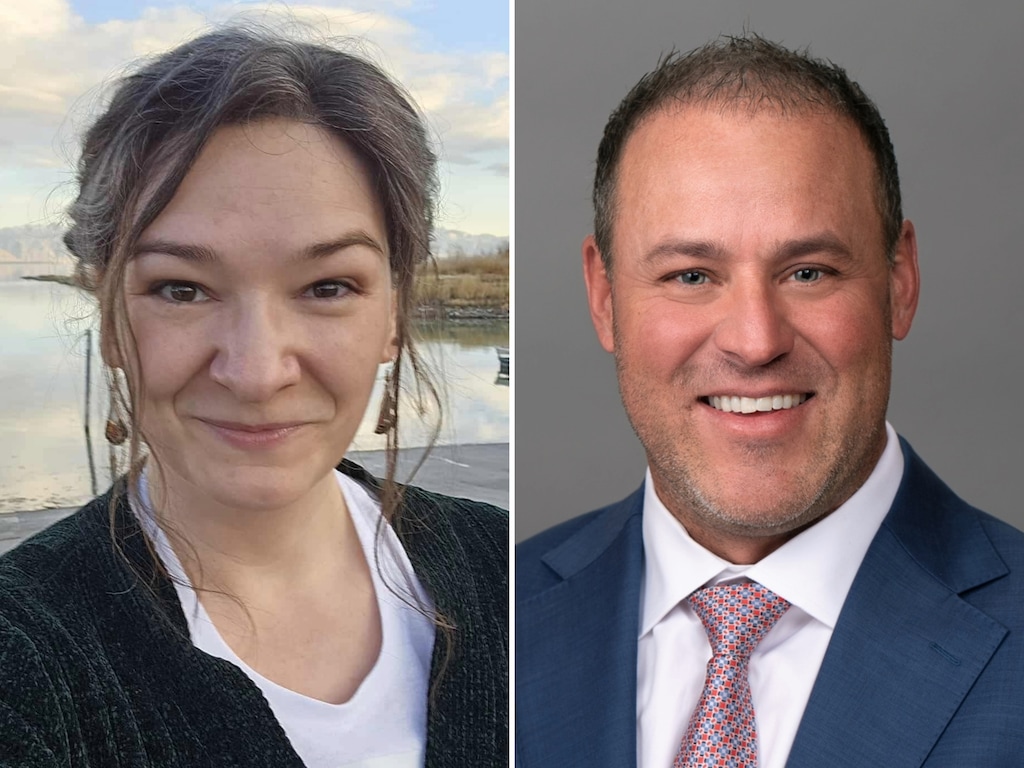
The Utah House’s most powerful leader, Republican Speaker Mike Schultz will face Democratic challenger Anna Graff this election to represent House District 12.
The District includes parts of Weber and Davis counties, including a section of the Great Salt Lake, which hovers just above its record low. Graff is calling for stronger regulations on industry, including data centers, to help address Utah’s water shortages. Schultz has represented District 12 since 2015, but did not respond to questions sent to candidates by The Tribune.
Candidates submitted photos and answers through a questionnaire. Answers may have been edited for style and clarity. Candidate responses are listed in alphabetical order by last name.
Utah voters told us government corruption is their top concern in this year’s election. Why do you think voters feel this way? And why should Utahns trust you to represent them?
Graff: We are seeing policies and bills with imbalanced benefit vs. impact, and the cost is carried by the people of Utah, financially, or with our health and wellbeing. Recent legislative sessions have limited regulations and increased benefits for the same industries listed in our lawmaker’s conflict of interest filings. Changes to the judiciary and public initiatives transfer power from local control to the state. A disturbing lack of transparency, oversight and accountability has eroded trust.
Schultz: Did not answer.
Utahns told us affordability is their second-highest priority in this election. How would you help Utahns afford housing, groceries, gas and other day-to-day expenses?
Graff: Empower localized control vs. statewide mandates. Those managing funds/impact must be consulted on policy/budget. Embrace variety in housing options, not just single-family vs. high-density. Zoning is best handled by municipalities; statewide density requirements don’t translate seamlessly and can drive cost. Costs shift to property taxes when school boards/districts are ignored and funding has extra strings/limits. Tax burdens ease when the funds address school needs, not fulfill requirements.
Schultz: Did not answer.
Water resources were also a top concern for voters. What policies would you support as Utah looks to balance growth with preservation of the Great Salt Lake and the Colorado River?
Graff: We must create regulations, standards, reporting requirements and indemnification measures for the industries using our water. Recent interim session hearings cast light on the lack of studies and requirements for data centers. Proactive water policies will prevent future loss of our resources and health. Municipal water-conservation plans, education initiatives, partnerships and water-saving alternatives start on the local level and we need to invest and make the changes now.
Schultz: Did not answer.
What is another topic you care about and want to address if elected to public office?
Graff: I care deeply for transparency, integrity, and accountability — rebuilding a foundation of honest representation in our policy making. Utahns have a right to select leaders to make decisions for furthering life, liberty and the pursuit of happiness, and to hold them accountable if they serve themselves rather than the people. We can balance needs of the people, impact and resources with proactive due diligence versus costly, reactive repair. I’m not here for power, I’m here for you.
Schultz: Did not answer.
How will you vote on Constitutional Amendment A? If passed, the amendment will stop the practice of publishing the full text of amendments and ballot questions by lawmakers in a newspaper for 60 days ahead of an election and instead require that text to be published on two state websites.
Graff: For.
Schultz: Did not answer.
How will you vote on Constitutional Amendment B? If passed, citizen-proposed laws that increase taxes would need to be approved by 60% of voters, instead of a simple majority.
Graff: Against.
Schultz: Did not answer.
What’s your favorite book and why?
Graff: There are far too many to choose one. But the books I find myself returning to time and again? “Rocket Boys” by Homer Hickam, “North and South” by Elizabeth Gaskell, “Gathering Moss” by Robin Wall Kimmerer, “Who Deserves Your Love” by KC Davis, and Jules Verne.
Schultz: Did not answer.