 Jordan Miller
Note to readers • Click here to find an interactive map where you can enter your address to see all the races on your ballot that have a voter guide from The Salt Lake Tribune.
Salt Lake County’s top prosecutor is running for reelection against a challenger this November.
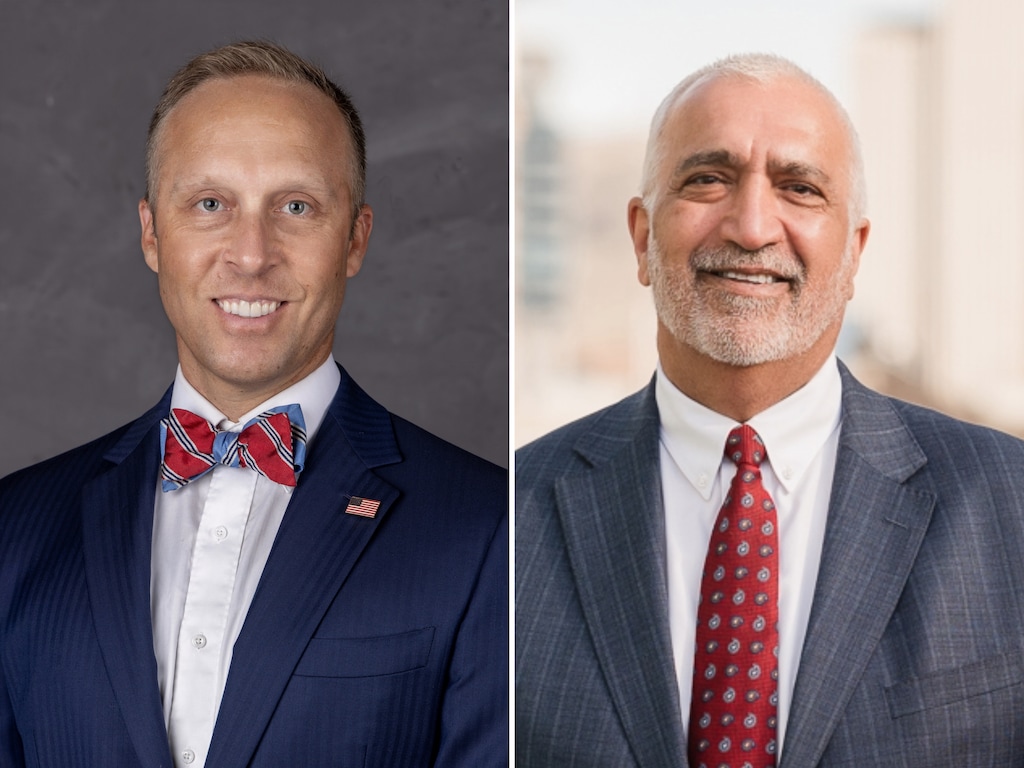
Republican candidate Kent Davis seeks to unseat incumbent District Attorney Sim Gill, who was first elected to the office in 2010.
Davis, a combat veteran, serves as corporate counsel and director of cybersecurity at a commercial real estate firm, and previously worked as a deputy district attorney under Gill from 2017 to 2021.
Candidates submitted photos and answers through a questionnaire. Answers may have been edited for style and clarity. Candidate responses are listed in alphabetical order by last name.
Election Day is Nov. 3. Mail ballots must be dropped off at a ballot dropbox by 8 p.m. on Election Day or, if returned by mail, must be received by the county clerk by 8 p.m. on Election Day.
What is the Salt Lake County district attorney’s role in immigration enforcement, and what is your message to witnesses and victims who may feel uncomfortable working with prosecutors because of their immigration status?
Davis: The D.A. has no role in federal civil immigration enforcement. The office prosecutes crimes under Utah law, and immigration status does not change whether a crime happened or who committed it. To victims and witnesses: if someone hurt you, my office will prosecute that person. Your status is not the case. When a victim stays silent, the offender stays free to find the next victim. I will sign certifications for cooperating victims under the visa programs Congress created for exactly this purpose.
Gill: My job as D.A. is to prosecute violations of Utah law, not to serve as a federal immigration agency. This applies to ICE agents who would violate the law; there is no absolute immunity for criminal conduct under federal law. Victims and witnesses should be able to report crimes without fearing that doing so will expose them to deportation. My message is simple: your safety matters, your voice matters, and my office will treat you with dignity and respect regardless of immigration status.
Salt Lake County has instituted a moratorium on data centers until a working group — which includes the D.A.’s office — can come up with a drafted ordinance to address land use for such facilities in unincorporated areas of the county (which include the Oquirrh foothills, Cottonwood canyons and a sliver of land near the airport).
The working group will consider measures such as conditional use requirements, water and power consumption limits and potentially an outright ban on such centers. What rules do you think the county should put in place for these data centers?
Davis: The D.A. is the county’s lawyer, so its first job in that working group is an ordinance that holds up in court. A blanket ban invites costly litigation. I would support conditional use permits, independent water and power impact studies before approval, closed-loop cooling instead of drawing on culinary water, noise and setback limits to protect canyon neighbors, and a guarantee that residents do not subsidize a facility’s power. Clear data-driven rules, applied the same to every applicant.
Gill: Data centers should be subject to clear standards that protect residents and the county’s limited water and energy resources. With a background in environmental and natural resources law, I was an early advocate for National Environmental Policy Act and [environmental] impacts for both data and ICE detention centers. Any large federal project should undergo rigorous review of water, energy, usage, noise and environmental impacts. Strictly enforcing environmental statutes is a good start. The public deserves nothing less.
One of the jobs of the Salt Lake County district attorney is to make charging decisions on police shootings. Should state legislators change laws regarding how and when officers can face criminal charges and, if so, in what way?
Davis: The Legislature writes the law, and the D.A. should apply the law the same way to officers as to everyone else. A prosecutor should not use charging decisions to pressure lawmakers or send political messages. If legislators act, they should fix the process: set a firm deadline for charging decisions so families and officers are not left waiting, and require a public written explanation of every decision, not leave it to one D.A.’s practice. Law enforcement is not, and should not be, partisan.
Gill: Absolutely, yes. We are legally and ethically obligated to apply the laws given to us. That is why I proposed, in an open letter to the Legislature, 22 distinct proposals that would balance police conduct and enhance both public safety and expectations for the misuse of force. If we want different outcomes, we need to change the laws. Community safety and transparent accountability can be achieved without compromising our ethical expectations and public safety.
Salt Lake County is planning big investments in the criminal justice system in consultation with The Leifman Group, a consulting firm. How would you assure residents that those who commit crimes will be held accountable while also ensuring people get the services they need so they don’t return to jail?
Davis: Accountability and treatment are one strategy applied to different problems. Accountability means consistent charging for repeat and violent offenders under written filing standards. Preventing recidivism means matching treatment to measured risk and need, with the jail, courts, and providers working from shared data. The 2025 legislative audit found the D.A.’s office does not track the most important number: whether graduates of its alternative-to-incarceration programs reoffend. I would track it, publish re-offense rates every year, and change what is not working.
Gill: Accountability and rehabilitation are not competing goals. Serious violent offenses require prosecution and accountability, while nonviolent offenders driven by mental illness, substance use or other needs should have access to treatment and services. My office has done both by building therapeutic justice programs and addressing habitual offenders through the targeted offender partnership strategy program in partnership with the SLCPD. This is why I created the first mental health court, veterans court and pre-filing diversion program. You can help people without compromising public safety.
Should Salt Lake County cooperate with ICE in any way that is not already required by law?
Davis: No.
Gill: No.