 Jordan Miller
Note to readers • Click here to find an interactive map where you can enter your address to see all the races on your ballot that have a voter guide from The Salt Lake Tribune.
Salt Lake County’s top cop will face a challenger in this year’s election.
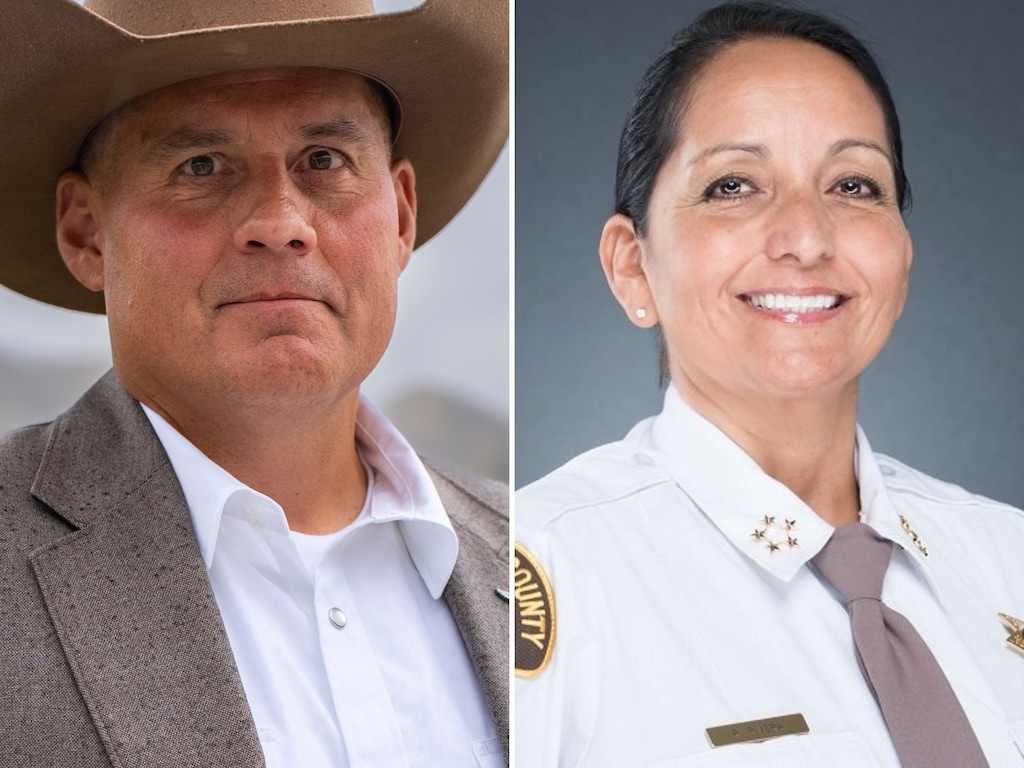
Sheriff Rosie Rivera, a Democrat, is seeking to retain her position against Republican challenger Shane Manwaring. Rivera served as Salt Lake County’s top law enforcement official since 2017, while Manwaring is a Unified Police Department lieutenant and a retired colonel in the U.S. Army’s aviation branch.
Candidates submitted photos and answers through a questionnaire. Answers may have been edited for style and clarity. Candidate responses are listed in alphabetical order by last name.
Election Day is Nov. 3. Mail ballots must be dropped off at a ballot dropbox by 8 p.m. on Election Day or, if returned by mail, must be received by the county clerk by 8 p.m. on Election Day.
The Salt Lake County sheriff oversees a large organization responsible for law enforcement, corrections and court security. What experience has best prepared you to lead an organization of that size and complexity, and what results from your record demonstrate your effectiveness as a law enforcement leader?
Manwaring: Leading large organizations requires strategic vision and adaptability. I assumed command of a 759-member military unit following serious climate failures. By placing diverse leaders in key roles and focusing on trust and transparency, I fundamentally transformed an entrenched culture — a success highlighted by my commanding general. Combining military and law enforcement experience, I lead large teams by leveraging experts, building trust and driving total climate reform.
Rivera: I have led the Sheriff’s Office since 2017, overseeing 1,100 employees and volunteers across law enforcement, corrections and court security. My 33 years in law enforcement prepared me to make tough decisions, balance priorities and lead through change. Through partnerships with employees, labor, community groups, law enforcement agencies and government leaders, we reached full staffing for the first time in years, ended overcrowding releases and expanded gang prevention and enforcement.
Should Salt Lake County continue using automatic license plate readers (such as Flock, Axon or Vigilant)?
Manwaring: Yes.
Rivera: Yes.
What guardrails, if any, should be in place surrounding the county’s use of license plate readers?
Manwaring: Automatic license plate readers (ALPRs) save lives and assist in clearing innocent individuals, but public safety cannot come at the expense of privacy. While law enforcement boundaries exist, we must enforce stricter limits to prevent private entities from capturing public data. As sheriff, I will protect your Fourth Amendment rights by ensuring ALPRs are strictly reserved for critical investigations like missing children and violent crime — balancing vital investigative power with uncompromising privacy protections.
Rivera: License plate readers have saved lives by locating missing people in danger and individuals who pose serious threats to public safety. But collecting/retaining unnecessary data and misuse by government agencies or private companies invades privacy and destroys public trust. Protecting privacy requires strict guardrails that limit data collection and retention, restrict access to a few trained authorized users, limit outside state use, and mandate logs and audits. Misuse should carry serious legal consequences.
Salt Lake County currently contracts with U.S. Immigration and Customs Enforcement for jail beds at the county detention center. Should the county continue to house ICE detainees at its jail?
Manwaring: Yes.
Rivera: No.
In what capacity should the Salt Lake County Sheriff’s Office work with ICE?
Manwaring: ICE plays a vital role in keeping us safe and I support standard jail record-sharing so non-citizens who commit crimes are held accountable. I oppose local law enforcement serving as agents through 287(g). When vulnerable communities fear local police will deport them, victims of domestic violence and abuse stay in the shadows — a safety risk I will not accept. As sheriff, I will cooperate with federal law at the jail while ensuring our local deputies maintain the trust needed to protect every victim.
Rivera: The sheriff’s duty is to enforce current law. Utah law requires sheriffs to notify federal authorities before releasing someone from jail that ICE has determined is not lawfully present in the U.S. and to coordinate transfers. I will follow the law while keeping our role limited. We will not join the 287(g) program, and deputies will not act as immigration agents or question community members about citizenship. I also support changing state law to reduce mandatory local involvement with ICE.
How should the Salt Lake County Sheriff’s Office handle low-level offenders who commit crimes associated with homelessness, substance abuse or mental illness?
Manwaring: Nonviolent offenders who pose no safety threat belong in diversion programs, not behind bars. Expecting standard clinics to manage acutely intoxicated or belligerent individuals endangers healthcare staff. I will utilize the county jail’s secure medical facility to safely manage detox and stabilization first. Once sobriety and mental clarity are restored, we can effectively connect individuals with substance abuse and mental health resources to address root causes and break the cycle of low-level crime.
Rivera: Public safety must guide every decision. People who commit low-level offenses must be held accountable, but jail is not always the best response when homelessness, substance use or mental illness contributes. When the offense, victim safety and community risk allow, I support accountable alternatives. Alternatives should be coordinated by justice partners, include victim input, set clear conditions and consequences, and connect people with treatment, housing and support.