 Julie Jag
Note to readers • Click here to find an interactive map where you can enter your address to see all the races on your ballot that have a voter guide from The Salt Lake Tribune.
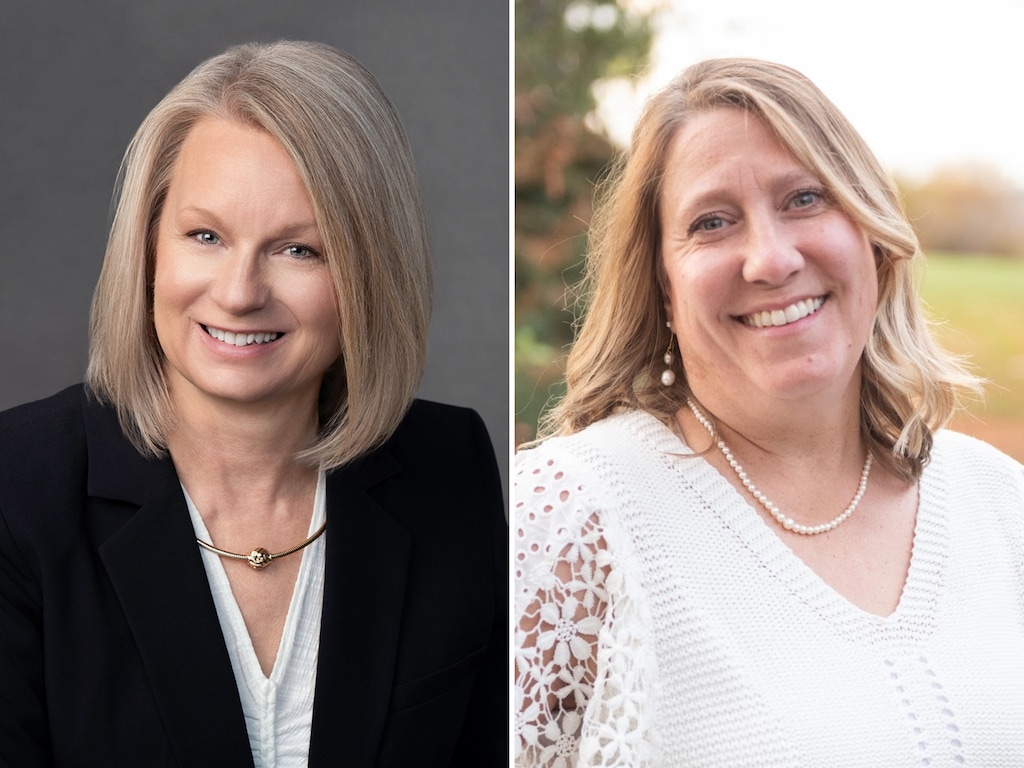
For the first time since she took office, freshman Rep. Kristin Chevrier, a Republican from Highland will defend her House District 54 seat, against Kristina Robinson, a Democrat from Alpine.
The district covers Highland and Alpine, as well as parts of east Lehi and American Fork.
Chevrier topped two other candidates in 2024 when the Utah County Republican Party selected her to take over the House seat vacated by Brady Brammer, who moved to the Senate. She has served on both the House Health and Human Services Committee and the House Transportation Committee.
Robinson is the CEO of i.t. Now, which provides technology services to small and medium-sized businesses.
The Salt Lake Tribune posed the following questions, based on a reader survey about the issues Utahns felt were most important this election season, to both of the candidates. Candidates submitted photos and answers through a questionnaire. Answers may have been edited for style and clarity. Candidate responses are listed in alphabetical order by last name. Chevrier did not respond to requests to fill out the questionnaire.
Remember: Election Day is Nov. 3. Mail ballots must be dropped in a drop box by 8 p.m. on Election Day or — if returned by mail — in the clerk’s possession by 8 p.m. on Election Day.
Utah voters told us government corruption is their top concern in this year’s election. Why do you think voters feel this way? And why should Utahns trust you to represent them?
Kristen S. Chevrier: Did not answer.
Kristina Robinson: Our president has a flagrant disregard for the constitution and is involved in profiteering. Both the Legislative Branch and Supreme Court aid and abet the corruption. The disconnect between policy makers and the public is manifest on a state level with the fast-tracking of data centers and inability of the public to stop the proceedings. I’ll push for public hearings and disclosure, and limiting the scope of MIDA, and will fight for more transparency laws between donors and politicians.
Utahns told us affordability is their second-highest priority in this election. How would you help Utahns afford housing, groceries, gas and other day-to-day expenses?
Chevrier: Did not answer.
Robinson: Affordability is a huge pain point, especially for young adults. I will address this by pushing for relaxed zoning of ADUs; instituting creative lending practices and cost-cutting for first-time home buyers; further restricting corporation residential home limits, and require a mandatory 7-year divestment clock; support a tax on mega-rich who hold assets rather than reportable income above a threshold of $10 million, ensuring they are paying into the systems that their wealth was built on.
Water resources were also a top concern for voters. What policies would you support as Utah looks to balance growth with preservation of the Great Salt Lake and the Colorado River?
Chevrier: Did not answer.
Robinson: As the second-driest state in the nation, it’s important to find the fine line between progress and self-harm. To that end, I will support strong limitations on large-scale commercial hospitality developments that steal water from Utah families and profit large out-of-state investors, in addition to decreasing tax incentives. I will [seek] more robust incentives for water-wise landscaping. I am in favor of relaxing commercial landscaping codes and eliminating much of the overwatered and underutilized sod.
What is another topic you care about and want to address if elected to public office?
Chevrier: Did not answer.
Robinson: I want to restore protection for Bears Ears and Grand Staircase-Escalante that allows continued hiking, biking, camping and hunting, but blocks corporations that want the land for mining, drilling and development. Utah is not for sale and allowing the federal government to protect our lands is a win for the future.
How will you vote on Constitutional Amendment A? If passed, the amendment will stop the practice of publishing the full text of amendments and ballot questions by lawmakers in a newspaper for 60 days ahead of an election and instead require that text to be published on two state websites.
Chevrier: Did not answer.
Robinson: For.
How will you vote on Constitutional Amendment B? If passed, citizen-proposed laws that increase taxes would need to be approved by 60% of voters, instead of a simple majority.
Chevrier: Did not answer.
Robinson: Declined to answer.
What’s your favorite book and why?
Chevrier: Did not answer.
Robinson: Oh my goodness, my favorite book right now is “The Woman They Could Not Silence,” about Elizabeth Packard. I’m so inspired by how one woman was able to change the laws surrounding the mentally ill. Her giving and capacity are qualities I aim for.