 Emily R. Anderson
Note to readers • Click here to find an interactive map where you can enter your address to see all the races on your ballot that have a voter guide from The Salt Lake Tribune.
As longtime state Sen. Ann Millner, an Ogden Republican, retires, one lawmaker is leaving the House of Representatives in an attempt to replace her. But the representative will have to beat a former U.S. diplomat who is also running for the seat.
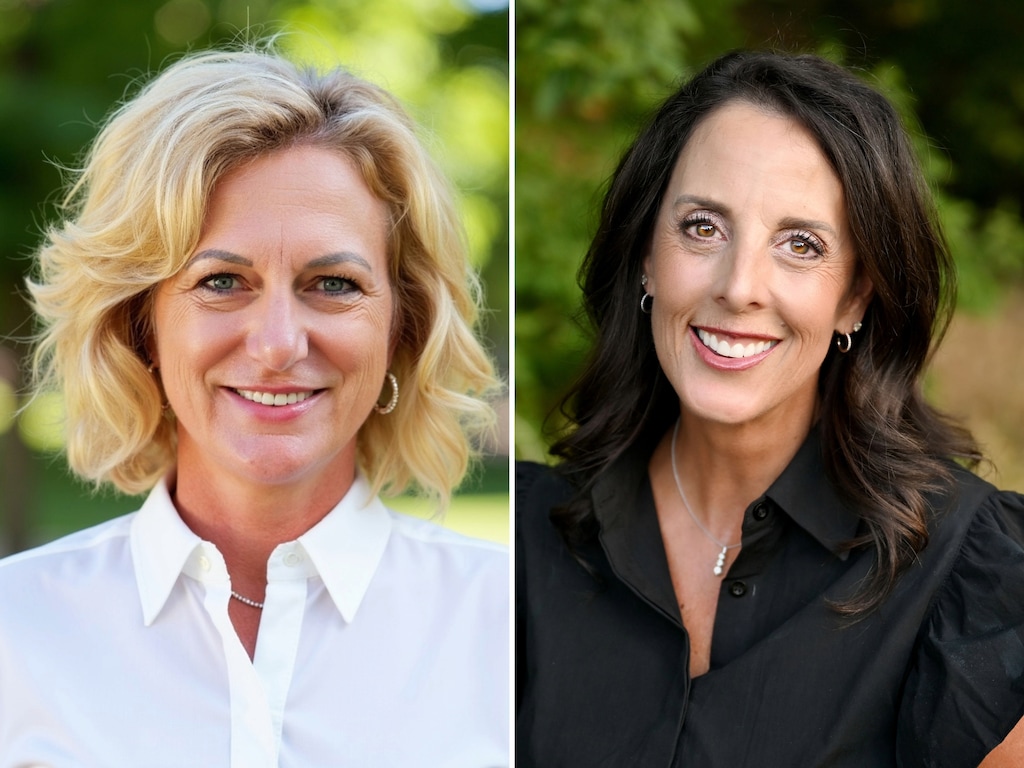
State Rep. Jill Koford, R-Ogden, is wrapping up her first term in the Legislature as she competes against CJ Hernandez, a Democrat, for a spot in the Senate.
Koford owns a graphic design company, and Hernandez worked as an official in the U.S. State Department until she filed for candidacy earlier this year. Both candidates were raised in Weber County.
Election Day is Nov. 3.
If returned through the postal service, mail ballots must be sent early enough to arrive at the county clerk’s office by 8 p.m. on Election Day. Otherwise, they can be left at a drop box until polls close at 8 p.m.
Candidates submitted photos and answers through a questionnaire. Answers may have been edited for style and clarity. Candidate responses are listed in alphabetical order by last name.
Utah voters told us government corruption is their top concern in this year’s election. Why do you think voters feel this way? And why should Utahns trust you to represent them?
Hernandez: The legislative majority continues to grab power while Utahns are being left behind. Voters see politicians undermining their right to ballot initiatives and an independent judiciary while continuing to make closed-door deals. Unlike many of our current leaders, I’m committed to listening to voters and addressing their day-to-day concerns. I believe that the government should serve the people, which is why I will oppose any attempts to restrict voter power or eliminate checks and balances.
Koford: Trust in our government structures and elected officials declines when people feel the lawmaking process lacks transparency. This concern only grows as polarization occurs between parties and within political parties. When someone alleges corruption in a primary election and a general election, that concern grows. In the Utah House of Representatives, I have focused on communicating openly and remaining accessible to constituents with questions or concerns. I will continue that approach in the Utah Senate.
Utahns told us affordability is their second-highest priority in this election. How would you help Utahns afford housing, groceries, gas and other day-to-day expenses?
Hernandez: Affordability is hitting Utah families hard, especially with wages lagging behind costs. We should gradually raise the minimum wage and tie it to the cost of living, eliminate the state sales tax on groceries, continue to reduce state tax on gasoline, expand affordable childcare so parents keep more of what they earn, and invest in clean energy that lowers utility costs over time.
Koford: Young Utahns, families and seniors are struggling. I have three kids who are just starting their lives and will struggle to afford a home and have a fulfilling life on a starting salary. The state can’t counteract inflation or every root cause of high costs, but we can still ease the burden. In the House of Representatives, I worked to cut taxes for young Utahns, families and seniors. If everyone is forced to do more with less, our state government should follow suit and pass those savings to the taxpayers.
Water resources were also a top concern for voters. What policies would you support as Utah looks to balance growth with preservation of the Great Salt Lake and the Colorado River?
Hernandez: We have to get serious about water conservation. If elected, I’ll support reducing water use on state-owned properties, protect the public’s ability to weigh in on water rights decisions, and back incentives for agriculture and industry to send more water to the Great Salt Lake. I’ll also oppose new water-intensive projects, including hyperscale data centers, that threaten Utah’s limited water supply.
Koford: I support voluntary conservation, efficient water use and growth that reflects available water supplies. I sponsored laws to compensate farmers for leasing water to the Great Salt Lake, protect water dedicated to conservation and require new large data centers to disclose water use. I’ll keep working to protect private water rights, ensure conserved water reaches its destination and preserve the Great Salt Lake and Colorado River system for future generations.
What is another topic you care about and want to address if elected to public office?
Hernandez: Working Utahns need support, not partisan attacks. As a career public servant and the daughter of a public school teacher, I have seen firsthand how important it is for workers to have a say in the conditions that affect their jobs and families. My opponent voted to strip public workers, like teachers and firefighters, of their right to collectively bargain. I will oppose any attempts to restrict Utahns’ right to join a union.
Koford: I want to protect local control over development and preserve the character of our communities. Cities and counties should be able to decide how they grow, with residents involved in decisions that affect their neighborhoods. I will defend local planning authority and support growth that accounts for water, roads and public services. We can meet the needs of a growing state while protecting the identity and quality of life that make each community unique.
How will you vote on Constitutional Amendment A? If passed, the amendment will stop the practice of publishing the full text of amendments and ballot questions by lawmakers in a newspaper for 60 days ahead of an election and instead require that text to be published on two state websites.
Hernandez: Against.
Koford: Decline to answer.
How will you vote on Constitutional Amendment B? If passed, citizen-proposed laws that increase taxes would need to be approved by 60% of voters, instead of a simple majority.
Hernandez: Against.
Koford: Decline to answer.
What’s your favorite book and why?
Hernandez: I keep returning to “The Prophet” by Kahlil Gibran for its poetic reflections on life and connection: live deeply, love generously, embrace joy and sorrow, and recognize our shared humanity.
Koford: “Atlas Shrugged” by Ayn Rand. It is one of the few novels that treats making as a virtue. Most stories apologize for production and romanticize allocation. It asks who holds the sky up, and what you do to a culture that teaches makers to be ashamed of their hands.