 Addy Baird
Note to readers • Click here to find an interactive map where you can enter your address to see all the races on your ballot that have a voter guide from The Salt Lake Tribune.
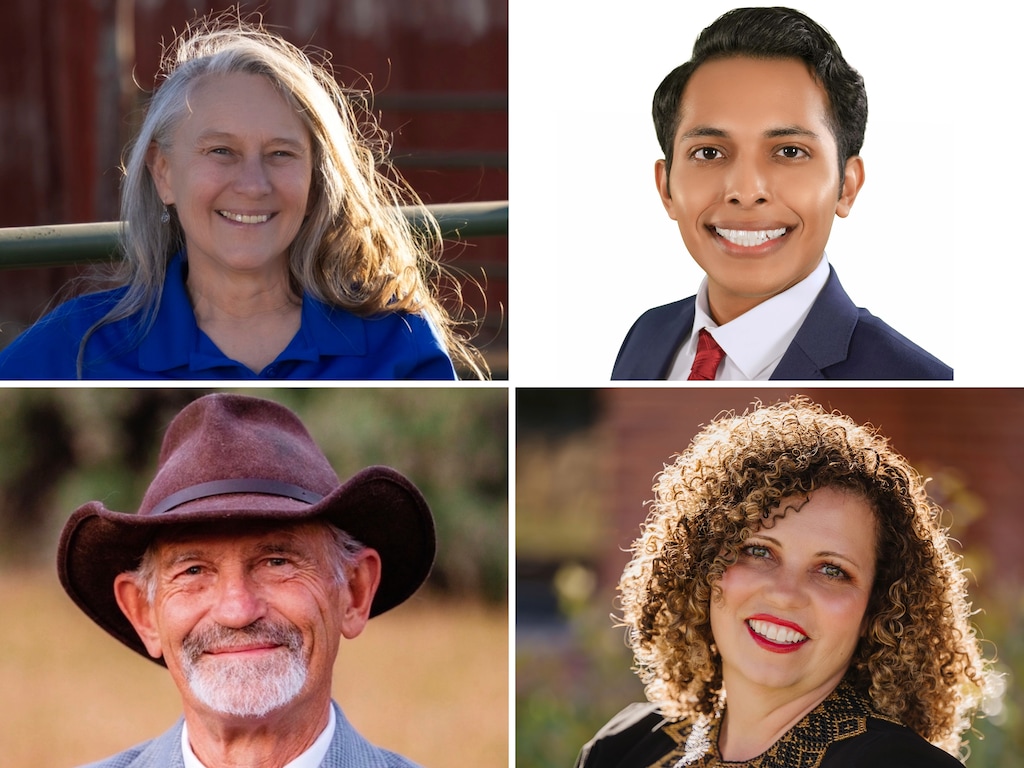
The race to represent Utah’s newly-drawn 3rd Congressional District is a crowded one, with six candidates vying to represent the district, which covers much of the eastern and southern parts of the state.
U.S. Rep. Celeste Maloy, who currently represents the state’s 2nd District, is running for reelection. She faces Democrat Kent Udell, Constitution party candidate Cassie Easley, Libertarian Michael Stoddard and unaffiliated candidates Adonis Hooslyn and Ayden Scott.
Here’s how the other candidates in the race said they would address voter concerns, including affordability, water issues and political corruption, and how they will vote on constitutional amendments.
Election Day is Nov. 3. Mail ballots must be dropped off at a ballot dropbox by 8 p.m. on Election Day or, if returned by mail, must be received by the county clerk by 8 p.m. on Election Day.
Candidates submitted photos and answers through a questionnaire. Answers may have been edited for style and clarity. Candidate responses are listed in alphabetical order by last name.
Utah voters told us government corruption is their top concern in this year’s election. Why do you think voters feel this way? And why should Utahns trust you to represent them?
Easley: I feel this way because our representatives only care about representing their Party. Because I am one of the people that doesn’t feel represented, and want to show that the people are more important than parties.
Hooslyn: Utah voters are tired of a government that seems to work better for billionaires, corporations and foreign governments than for working families. They see the insider deals, insider trading, wars being started and a lack of accountability for political failures while costs keep rising. I’m a working-class American who sees what they see. I’ll fight for a government that answers to the people and puts working Utahns first.
Maloy: Our government institutions rely on trust and support from the American public and Utahns. Utahns are concerned about corruption because they see Washington failing at its most basic jobs. Congress is continually spending too much, can’t control the debt, and each side continues to point fingers. To rebuild trust in these institutions, we must return to regular order, be transparent in decision-making, and refuse angry, divisive campaigns that tear down institutions for clicks.
Scott: Did not answer
Stoddard: Did not answer
Udell: We’re seeing corruption in all levels of government. Voters feel that the system is rigged against them and they are not wrong. Big money underwriting political campaigns is part of the problem. I do not take corporate political donations. At least 75% of my campaign’s donations come from individuals contributing $200 or less. Also, as an engineering scientist and ethics professor, I believe truth is vital. I will represent Utahns with integrity as that is how to conduct myself at all times.
Utahns told us affordability is their second-highest priority in this election. How would you help Utahns afford housing, groceries, gas and other day-to-day expenses?
Easley: It is not the responsibility of the federal government to make things more affordable, it is their responsibility to ensure that there is economic stability. With economic stability there would be more money in the pockets of individuals and that would mean cutting spending at the federal level.
Hooslyn: Utahns need relief, not excuses. I’ll fight to build more affordable housing, lower healthcare and prescription costs, protect workers’ wages and crack down on corporate price gouging. We should invest in Utah communities, support working families and stop giving tax breaks and subsidies to wealthy corporations that don’t need them. Government should make life more affordable for all working families in the United States.
Maloy: Affordability starts with getting Washington’s spending under control. When the government borrows too much, Utah families pay the price through higher inflation, higher interest rates and a weaker economy. I’ll keep pushing Congress to return to regular order, pass responsible budgets, cut waste, protect taxpayers and make long-term reforms that strengthen programs like Social Security. We need lower costs, more accountability and a government that lives within its means.
Scott: Did not answer
Stoddard: Did not answer
Udell: Housing: Federal support for Gov. Cox’s initiative for starter homes. Energy: Support transition to less expensive renewable sources. Healthcare: I support either universal healthcare or Medicare for all. Childcare: Push for federal funding for childcare including tax credits and deduction of childcare costs below a threshold income.
Water resources were also a top concern for voters. What policies would you support as Utah looks to balance growth with preservation of the Great Salt Lake and the Colorado River?
Easley: I would support policies that decreased the expansion of urban areas to allow for less water being used to allow the water tables and reservoirs to recharge.
Hooslyn: Utah’s water belongs to the people. It does not belong to developers, corporations or special interests. We can’t keep approving unchecked growth while our lakes and rivers run dry. I’ll fight for conservation, modern infrastructure, smarter agricultural water use, and sustainable development. Protecting the Great Salt Lake and Colorado River must come before short-term profits. We need growth that works for Utah families, farmers and future generations.
Maloy: As someone who has spent a career in water law and management, I know the value and stakes of proper water management in Utah. We have an opportunity ahead of us: we can preserve the Great Salt Lake, manage our state’s water resources and build a strong water future for Utah’s next generations. As chair of the Congressional Western Caucus, I will be a leading voice in Congress while ensuring that state and local governments can control their own water policies. Utah’s water belongs to Utahns.
Scott: Did not answer
Stoddard: Did not answer
Udell: Water is life. Utah needs a comprehensive assessment of surface water and ground water including actual availability, recharge, withdrawals, water quality and future demand. The 2026 State Water Plan is a good start but incomplete. I support fairly compensated leasing of water rights from legacy water users. The “use it or lose it” mentality is an obstacle for common sense reductions of water use. Research and incentives that promote innovative water conservation are a win-win for everyone.
What is another topic you care about and want to address if elected to public office?
Easley: Flocking systems & data centers - The flocking systems are a blatant disregard of the Fourth Amendment. I have nothing to hide as does most of the population, but that does not entitle government entities to track us. Data centers are being put in rural areas with no transparency. We don’t know the impacts on wildlife nor our resources. If we need them so bad, they should put them in urban areas.
Hooslyn: Flock cameras and sports gambling raise two different but important concerns. Flock’s automated license plate readers can help law enforcement investigate crime, but Utahns deserve strong limits on data collection, retention, sharing and government surveillance. Sports gambling can create serious financial and addiction risks, especially for young people. We should protect public safety and personal freedom while demanding transparency and accountability from both government and industry.
Maloy: Families are doing everything they can to live within their means, but the federal government keeps borrowing, spending, and passing the bill to the next generation. We need a serious course correction. That means cutting wasteful spending, reforming the budget process, reducing bureaucracy, growing the economy and putting everything on the table so we can protect taxpayers and rebuild trust.
Scott: Did not answer
Stoddard: Did not answer
Udell: Global Warming. Politicians avoid taking action, presumably due to campaign contributions from the fossil fuel industry. But it is real. It is increasing Utah’s fire, flood and drought risk. I propose the Carbon Fee & American Return (CFAR): charge polluters for the CO2 they release and return that revenue directly to Americans. Most families would come out ahead. This is a libertarian free-market solution that internalizes the cost of burning fossil fuels and rewards cleaner energy.
How will you vote on Constitutional Amendment A? If passed, the amendment will stop the practice of publishing the full text of amendments and ballot questions by lawmakers in a newspaper for 60 days ahead of an election and instead require that text to be published on two state websites.
Easley: Against
Hooslyn: Against
Maloy: Decline to answer
Scott: Did not answer
Stoddard: Did not answer
Udell: For
How will you vote on Constitutional Amendment B? If passed, citizen-proposed laws that increase taxes would need to be approved by 60% of voters, instead of a simple majority.
Easley: For
Hooslyn: Against
Maloy: Decline to answer
Scott: Did not answer
Stoddard: Did not answer
Udell: Against
What’s your favorite book and why?
Easley: My favorite book is “Atlas Shrugged.” I believe in capitalism and without it our country will fail. This book is a great guide of what happens when socialism destroys a country.
Hooslyn: “Blood Meridian” by Cormac McCarthy is my favorite book because it explores violence, morality, power and what happens when people abandon their humanity. I also love how McCarthy makes the American West feel almost mythological.
Maloy: “Leadership and Self Deception”
Scott: Did not answer
Stoddard: Did not answer
Udell: Favorite recent book is “Nexus: A Brief History of Information Networks from the Stone Age to AI” by Yuval Noah Harari. It is an insightful account of how we arrived at this moment and the urgent choices we must make to survive and thrive.