facebook-pixel

After Charlie Kirk killing, Utahns see political violence as a rising problem nationwide — but less so at home

According to poll results published Thursday, 91% of participants said it was important that leaders encourage civility.
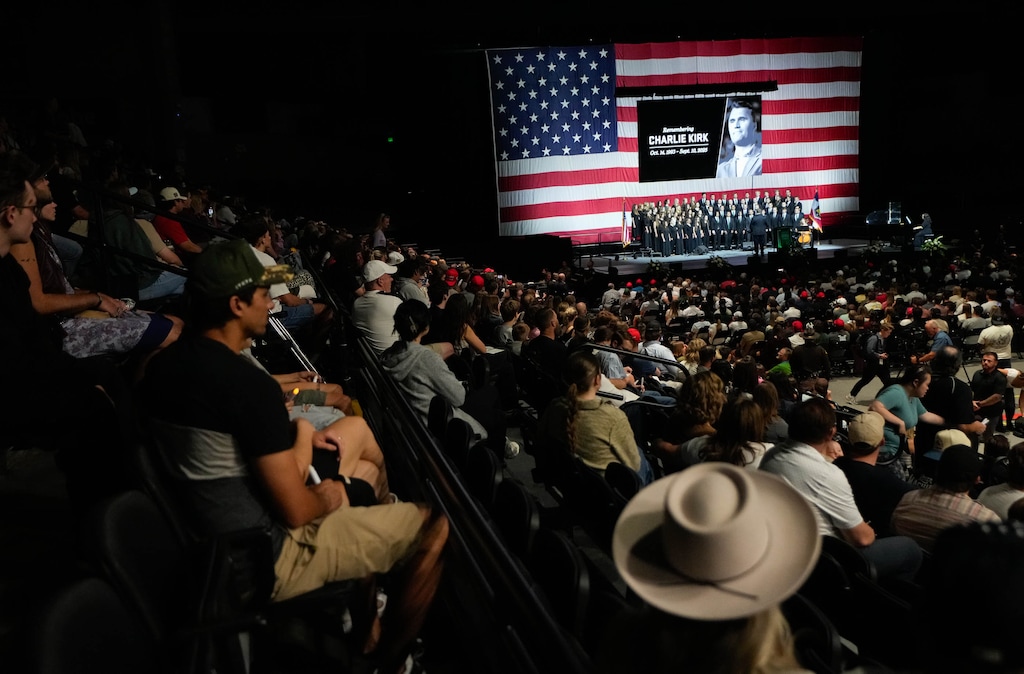
(Francisco Kjolseth | The Salt Lake Tribune) Utah Valley University holds a vigil on Friday, Sept. 19, 2025, at the UCCU Center following the recent shooting death on campus of Charlie Kirk, conservative commentator and founder of Turning Point USA.

In the weeks since conservative activist Charlie Kirk was shot and killed in Utah, a majority of the state’s residents say they are “very concerned” about a rise in political violence nationwide — but fewer are worried that it will return to affect their communities.

According to polling published Thursday by Arizona-based Noble Predictive Insights, approximately 58% of Utahns are “very concerned” and another 30% are “somewhat concerned” when it comes to political violence in the U.S.

Respondents are less on edge about political violence closer to home. About 43% of participants responded they were “very concerned” about political violence taking place in Utah, and 34% said they were “somewhat concerned.”

The company surveyed over 600 Utah registered voters between Sept. 22 and 26 — around two weeks after Kirk was fatally shot on Utah Valley University’s campus in Orem.

“This poll suggests Utahns aren’t viewing their state as the epicenter of a violent hurricane, as much as they see it as one more place caught up in the whirlwind,” said Noble Predictive Insights founder and CEO Mike Noble in a statement.

A significant majority of surveyed Utahns — 85% — agreed that political violence has increased in the last five years, and that sentiment was relatively consistent across political affiliations.

Over the summer, one person was shot at a “No Kings” march protesting President Donald Trump’s policies in downtown Salt Lake City. That individual, Afa Ah Loo, later died.

Utah’s was the only rally among dozens held nationwide that weekend that saw a violent death.

Pollsters also asked participants specifically whether they agreed or disagreed that “social media companies have contributed to increased political violence in the U.S.,” and whether those corporations have done enough to “prevent the spread of violent or extremist content.”

In Utah, an early enactor of social media regulations meant to protect young people, 73% of respondents either strongly agreed or somewhat agreed that social platforms have played a role in stoking violence. And 63% answered that the companies need to do more to reduce violent content on their sites, with older Utahns being more likely to see a lack of content moderation as a problem.

Utah’s Republican Gov. Spencer Cox has been a vocal proponent of cracking down on social media companies, and in an appearance last month on NBC’s “Meet the Press,” he called them “conflict entrepreneurs.”

Cox was booed by an audience when he joined other politicians in standing in for the late Kirk at a Turning Point USA event at Utah State University last week. But generally, the governor’s response to Kirk’s killing on a Utah university campus — condemning toxic political division and violence — has drawn bipartisan praise.

According to Noble Predictive Insight’s poll, Utahns widely agree that political figures should take the lead in diffusing political hatred.

About 75% said it is “very important” and 19% answered it is “somewhat important” that “state and local leaders to speak out against political violence and encourage civility in public discourse.”

“We’re seeing a deep public desire for a reset,” Noble said in a statement. “It’s a recognition that the political temperature has gotten too hot and a call for leaders to dial it back — to set an example of restraint in an era of escalating rhetoric."