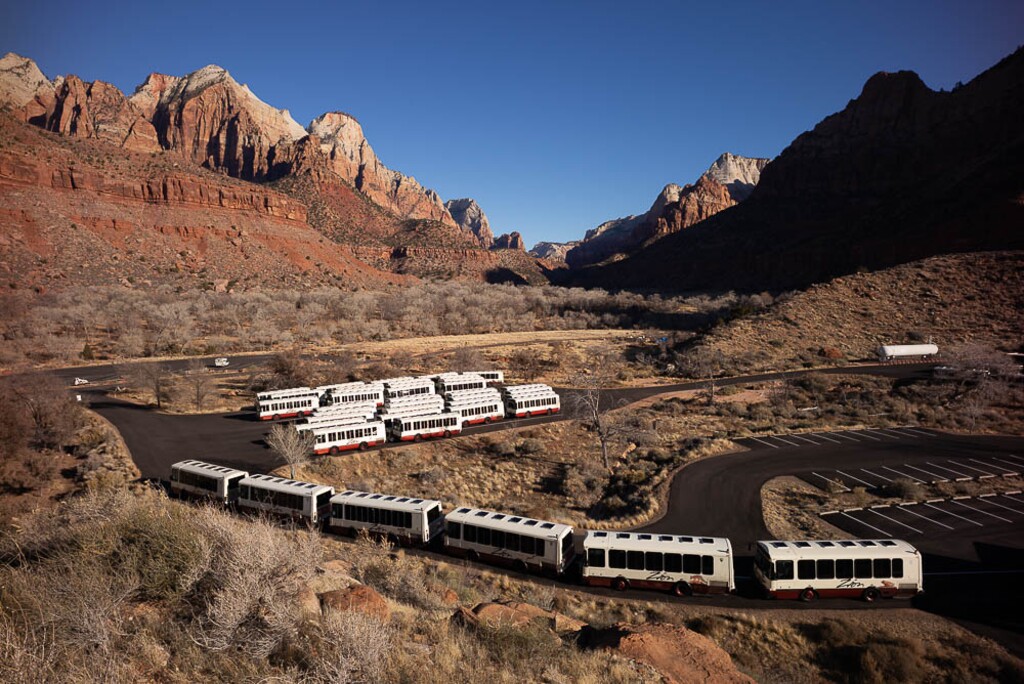
Zion National Park shut down its shuttle bus service Tuesday to avoid spreading the coronavirus, effectively capping visits to its most popular destinations in Zion Canyon, while other Utah parks announced closures of visitor centers, exhibits, guided tours and indoor programs.
“Moab is asking people to please stay in their home community,” Mayor Emily Niehaus said. “This is an urgent message to people considering travel to Moab.”
Utah’s busiest national park, Zion remains open to the public — as do all the region’s national parks. Visitors will be allowed to drive up Zion Canyon, something that hasn’t happened during the spring high season in years, but don’t expect it to be easy.
By 10:30 a.m. Tuesday, the canyon absorbed as many cars as there are parking spaces and officials closed it to vehicle access. Visitors could wait until parking became available to enter, officials posted on Twitter, or they could hike the Pa’rus or Watchman trails from the closed visitor center.
Other options include driving the 12.5 miles to the park's quiet east entrance and hike to East Rim destinations from there, or drive up the Kolob Terrace Road from Virgin to reach the Grapevine, Hop Valley and other remote trailheads.
“Park superintendents are assessing their operations now to determine how best to protect the people and their parks going forward," Deputy Director David Vela said in a news release.
Park visitors are advised to check individual parks’ websites before they travel to get current information, which is subject to change at a moment’s notice.
In San Juan County, the Bureau of Land Management’s Kane Gulch Ranger Station near Bears Ears National Monument had no immediate plans to close, though rangers were greeting visitors outside the facility to reduce the risk of virus transmission. Backcountry permits for the area saw a wave of cancellations, followed by an uptick in walk-in reservations after most ski areas in Utah and Colorado suspended operations. Brian Head Resort, in Iron County, ended its ski season Tuesday.
Conditions remain “fluid” and other closures could be announced, according to State Parks spokesman Eugene Swalberg.
“Employees have been asked to clean high-traffic areas or highly used materials regularly, as well as to not report to work should there be concerns about their health status,” Swalberg said. “This includes limiting contact with the public regarding payments, such as utilizing card transactions and asking the public to come prepared with exact change to utilize pay stations or ‘iron rangers.’ We are also looking into logistics to launch a prepay system in the coming days.”
Some Utah national parks are also looking to limit the transactions between visitors and staff, requiring guests to pay entrance fees and obtain wilderness permits online.
Zion’s shuttle service was implemented about 20 years ago to alleviate traffic congestion in the narrow canyon. Mandatory for canyon visitors much of the year, the shuttle buses have enabled the park to accommodate more and more visitors, reaching a record 4.9 million last year. Without them, visitation will likely drop this spring and push traffic to less-traveled parts.
Park officials are exploring additional measures, such as creating “virtual visitor centers” in lieu of staffed buildings. Also closed are the Human History Museum and Kolob Canyons Visitor Center, while the concessionaire-run Zion Lodge remains open.
Arches and Canyonlands limited visitor services to minimize contact between staff and the public in accordance with federal guidelines to ensure 6 feet of social distance between people. The parks’ visitor centers were closed Tuesday, but staff will remain available on the centers’ patios to answer questions and assist with trip planning, according to the parks’ spokeswoman, Karen Garthwait.
The park is suspending ranger-led tours of Fiery Furnace and barring new check-ins at the Devils Garden Campground for the next two weeks, in accordance with the new health department order.
While Arches remains accessible, tourists won’t find a place to stay after the Southeast Utah Health Department on Tuesday banned anyone other than “essential visitors” and “primary residents” from checking into overnight accommodations or camping on private or public lands. The order applies to dispersed camping and BLM campgrounds, but not Canyonlands’ campgrounds, which are in San Juan County outside the health department’s jurisdiction.
Moab leaders, residents and health care officials last weekend became increasingly alarmed with the hordes of tourists arriving in their small town, fearing the spread of COVID-19 and worrying that the Moab Regional Hospital lacks the resources to cope with the public health emergency should visitors or residents fall ill.
The hospital’s leaders sent a letter to Utah Gov. Gary Herbert imploring him to shut down all nonessential businesses in Moab. They also want national parks to close.
When the spring tourism season amps up, at least 5,500 tourists often flood Moab on any given day. But the Southeast Utah Health Department all but boarded up the city and the rest of its three-county service area to visitors Tuesday, when the agency’s director, Bradon Bradford, issued an order that banned table service at restaurants, closed all gathering places but churches and private clubs (many of which already have shut down), and restricted all overnight accommodations, including RV parks and town homes, to just “essential visitors.”
“Effective tonight, we are restricting the check-in of new guests in all three counties [Grand, Emery and Carbon] to only those that can demonstrate that they are working in our counties and their dependents and spouses,” Bradford said Tuesday in a Facebook video post. “We feel like if we don’t take action now, our residents will suffer, our health care will suffer. It is not built to handle the number of people that could potentially hit in a wave of sickness all at once.”