I briefly won my battle with myrtle spurge, and all it took was a minor head injury and some chemical burns
Destroy this invasive weed before the problem gets worse.
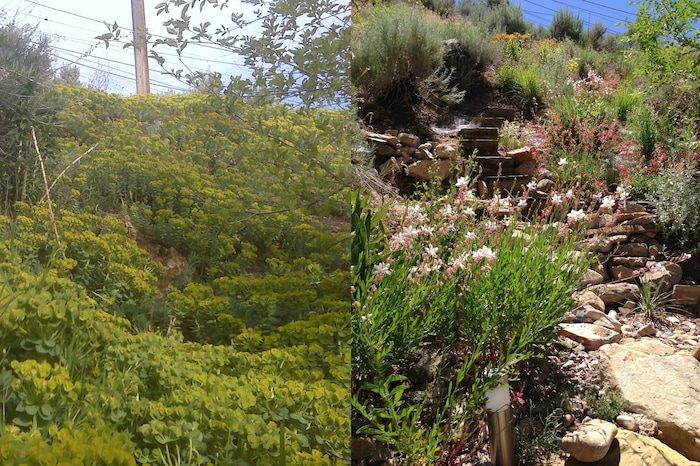
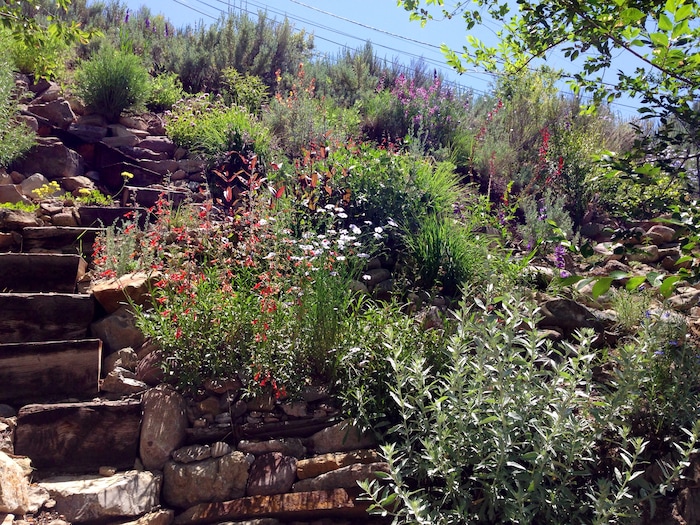
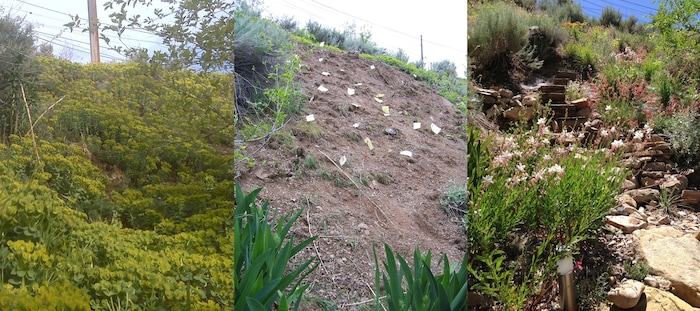
(Erin Alberty | The Salt Lake Tribune) Starting in 2010, reporter Erin Alberty and her husband eradicated a carpet of invasive Myrtle Spurge from their backyard in Salt Lake City, and replaced it with a garden of plants from the American West. Here are images of the same site in 2010 and in 2013.
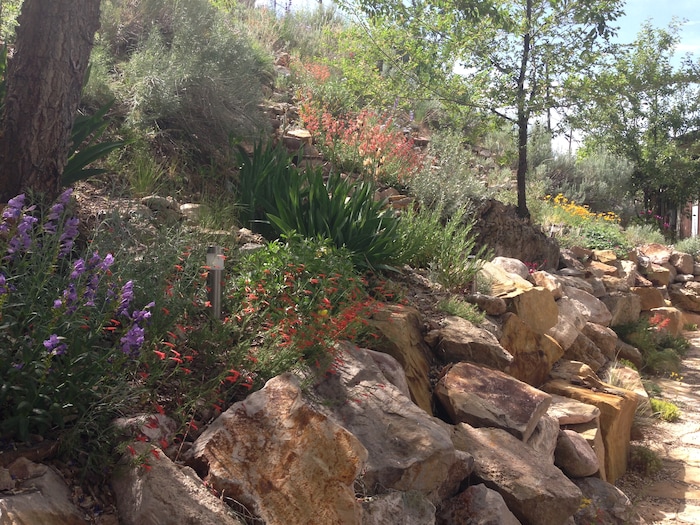
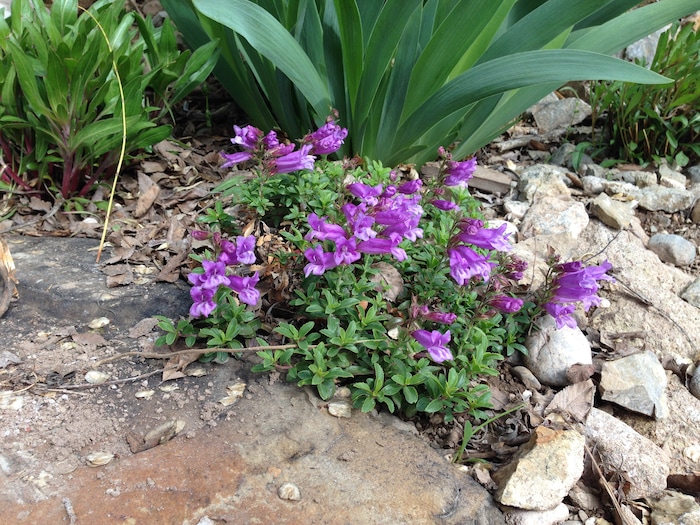
(Erin Alberty | The Salt Lake Tribune) Penstemon venustus and Penstemon pinifolius bloom June 4, 2014 in the former backyard of reporter Erin Alberty in Salt Lake City. The Utah native plants helped to replace a carpet of invasive Myrtle Spurge.
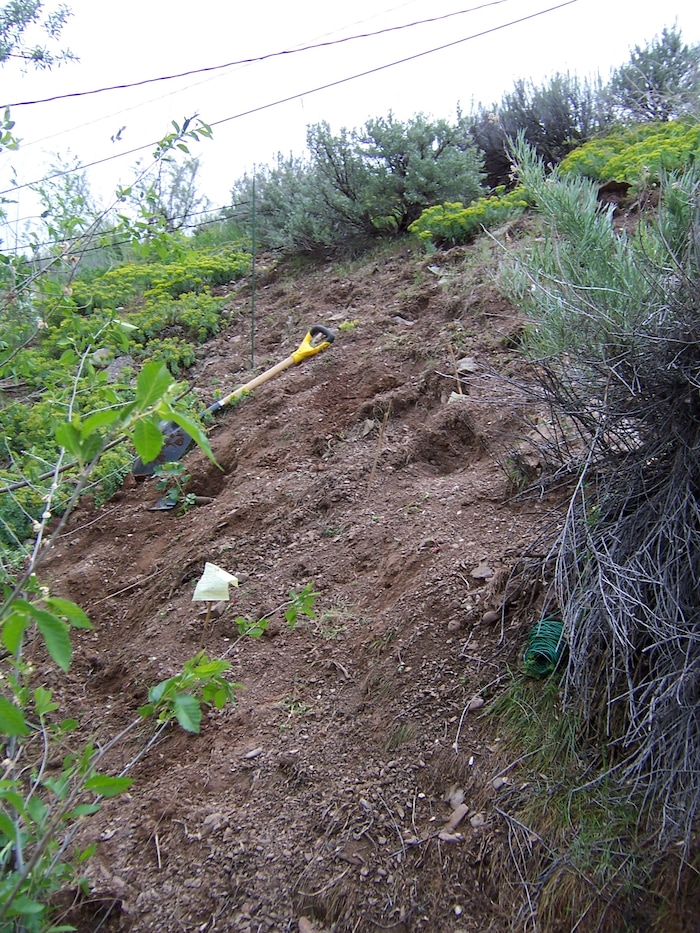
(Erin Alberty | The Salt Lake Tribune) A swath of naked mud looms in the former backyard of reporter Erin Alberty on May 21, 2010, after she and her family pulled a carpet of invasive Myrtle Spurge off the slope in Salt Lake City.
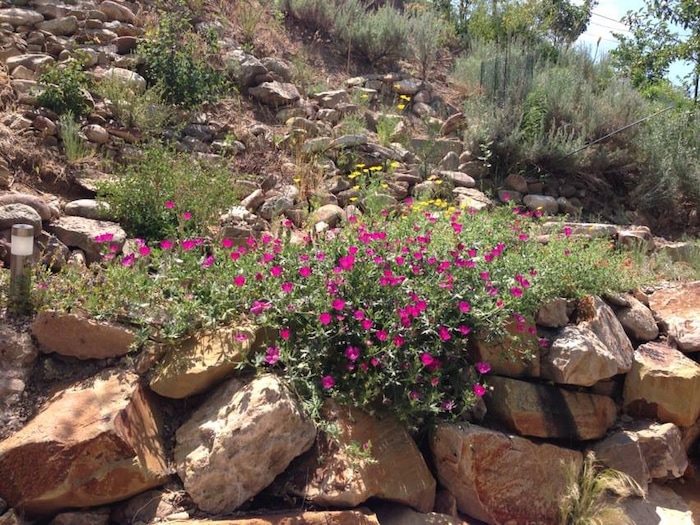
(Erin Alberty | The Salt Lake Tribune) The magenta blossoms of Prairie Winecups cascade over rocks July 2013 in the former backyard of reporter Erin Alberty in Salt Lake City. The plant replaced a carpet of invasive Myrtle Spurge.
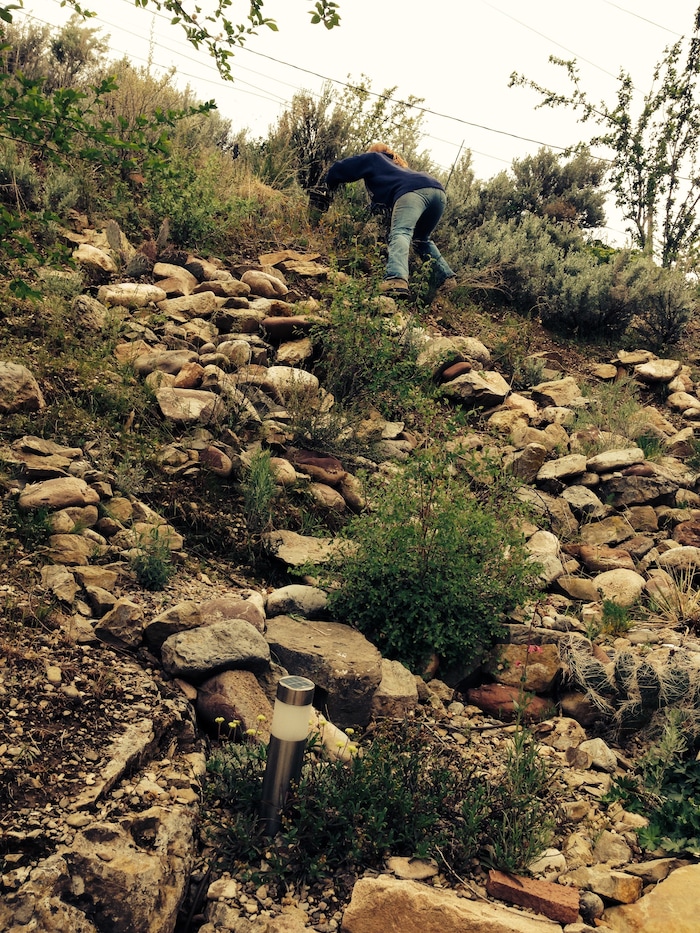
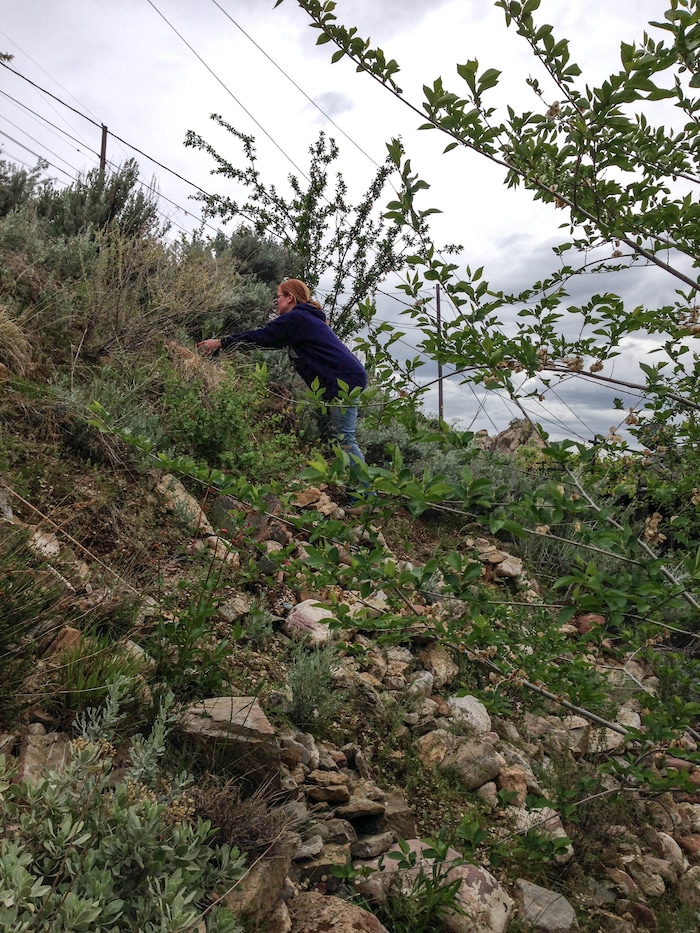
(Courtesy photo) Reporter Erin Alberty works in the garden May 11, 2014 in Salt Lake City. The slope had been covered in invasive Myrtle Spurge.
(Erin Alberty | The Salt Lake Tribune) The purple blossoms of Penstemon fruticosus appear May 10, 2014 in the former backyard of reporter Erin Alberty in Salt Lake City. It is one of dozens planted to replace a carpet of invasive Myrtle Spurge.
(Erin Alberty | The Salt Lake Tribune) White sage, little bluestem bunchgrass and rabbitbrush fill out the autumn scene in a Salt Lake City garden. Reporter Erin Alberty and her husband used plants from the American West to replace the invasive Myrtle Spurge that carpeted the slope. Photo taken October 2014.
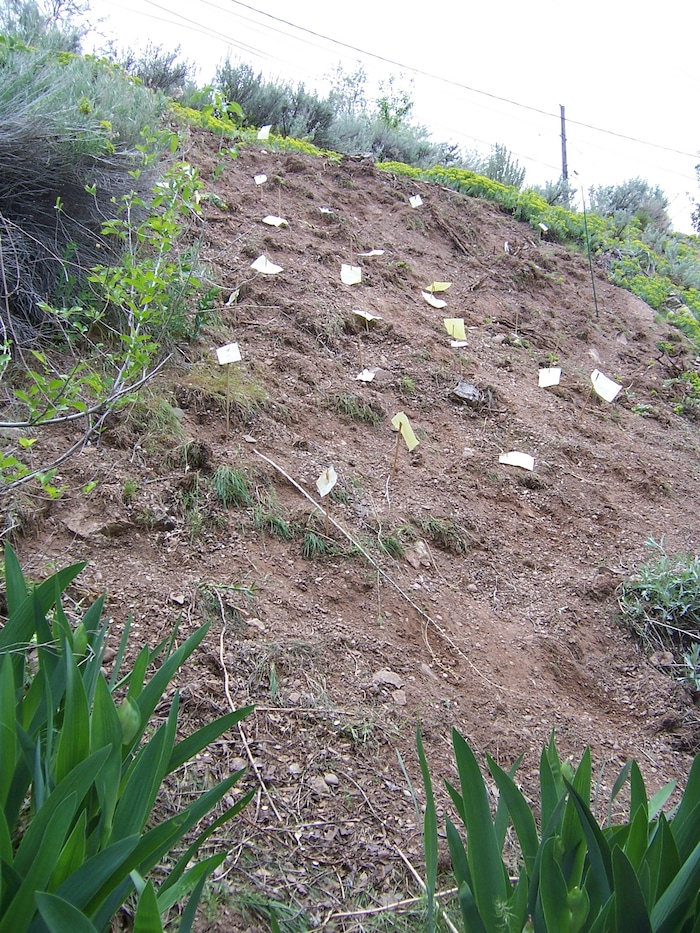
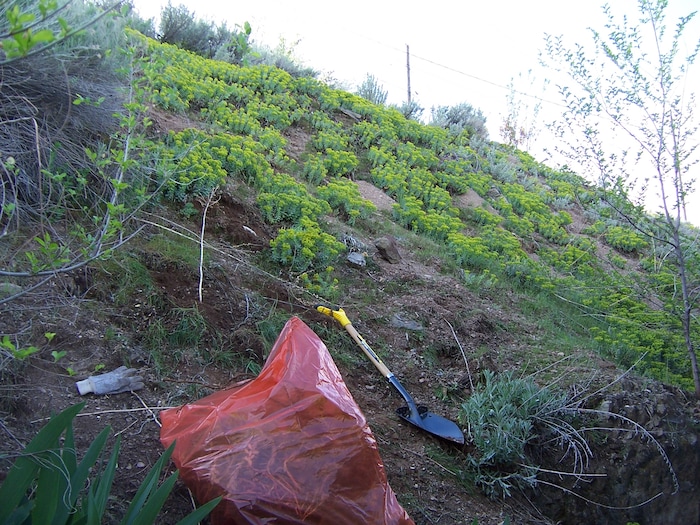
(Erin Alberty | The Salt Lake Tribune) Bare dirt looms over a Salt Lake City home May 21, 2010, after the slope was partly cleared of invasive Myrtle Spurge.
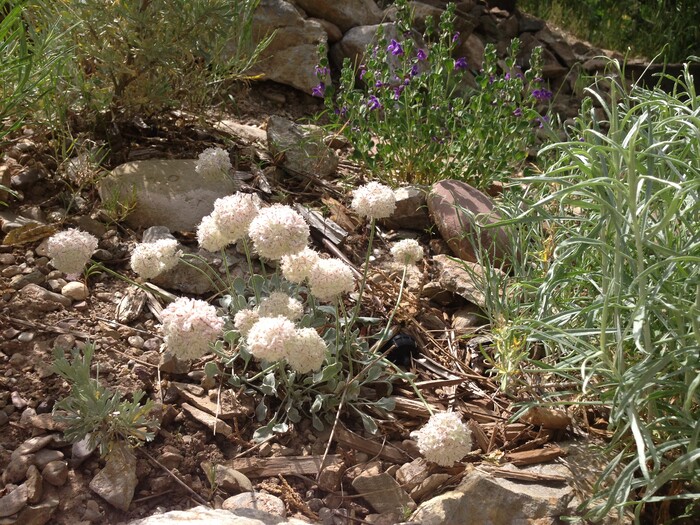
(Erin Alberty | The Salt Lake Tribune) White poms hover over Cushion Buckwheat on June 4, 2014 in the former backyard of reporter Erin Alberty in Salt Lake City. It helped to replace a carpet of invasive Myrtle Spurge.
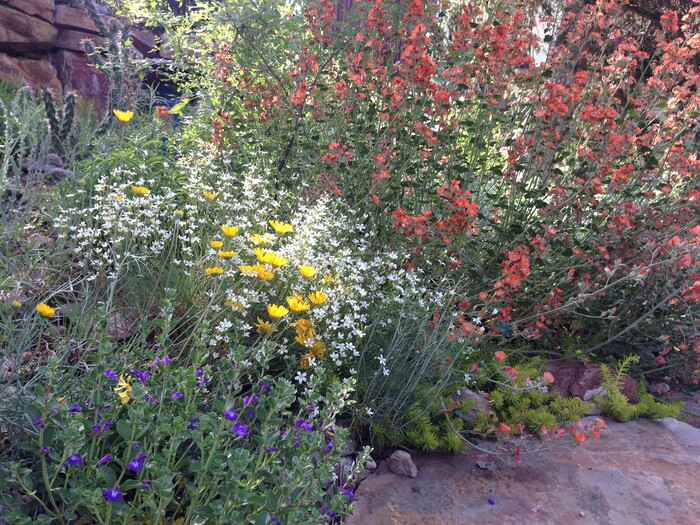
(Erin Alberty | The Salt Lake Tribune) Globemallow, sandwort, Sundancer Daisy and scutellaria bloom June 3, 2015 at the former home of reporter Erin Alberty in Salt Lake City. The plants helped to replace a carpet of invasive Myrtle Spurge.
(Courtesy photo) Reporter Erin Alberty steps lightly over a steep section May 11, 2014 in her former backyard as she gardens a slope that had been covered in invasive Myrtle Spurge.
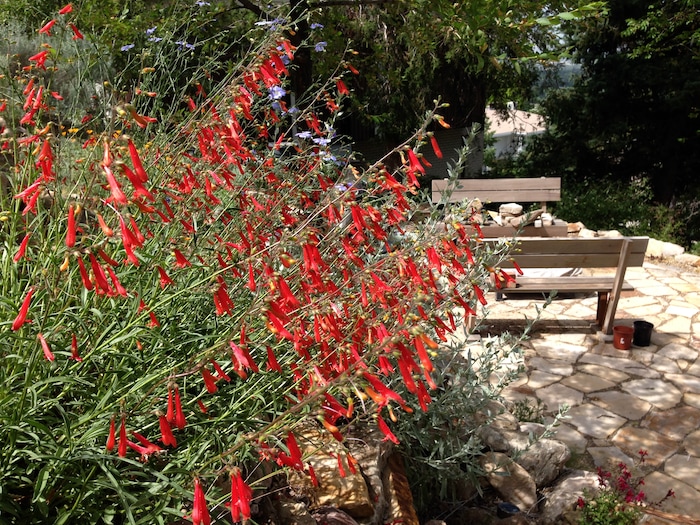
(Erin Alberty | The Salt Lake Tribune) Red blossoms of Bridges Penstemon hang over a patio June 4, 2014 in the former backyard of reporter Erin Alberty in Salt Lake City. The Utah native plant helped to replace a carpet of invasive Myrtle Spurge.
(Erin Alberty | The Salt Lake Tribune) Red penstemons, White Sage and Blue Flax light up the former backyard of reporter Erin Alberty on June 2, 2015 in Salt Lake City. The Utah native plants helped to replace a carpet of invasive Myrtle Spurge.
(Erin Alberty | The Salt Lake Tribune) Invasive Myrtle Spurge is gradually thinned out May 14, 2010 in the former backyard of reporter Erin Alberty in Salt Lake City.
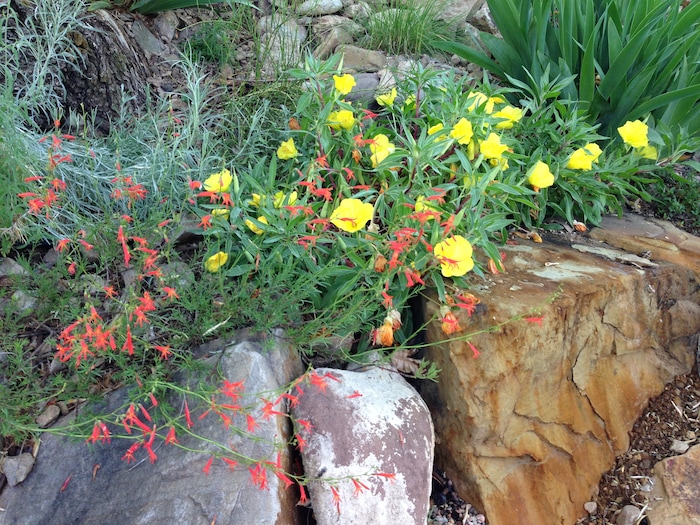
(Erin Alberty | The Salt Lake Tribune) Red blossoms of Pineleaf Penstemon mingle with yellow Missouri Evening Primrose on June 12, 2015 in the former backyard of reporter Erin Alberty in Salt Lake City. The plants helped to replace a carpet of invasive Myrtle Spurge.
(Erin Alberty | The Salt Lake Tribune) Various penstemons bring color to the former backyard of reporter Erin Alberty on June 10, 2015 in Salt Lake City. The plants helped to replace a carpet of invasive Myrtle Spurge.
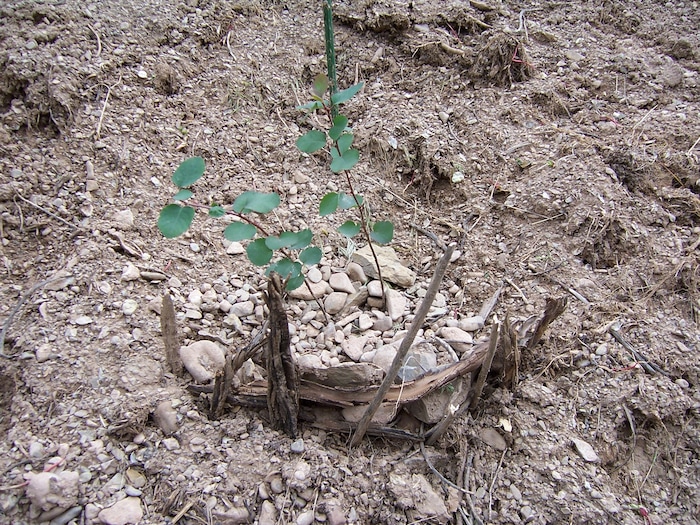
(Erin Alberty | The Salt Lake Tribune) A tiny, improvised retaining wall helps the roots of a Utah Serviceberry sapling to capture water on a precarious slope in Salt Lake City. Reporter Erin Alberty planted the shrub when and her family cleared the slope of invasive Myrtle Spurge in May 2010.
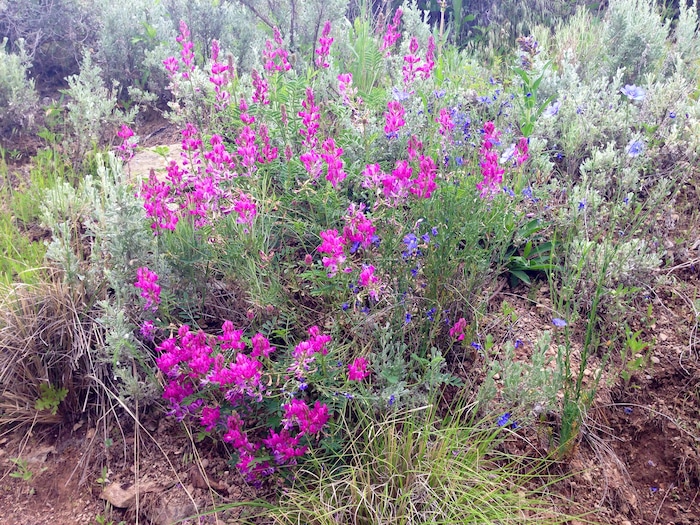
(Erin Alberty | The Salt Lake Tribune) Sweetvetch glows hot pink alongside Blue Flax on May 26, 2015 in the former backyard of reporter Erin Alberty in Salt Lake City. The Utah native plants helped to replace a carpet of invasive Myrtle Spurge.
(Erin Alberty | The Salt Lake Tribune) Bridges Penstemon takes center stage June 3, 2015 in the former backyard of reporter Erin Alberty in Salt Lake City. The Utah native plant helped to replace a carpet of invasive Myrtle Spurge.
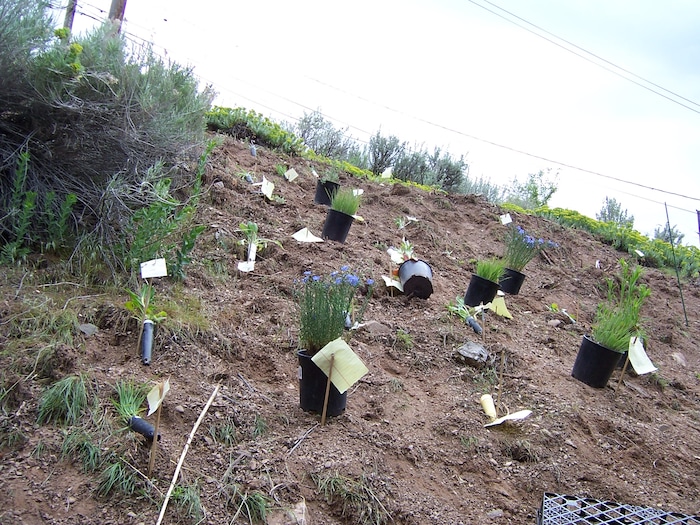
(Erin Alberty | The Salt Lake Tribune) Utah native plants are ready to go in the ground May 21, 2010 in the former backyard of reporter Erin Alberty in Salt Lake City. Invasive Myrtle Spurge was cleared from the slope.
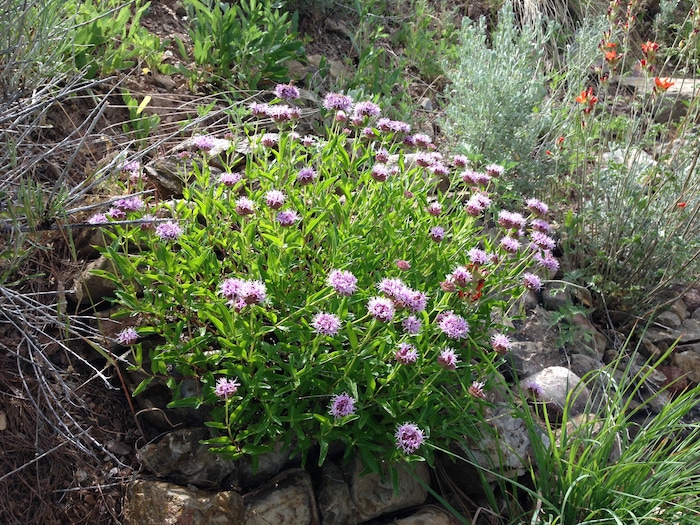
(Erin Alberty | The Salt Lake Tribune) Lavender blooms light up a Little Beebalm on June 4, 2015 in the former backyard of reporter Erin Alberty in Salt Lake City. The Utah native plant helped to replace a carpet of invasive Myrtle Spurge.
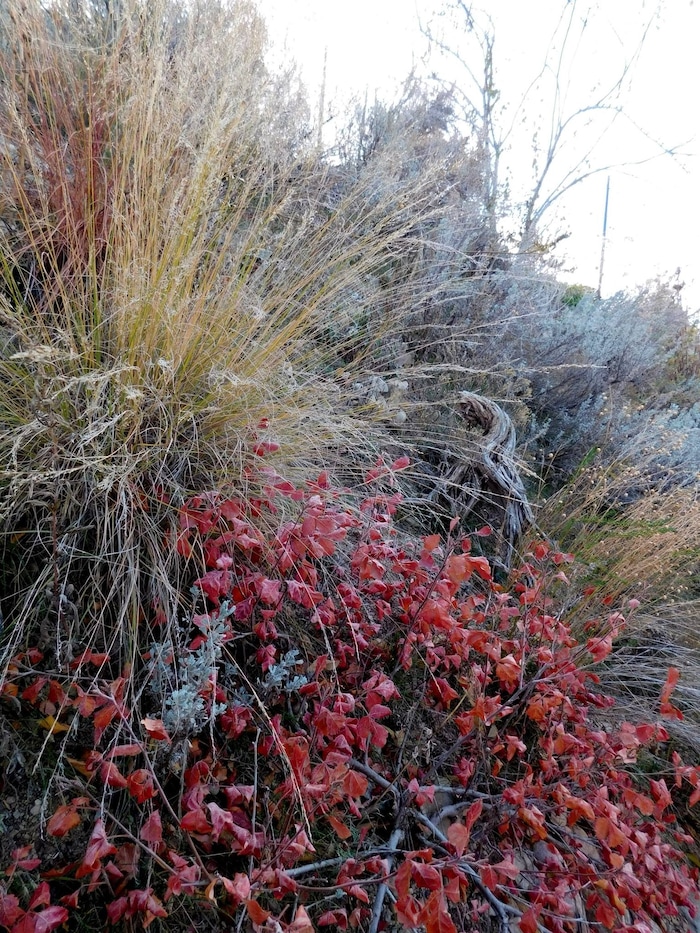
(Erin Alberty | The Salt Lake Tribune) Oakleaf Sumac and Alkali Sacaton grass bring warmth to a late fall scene Nov. 17, 2015 in the former backyard of reporter Erin Alberty in Salt Lake City. The Utah native plants helped to replace a carpet of invasive Myrtle Spurge.
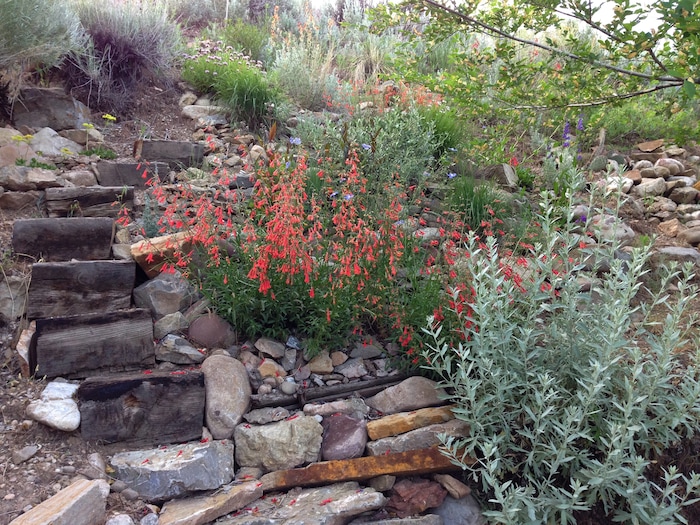
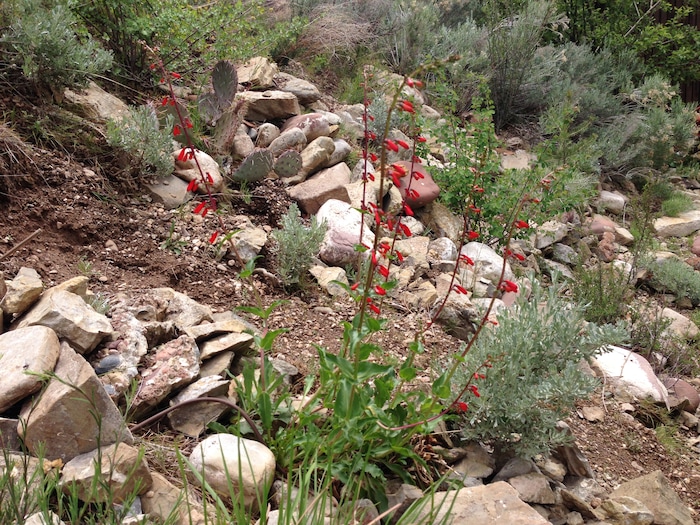
(Erin Alberty | The Salt Lake Tribune) Firecracker Penstemon, Prickly Pear and Big Mountain Sage fill in the former backyard of reporter Erin Alberty on May 4, 2015 in Salt Lake City. The Utah native plant helped to replace a carpet of invasive Myrtle Spurge.
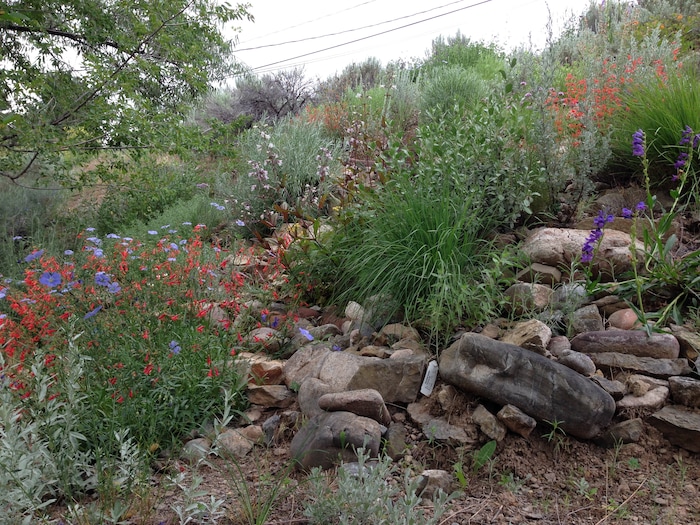
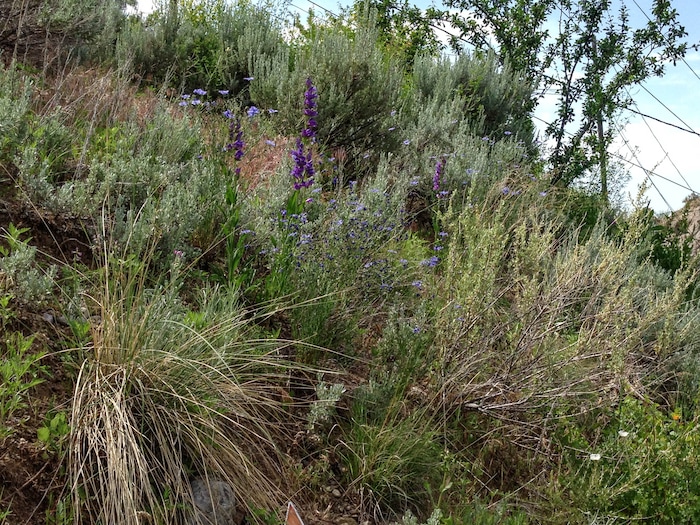
(Erin Alberty | The Salt Lake Tribune) Blue Flax, Rocky Mountain Penstemon and Fourwing Saltbush fill in a wildscape June 4, 2014 near the back of the former backyard of reporter Erin Alberty. The Utah native plants helped to stabilize a slope that had been covered in invasive Myrtle Spurge. A less formal landscape in the back of a garden transitions to the spurge-infested green space on the mountain behind it.
(Erin Alberty | The Salt Lake Tribune) Starting in 2010, reporter Erin Alberty and her husband eradicated a carpet of invasive Myrtle Spurge from their backyard in Salt Lake City, and replaced it with a garden of plants from the American West. Here are images of the same site from 2010 to 2013.
(Erin Alberty | The Salt Lake Tribune) Myrtle spurge carpets the former backyard of reporter Erin Alberty on May 13, 2010 in Salt Lake City. After an intensive clearing effort, the invasive weed has begun to return to the property.
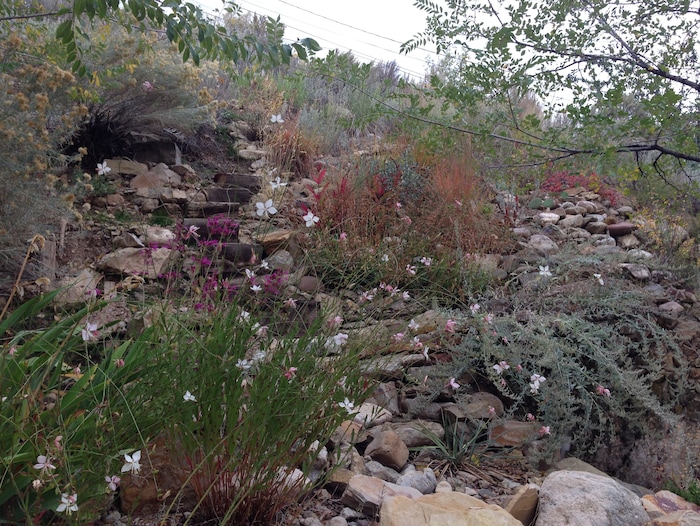
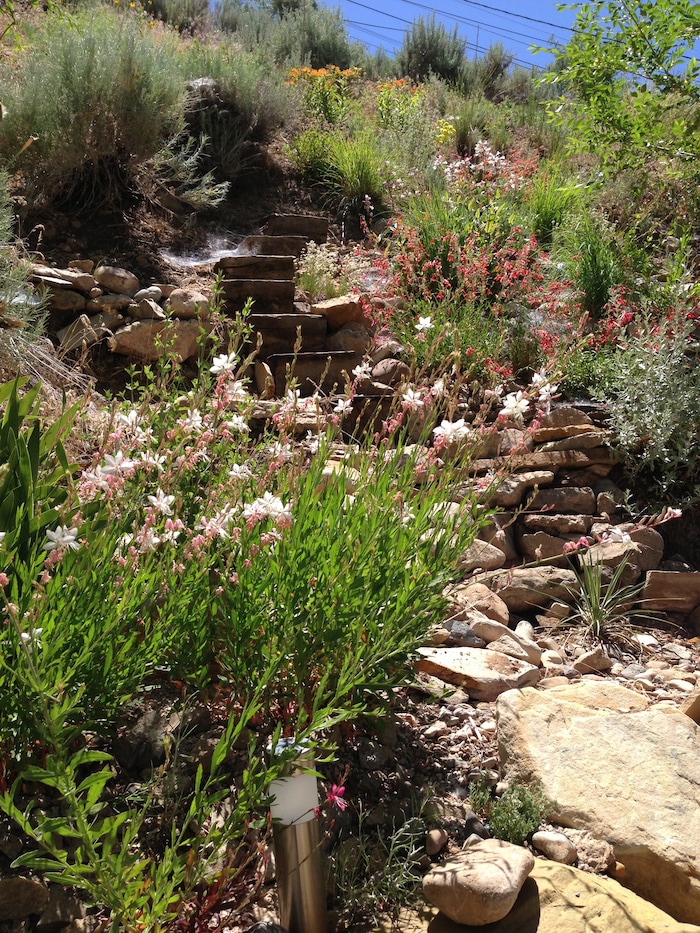
(Erin Alberty | The Salt Lake Tribune) Gaura, penstemons and butterfly weed bring color to a Salt Lake City garden on June 23, 2013. Reporter Erin Alberty and her husband used plants from the American West to replace the invasive Myrtle Spurge that carpeted the slope.
I had no interest in gardening when I came to Salt Lake City.
My husband and I lived for years in a condo on Wasatch Drive. Behind us was green space, and we were happy to let the mountain landscape for us. Zero water, zero cost, zero work. Let the wild plants do their job, we said.
Little did we know the mountain was in the thrall of a villain that kills all in its path. It scars earth and flesh alike. It can blind children. And it was carpeting our backyard.
MYRTLE SPURGE!
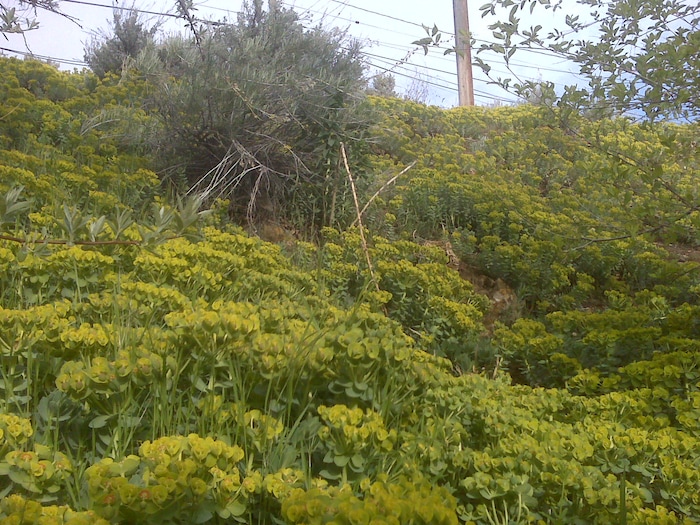
(Erin Alberty | The Salt Lake Tribune) Myrtle spurge carpets the former backyard of Salt Lake Tribune reporter Erin Alberty, as seen in May 2010. Alberty and family made it their goal to remove the noxious weed from the Salt Lake City property, only to see it return a few years later after they had moved out.
We first discovered this Force of Evil in 2010, during a countywide awareness campaign. The waxy, stemmy succulent had been used in landscapes as a drought-tolerant ground cover — but it spreads prolifically and was invading the Wasatch foothills. I beelined to our slope and began pulling the weeds obsessively.
It was hard; the long taproots had wedged themselves between boulders, and I frequently fell backward while pulling them, whacking my head on rocks.
Then came the burns.
My hands, arms and face puffed up, red and hot. The caustic sap of the myrtle spurge vindictively spattered onto my skin as I ripped it out of the ground.
After a few days, we had a full carload of demon plants to dispose of — and a massive swath of naked dirt looming above our house.
(Erin Alberty | The Salt Lake Tribune) Utah native plants are ready to go in the ground May 21, 2010 in the former backyard of reporter Erin Alberty in Salt Lake City. Invasive Myrtle Spurge was cleared from the slope.
We frantically plopped a bunch of baby native plants onto our mudslide-to-be. About two-thirds of them died in the summer heat. Turns out it’s hard for even well-adapted plants to grow on a steep slope — and it’s instructive that spurge is able to thrive in seemingly impossible sites. How can other plants compete with that? No wonder it’s taking over whole mountainsides.
The next spring, baby sages and rabbitbushes immediately began to emerge where we had removed the spurge. A colony of milkvetch filled in some bare ground with silvery foliage and dark pink flowers. Broom snakeweed popped up in graceful plumes. I got better at gardening and kept some plants alive.
(Erin Alberty | The Salt Lake Tribune) Firecracker penstemon, prickly pear and big mountain sage filled in the former backyard of Tribune reporter Erin Alberty, as seen on May 4, 2015 — after intensive efforts to remove an infestation of myrtle spurge. The Utah native plants helped to replace a carpet of the invasive weed.
Then a carpet of green sprouts began to darken the ground. I plucked some out, and white sap dribbled onto my fingers.
The spurge was back!
But it was easier to pull the sprouts. We cleared them out and kept pulling the mature spurge, broadening the perimeter of our attack. We added herbicide to our arsenal, which tripled our efficiency. Each summer we heard the pop-pop-pop of the spurge seedheads bursting on the hill behind our yard and knew they were shooting ever more progeny at us. But each year the native plants grew bigger, and the new generations of spurge sprouts were thinner.
After about four years, the sprouts all but stopped appearing in the area we first had cleared.
Meanwhile, I became addicted to gardening. As the slope became more arrayed in the colors and textures of my plants, it also came alive with buzzing and chirping. A trio of baby owls learned to fly in our yard. Peregrine falcons perched on the nearest utility pole. Our garden won a Habitat Hero award from the Audubon Society, and pictures of it appeared on a plant nursery’s ads.
(Erin Alberty | The Salt Lake Tribune) As efforts to remove myrtle spurge from the yard began to take hold, flowers bloomed and birds returned to the yard.
My family moved out of that condo in 2016. I recently visited the old neighborhood and saw those devilish neon yellow blossoms pouring down yards that were spurge-free just two years ago. It was creeping again into my old backyard. It also had escaped its domain on the west face of the mountain and thoroughly infested slopes and drainages to the south.
It’s depressing.
I kind of want to hate everyone who doesn’t care how bad this is for our mountains. I want to hate my old neighbors. I want to hate the county for not vigorously enforcing its ban and the state for not even listing it as a noxious weed until recently.
But the truth is a lot of people don’t know about this threat. Hardly any of my conservation-minded friends think or talk about myrtle spurge. I don’t know if they’d even pull it from their yards if it were there.
It makes all that work — the blisters, the head wounds — feel like a waste.
But I wouldn’t take it back. Now I have proof that myrtle spurge can be beaten with diligence. There were years when almost no spurge sprouted on my property, even with a mob of seed-spraying invaders close by.
It would have been much easier to deal with this problem earlier. But we can’t say it’s impossible now.
It’s also not too late to at least internalize the Lesson of the Spurge: We need to clean up our messes as soon as we know about them.
(Erin Alberty | The Salt Lake Tribune) Invasive myrtle spurge is gradually thinned out in the former backyard in Salt Lake City of Tribune reporter Erin Alberty.
Tips for ridding your property of myrtle spurge
Wear pants and long sleeves, as well as protective eyewear, as you pull, to shield yourself from the plant’s caustic sap.
Bag up spurge and throw it in the garbage — NOT green waste bins. That can spread the weed in compost.
Whether you pull the weeds or spray them with herbicide, you will need to keep up with newly sprouting spurge seeds for a couple of years.
If your property is adjacent to spurge infestations, you can shield your site from the yearly sprays of exploding seedheads by planting your perimeter with native shrubs and large bunchgrasses. Sage, rabbitbush, fourwing saltbush, purshia, mountain mahogany, Apache plume, oakleaf sumac, basin wild rye and alkali sacaton can give you a nice mix of colors and textures.