By renaming new Utah monument Shash Jaa, is Trump trying to divide Native American tribes?
The new name means ‘Bears Ears’ in Navajo, but the five-tribe coalition that sought the monument had asked for an English name for the sake of unity.
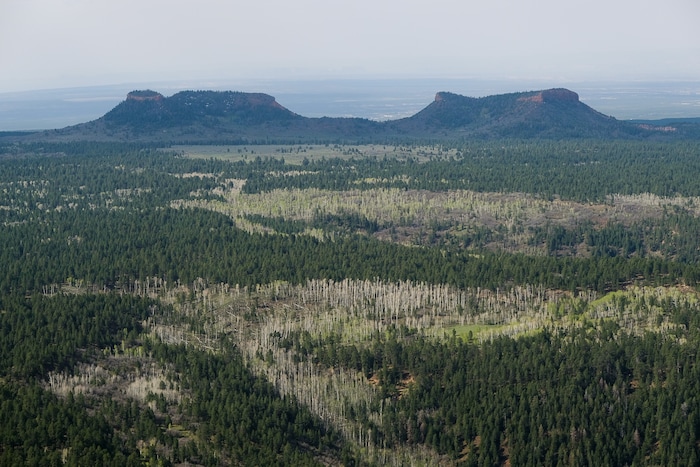
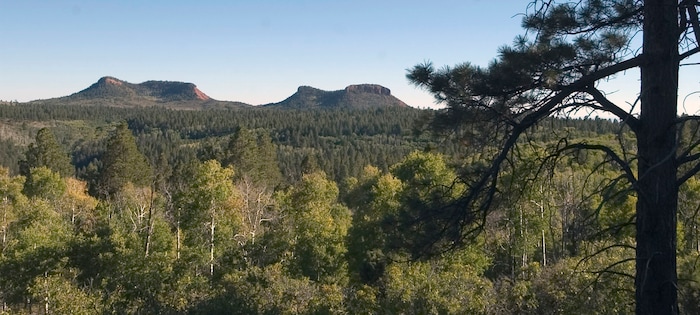
(Francisco Kjolseth | The Salt Lake Tribune) The two buttes that make up the namesake for the Bears Ears National Monument reveal the vast landscape surrounding them as part of the 1.35 million acres in southeastern Utah protected by President Barack Obama on Dec. 28, 2016. Utah Republicans in Congress are advocating for Trump to jettison Uta's national monument designation.
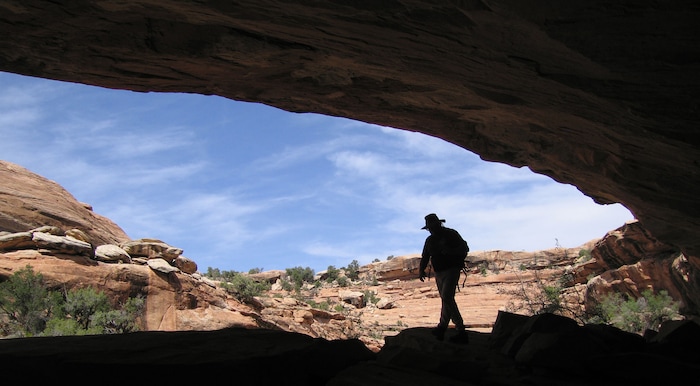
(Al Hartmann | The Salt Lake Tribune) A hiker explores an alcove in a sandstone canyon in the Cedar Mesa area in San Juan County. The mesa is loaded with Anasazi Indian sites. Cedar Mesa is on the Southern Utah Wilderness Alliance list of Utah's ten most threatened wilderness treasures.
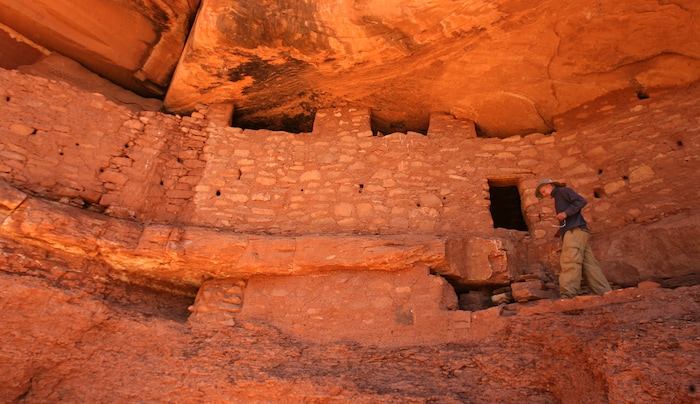
(Leah Hogsten | Tribune file photo) Hiker Richard Schwarz has visited Moon House four times and claims it is his favorite site to visit in southern Utah. Moon House is a Pueblo III-period cliff dwelling located in southeastern Utah on Cedar Mesa in McLoyd's Canyon. It was created by the Anasazi or Ancestral Puebloan peoples between 1150 and 1300 A.D.
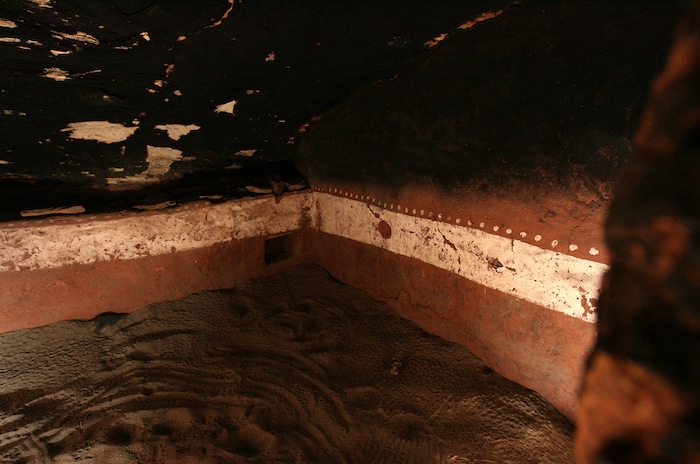
(Leah Hogsten | Tribune file photo) Moon House is aptly named for a "moon" image in the preserved paint and plaster used (at left, in the room). Moon House is a Pueblo III-period cliff dwelling located in southeastern Utah on Cedar Mesa in McLoyd's Canyon. It was created by the Anasazi or Ancestral Puebloan peoples between 1150 and 1300 A.D.
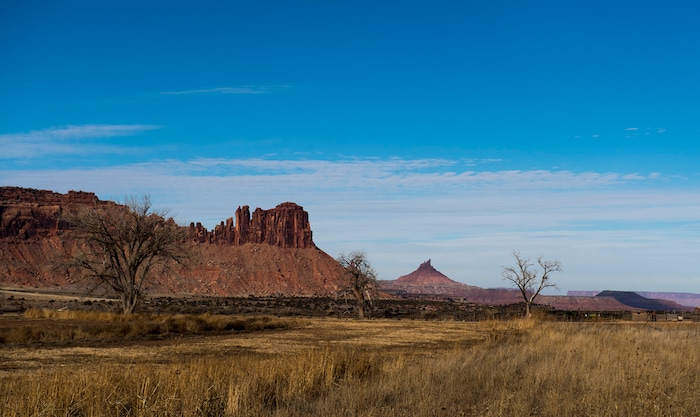
(Rick Egan | Tribune file photo) In 2016, the Bureau of Land Management approved a 6.4-mile motorized route in Indian Creek crossing the historic Dugout Ranch, pictured recently, inside the new Bears Ears National Monument. The trail is located north of Six Shooter Peak, seen in the distance. San Juan County has long sought a right of way here to bridge popular riding areas on either side of State Route 211, but conservationists and one local rancher feared a new trail would invite motorized use in places where it doesn't belong.
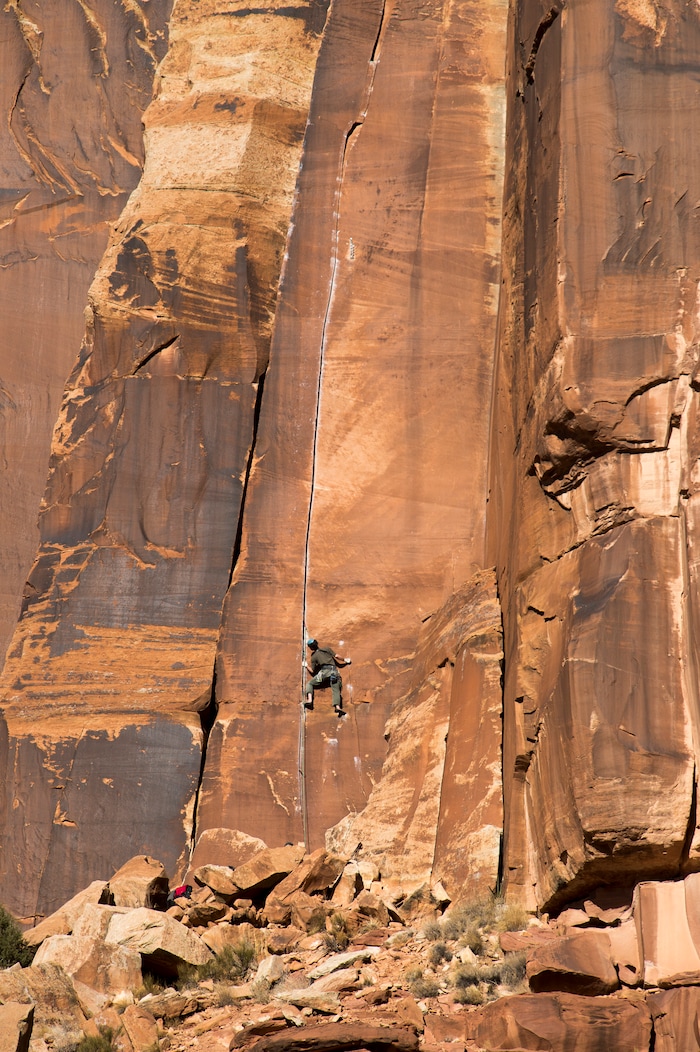
(Rick Egan | Tribune file photo) Climbers at Indian Creek, Friday, December 30, 2016.
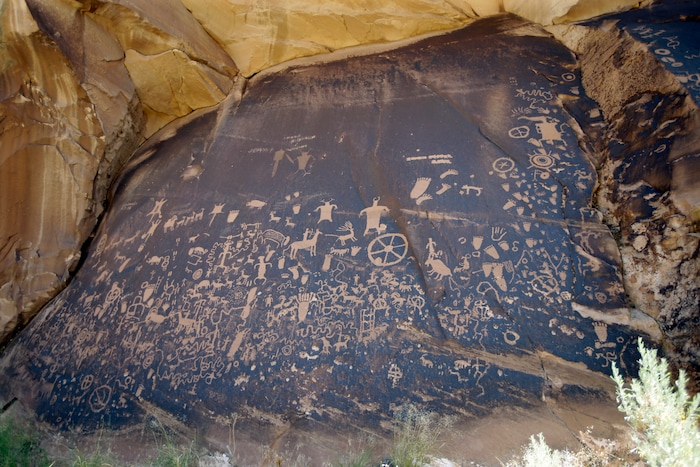
(Rick Bowmer | AP Photo) The Newspaper Rock in Bears Ears National Monument features a rock panel of petroglyphs in the Indian Creek Area near Monticello, Utah. President Barack Obama on Wednesday, Dec. 28, designated two new national monuments in Utah and Nevada. The Bears Ears National Monument in Utah covered 1.35 million acres of tribal land in the Four Corners region.
(Al Hartmann | The Salt Lake Tribune) Petroglyphs etched in stone along the San Juan River, the southern border of Bears Ears National Monument.
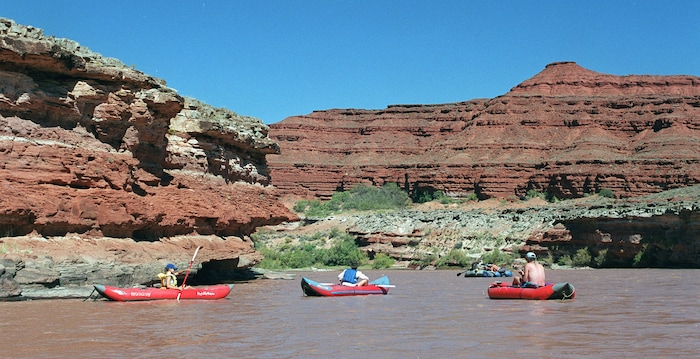
(Al Hartmann | The Salt Lake Tribune) Rafters on rubber ducks make their way down the San Juan River between Bluff and Mexican Hat. The area is included for a proposed Bears Ears National Conservation Area.
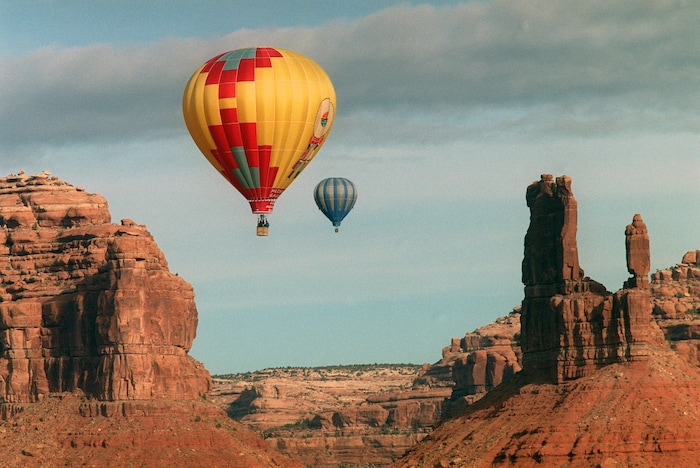
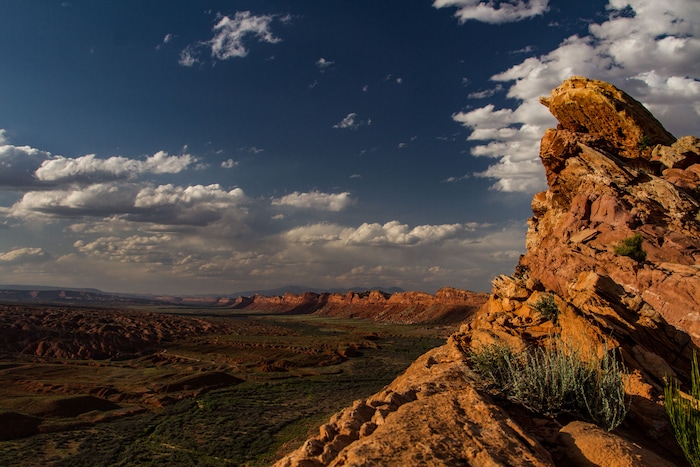
(Al Hartmann | The Salt Lake Tribune) Hot air balloons hover over formation in Valley of the Gods an area between Bluff and Mexican Hat. The area was part of Bears Ears National Monument.
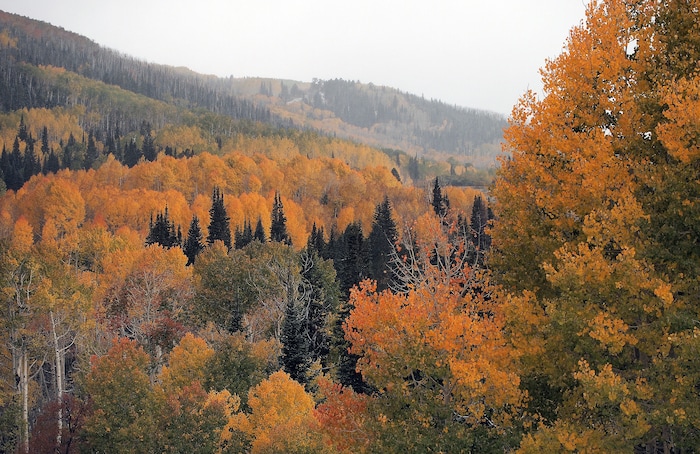
(Al Hartmann | The Salt Lake Tribune) Fall leaves at peak color on the east side of the Abajo Mountains west of Monticello in San Juan County. The area was in Bears Ears National Monument.
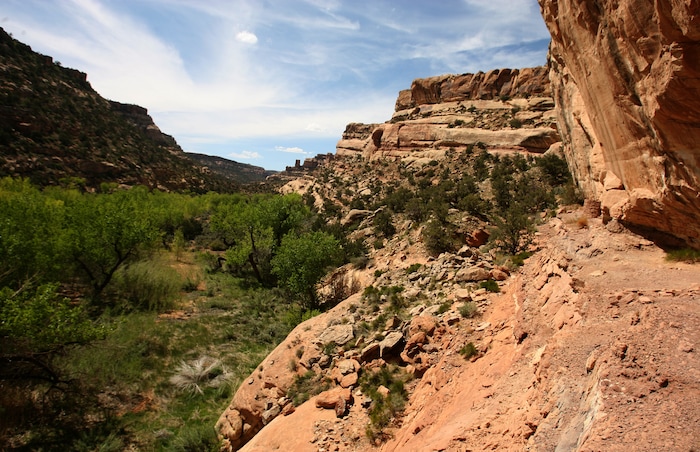
(Leah Hogsten | The Salt Lake Tribune) Arch Canyon, pictured here in 2010, was in Bears Ears National Monument.
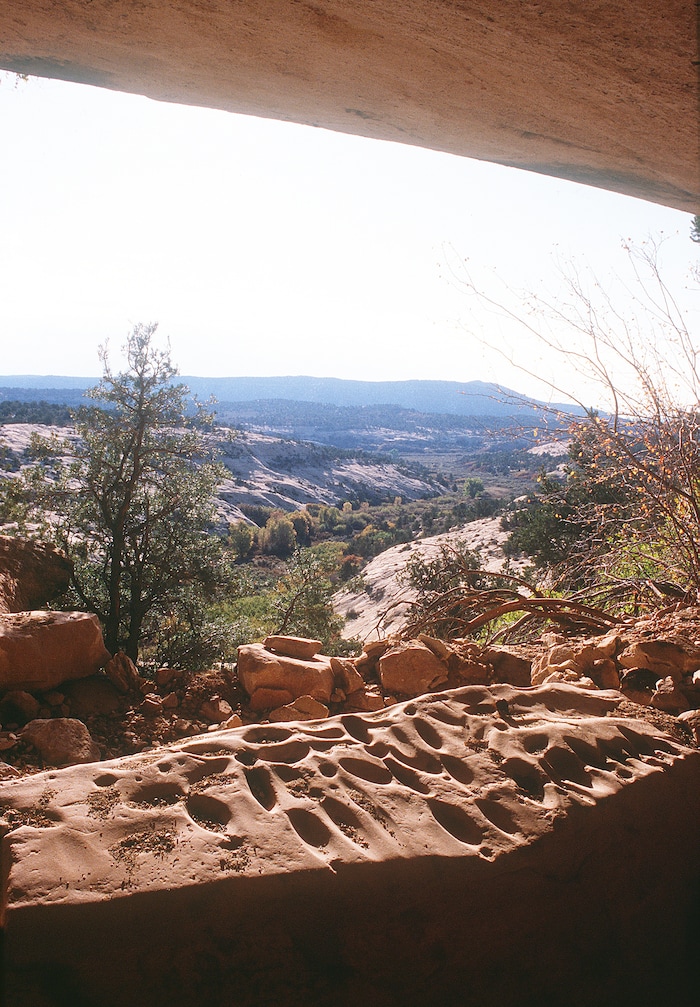
(Al Hartmann | The Salt Lake Tribune) Anasazi grinding rock under sandstone alcove in canyon along Elk Ridge west of Blanding in San Juan County. The area was included in Bears Ears National Monument.
(Al Hartmann | The Salt Lake Tribune) A view across the forested high country of Elk Ridge with the Bears Ears formation in the distance. This is rugged terrain of the Elk Ridge premium limited entry elk hunting unit in San Juan County where some of the biggest elk in Utah roam. It was included in Bears Ears National Monument.
| Courtesy Josh Ewing
Utah trust lands officials will auction a 391-acre piece of Comb Ridge at its Oct. 19 auction in Salt Lake City. This parcel, pictured here, west of Bluff is among 12 state-owned properties on tap for a sale that has drawn criticism from sportsmen and conservationists who say these lands should remain public.
President Donald Trump not only trimmed and broke up the Bears Ears National Monument when he visited Utah last week. He also renamed it with the Navajo-language term for Bears Ears, a gesture that could be courting trouble with many Native Americans.
Officials in the Trump administration say renaming one of two new smaller monuments Shash Jaa reflects tribal spiritual and ancestral ties to that part of southern Utah’s San Juan County, where Bears Ears Buttes rise over the landscape like twin beacons.
“Looking at the historical relevance, we thought that choosing a tribal name was important, and it’s local. We consulted with Navajo that live in Utah and they asked for it,” Interior Secretary Ryan Zinke told The Salt Lake Tribune last week. “Certainly, I don’t think anyone would object to having a native name rather than Bears Ears as the name of the monument.”
Nor did the Interior run anything past Utah Dine Bikeyah, the local grass-roots Navajo group deeply involved with the Bears Ears proposal, according to executive director Gavin Noyes, who views the rename as a cynical attempt to divide the tribes by exploiting historic grievances among them.
(Animated Illustration by Christopher Cherrington | The Salt Lake Tribune) Sources: U.S. Department of the Interior, U.S. Rep. Rob Bishop’s office
“The tribes have all gotten together and they have designed themselves as a commission and chosen a name that works for everybody. It’s collaborative and it’s in English,” Noyes said. “Even though every single tribe has a name for Bears Ears in their own language, the selection of the Navajo name tramples the Native American true history of the place.”
Noyes’ group had initially suggested naming the ambitious land conservation proposal Dine Bikeyah, which means “the people’s homeland” in Navajo, but embraced the more inclusive name to gain support from the Ute, Ute Mountain Ute, Zuni and Hopi tribes. Five tribes eventually signed on and petitioned for the monument designation as sovereign entities.
On Dec. 28, Obama named the short-lived monument Bears Ears in reference to the twin buttes visible from every direction that have served as a geographic reference point for thousands of years. The first sentence of his proclamation cited the various names for the buttes in the tribes’ languages: Hoon’Naqvut (Hopi), Kwiyagatu Nukavachi (Ute), Shash Jaa (Navajo) and Ansh An Lashokdiwe (Zuni).
During his brief visit to Salt Lake City last week, Trump trimmed the monument to a fraction of its original size and carved out a second monument for Indian Creek. Together, the two add up to 202,000 acres, an 85 percent reduction of the original monument that left out Cedar Mesa and other critical landscapes rich in archaeological and natural values.
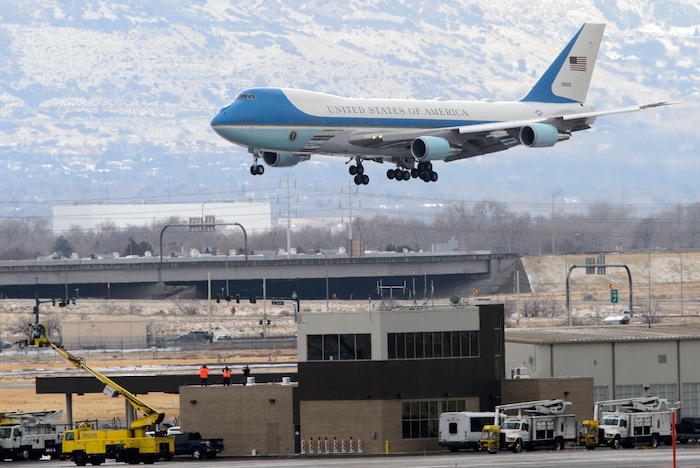
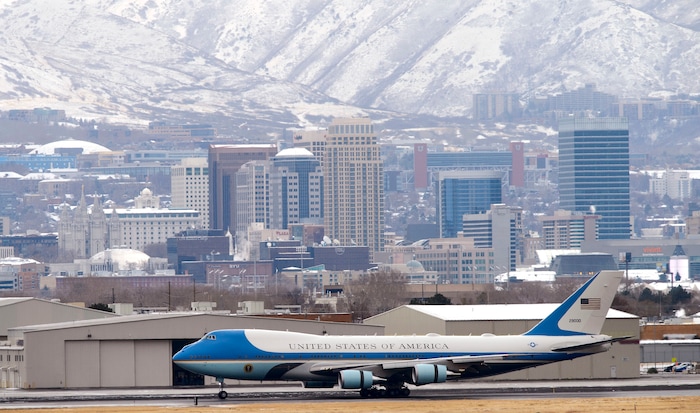
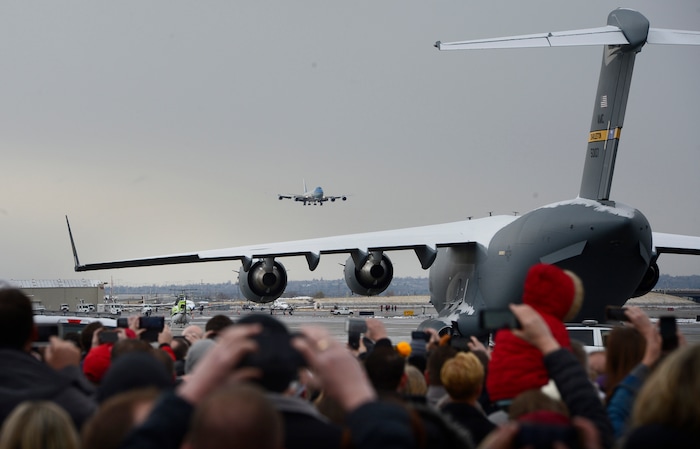
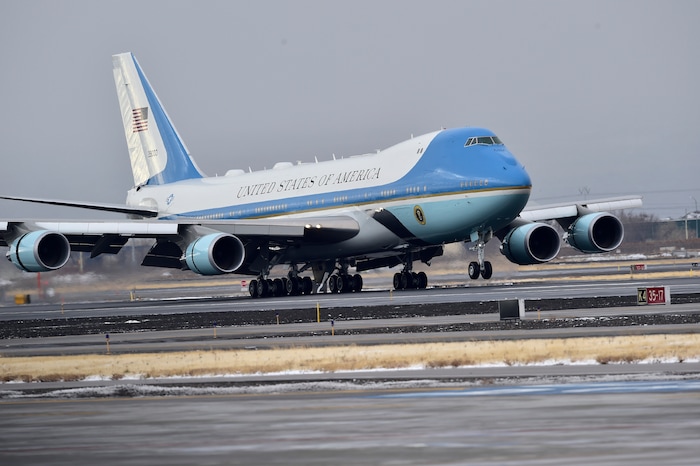
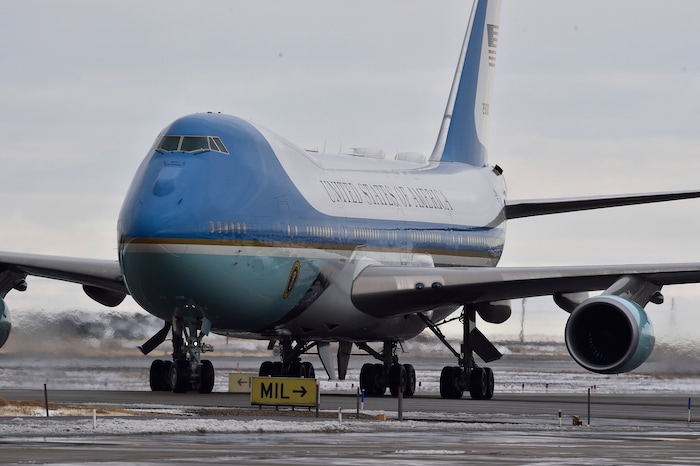
(Steve Griffin | The Salt Lake Tribune) Air Force One prepares to land at Salt Lake City International Airport for President Trump's visit to Salt Lake City on Monday, Dec. 4, 2017.
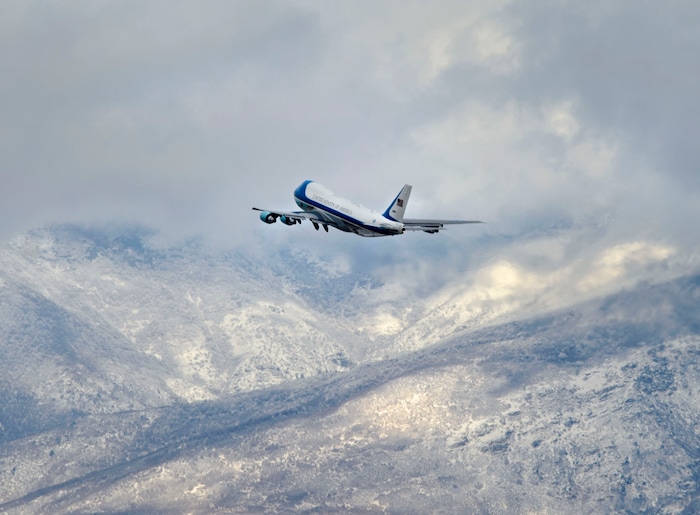
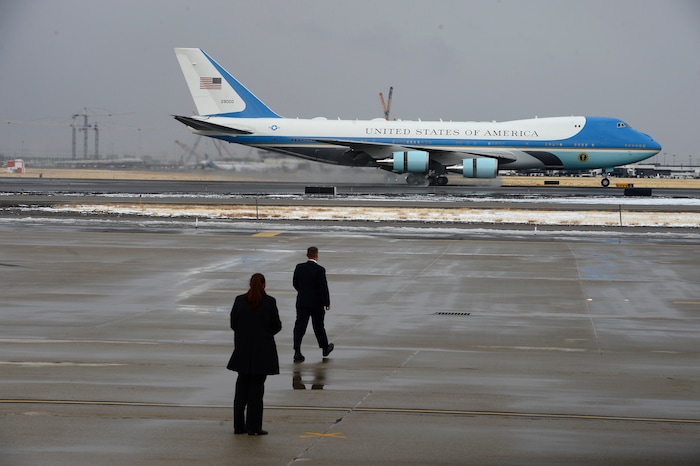
(Steve Griffin | The Salt Lake Tribune) Air Force One leaves the Salt Lake International Airport after President Trump visited Salt Lake City Monday December 4, 2017.
(Steve Griffin | The Salt Lake Tribune) Air Force One lands at Salt Lake City International Airport as President Donald Trump visits Salt Lake City on Monday, Dec. 4, 2017.
(Steve Griffin | The Salt Lake Tribune) Air Force One lands at Salt Lake City International Airport as President Donald Trump visits Salt Lake City on Monday, Dec. 4, 2017.
(Scott Sommerdorf | The Salt Lake Tribune)
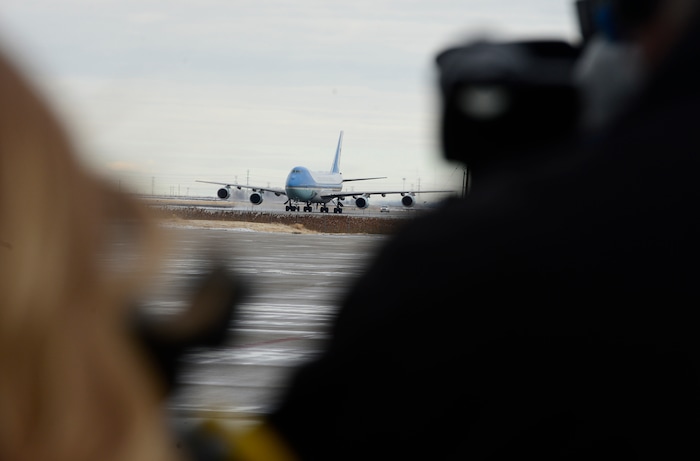
The arrival of Air Force One at the Ronald R Wright National Air Guard Base, Monday, December 4, 2017.
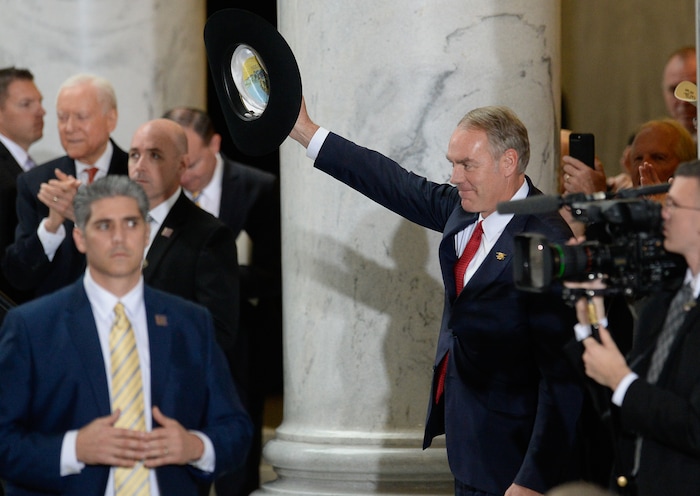
(Francisco Kjolseth | The Salt Lake Tribune) Interior Secretary Ryan Zinke is acknowledged by U.S. President Donald Trump on stage at the Utah Capitol on Monday, Dec. 4, 2017, moments before signing two presidential proclamation to shrink Bears Ears and Grand Staircase-Escalante national monuments.
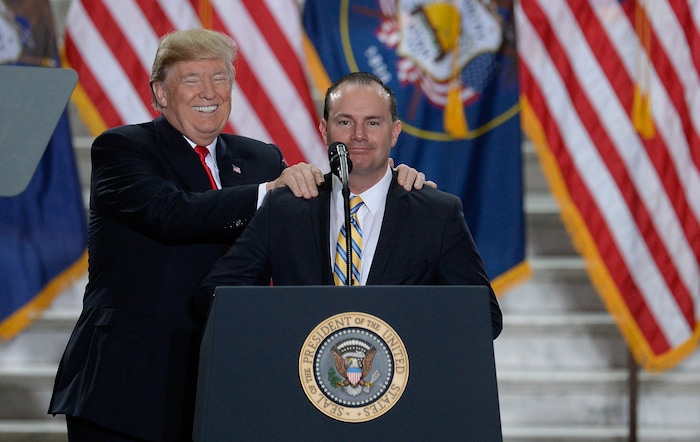
(Francisco Kjolseth | The Salt Lake Tribune) U.S. President Donald Trump is joined by Sen. Mike Lee at the Utah Capitol on Monday, Dec. 4, 2017, prior to signing a presidential proclamation to shrink Bears Ears and Grand Staircase-Escalante national monuments.
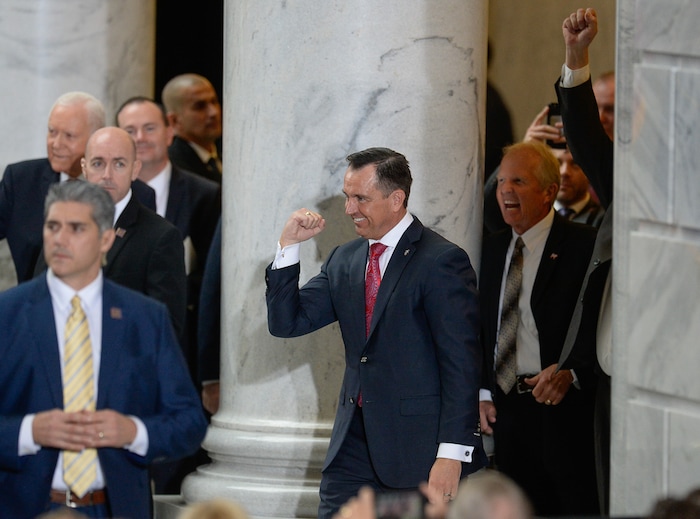
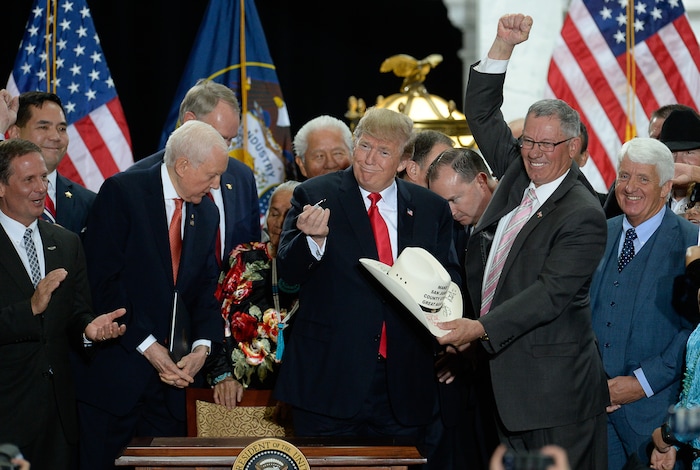
(Francisco Kjolseth | The Salt Lake Tribune) Speaker of the House Greg Hughes, pumps his fist after being acknowledged by U.S. President Donald Trump at the Utah Capitol on Monday, Dec. 4, 2017. President Trump signed two presidential proclamation to shrink Bears Ears and Grand Staircase-Escalante national monuments.
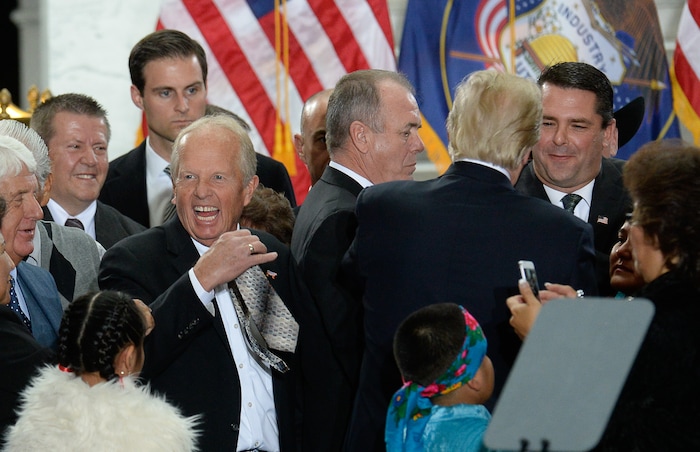
(Francisco Kjolseth | The Salt Lake Tribune) Rep. Mike Noel, R-Kanab delights in having his tie signed by U.S. President Donald Trump at the Utah Capitol on Monday, Dec. 4, 2017, following Trump's signing of two presidential proclamations to shrink Bears Ears and Grand Staircase-Escalante national monuments.
(Scott Sommerdorf | The Salt Lake Tribune)
The arrival of Air Force One at the Ronald R Wright National Air Guard Base, Monday, December 4, 2017.
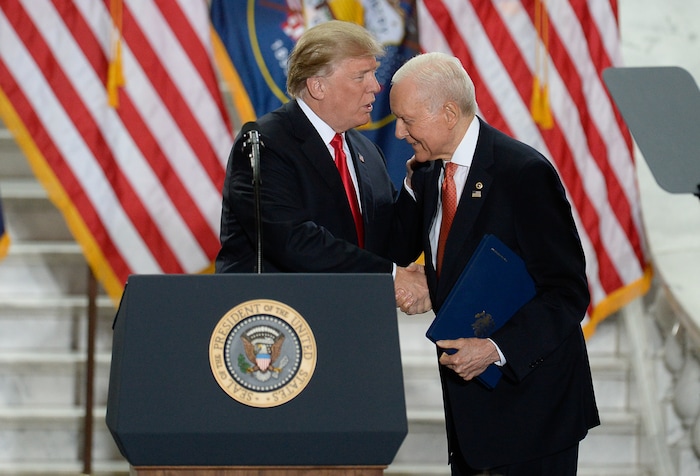
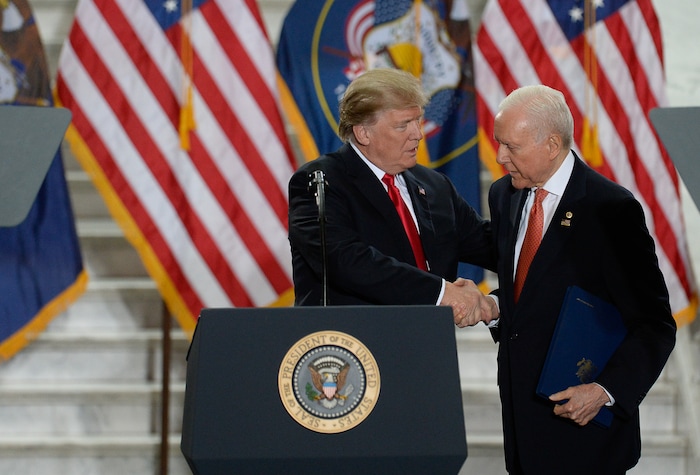
(Francisco Kjolseth | The Salt Lake Tribune) U.S. President Donald Trump is joined by Senator Orrin Hatch at the Utah Capitol on Monday, Dec. 4, 2017, to sign a presidential proclamation to shrink Bears Ears and Grand Staircase-Escalante national monuments.
(Francisco Kjolseth | The Salt Lake Tribune) U.S. President Donald Trump is joined by Senator Orrin Hatch at the Utah Capitol on Monday, Dec. 4, 2017, to sign a presidential proclamation to shrink Bears Ears and Grand Staircase-Escalante national monuments.
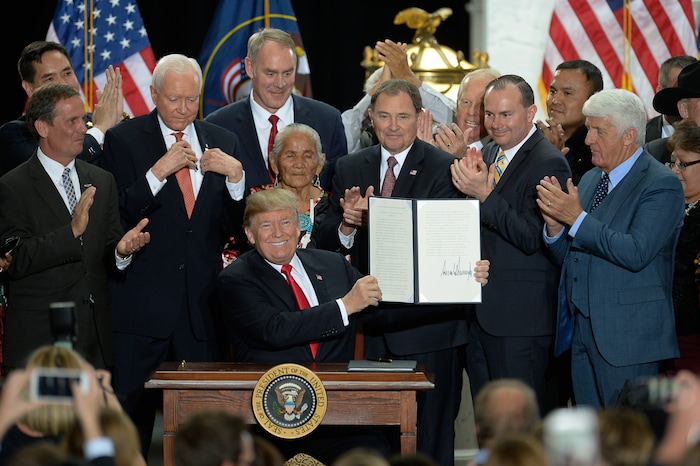
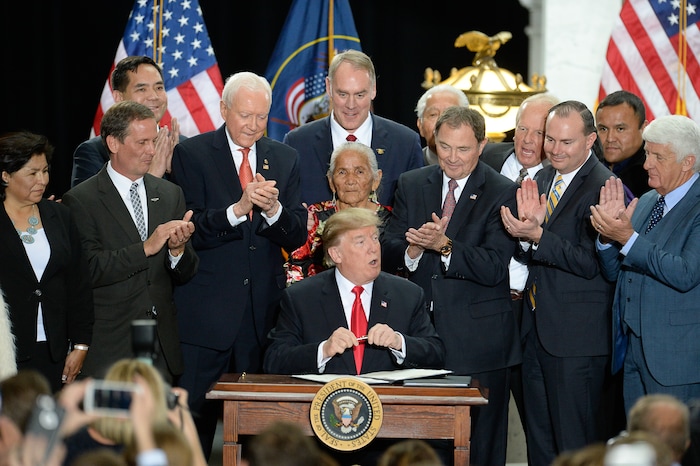
(Francisco Kjolseth | The Salt Lake Tribune) U.S. President Donald Trump is surrounded by Utah representatives at the Utah Capitol on Monday, Dec. 4, 2017, after signing two presidential proclamations to shrink Bears Ears and Grand Staircase-Escalante national monuments.
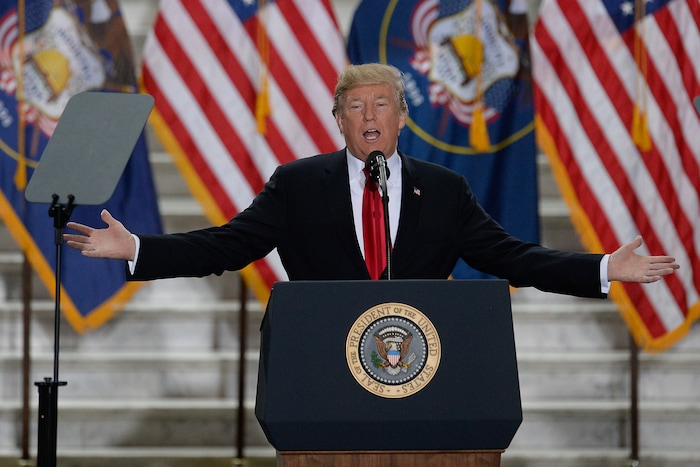
(Francisco Kjolseth | The Salt Lake Tribune) U.S. President Donald Trump takes the stage at the Utah Capitol on Monday, Dec. 4, 2017, to sign a presidential proclamation to shrink Bears Ears and Grand Staircase-Escalante national monuments.
(Scott Sommerdorf | The Salt Lake Tribune)
he arrival of Air Force One at the Ronald R Wright National Air Guard Base, Monday, December 4, 2017.
(Francisco Kjolseth | The Salt Lake Tribune) Bruce Adams, right, Chairman of the San Juan County Commission has his hat signed by U.S. President Donald Trump at the Utah Capitol on Monday, Dec. 4, 2017, following Trump's signing of two presidential proclamations to shrink Bears Ears and Grand Staircase-Escalante national monuments.
(Francisco Kjolseth | The Salt Lake Tribune) U.S. President Donald Trump is surrounded by Utah representatives at the Utah Capitol on Monday, Dec. 4, 2017, as he signs a presidential proclamation to shrink Bears Ears and Grand Staircase-Escalante national monuments.
(Scott Sommerdorf | The Salt Lake Tribune)
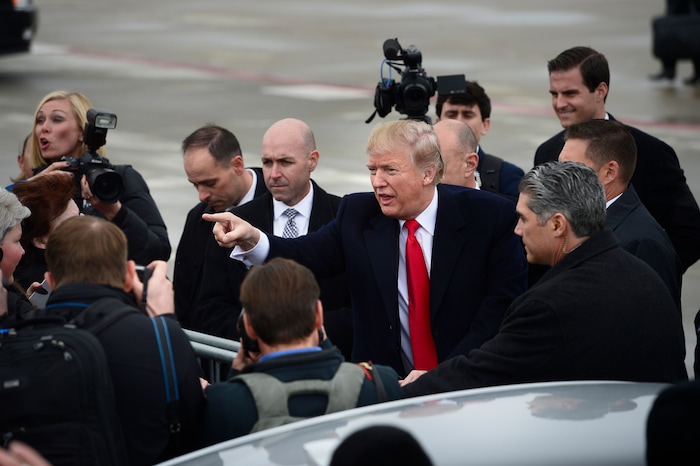
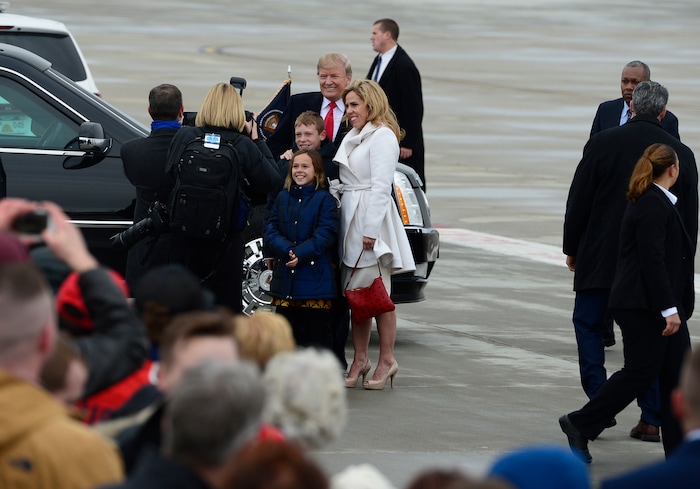
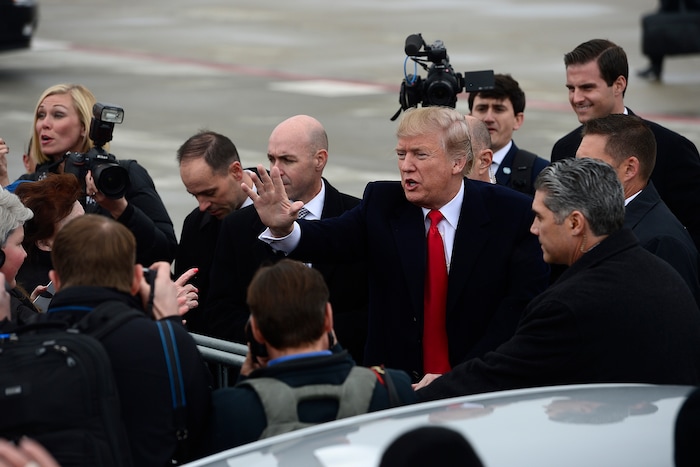
President Trump visits with a crowd of admirers after he arrived in Salt Lake City, Monday, December 4, 2017.
(Scott Sommerdorf | The Salt Lake Tribune)
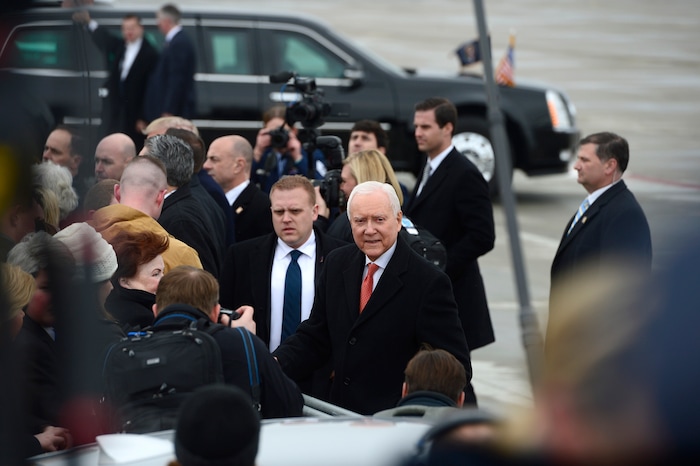
Senator Orrin Hatch visits with a crowd of Trump admirers after he arrived in Salt Lake City, Monday, December 4, 2017.
(Scott Sommerdorf | The Salt Lake Tribune)
President Trump visits with a crowd of admirers after he arrived in Salt Lake City, Monday, December 4, 2017.
(Scott Sommerdorf | The Salt Lake Tribune)
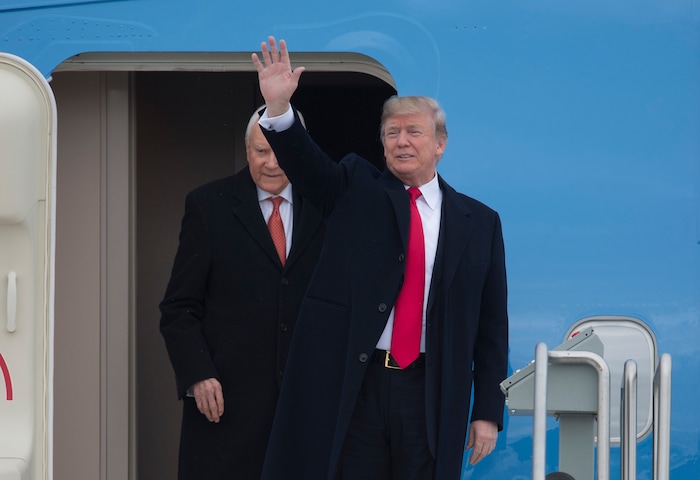
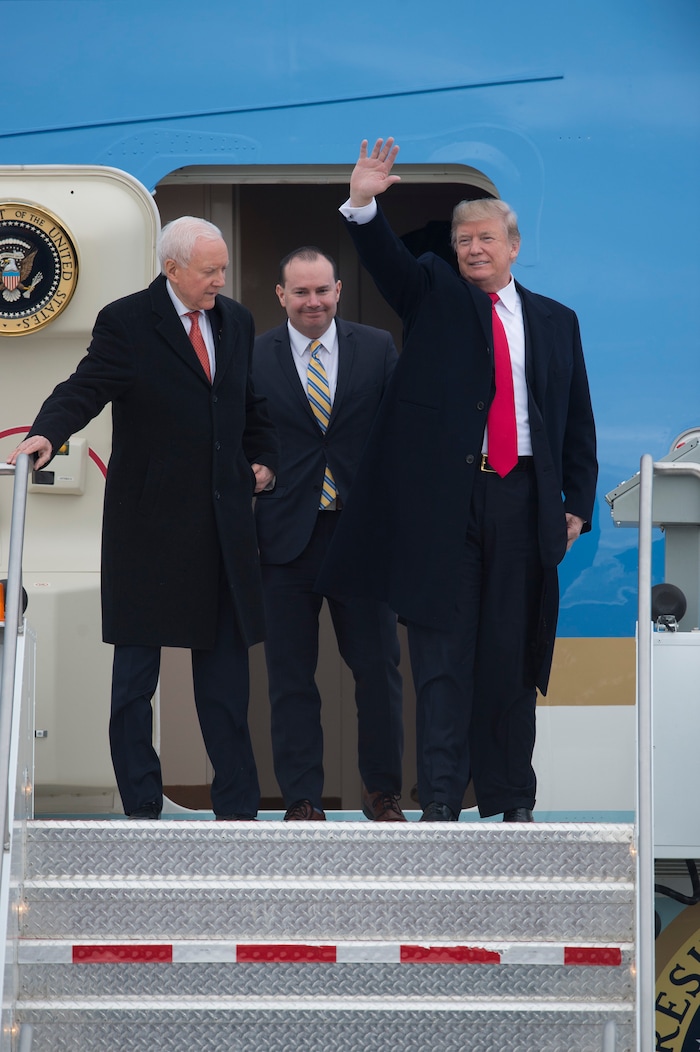
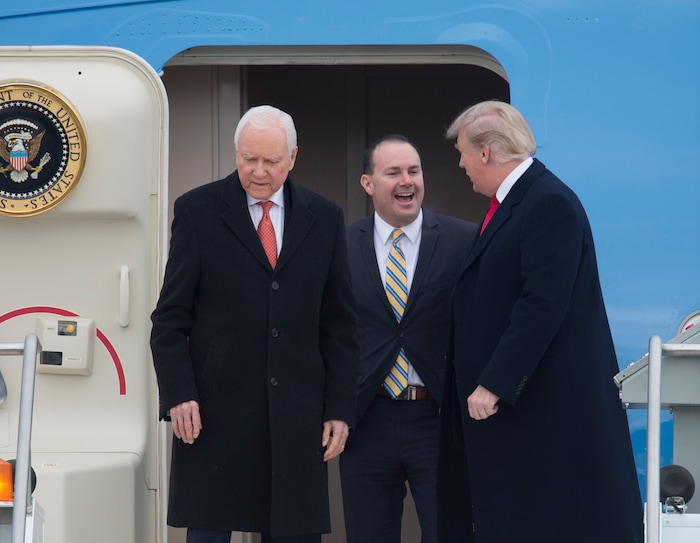
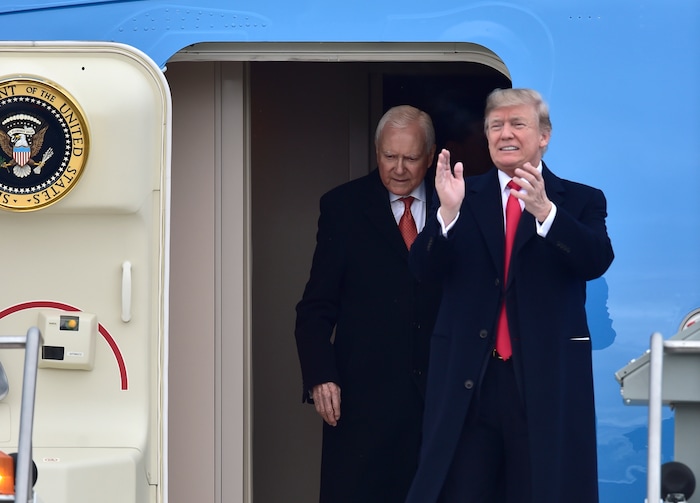
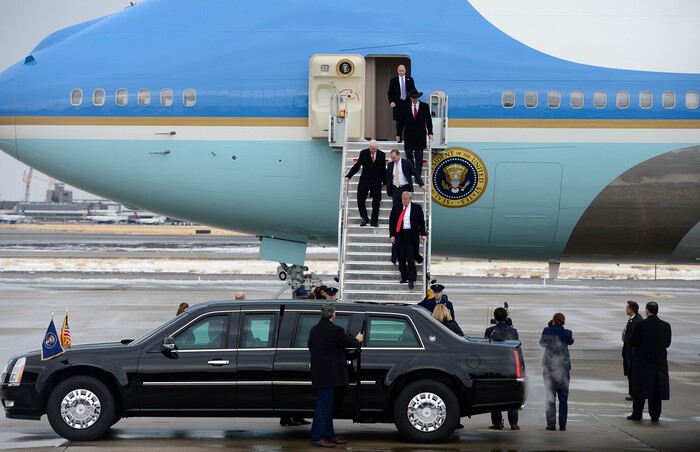
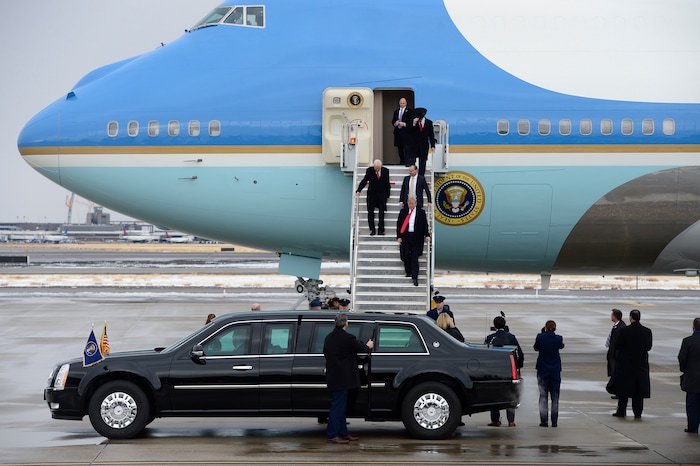
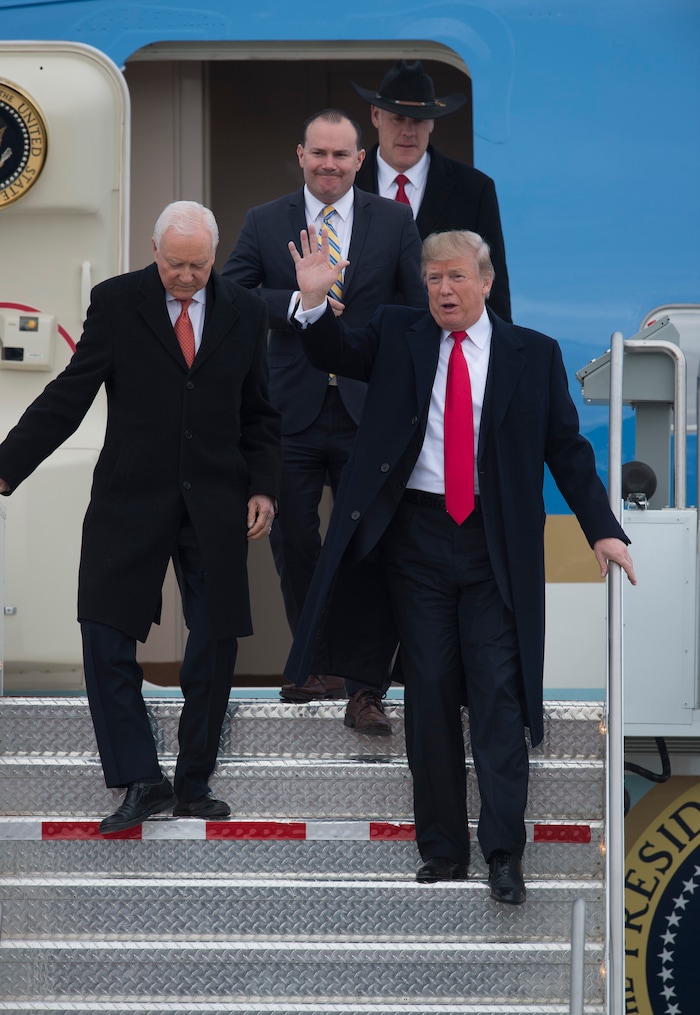
President Trump deplanes from Air Force One with Senators Hatch and Lee at the Ronald R Wright National Air Guard Base, Monday, December 4, 2017.
(Scott Sommerdorf | The Salt Lake Tribune)
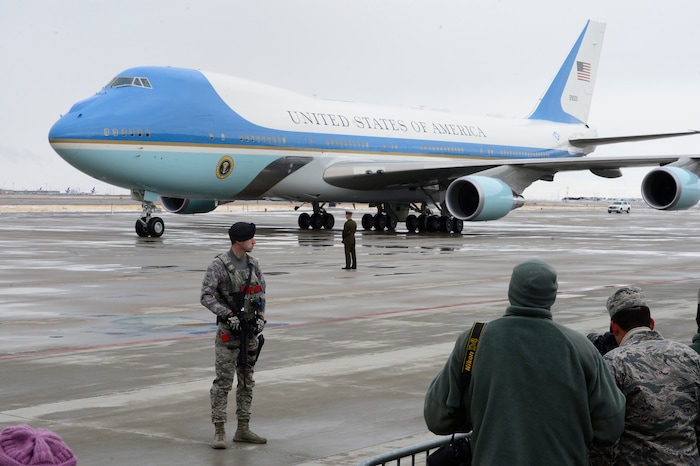
Air Force One arrives at the Ronald R Wright National Air Guard Base, Monday, December 4, 2017.
(Scott Sommerdorf | The Salt Lake Tribune)
The arrival of Air Force One at the Ronald R Wright National Air Guard Base, Monday, December 4, 2017.
(Scott Sommerdorf | The Salt Lake Tribune)
President Trump deplanes from Air Force One with Senators Hatch and Lee at the Ronald R Wright National Air Guard Base, Monday, December 4, 2017.
(Scott Sommerdorf | The Salt Lake Tribune)
President Trump visits with a crowd of admirers after he arrived in Salt Lake City, Monday, December 4, 2017.
(Scott Sommerdorf | The Salt Lake Tribune)
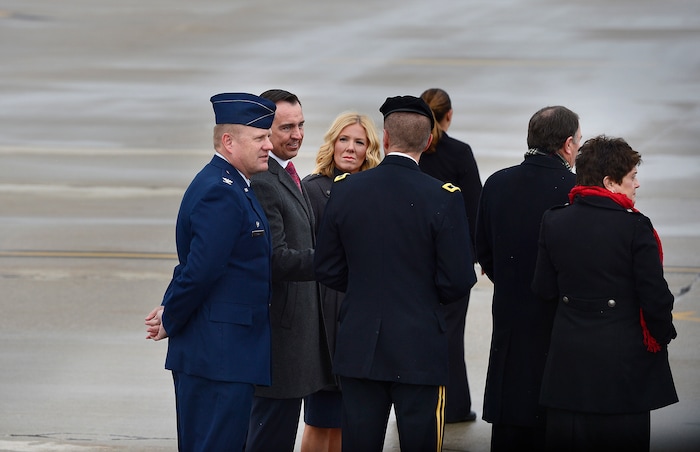
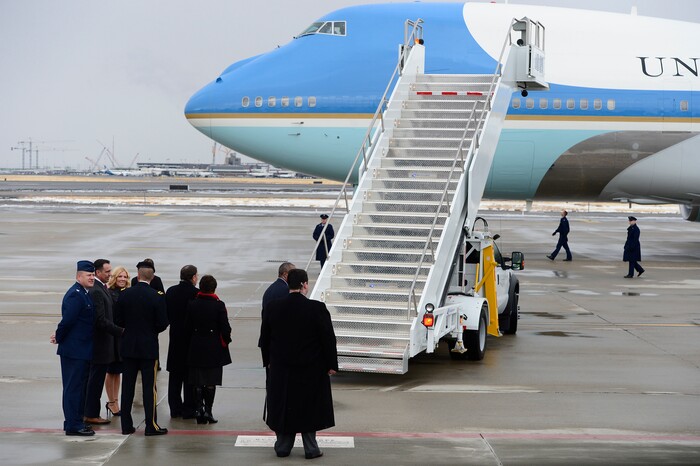
Governor Gary Herbert and his wife, Speaker Greg Hughes and his wife, wait for President Trump to deplane after the arrival of Air Force One at the Ronald R Wright National Air Guard Base, Monday, December 4, 2017.
(Scott Sommerdorf | The Salt Lake Tribune)
he arrival of Air Force One at the Ronald R Wright National Air Guard Base, Monday, December 4, 2017.
(Scott Sommerdorf | The Salt Lake Tribune)
President Trump visits with a crowd of admirers after he arrived in Salt Lake City, Monday, December 4, 2017.
(Scott Sommerdorf | The Salt Lake Tribune)
Air Force One arrives at the Ronald R Wright National Air Guard Base, Monday, December 4, 2017.
(Scott Sommerdorf | The Salt Lake Tribune)
President Trump visits with a crowd of admirers after he arrived in Salt Lake City, Monday, December 4, 2017.
(Scott Sommerdorf | The Salt Lake Tribune)
President Trump arrives in Salt Lake City after the arrival of Air Force One at the Ronald R Wright National Air Guard Base, Monday, December 4, 2017.
(Scott Sommerdorf | The Salt Lake Tribune)
The arrival of Air Force One at the Ronald R Wright National Air Guard Base, Monday, December 4, 2017.
(Scott Sommerdorf | The Salt Lake Tribune)
President Trump arrives in Salt Lake City after the arrival of Air Force One at the Ronald R Wright National Air Guard Base, Monday, December 4, 2017.
(Scott Sommerdorf | The Salt Lake Tribune)
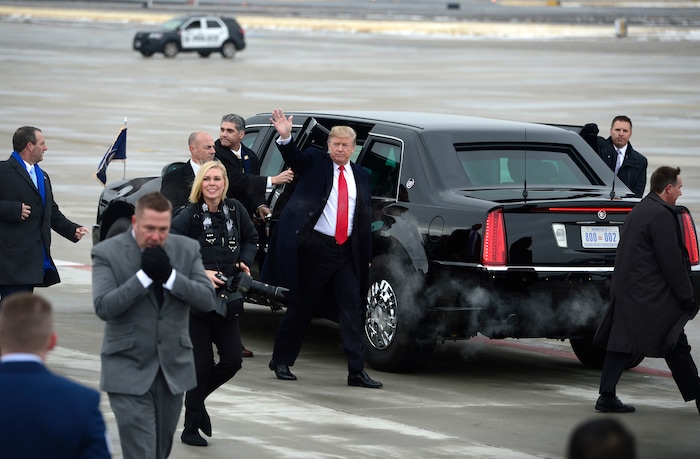
President Trump arrives with Senators Hatch and Lee, and Interior Sec. Zinke, after arrival of Air Force One at the Ronald R Wright National Air Guard Base, Monday, December 4, 2017.
(Scott Sommerdorf | The Salt Lake Tribune)
Governor Gary Herbert and his wife, Speaker Greg Hughes and his wife, wait for President Trump to deplane after the arrival of Air Force One at the Ronald R Wright National Air Guard Base, Monday, December 4, 2017.
(Scott Sommerdorf | The Salt Lake Tribune)
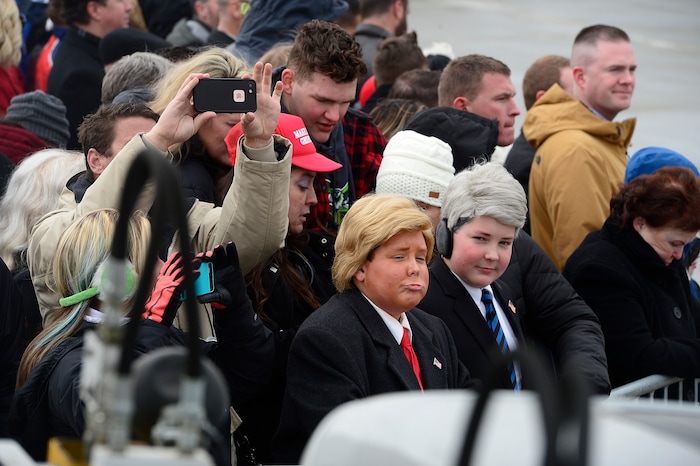
Two young boys dressed as Trump waited for the arrival of Air Force One at the Ronald R Wright National Air Guard Base, Monday, December 4, 2017.
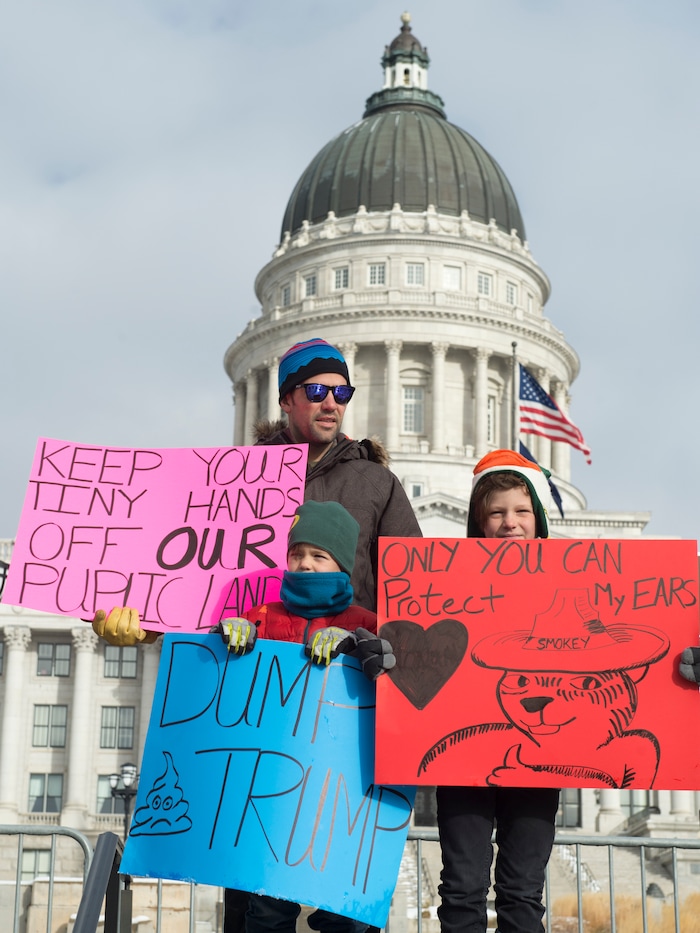
(Rick Egan | The Salt Lake Tribune) Perry Dixon, stands with his kids Miles, 6, and Parker 9, as they protest President Trump's visit to Utah to shrink the Bears Ears monument in front of the Utah State Capitol Building, Monday, December 4, 2017.
In a speech at the Utah Capitol, the president said Utah’s national monument designations disenfranchise locals residents, including Native Americans, by keeping them from accessing these public lands.
“We have seen needed improvements, like infrastructure upgrades and road maintenance, impeded and foreclosed,” Trump said. “We have seen how this tragic federal overreach prevents many Native Americans from having their rightful voice over the sacred land where they practice their most important ancestral and religious traditions”
Some tribal officials scoffed at this claim, since it was elected Native American leaders who pushed for a Bears Ears monument.
“It’s pretty obvious [Trump] thinks he’s going to divide us, but if anything, it has done the reverse,” said Shaun Chapoose, who serves on Ute Tribe’s business committee, on KUER’s RadioWest program last week.
(AP Photo/Rick Bowmer) Shaun Chapoose, at a Dec. 4, 2017 news conference in Salt Lake City.
“You can call it whatever you want,” Chapoose continued. “It is known fact historically, yeah, the Navajo are there now. But throughout history the Hopi have been there, the Zuni have been there, my people have been there. Remnants of our existence have always been there.”
Obama’s Bear Ears proclamation also gave a special advisory role over monument management to a panel known as the Bears Ears Commission, comprised of one representative from each of the five tribes. The commission, which has met monthly since February, includes Chapoose and other tribal officials who are strong monument supporters.
Trump now intends to insert an anti-monument member of the San Juan County Commission onto the panel. The proclamation he signed Monday renames it Shash Jaa Commission and excludes Indian Creek from its jurisdiction. It also requires the group include the county commissioner representing the Navajo-majority’s District 3, a seat currently held by Rebecca Benally, a monument opponent.
In a separate case, a federal judge has ruled San Juan’s voting districts violate the Constitution because they are gerrymandered along racial lines.
Native Americans make up a slight majority in San Juan County, but have never held a majority of seats on either the three-member county commission or five-member school board due to the illegal way voting districts are configured, the Navajo Nation has argued in court.
U.S. District Judge Robert Shelby agreed and has ordered a redistricting that could soon result in two Native American-majority commission districts in San Juan County, including the one now held by Phil Lyman of Blanding.
Trump’s proclamation on Monday also called on Congress to give the reconstituted Shash Jaa Commission “co-management” powers with federal agencies, but that gesture got little respect from Navajo tribe officials. They say Obama’s proclamation gave them as much influence over monument management as allowed under current law and that they were happy with that.
— Tribune reporter Thomas Burr contributed to this report.