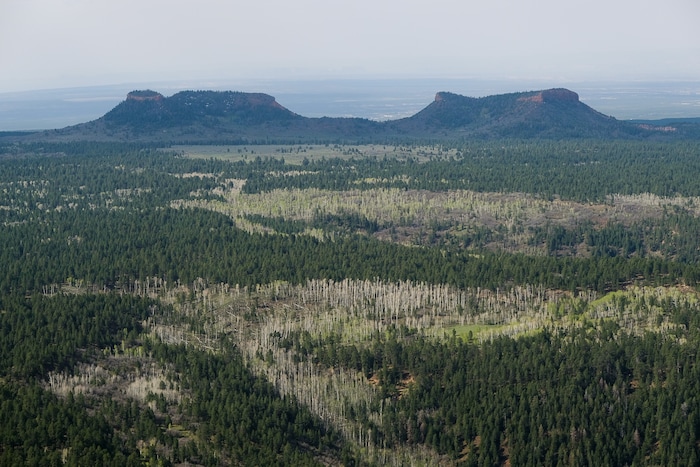
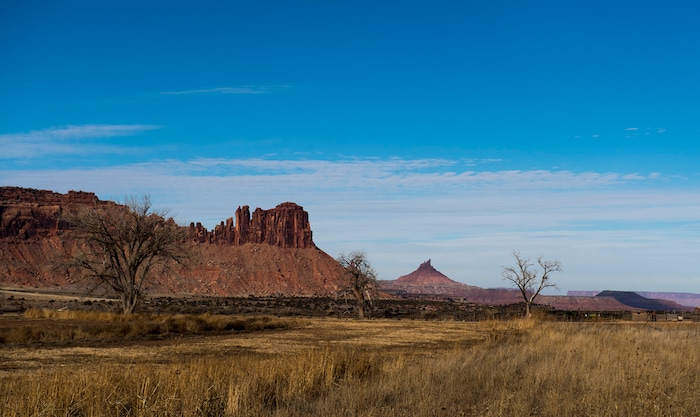
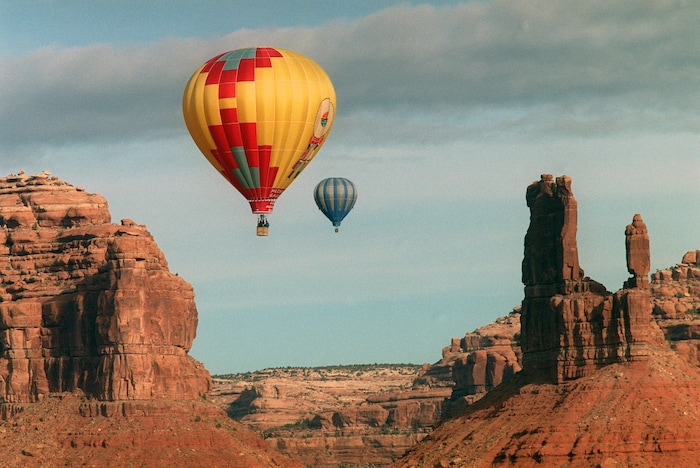
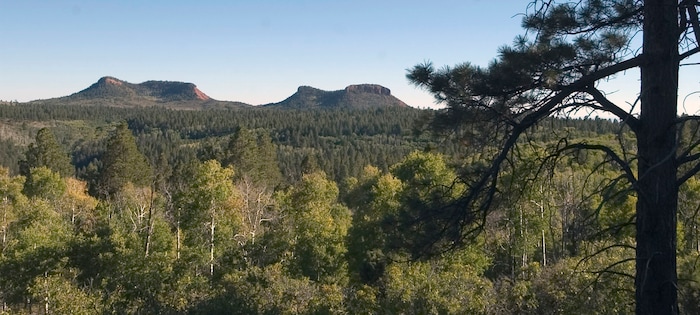
(Francisco Kjolseth | The Salt Lake Tribune) The two buttes that make up the namesake for the Bears Ears National Monument reveal the vast landscape surrounding them as part of the 1.35 million acres in southeastern Utah protected by President Barack Obama on Dec. 28, 2016. Utah Republicans in Congress are advocating for Trump to jettison Uta's national monument designation.

Where Utah once had two large national monuments, the state now has five smaller ones under an order signed Monday by President Donald Trump — but several high-value sites the original monuments were designed to protect are left out.
With the stroke of a pen, Trump dramatically reduced Bears Ears to 202,000 acres in two new renamed monuments and the Grand Staircase-Escalante to three new monuments totaling more than 1 million acres, down from 1.9 million acres.
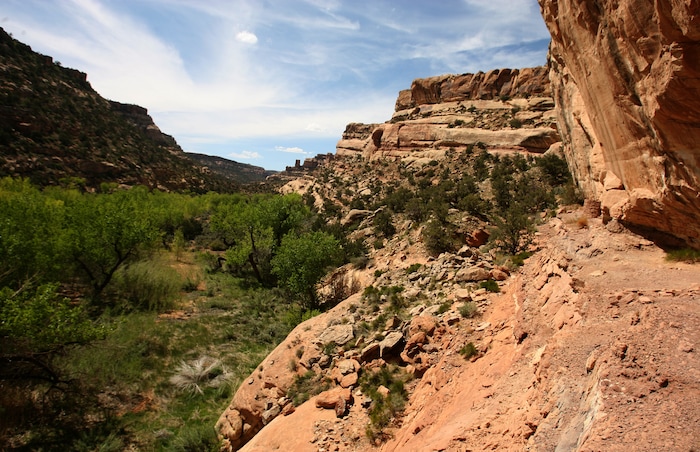
Now excluded from protections, the former Bears Ears National Monument’s Cedar Mesa and Elk Ridge landscapes, highlands canyon west of Blanding, once supported an ancient civilization far more densely populated than seen today in San Juan County.
(Al Hartmann | Tribune file photo) Utah State Road 261 heading north across Cedar Mesa towards the "Bears Ears" in San Juan County.
Tens of thousands of archaeological sites are found on the mesa tops and tucked into surrounding canyons, held sacred by the five tribes that petitioned President Barack Obama to proclaim the monument. While state and local leaders deny these resources are at risk, monument status was seen as a way to safeguard countless artifacts embedded in remote public lands.
“This was due, in large part, to the widespread looting and theft of irreplaceable objects and the wholesale robbery of native culture that was going on in this area prior to [Obama’s monument designation]. There were almost a dozen looting cases in the two years preceding the announcement,” said attorney Natalie Landreth of the Native American Rights Fund.
Acting on recommendations provided by Interior Secretary Ryan Zinke, Trump renamed and reduced Bears Ears to about one-seventh the size of the monument Obama designated Dec. 28, broken into two separate monuments miles apart and totaling 201,876 acres.
In an interview with The Salt Lake Tribune on Sunday, Zinke said Obama’s proclamation drew boundary lines “arbitrarily” in ways that disrupt access and “locked people out.”
“We're not making any more land and the more you can promote the public to use and adore and bond with our public lands, the better off our country will be,” Zinke said. “There are no oil and gas resources that anyone has reported in Bears Ears. It really is about multiple use and multiple use is grazing, timber management, recreation, being able to use in some places four-wheel drives.”
Anchored by Comb Ridge west of Blanding and Bluff, the new Shash Jaa National Monument covers 129,980 acres that include Bears Ears Buttes and parts of Mule and Arch canyons. The new Indian Creek National Monument covering land along State Route 211 is about 71,896 acres.
By renaming the monument Shash Jaa, which means “Bears Ears,” Trump is selecting a Navajo title at the expense of the four other tribes with ancestral ties to these lands.
“Looking at the historical relevance, we thought that choosing a tribal name was important, and it’s local,” Zinke told The Salt Lake Tribune. “We consulted with Navajo that live in Utah and they asked for it. Certainly, I don’t think anyone would object to having a native name rather than Bears Ears as the name of the monument.”
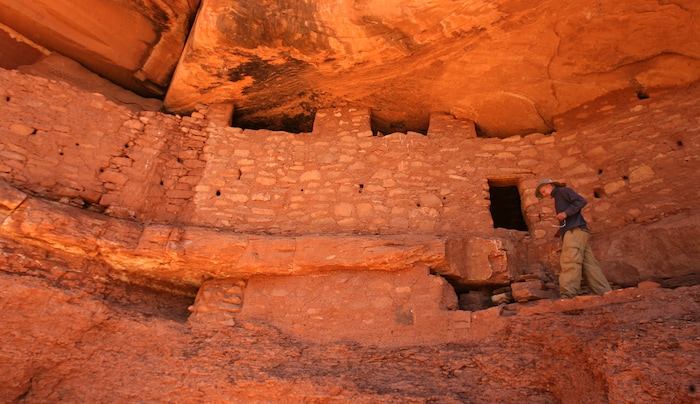
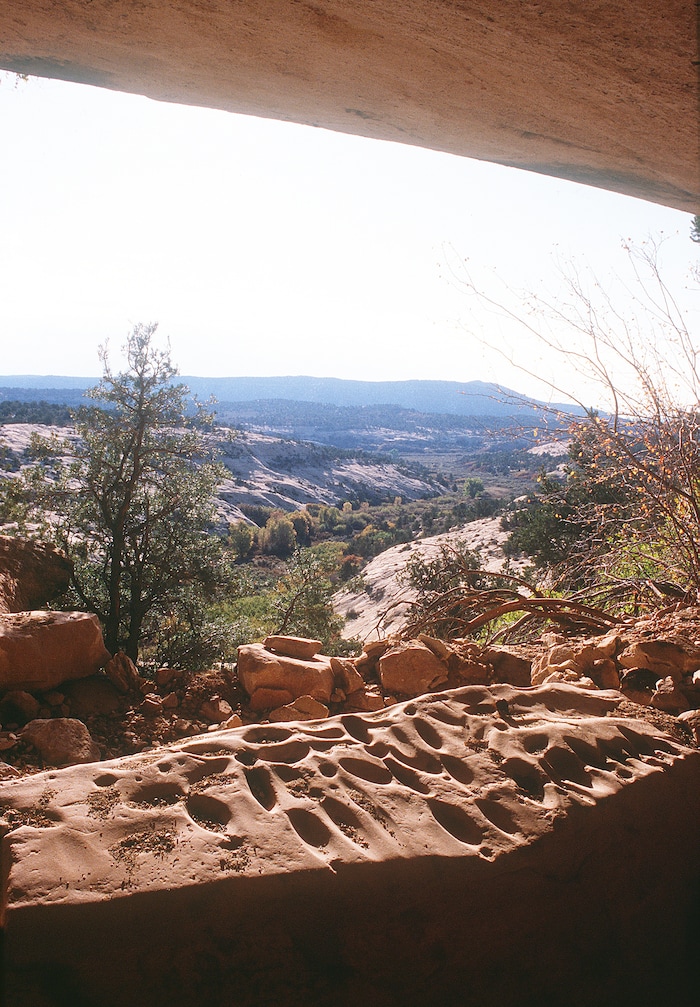
(Leah Hogsten | Tribune file photo) Hiker Richard Schwarz has visited Moon House four times and claims it is his favorite site to visit in southern Utah. Moon House is a Pueblo III-period cliff dwelling located in southeastern Utah on Cedar Mesa in McLoyd's Canyon. It was created by the Anasazi or Ancestral Puebloan peoples between 1150 and 1300 A.D.
The new monument includes two tiny satellite units that protect Doll House and Moon House ruins. Located in Dark Canyon and Cedar Mesa respectively, these famous sites were already subject to access restrictions prior to the monument designation.
Not surprisingly, these two ruins were specifically named in Obama’s proclamation as examples of the “objects of historic and scientific interest” the monument would protect. Another spot named in the proclamation that remains in the redrawn monument is the Lime Ridge Clovis site, west of Bluff, Utah’s oldest known archaeological site.
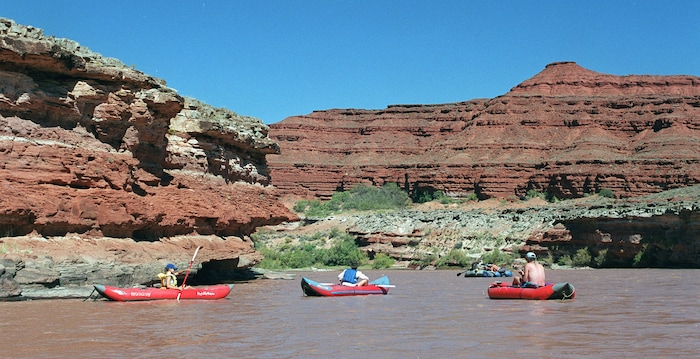
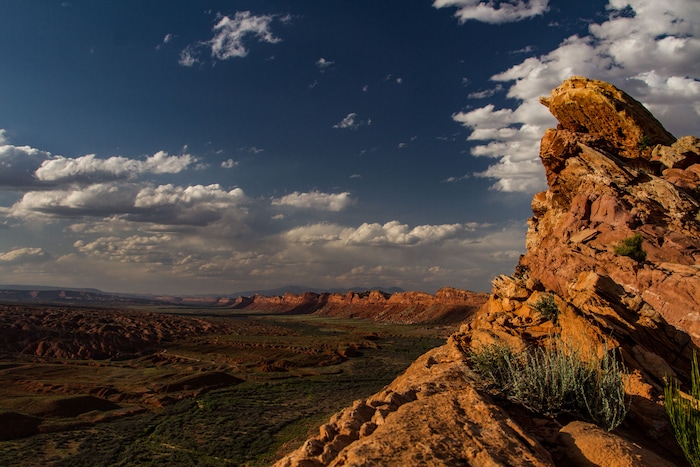
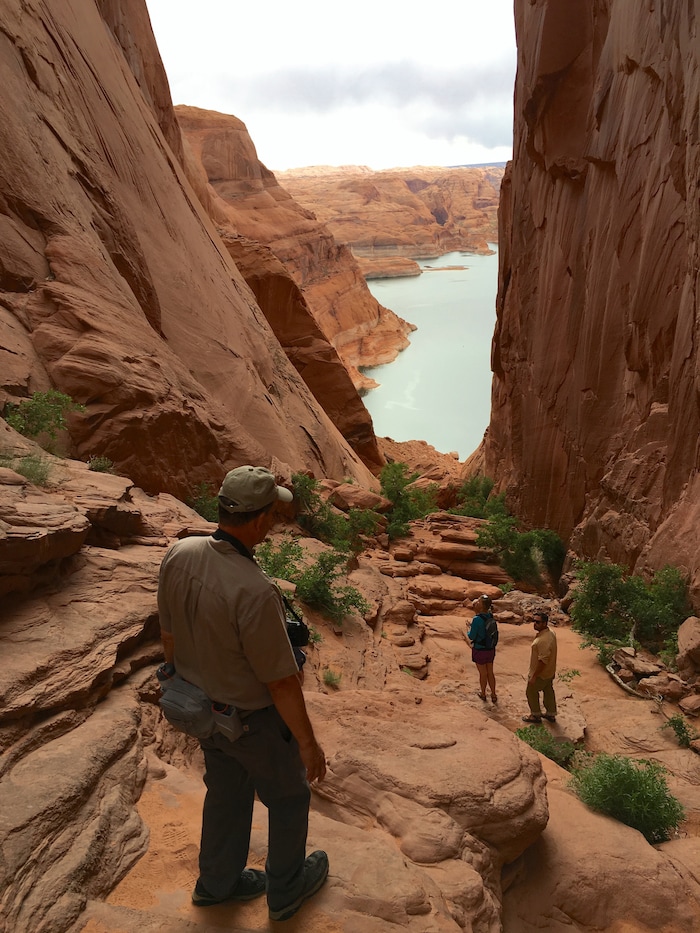
But other sites Obama highlighted are out. In addition to Elk Ridge and Cedar Mesa, Trump is removing Valley of the Gods, much of the San Juan River and and the trail cut by the San Juan Expedition in 1880 that famously passed through the Hole in the Rock, a cleft in the sandstone above Glen Canyon. The 60-mile western stretch of the Hole in the Rock trail was also largely excluded from the redrawn Grand Staircase-Esclante monument.
In the case of Cedar Mesa, Zinke contends more than 400,000 acres of it is already managed as wilderness, which carries a larger degree of protection than monument status. The new Shash Jaa monument’s western boundary dovetails with an ongoing wilderness study area that was left out.
“Cedar Mesa is unaccessible wilderness,” Zinke said. “We had to also devise boundaries where I can, Interior can actually monitor and protect monuments to make it clear where the boundaries were.”
Paved State Route 261, however, runs right down the mesa, cutting the wilderness study area in two and providing access to numerous canyons descending from either side of the mesa.
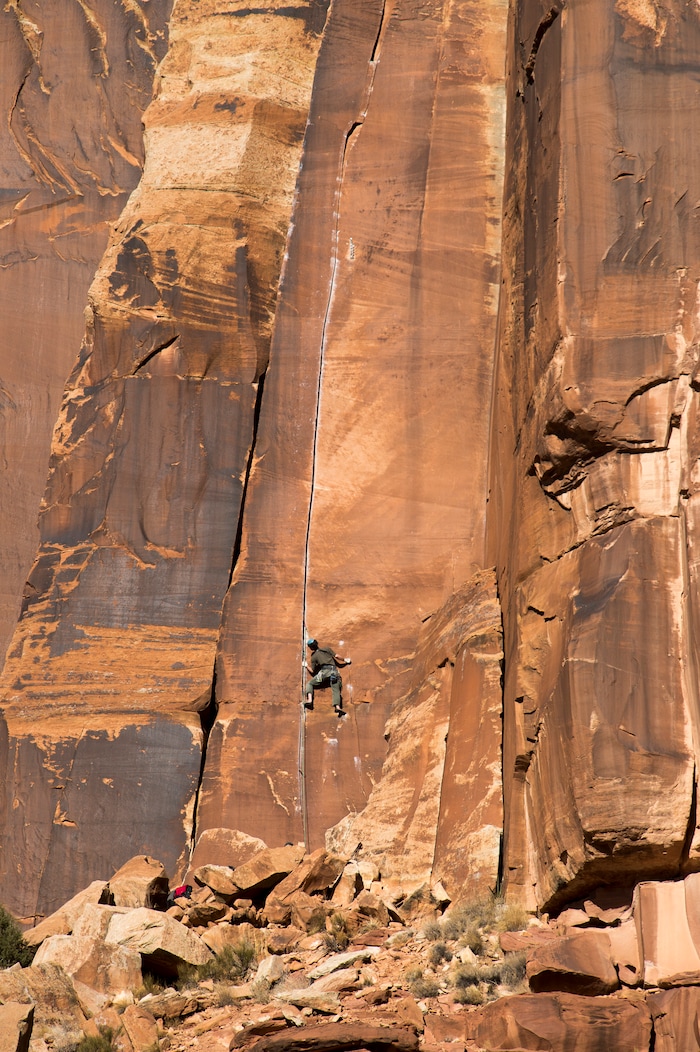
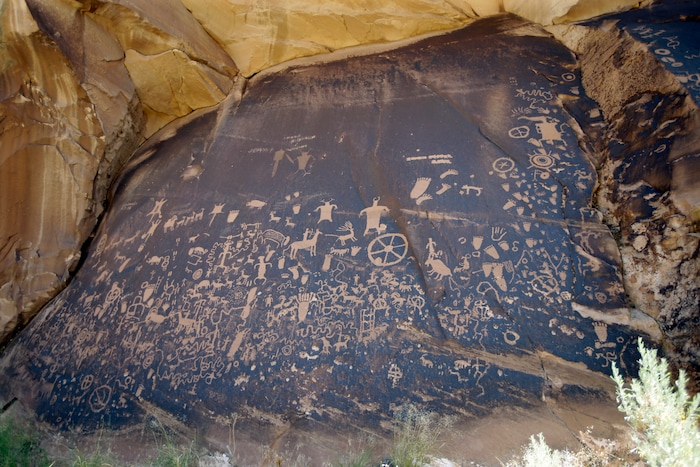
The Indian Creek National Monument covers land along State Route 211 where it passes through a world-class crack climbing area and Dugout Ranch. This land abuts Canyonlands National Park’s Needles district and captures numerous rock art sites such as Newspaper Rock.
(Rick Egan | Tribune file photo) Climbers at Indian Creek, seen in 2016.
While vastly reduced from what the tribes insist is the appropriate size, these two monuments are still on par in size with Utah’s famed national parks.
The two new smaller monuments capture far fewer state trust sections, now totaling only about 19,000 acres.
Trump’s order also trimmed the margins of the Grand Staircase-Escalante, turning that monument into three new ones, each encompassing one of the three distinct landscapes covered in the original monument designated by President Bill Clinton in 1996.
West to east, the monuments are Grand Staircase (209,993 acres), Kaiparowits (551,034 acres), and Escalante Canyons (242,836 acres), totaling just over 1 million acres.
In an apparent effort to free up some the Kaiparowits Plateau’s rich coal seams, this monument’s boundaries feature arms jutting in all directions where big bites were taken out of the monument.
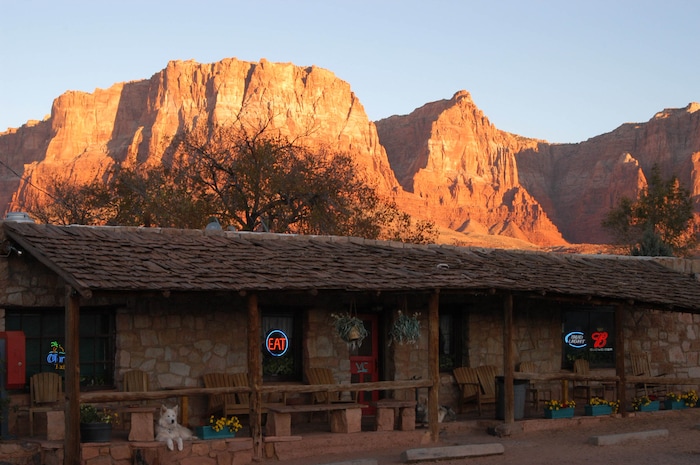
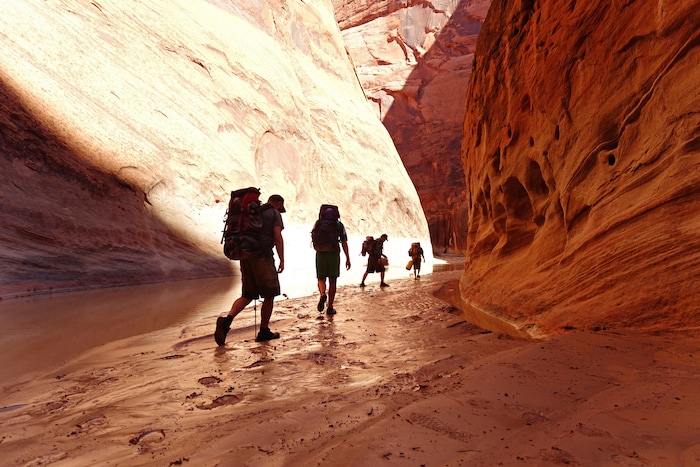
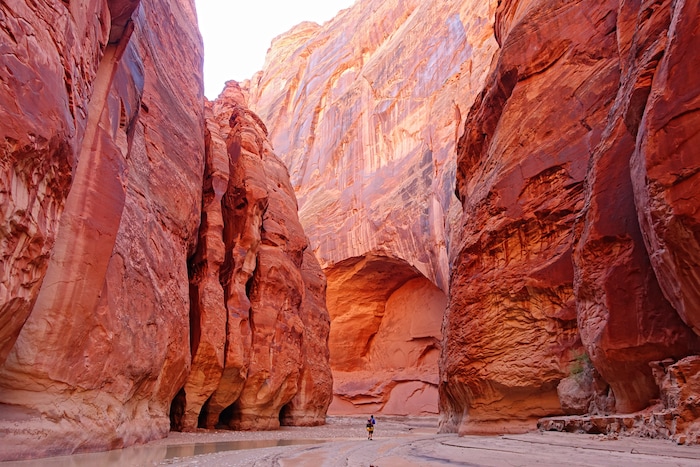
(Tribune File Photo) The Vermilion Cliffs tower over the Lees Ferry Lodge in northern Arizona.

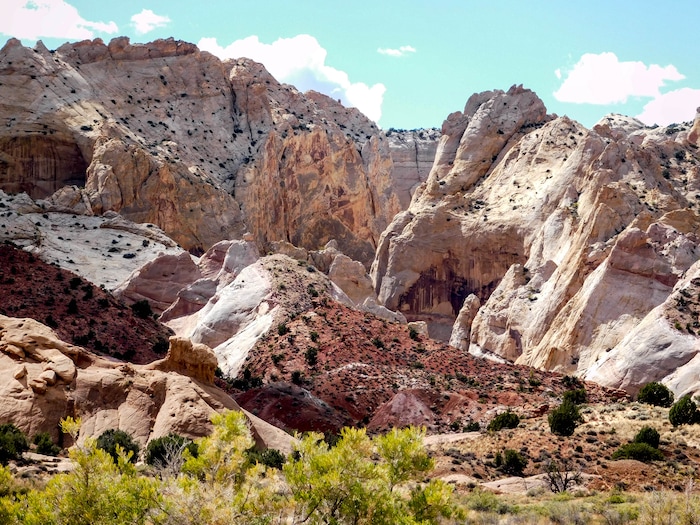
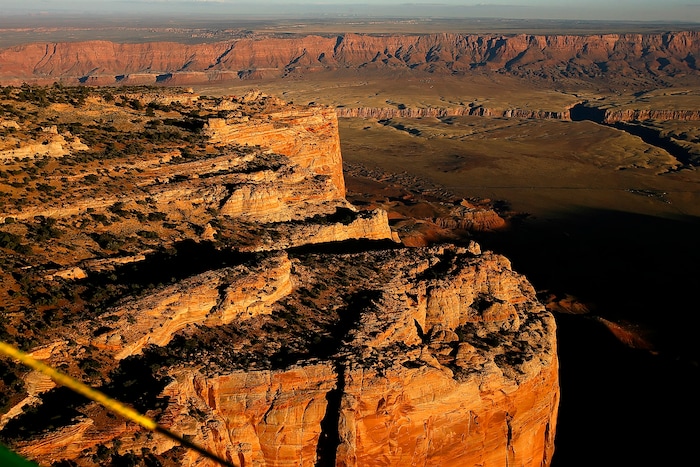
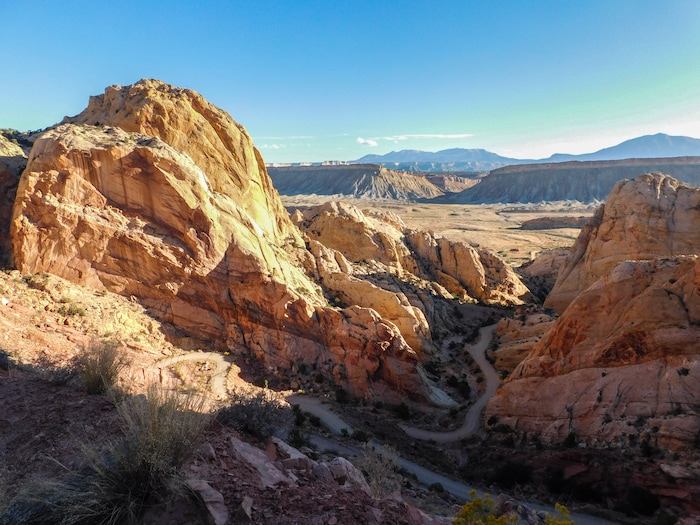
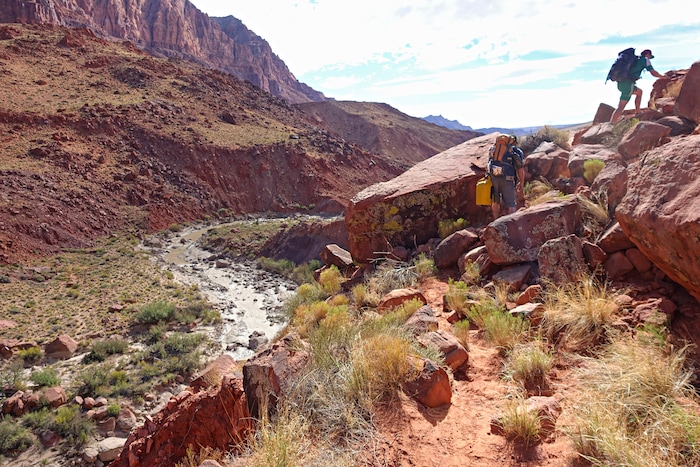
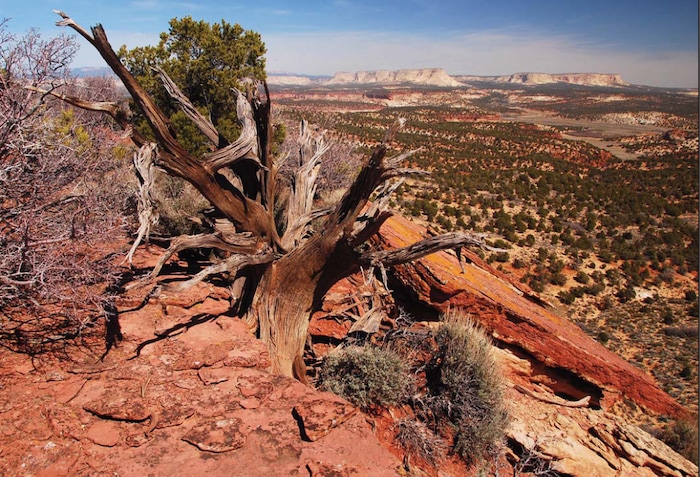

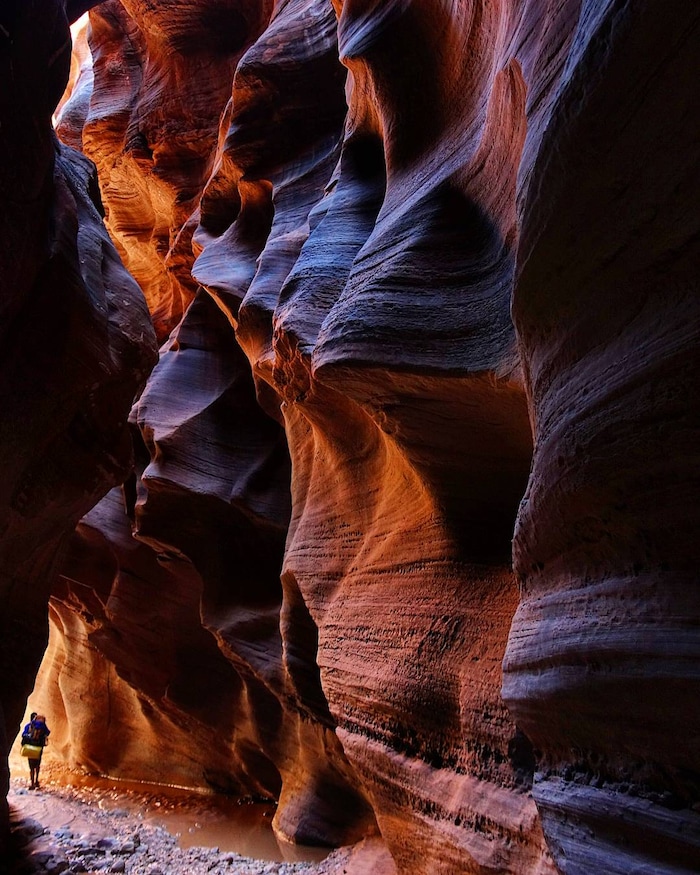
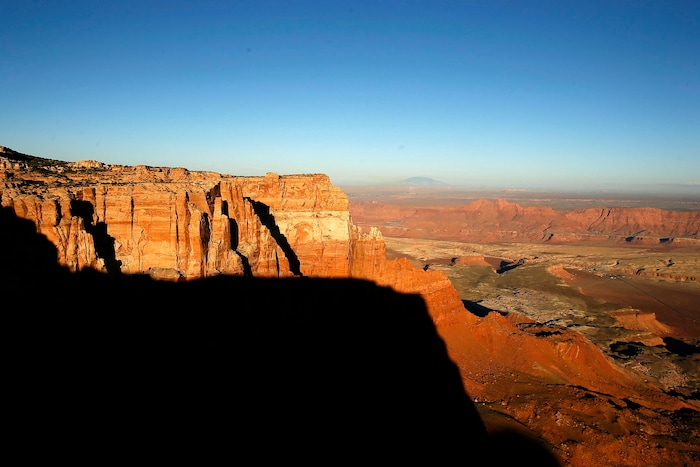
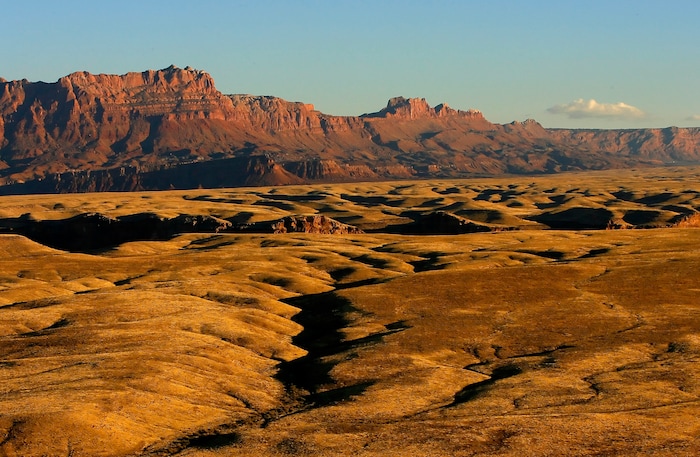
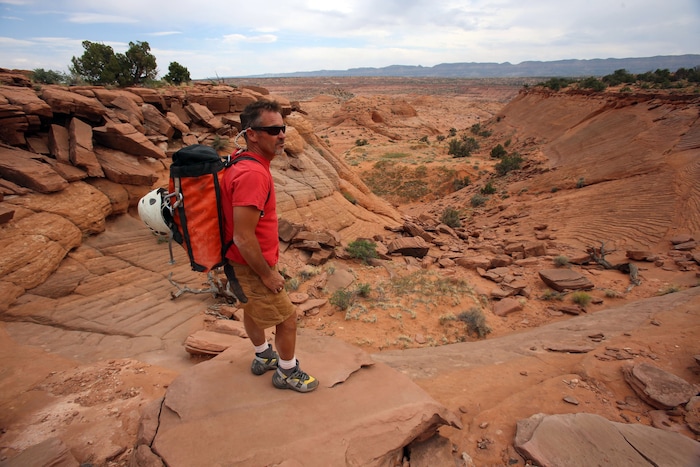

Under the 1,600-square-mile plateau are sedimentary rock formations covering an unbroken record of fossils spanning 30 million years of the Late Cretaceous Era, yielding fossils of most life forms, including several species of dinosaur previously known to science.
Paleontologist Jeff Eaton, who has worked on the plateau for more than 30 years in search of early mammals, could make no sense of the monument boundaries.
They also delineate three non-contiguous satellite units, including Dance Hall Rock, an important layover spot for the San Juan Expedition of 1879-80, and two blocks of land just north of U.S. Highway 89. It is not clear why these two blocks near Big Water were included.
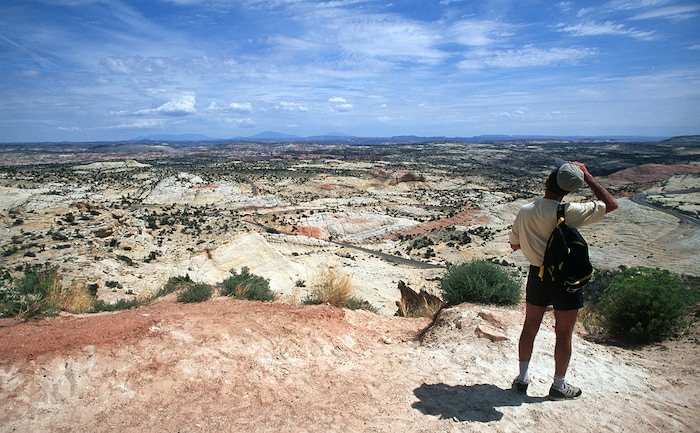
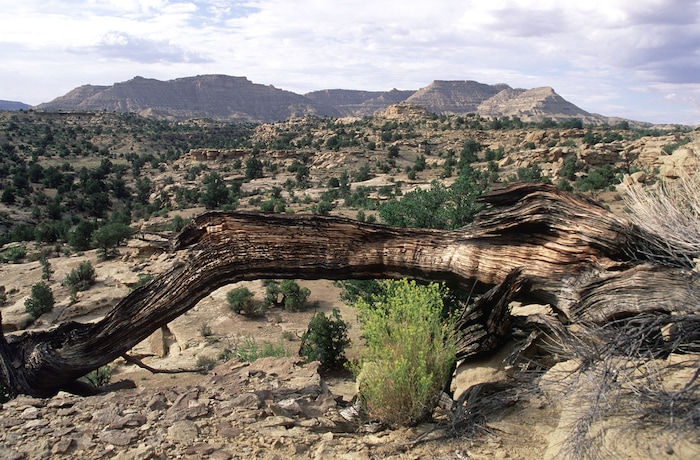
(Al Hartmann | Tribune File Photo) Broken country of scrub and sandstone washed on top of the Kaiparowits Plateau in the Grand Staricasae-Escalante national Monument is wilderness at its best. This area is one of the most rugged and desolate areas in the west.
“They have created a land management nightmare,” wrote Eaton, a retired Weber State University professor, in an e-mail. “Previous boundaries made sense as they connected Capitol Reef National Park and Glen Canyon National Recreation Area, or National Forest. Now there are odd strips of land breaking up what were contiguous management areas.”
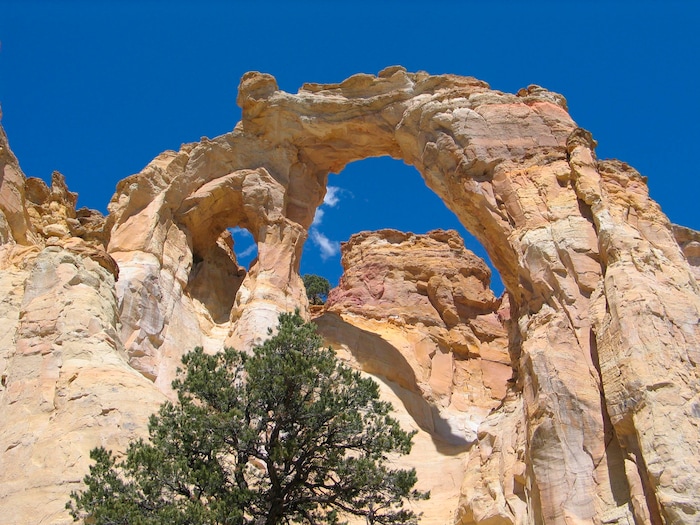
Trump’s order highlights several places named in President Clinton’s 1996 monument proclamation that will remain one of the three new monuments: the Upper Paria Canyon system; Natural Bridge; East Kaibab Monocline, also called the Cockscomb; Grosvenor Arch; Old Paria townsite, and relic Uplant communities such those found as No Mans Mesa. Also captured in the new monuments are Vermilion and Circle cliffs.
The federal lands excluded from the two original monuments will continue to be managed by the Bureau of Land Management and, in the case of Elk Ridge and Dark Canyon, the U.S. Forest Service.
(Courtesy of Jerry Roundy) Dance Hall Rock near Hole in the Rock Road.
Obama’s Bear Ears proclamation gives a special advisory role over monument management to a panel known as the Bears Ears Commission, comprised of one representative of each of the five tribes the petitioned for the monument.
Trump’s proclamation signed Monday requires that the San Juan County commissioner representing the Navajo-majority’s voting district will join this panel. That district, which will soon be redrawn under a court-ordered overhaul of San Juan County voting districts, is currently held by Rebecca Benally, an Aneth Chapter member who vehemently opposed the initial monument designation.
Trump’s order on Monday also calls on Congress to give the commission “co-management” powers.
— Reporter Thomas Burr contributed to this story.