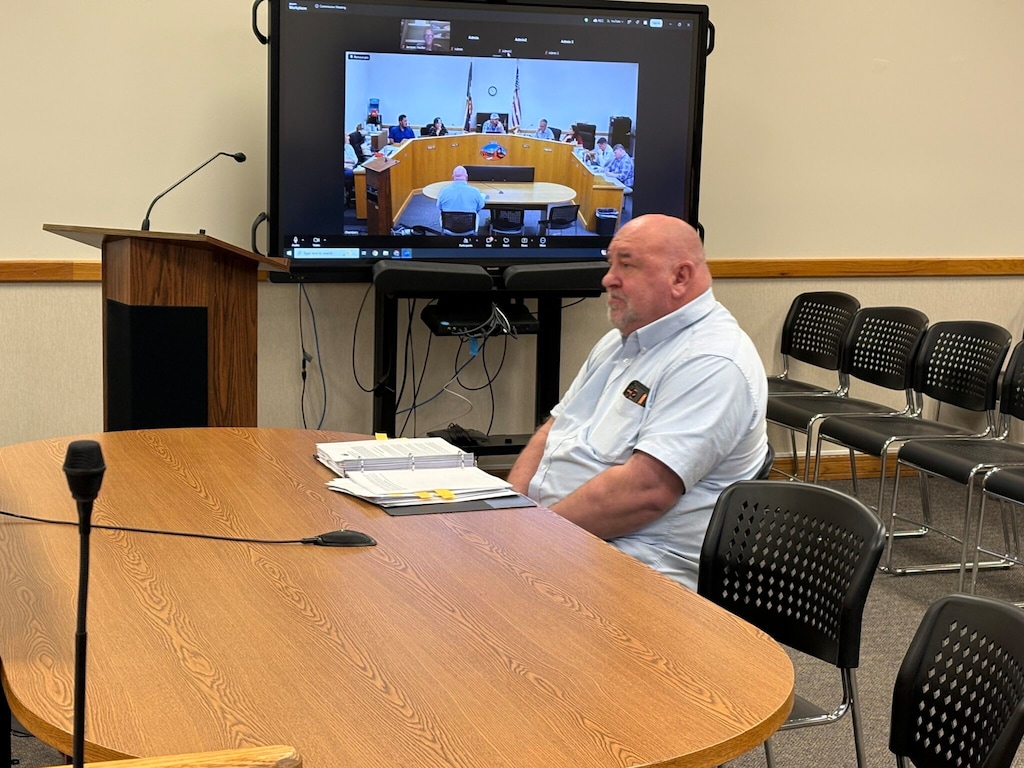
 Andrew Christiansen
Grand County has temporarily paused new data center development applications as a growing number of Utah local governments consider how to regulate an industry with potential significant impacts on water use, electricity demand, infrastructure and land use.
The Grand County Commission unanimously approved the 180-day temporary land use regulation July 7, giving the county time to develop standards for data center development, a type of use not currently defined or regulated in the county’s Land Use Code.
Data centers are facilities that house computer servers and other equipment used to store and process digital information. They support services such as cloud computing, online applications, financial transactions and artificial intelligence. Larger facilities can require significant amounts of electricity and, in some cases, water for cooling.
The regulation temporarily pauses the county’s acceptance, processing and approval of applications, permits and licenses for data centers, data center power plants and associated digital infrastructure while permanent rules are developed.
A May staff report from the Grand County Planning and Zoning Department outlined the potential land-use, infrastructure, environmental and fiscal implications of data center development in Grand County and identified planning considerations the county would need to address as it develops permanent data center standards.
The report identified electricity demand and water availability as two key considerations for Grand County. Staff estimated that a single mid-scale data center could require nearly two to four times the electricity Grand County currently uses annually and consume water at a rate equivalent to roughly 25% to 50% of the City of Moab’s annual aquifer draw.
Jackson said the pause is intended to give the county time to create permanent standards rather than prevent data center development.
“This is not a ban, and it’s not the county’s final position on these uses,” Jackson told commissioners. “It’s a limited, time-bounded pause that gives staff and commission the room to do permanent work properly.”
Jackson emphasized that there are no pending data center applications before the county.
“Nothing’s in a queue, and nothing has been submitted, nothing is being suspended by this action,” Jackson said. “This is precisely why now is the right time to act — we’re getting ahead of this proactively on our own timeline rather than reaching out to an application already on the counter.”
Jackson said the county’s current Land Use Code does not define data centers or establish specific review standards, leaving the county without data-center-specific criteria for evaluating issues such as water use, electricity demand, noise, lighting and visual impacts. Jackson added that under the current code, “we would be reviewing it against a blank page.”
The county’s temporary pause comes as several Utah communities consider how to address data center development. The Stratos Project in Box Elder County, a proposed large-scale data center and energy project backed by celebrity investor Kevin O’Leary, has drawn significant public attention and criticism over potential impacts related to water use, electricity demand and infrastructure needs.
Box Elder County later adopted a 180-day moratorium on new data centers and data center power plants on unincorporated county land while officials considered additional zoning and development standards. The pause did not apply to the Stratos Project because land-use authority for the project area had been transferred to Utah’s Military Installation Development Authority (MIDA).
Other Utah counties have also begun reviewing data center regulations. Iron and Cache counties have adopted 180-day pauses on data center applications while considering potential regulations.
Grand County refers to its action as a temporary land use regulation rather than a moratorium based on guidance from its land-use attorney, Jackson said. Both terms describe a temporary pause while a local government develops permanent rules.
Any permanent Land Use Code changes related to data centers would go through the county’s public hearing process, including review by the Grand County Commission and Planning Commission, with opportunities for public comment before final adoption.
The pause also comes as Grand County is already reviewing its broader development regulations through a rewrite of its Land Use Code. The county selected Sunrise Engineering in April to lead the long-delayed update, which is intended to simplify the code, address inconsistencies and better align development regulations with the county’s General Plan.
Sunrise recently completed an initial audit of the existing code as the first phase of that process.
Beyond water and electricity considerations, the Planning and Zoning staff report identified additional issues the county will need to evaluate as it develops permanent data center standards, including infrastructure, backup generators, hazardous materials, air quality, noise, lighting, visual impacts and compatibility with surrounding land uses.
Staff also estimated that accommodating the electricity demand of a mid-scale data center could require major transmission upgrades, with potential timelines of five to 10 years.
Grand County relies entirely on groundwater, the report noted, and the aquifer system is already at or near its sustainable yield. It identified water availability and cooling technologies as factors the county would need to consider in future data center standards.
The staff report distinguished between different types of data centers and did not recommend prohibiting all data center uses. Instead, it recommended developing standards that distinguish between smaller facilities and larger developments. Smaller “edge” data centers serving local connectivity needs could potentially be compatible with county goals if they meet standards addressing issues such as water use, noise, lighting and other impacts.
For larger facilities, the report identified questions the county may need to address, including zoning classifications, water standards, power infrastructure requirements, renewable energy considerations, visual impacts and infrastructure cost-sharing.
The report also considered potential economic benefits from data center development, including increased taxable property value and construction activity. However, it noted that financial benefits would depend on Utah tax policies and incentives and that large facilities may create relatively few permanent jobs compared with their size and infrastructure demands.
The report estimated that large data centers may employ about 30 to 100 full-time workers, primarily in technical operations and security roles.
Jackson said the temporary land use regulation is only a placeholder while the county develops permanent rules for data centers.
“The permanent ordinance that comes back to you will very likely define these uses differently, and will carry the substantive regulations that the temporary measure does not,” Jackson said.
During the meeting, commissioners also discussed involving the public as the county develops permanent data center standards. Commissioner Trish Hedin suggested outreach such as a public workshop or survey could help gather community input, but no decisions were made.
This story was first published by The Times-Independent.