 Brock Marchant
Hyrum • Justin and Kimberly Stubbs were eager for a chance to start building.
Having two kids, it was time to upsize from their Hyrum town house, but with Cache Valley’s soaring home costs, the opportunity to upgrade seemed out of reach.
In July, they took a leap: After six months of working to meet eligibility requirements, they applied for a federal program that has long offered low-interest loans for people in rural communities who are willing to get their hands dirty and build their own home.
Last month, however, their dreams were dashed when the U.S. Department of Agriculture changed the initiative’s rules, leaving the family unable to receive the loan for which they applied.
“Our family’s grown. We had a baby. We needed a little more room,” Justin Stubbs said. “It was devastating.”
The changes, one nonprofit administrator says, will make the popular USDA Rural Development Mutual Self-Help Housing Program essentially useless in most of Utah by limiting how much federal funding local organizations can dole out for mortgages.
“The money is all there,” said Josh Runhaar, who oversees the program in Cache and Box Elder counties as the director of Neighborhood Nonprofit Housing Corp. “The thing that shifted was they changed our ability to utilize the program.”
Before the switch, Runhaar said, the initiative — which requires participants to spend 35 hours a week constructing houses for themselves and neighboring participants — could offer low-interest mortgages to clients who built homes valued up to $595,000 in Cache County.
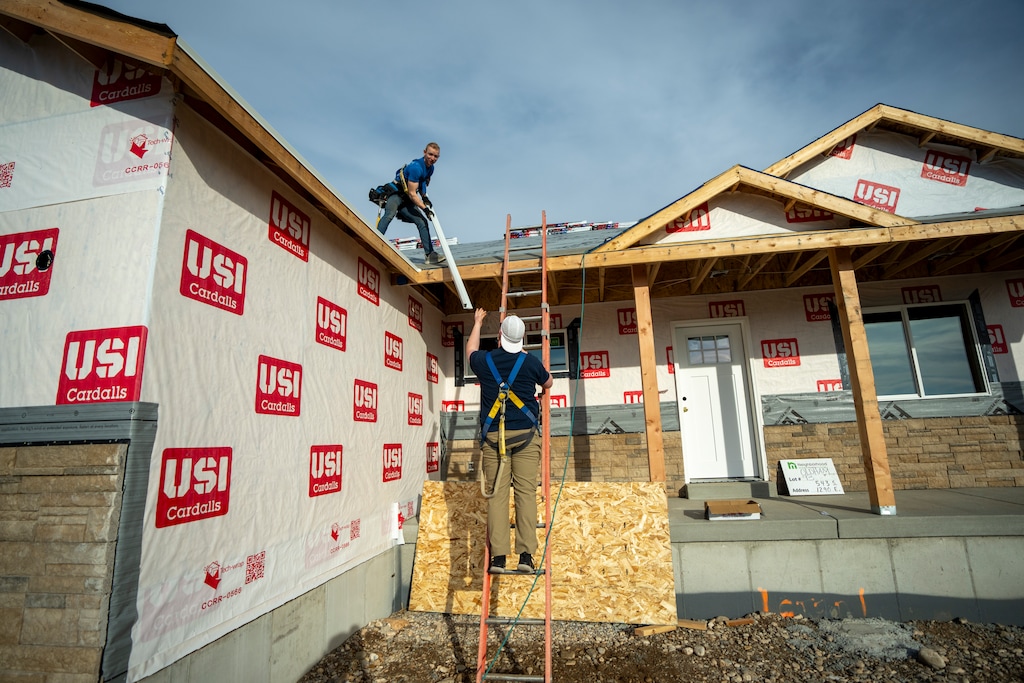
(Rick Egan | The Salt Lake Tribune) Cameron Oldham works on homes in Hyrum on Wednesday, March 4, 2026.
Normally, he said, construction costs would end up anywhere from $350,000 to $415,000, and homes would appraise for even more.
Now, that loan cap for the area has shrunk to $324,700 post-appraisal — a budget that Runhaar said is unworkable in Cache Valley’s booming housing industry.
“There’s not much that we can build,” he said. “That doesn’t work.”
Neighborhood Nonprofit Housing Corp. and other housing authorities are now trying to work with Utah’s congressional representatives to address the regulatory hurdle, Runhaar said.
A spokesperson for the USDA said the lower loan limits will save money to allow more families to participate. To make projects pencil, the department encouraged states and cities to consider smaller lots and houses.
“These changes also support our efforts to address increasing rates of delinquency and default. When those costs rise, they are borne by taxpayers and borrowers alike,” the spokesperson said. “The program remains available, even with updated limits, and the USDA encourages families to consider all eligible housing options.”
No representatives from Utah’s congressional delegation responded to questions about the program’s alterations.
Unless Congress takes action to reverse the changes, Runhaar said the adjustments will likely mean the death of Cache Valley’s biggest program to help lower-income people get into homes — one that’s aided more than 700 families in Cache and Box Elder counties over the past 25 years.
(Rick Egan | The Salt Lake Tribune) Cameron Oldham shows the status of his Hyrum home on Wednesday, March 4, 2026.
Cameron Oldham, one of the last applicants to be approved in Cache Valley, lamented that others will not get the same opportunity.
“It was this program or bust,” he said, shortly after arriving to shingle his soon-to-be neighbors’ roofs in Hyrum. “I do all I can to provide for my family, but homeownership wasn’t an option within the next decade or two.”
Late last month, he and his wife, Katy, had their third baby, making the couple even more grateful for the chance to build the home they are set to move into before the end of the year.
“My kids can grow up in a neighborhood with little kids running down the street,” he said. “I’m going to die in this house.”
The Stubbs, meanwhile, are unsure of what they will do next.
To qualify for the home-building program, they said they had to sell their town house, giving up a 2.8% interest rate. Now, they’re living with Kimberly’s mother.
“We’ve already put almost a year and a half into this whole process,” Kimberly said. “We have a roof over our heads, but it is tight.”
(Bethany Baker | The Salt Lake Tribune) Houses under construction in Hyrum in 2025. The homes were part of a federal housing initiative that was curtailed last month.
 I’m Brock Marchant, The Salt Lake Tribune’s Cache Valley reporter in partnership with Utah Public Radio. As a valley native, I’ve seen firsthand the issues that people face everywhere from Richmond to Avon — unaffordable housing, dwindling open space and a rapidly increasing population that has cities struggling to keep up. I want to explore local problems by reporting on the ground, not just quote elected officials and news releases. As residents work diligently to overcome challenges, I want to tell their stories and share their solutions. Smart, hard-working people have built the valley’s history, and I’m certain they will frame its future.
As a nonprofit newsroom we rely on donations from readers like you to make this work possible. Donate today to support this reporting.