facebook-pixel

A nationwide coalition wants to prevent federal funding to Utah’s massive homeless campus

The proposed 1,300-bed facility is at the center of Utah’s ongoing debate over how to respond to homelessness.
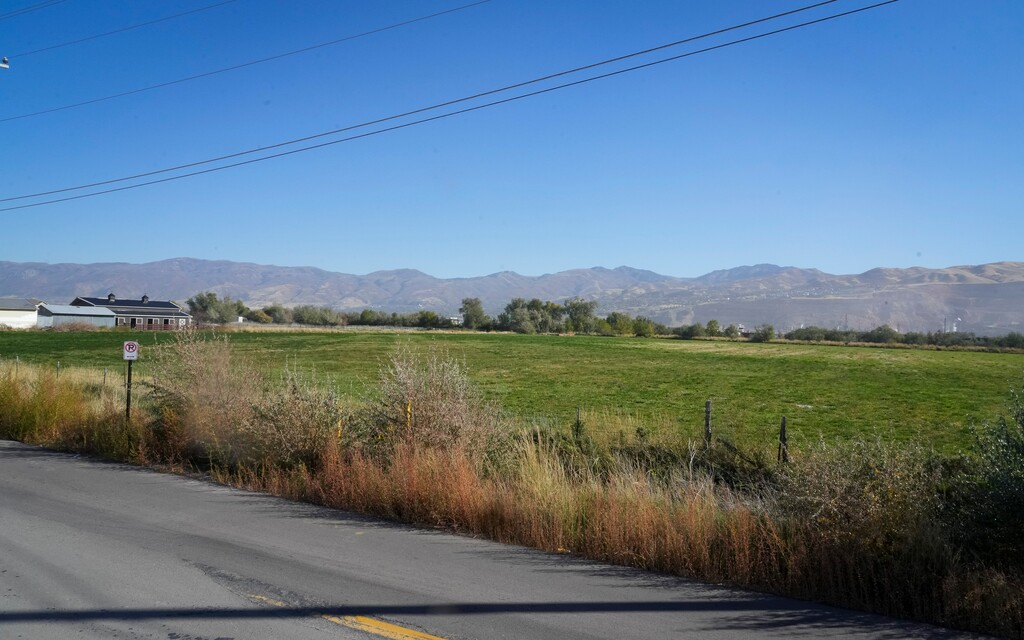
(Bethany Baker | The Salt Lake Tribune) The site of the planned homeless campus is seen in Salt Lake City in 2025. A national coalition is seeking to prevent federal funding from supporting Utah's planned homeless campus.

While some state leaders look to build a massive new campus where homeless Utahns could be forced into treatment against their will, a group of advocates opposed to that plan is taking its case national.

The group, which includes politicians like state House Minority Leader Angela Romero, D-Salt Lake City, and U.S. Rep. Maxwell Alejandro Frost, D-Florida, kicked off a push Thursday to prevent federal funds from paying for what they call a “detention camp” in Utah’s capital.

“Our concern with the campus is it’s far away from city resources, and there’s also a civil commitment piece to it,” Romero, who called the facility an “internment camp” last month, said on a Thursday organizing call. “We just have a lot of concerns.”

On the call, coalition leaders urged activists from across the country to speak up against funneling federal dollars to Utah’s project. Such federal support, they argued, would be an early step in President Donald Trump’s major shift toward a stricter stance on homelessness.

Those opposed to the facility worry that it would be ineffective in helping homeless Utahns, divert funds away from housing programs already in place and trample on the civil rights of those ordered to undergo treatment there.

State leaders want to build the facility with space to hold up to 1,300 people on the west side of Salt Lake City. The Legislature has yet to sign off on all the funds necessary to build and run it, leaving a gap that policymakers, including Gov. Spencer Cox, hope to fill with federal dollars.

Cox’s office and state homelessness board chair Randy Shumway did not respond to questions about federal funding for the campus.

When asked about its stance on the campus and possible funds available for it, the U.S. Department of Housing and Urban Development said “HUD is committed to supporting local communities, providing housing and services to help Americans recover and regain self-sufficiency.”

While operational details of the campus are still being worked out, top officials seem to be leaning toward including facilities to host people who have been ordered to undergo treatment for mental illnesses or drug abuse against their will. Some Utah homeless service providers and advocates have criticized that push and advocated for additional funding to flow toward housing and case management for those living on the streets.

The campus funding gap

Last fall, state leaders announced they had found a site at 2520 N. 2200 West for the proposed campus. Then-state homelessness coordinator Wayne Niederhauser said the facility would cost $75 million to build and about $34 million a year to run. Utah lawmakers have already allocated about $23 million to construction costs.

Ahead of the ongoing legislative session, Cox asked legislators to pour another $25 million into building the campus and earmark $20 million for ongoing operations once it is completed. If lawmakers did fully back the request, the state would still need more than $25 million to build the facility and roughly $14 million more to run it each year, according to Niederhauser’s estimate.

That’s where federal funds could help. State leaders believe the campus’s development — and a larger reorientation away from policies that seek to get homeless Utahns into housing first to ones that emphasize behavioral health care and involuntary treatment — matches up well with a Trump summertime executive order.

Late last year, a federal judge temporarily blocked the order from taking effect, though, hitting pause on Trump’s move to overhaul the federal response to homelessness and free up funds that could flow to the campus.

Those opposed to diverting federal dollars to the project fear it would do more harm than good for homeless Utahns, not least because that money currently is helping to pay for affordable housing. They want to see other types of help for people experiencing homelessness.

“What we actually need is strong, locally driven homelessness prevention efforts, affordable housing development and access to deeply affordable units across our rural counties, support for existing local shelters and case management, not a centralized detention center that dehumanizes Utahns and pulls funds away from rural solution-building,” Utah State University social work professor and rural homelessness expert Jess Lucero said on the Thursday call.

Building a broad coalition

The opposition group also includes the National Homelessness Law Center, the Disability Law Center of Utah, the American Civil Liberties Union of Utah and Utah Support Advocates for Recovery Awareness.

On the call, organizers criticized laws that allow police to arrest and cite people who camp or otherwise live outside and have nowhere else to go. They also laid out concerns that forcing people experiencing homelessness into the campus would violate federal court rulings and laws on involuntary treatment.

Frost and four other U.S. representatives sent a letter Thursday to HUD Secretary Scott Turner urging that his department reject any funding requests that would allocate dollars to projects like the campus.

“Facilities like this risk creating inhumane detention and are not a viable solution to homelessness,” they wrote. “We ask that you instead focus your agency’s efforts on proven solutions to promote housing stability.”