facebook-pixel

Future move of LDS Hospital in the Avenues now looms in Salt Lake City Council election

All five candidates in District 3 are pointing to “F Street” as an approach to avoid.
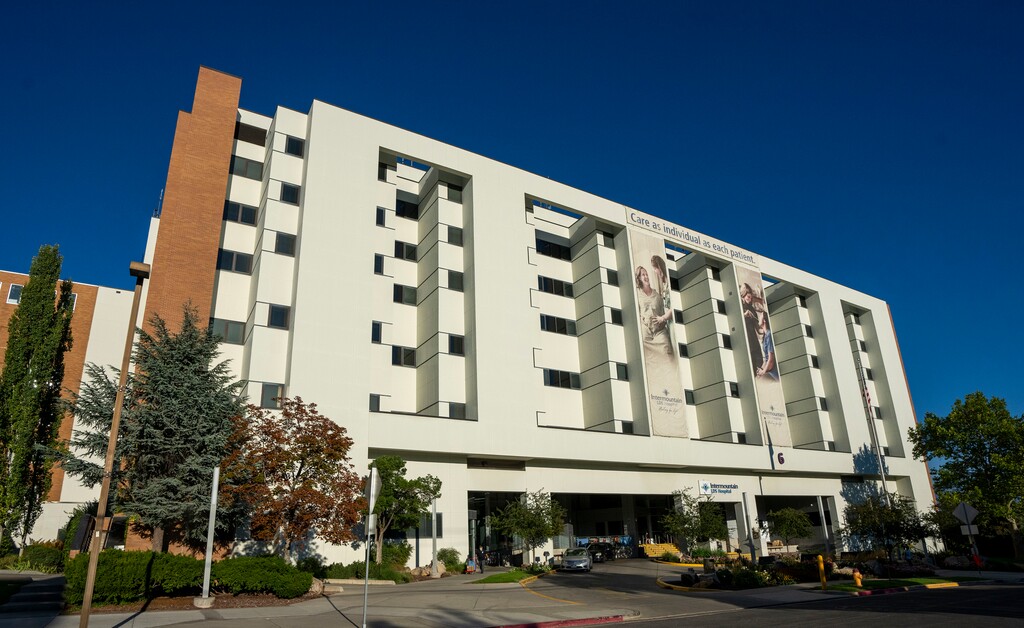
(Rick Egan | The Salt Lake Tribune) Intermountain Health's LDS Hospital in 2021. Candidates for Salt Lake City Council District 3 have shared their stances on the site's future.

When residents of Salt Lake City’s oldest neighborhood contemplate the prospect of moving LDS Hospital’s massive 120-year-old presence out of the Avenues, for many it’s with a wary eye on the recent past.

A wide coalition of neighbors bitterly opposed a project in the upper Avenues called Capitol Park Cottages, where Ivory Homes is building 21 home lots on a once-treasured piece of open space surrounded by residential properties at about 675 N. F Street.

Frustration with City Hall’s late 2022 approval of additional density for that 3.2-acre subdivision of single-family and twin homes with accessory dwellings seems so far one of the only issues that fully unites the five candidates running for the City Council seat for District 3, which represents the area.

[Read more: Salt Lake City Council District 3 voter guide.]

That includes incumbent Chris Wharton, who is seeking a rare third term in the seat as he faces four challengers on the ballot this November.

Wharton, who voted against the Ivory Homes project at a crucial juncture, joins his opponents on the debate trail in giving the public process for approving what many refer to as “F Street” a firm thumbs-down.

Some of that shared wariness now underlies many questions over what might happen with upwards of 15 acres in the neighborhood when LDS Hospital moves its operations — just as mail-in ballots in the Nov. 4 city election start to reach prospective voters.

That’s even while the hospital’s owner, Intermountain Health, hasn’t made clear its future plans, clouding the question of exactly when a prospective move might come before the City Council.

Future yet to come into focus

Intermountain publicly announced two years ago that it intends to shift staff and services away from the sizable landmark hospital and its generous Avenues footprint centered at 8th Avenue and C Street, as part of building a new hospital downtown.

Along with transitioning to a future high-rise medical hub on the vacated former Sears site at 754 S. State, sources familiar with the discussions have said Intermountain intends to demolish at least part of the aging LDS Hospital building and support facilities, possibly including adjoining physicians and surgical offices and two parking structures.

Intermountain brass have said it plans to eventually transition staffers downtown, though Intermountain spokesperson Jess Gomez declined to offer any additional details on the health care chain’s future plans for LDS Hospital.

“We have not been involved in any discussions with any of the candidates on this matter,” Gomez said in a statement. “We continue to focus on providing world-class health care at LDS Hospital and plan to do so in the future.”

A little more than a year ago, Intermountain’s zoning request to build a tower-laden, block-size urban hospital with ambulance services on the flattened Sears location drew cautious approval from the City Council.

Intermountain hasn’t released additional information on its move nor substantially updated design plans for the new hospital at the Sears site since.

Now, it’s a D3 election issue

Candidates for Salt Lake City Council District 3, clockwise from top left: Blake McClary; Chris Wharton; Liddy Huntsman; Jake Seastrand; and David Berg.

Wharton, an attorney and current City Council chair who has held the seat for eight years, is going up this election season against software executive Blake McClary; foundation board member and diabetes-care advocate Liddy Huntsman-Hernandez; health care worker David Berg; and judicial assistant and business owner Jake Seastrand.

The municipal race is one of three contested elections for City Council this year that will be decided via ranked choice voting.

Last week, questions about LDS Hospital’s future bubbled up alongside such big-sky issues as public safety, housing, homelessness, traffic-calming and city budgets in the race for District 3, which spans the Avenues, Capitol Hill, Federal Heights and parts of the Marmalade and Guadalupe neighborhoods.

McClary unveiled a detailed plan for affordable, family-friendly town homes and park-size green spaces on as many as 14 parcels Intermountain owns there — and sought to criticize Wharton for not giving the future redevelopment adequate attention.

The Avenues resident is calling on Salt Lake City to explore buying the property from Intermountain through the city’s Community Reinvestment Agency or entering into a public-private partnership to guide its development.

He contends there has been “no attempt” at engaging with Intermountain to begin planning what will happen on that footprint between C and D streets — other than a scant sentence or two on its redevelopment among 60 pages of planning documents on existing neighborhood conditions.

“With about 20 acres of prime land in Salt Lake City’s oldest neighborhood,” McClary said in an interview, “I don’t understand how that isn’t strategy number one for the city, right?”

‘Generational project’ or crickets at City Hall?

Wharton, who lives in Marmalade, has countered that it is “really premature and a little bit confusing to be holding planning exercises for the LDS Hospital site, especially without the landowner at the table.”

Wharton said he is in regular communication with Intermountain’s top executives about current and future needs for the hospital, its patients and surrounding neighborhood. He said Intermountain is still “several years out” on deciding what to do — including the possibility of keeping the hospital there in some form.

“I’m as eager as anyone else to find out what its future holds,” Wharton said, “but that process needs to be initiated by the property owner and guided by the needs of residents, not by speculation.”

He said in an interview the hospital’s future is one of the three “big generational projects” — along with building a new West High School and updating the Avenues 38-year-old master plan — that he is hoping to see through with an additional four years in office.

“I want to make sure that we have experience on the council as we make these big decisions for District 3 and for the rest of Salt Lake City,” he said. “I think that having experience is critical for that.”

Wheels have already started to turn on updating that master plan, for which mapping possible land uses on those Intermountain-owned parcels under and around the hospital is likely to be pivotal.

Calls for transparency, neighborhood input

Candidate Liddy Huntsman-Hernandez said she is concerned over “lackluster” transparency in recent real estate developments in the city, including the Ivory Homes project on F Street and the city’s recent deal with Smith Entertainment Group for a downtown sports, entertainment, culture and convention district.

“My concern with the LDS Hospital site is that it could become another juicy opportunity for investors and developers to get ahead of the public process,” Huntsman-Hernandez said. “I wouldn’t be surprised if some are already eyeing this site.”

What matters most now, she said, is “transparency and neighborhood participation” by the people of District 3: “If and when the time comes, the future of that property should be determined through a transparent, community-driven process that genuinely reflects neighborhood priorities — not developer agendas.”

Candidate David Berg, who lives in District 3’s western reaches, said that proposing an elaborate plan for LDS Hospital now “is premature,” although he added that “we do need to stay on top of what could happen there.”

Reshaping it for green space, housing

The question is also being framed on the campaign trail in the context of making the city more accommodating to families. That’s surfacing as part of larger debates on affordability, park safety and the need for additional multi-bedroom housing to stem what some of the candidates portray as ongoing flight from Utah’s capital.

McClary is pressing for public subsidies to any redevelopment at the hospital site to create town homes for sale at $550,000 — a figure Huntsman-Hernandez has called “naive” given prevailing land and construction costs.

Candidate Jake Seastrand, who works as a judicial assistant in 3rd District Court, said he applauded McClary for taking the initiative on the hospital site — but says his opponent’s newly unveiled plan does not go far enough.

As part of the city’s rewriting of the area’s master plan, Seastrand is calling for substantial tweaks to the hospital site’s underlying zoning, with added requirements to its urban institutional label to tilt it more firmly toward housing and green spaces.

“That way,” said Seastrand, “when that redevelopment did come around, we would already have a blueprint ready to go.”

Seastrand said Avenues residents have a well-founded sense of “density backlash” after the F Street approval. He is urging more of a “gentle density” approach that emphasizes smaller housing types such as town homes, triplexes and duplexes available for ownership, otherwise referred to as “missing middle” housing.

He, like Wharton and Huntsman-Hernandez, is also calling for widespread public input into the new Avenues master plan when it comes to the hospital site to ensure the community’s needs are met. “That way,” Seastrand said, “the neighborhood would feel like it actually gave them more stability.”