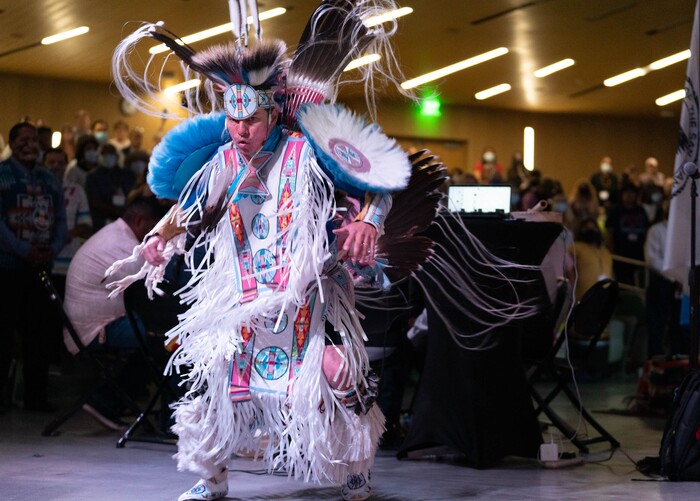
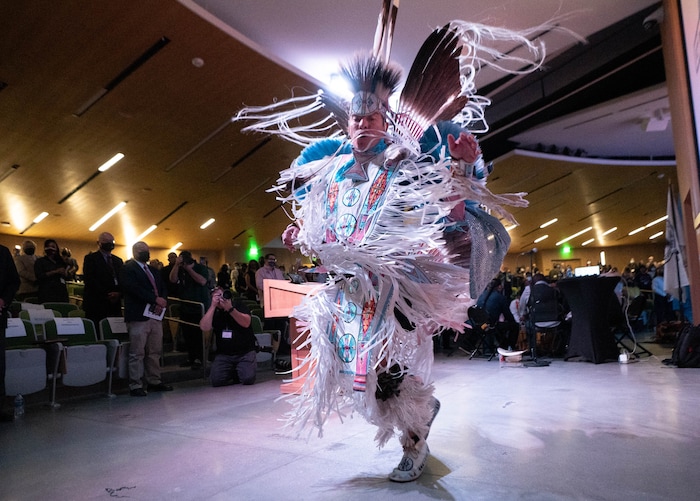
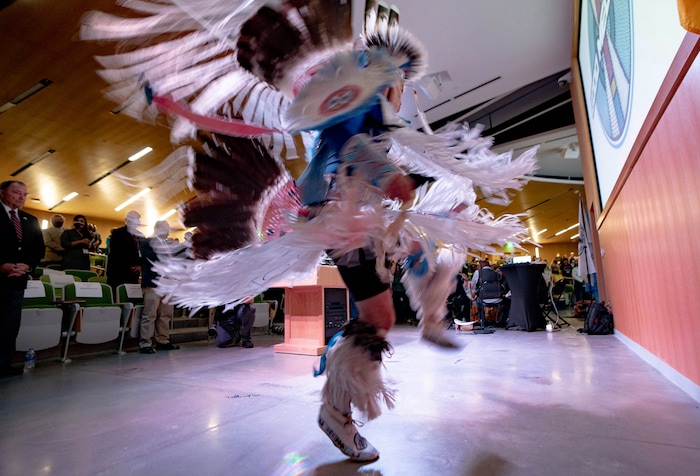
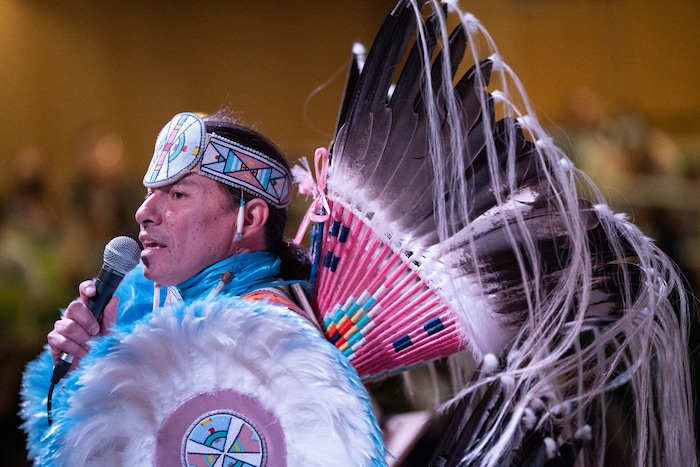
(Francisco Kjolseth | The Salt Lake Tribune) Christian Parrish Takes the Gun, known professionally as Supaman, performs a fancy dance for the start of the 15th Annual Governor’s Native American Summit held on the Utah Valley University campus on Friday, Aug. 6, 2021.
Orem • In a year filled with wildfires, a windstorm, an earthquake, a drought and the coronavirus pandemic, Dustin Jansen has seen firsthand what can happen when leaders of the state and Utah’s eight Native American tribes communicate and work together.
Jansen, director of the Utah Division of Indian Affairs, told a group Friday at Utah Valley University about how he and others loaded up hundreds of sheep to deliver to the Navajo Nation last year. This was part of the Utah Farm Bureau’s Farmers Feeding Utah program, which was created to help farmers and ranchers who found themselves with lots of food and not enough customers to buy it.
After a historic windstorm knocked down thousands of trees in September, dozens of trucks collected the debris in and around Salt Lake County to bring to people in need of firewood, rather than chipping it all up and sending it to a landfill.
And then, Jansen said, there was the distribution of masks, gloves and vaccines to curb the spread of COVID-19.
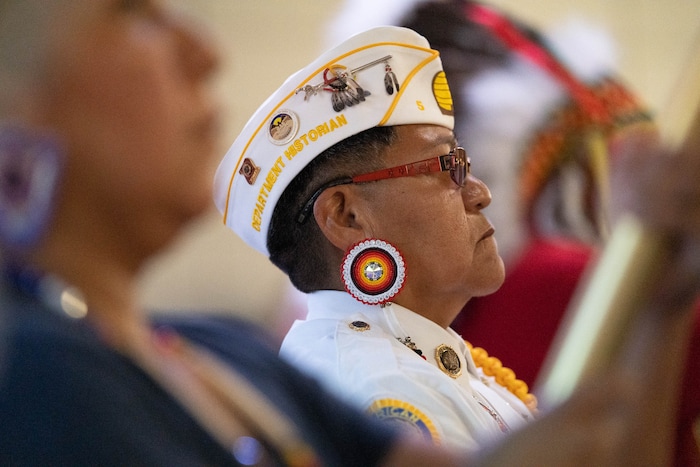
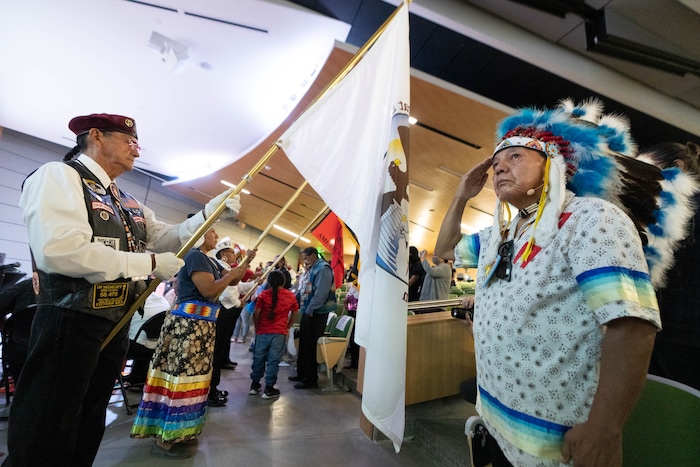
Collaboration between state and tribal leaders isn’t always easy and takes work, according to Jansen. But honest and open conversations are important, Jansen told the people who gathered Friday for the 15th Annual Governor’s Native American Summit in Orem, hosted by the Ute Tribe of the Uintah and Ouray Reservation.
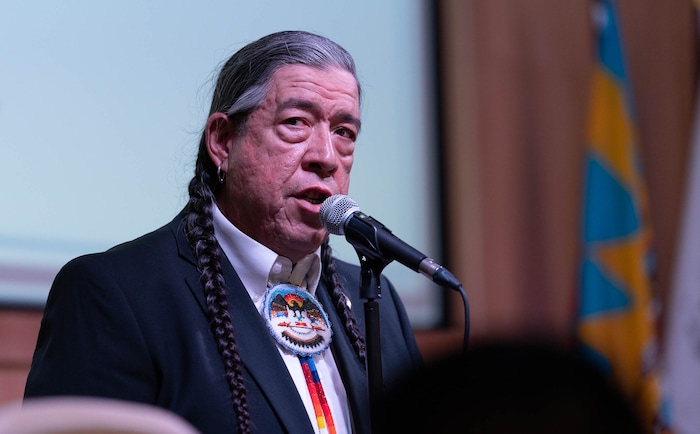
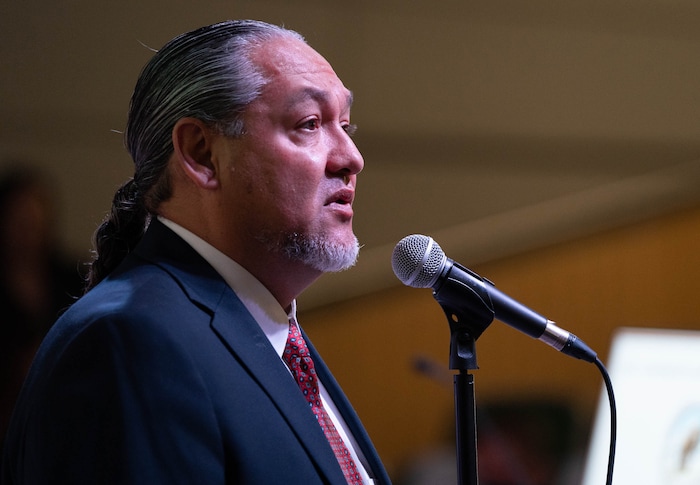
“We, as residents, [and] us, as one of the tribes who inhabited this area since time immemorial, need to learn to actually work together,” said Shaun Chapoose, chairman of the Ute Indian Tribe Business Committee.
“Like a family relationship, it’s dysfunctional sometimes,” Chapoose said. “You don’t always agree on things.”
Still, he said, “it’s very important that we have communication.”
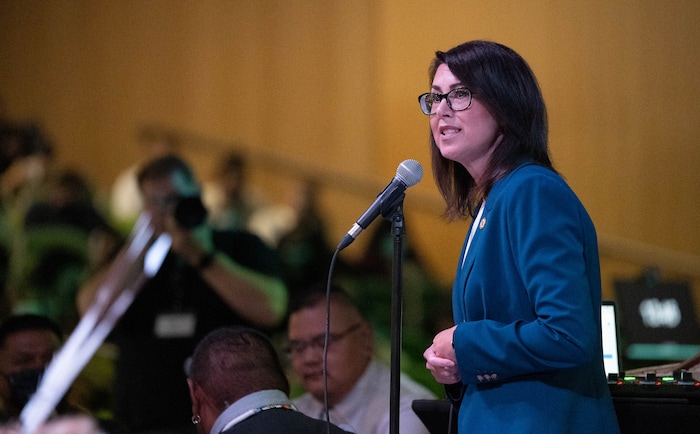
On Thursday, Gov. Spencer Cox met with tribal leaders for a candid conversation about their priorities and concerns, according to Jansen. And Lt. Gov. Deidre Henderson told the crowd that she plans to visit all eight tribes.
“Governor Cox and I are committed to working together,” Henderson said. “We’re committed to understanding the things that have happened in the past and figuring out constructive and good ways to move forward in the future.”
As a Utah tribal leader, Chapoose said he wanted to remind people, “We’re not going nowhere. ... This is our home.”
“We, as the Ute Indian Tribe, will always do what we can,” he added, “to protect ourselves and to protect our people.”
Chapoose encouraged attendees to continue to take safety precautions during COVID-19 — even as people get vaccinated.
“History tells us when ... sickness hits and there’s no immunities, populations cease to exist,” he said. “Native Americans are a good example of that.”
The pandemic “has shown all of us that it doesn’t matter who you are, where you live, what you think, what you have, or don’t have, we’re all susceptible,” Chapoose said. “We’re all at the whims of it.”
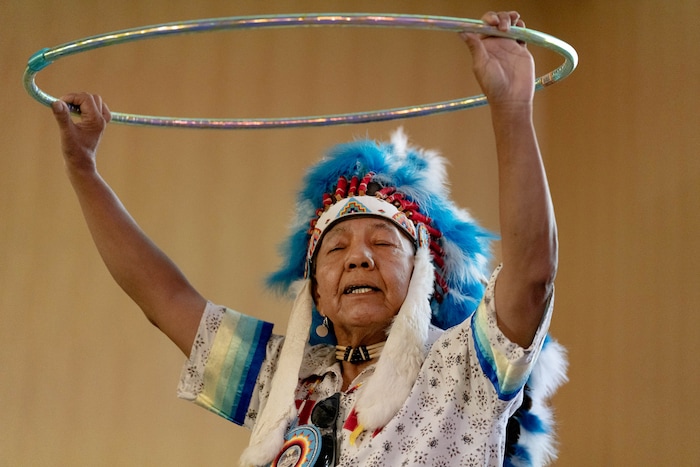
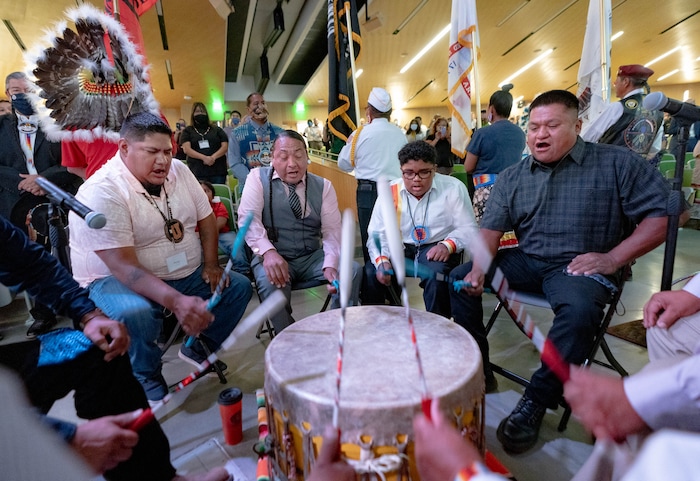
The daylong summit — which included sessions about the power of traditional music in healing, the Indian Child Welfare Act and the role of family in Native American culture — began with music performed by the Hillcreek Singers from Fort Duchesne of the Northern Ute Tribe. Ute elder Larry Cesspooch also performed the Ute creation story.
Supaman, a Native American dancer and hip-hop artist who lives on a Crow reservation in Montana, invited a handful of attendees to help him create a song through beatboxing and different sounds, after he performed a dance dedicated to missing and murdered Indigenous women and girls. He also encouraged people to “create your destiny.”
“You’ve got to take action for your situation in life,” he said.
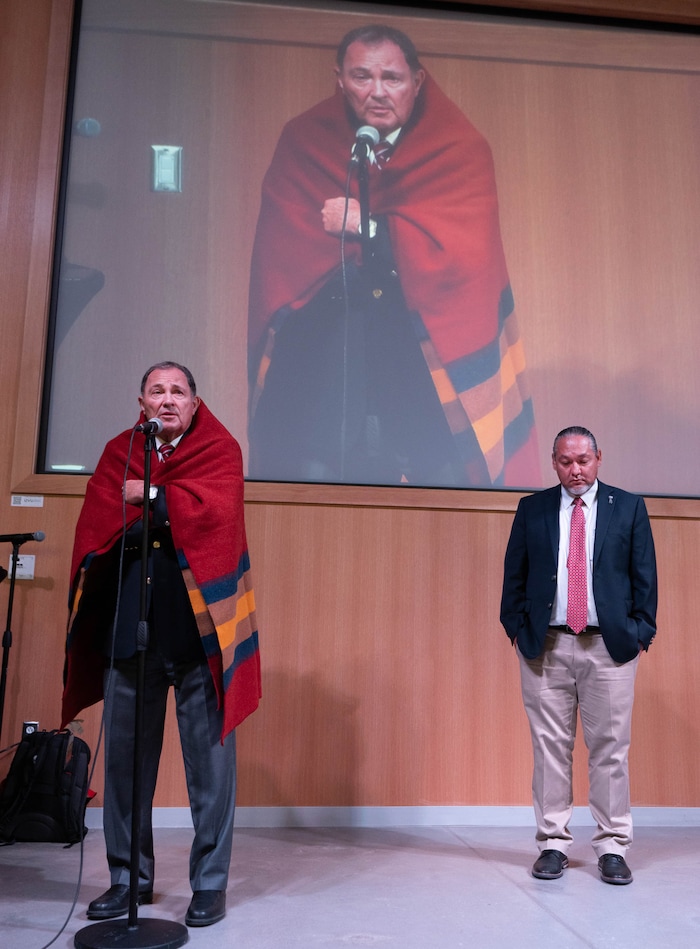
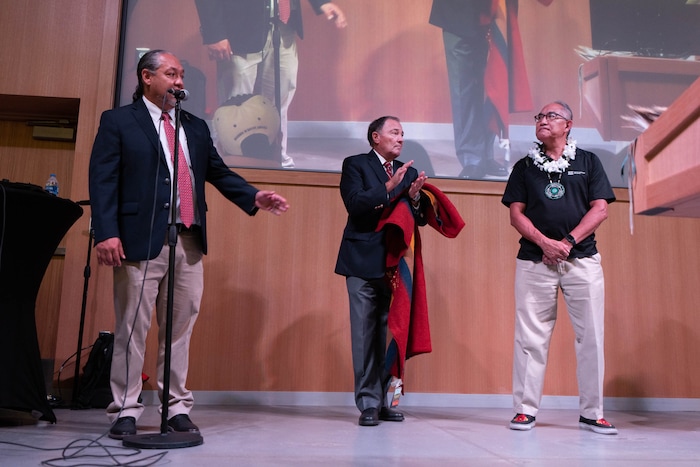
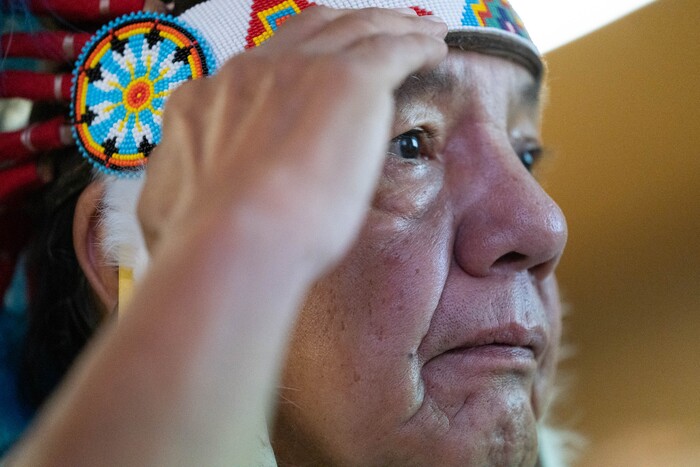
Jansen presented a blanket to former Gov. Gary Herbert, honoring his work in creating the summit, now in its 15th year. An emotional Herbert said he was “humbled” as he held the blanket around him.
“I have a foster brother who is a full-blooded Navajo,” Herbert said. “And raised with him, I’ve had maybe a better appreciation of some of the challenges that Native Americans face, for a variety of reasons, and thought, ‘We can do better.’”
The summit was started to bring people together to have honest and loving conversations, he said, and there’s more work to do.