Chiura Obata, who painted natural wonders and hardships of Japanese-Americans at Topaz, gets major exhibition at Utah Museum of Fine Arts
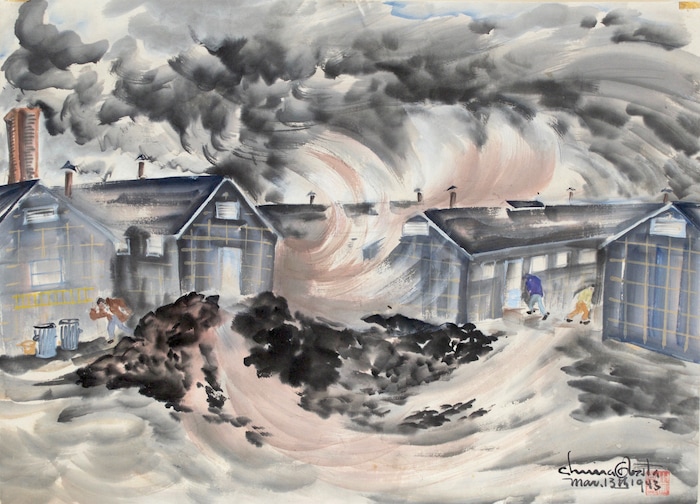
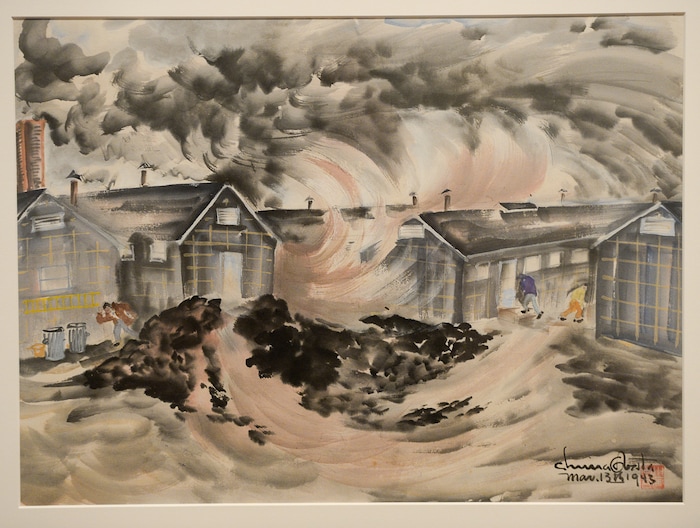
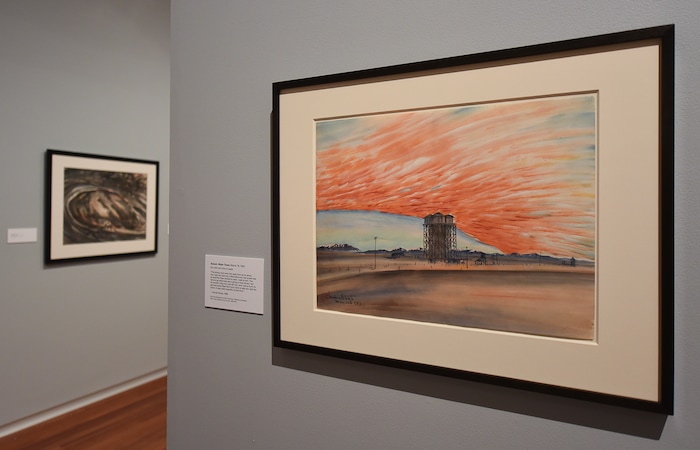
(Chiura Obata | courtesy Utah Museum of Fine Arts) "Dust Storm, Topaz," a watercolor-on-paper created March 13, 1943, by Japanese-American artist Chiura Obata during his time at the Topaz internment camp in Utah. Obata's work will be shown in a major touring retrospective, May 25-Sept. 8 at the Utah Museum of Fine Arts.
When he was 56, Chiura Obata — already recognized as a gifted landscape painter known for beautiful vistas of California — moved with his family to Utah, but not by choice.
The move in 1942 was a forced exodus from the Bay Area to the Topaz War Relocation Center near Delta. Topaz was one of the internment camps the U.S. government opened to detain Japanese-Americans during World War II, imprisoning people for no reason other than their Japanese heritage.
The Obatas lived less than a year at Topaz, but the experience had a major effect on his painting and drawing — as can be seen in a major touring retrospective of Obata’s work, now open at the Utah Museum of Fine Arts.
(Chiura Obata | courtesy Utah Museum of Fine Arts) "Untitled (Bears)," an ink-on-paper work, circa the 1930s, by Japanese-American artist Chiura Obata. Obata's work will be shown in a major touring retrospective, May 25-Sept. 8 at the Utah Museum of Fine Arts.
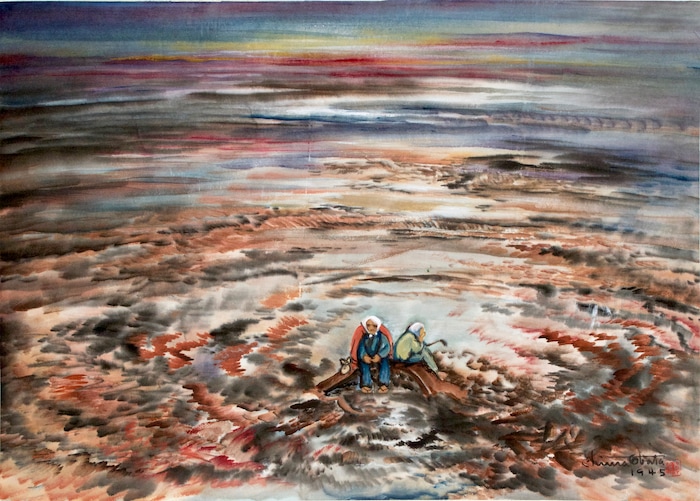
(Chiura Obata | courtesy Utah Museum of Fine Arts) "Devastation," a 1945 watercolor on silk by Japanese-American artist Chiura Obata. Obata's work will be shown in a major touring retrospective, May 25-Sept. 8 at the Utah Museum of Fine Arts.
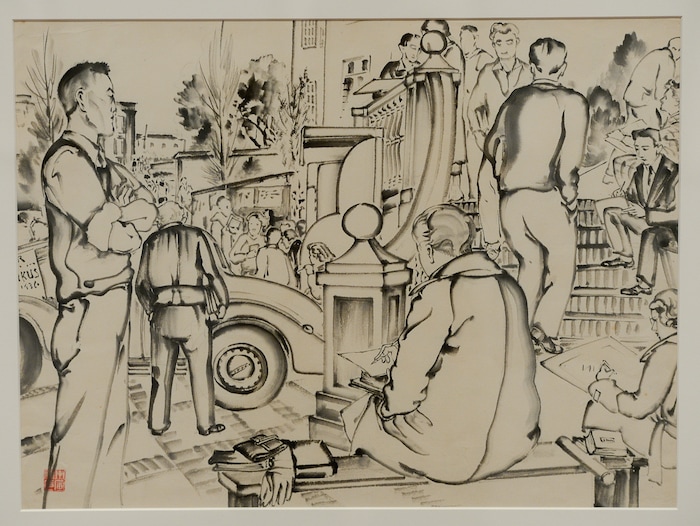
(Chiura Obata | courtesy Utah Museum of Fine Arts) "Untitled (UC Berkeley Students)," an ink-on-paper work, circa 1930s, by Japanese-American artist Chiura Obata. Obata's work will be shown in a major touring retrospective, May 25-Sept. 8 at the Utah Museum of Fine Arts.
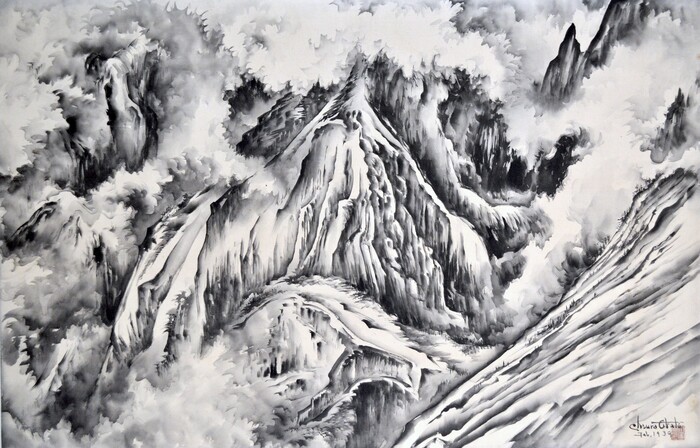
(Chiura Obata | courtesy Utah Museum of Fine Arts) "A Snow Storm Nearing Yosemite Park Government Center," a 1939 sumi-on-silk work by Japanese-American artist Chiura Obata. Obata's work will be shown in a major touring retrospective, May 25-Sept. 8 at the Utah Museum of Fine Arts.
(Chiura Obata | courtesy Utah Museum of Fine Arts) "Untitled (Pier)," a 1940 watercolor on paper by Japanese-American artist Chiura Obata. Obata's work will be shown in a major touring retrospective, May 25-Sept. 8 at the Utah Museum of Fine Arts.
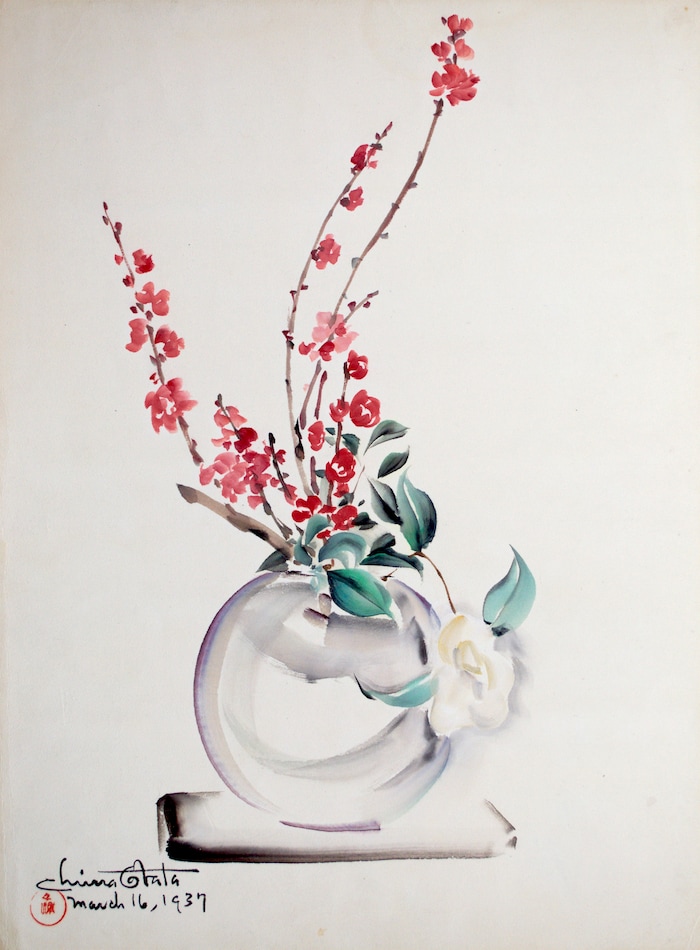
(Chiura Obata | courtesy Utah Museum of Fine Arts) "Untitled (Ikebana in a Glass Vase)," a 1937 color ink-on-paper work by Japanese-American artist Chiura Obata. Obata's work will be shown in a major touring retrospective, May 25-Sept. 8 at the Utah Museum of Fine Arts.
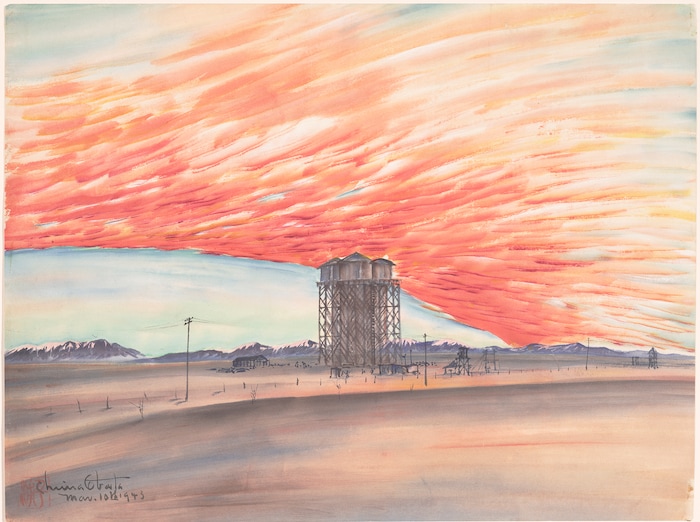
(Chiura Obata | courtesy Utah Museum of Fine Arts) "Sunset, Water Tower," an ink/color/mica on paper work created March 10, 1943 by Japanese-American artist Chiura Obata during his time at the Topaz internment camp in Utah. Obata's work will be shown in a major touring retrospective, May 25-Sept. 8 at the Utah Museum of Fine Arts. (Fine Arts Museums of San Francisco, Museum purchase, gift of the Graphic Arts Council, 2001.28.1)
(Chiura Obata | courtesy Utah Museum of Fine Arts) "Southern Shore of Salt Lake," an ink-on-paper work created on Sept. 24, 1942 by Japanese-American artist Chiura Obata. Obata's work will be shown in a major touring retrospective, May 25-Sept. 8 at the Utah Museum of Fine Arts.
(Chiura Obata | courtesy Utah Museum of Fine Arts) "Dust Storm, Topaz," a watercolor-on-paper created March 13, 1943 by Japanese-American artist Chiura Obata during his time at the Topaz internment camp in Utah. Obata's work will be shown in a major touring retrospective, May 25-Sept. 8 at the Utah Museum of Fine Arts.
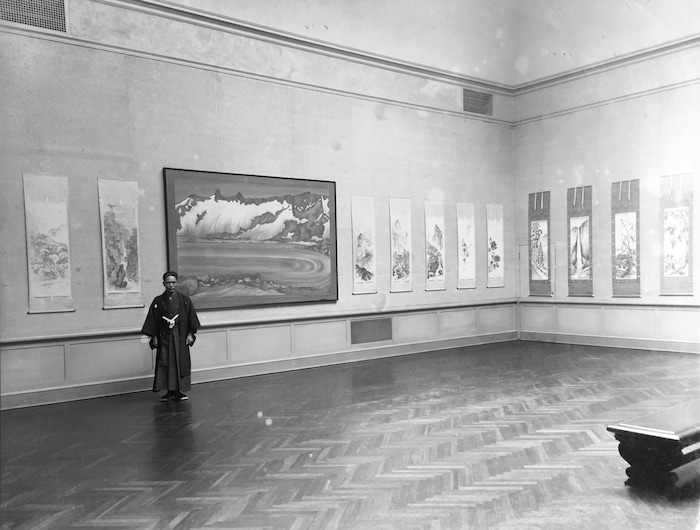
(courtesy Utah Museum of Fine Arts) Japanese-American artist Chiura Obata, seen here in 1931 at an exhibition at the California Palace of Legion of Honor. Obata's work will be shown in a major touring retrospective, May 25-Sept. 8 at the Utah Museum of Fine Arts.
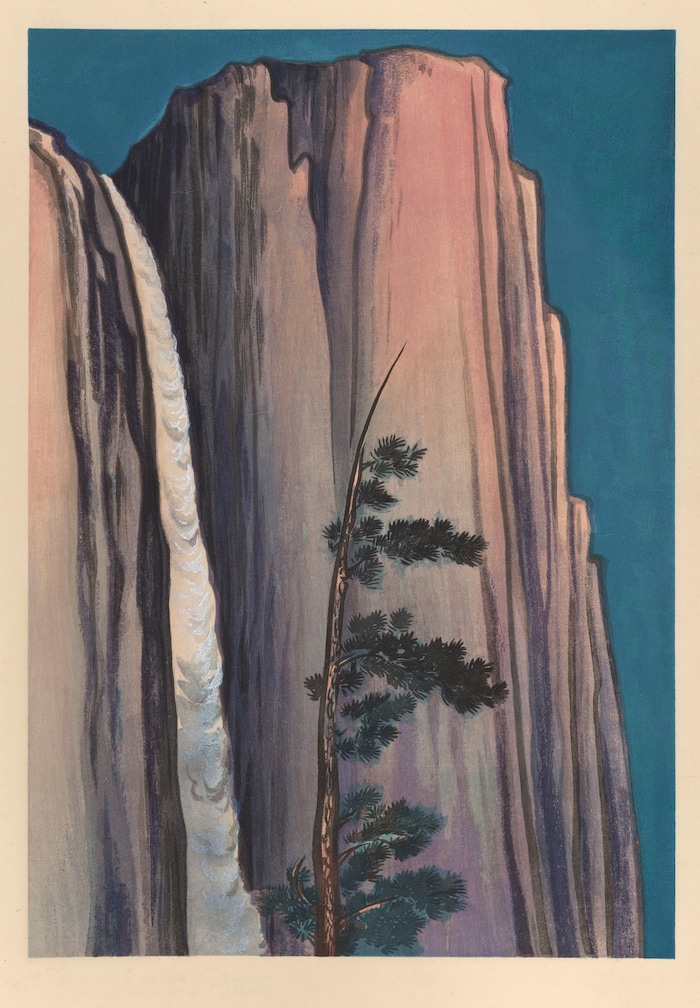
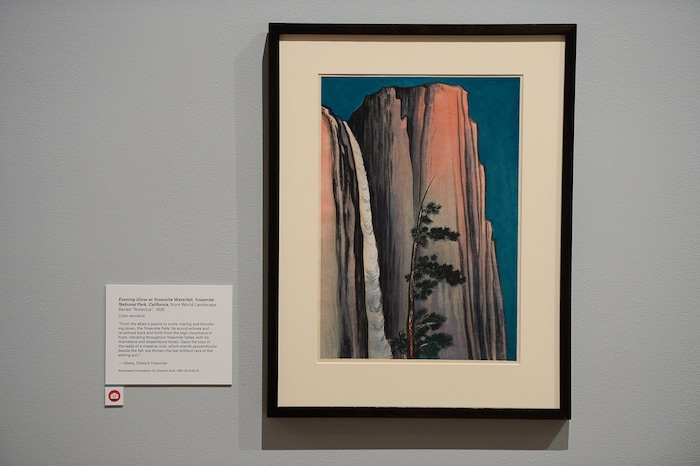
(Chiura Obata | courtesy Utah Museum of Fine Arts) "Evening Glow at Yosemite Waterfall, Yosemite National Park, California," a 1930 color woodcut by Japanese-American artist Chiura Obata. Obata's work will be shown in a major touring retrospective, May 25-Sept. 8 at the Utah Museum of Fine Arts. (Achenbach Foundation for Graphic Arts, 1963.30.3126.23)
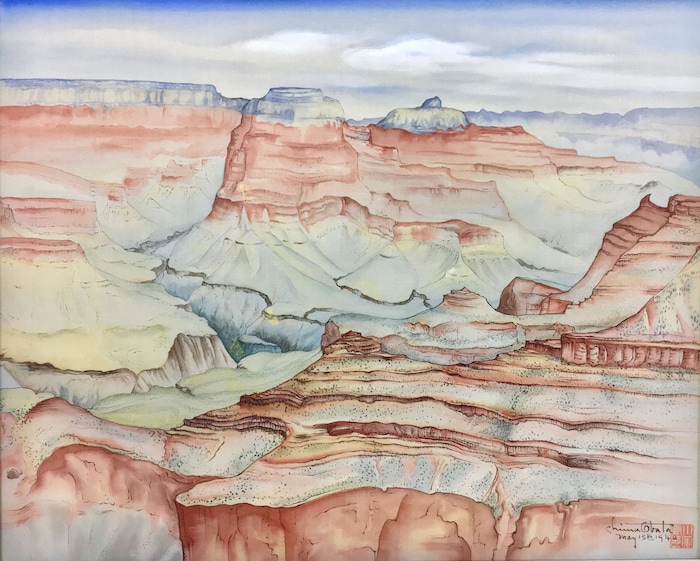
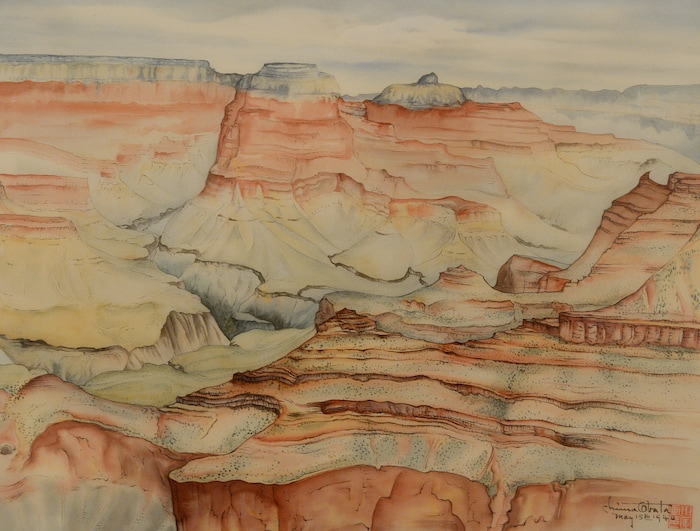
(Chiura Obata | courtesy Utah Museum of Fine Arts) "Grand Canyon," a 1940 watercolor on silk by Japanese-American artist Chiura Obata. Obata's work will be shown in a major touring retrospective, May 25-Sept. 8 at the Utah Museum of Fine Arts.
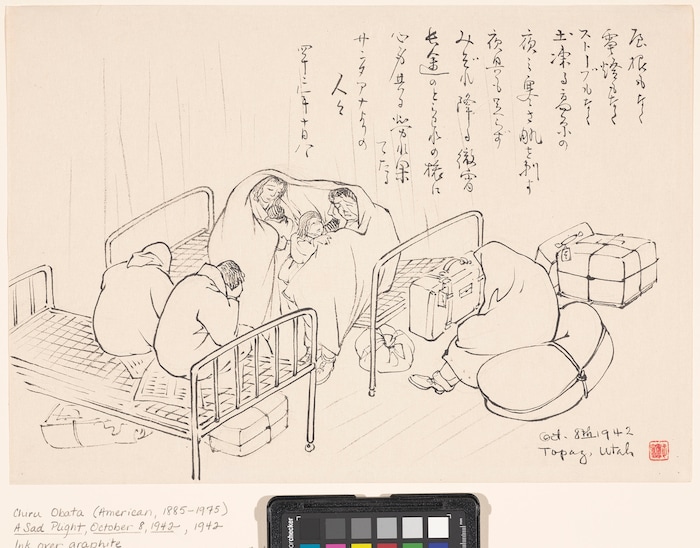
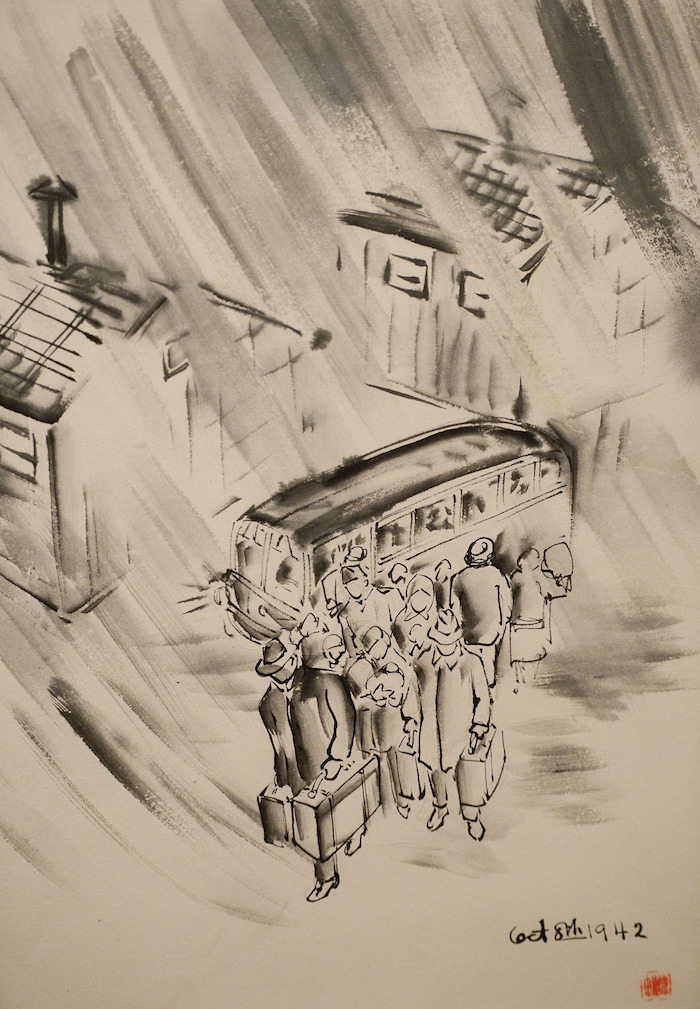
(Chiura Obata | courtesy Utah Museum of Fine Arts) "A Sad Plight," an ink-over-graphite work on paper by Japanese-American artist Chiura Obata, drawn Oct. 8, 1942, during the artist's time at the Topaz internment camp in Utah. Obata's work will be shown in a major touring retrospective, May 25-Sept. 8 at the Utah Museum of Fine Arts. (Fine Arts Museums of San Francisco, Museum purchase, gift of the Graphic Arts Council, 2001.28.3)
“Before the war, his brushstrokes were very measured, methodical and almost calm. … After the war, they seem to open up a bit,” said ShiPu Wang, associate professor of art history and visual culture at the University of California-Merced, and curator of the touring exhibition “Chiura Obata: An American Modern.”
The exhibit, which is making its first stop in Utah after its debut at UC-Santa Barbara, features some 150 works spanning seven decades of paintings and drawings by the prolific artist, who was born in Japan in 1885 and emigrated to America in 1903.
Wang said he looked through 800 of Obata’s works to select the 150 in the show. The number of works Obata created is unknown. In a 1928 interview, he claimed to have already created 5,000 artworks, and he continued to paint until his death in 1975.
“We’re just scratching the surface,” Wang said.
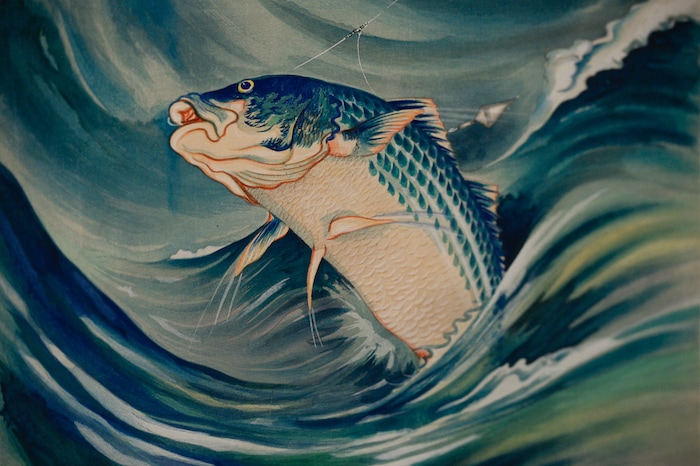
(Francisco Kjolseth | The Salt Lake Tribune) The Utah Museum of Fine Art hosts "Chiura Obata: An American Modern," major touring retrospective of Japanese-American artist (1885-1975), whose work captured Western landscapes and his time at the Topaz War Relocation Center (internment camp) during World War II. Exhibit opens Friday, May 25. Pictured is Striped Bass, from World Landscapes Series, "America", 1930.
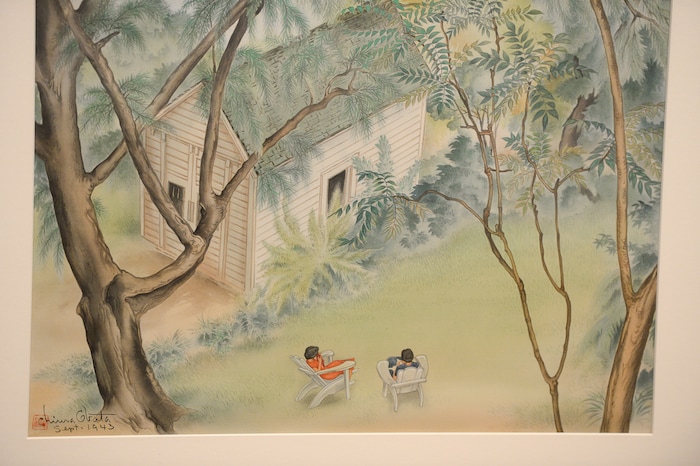
(Francisco Kjolseth | The Salt Lake Tribune) The Utah Museum of Fine Art hosts "Chiura Obata: An American Modern," major touring retrospective of Japanese-American artist (1885-1975), whose work captured Western landscapes and his time at the Topaz War Relocation Center (internment camp) during World War II. Exhibit opens Friday, May 25. Pictured is Webster Groves, Missouri, September 19, 1943, Color on silk.
(Francisco Kjolseth | The Salt Lake Tribune) The Utah Museum of Fine Art hosts "Chiura Obata: An American Modern," major touring retrospective of Japanese-American artist (1885-1975), whose work captured Western landscapes and his time at the Topaz War Relocation Center (internment camp) during World War II. Exhibit opens Friday, May 25. Pictured is Untitled (UC Berkeley students), ca 1930s, Ink on paper.
(Francisco Kjolseth | The Salt Lake Tribune) The Utah Museum of Fine Art hosts "Chiura Obata: An American Modern," major touring retrospective of Japanese-American artist (1885-1975), whose work captured Western landscapes and his time at the Topaz War Relocation Center (internment camp) during World War II. Exhibit opens Friday, May 25. Pictured is Grand Canyon, May 15, 1940, Watercolor on silk.
(Francisco Kjolseth | The Salt Lake Tribune) The Utah Museum of Fine Art hosts "Chiura Obata: An American Modern," major touring retrospective of Japanese-American artist (1885-1975), whose work captured Western landscapes and his time at the Topaz War Relocation Center (internment camp) during World War II. Exhibit opens Friday, May 25. Pictured is Dust Storm, Topaz, March 13, 1943, Watercolor on paper.
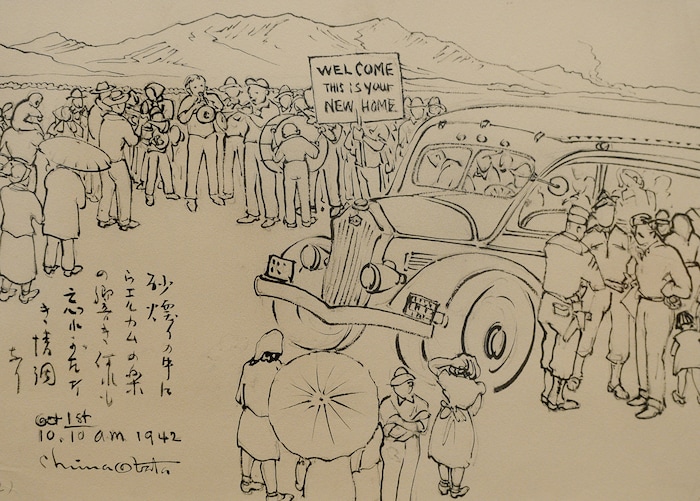
(Francisco Kjolseth | The Salt Lake Tribune) The Utah Museum of Fine Art hosts "Chiura Obata: An American Modern," major touring retrospective of Japanese-American artist (1885-1975), whose work captured Western landscapes and his time at the Topaz War Relocation Center (internment camp) during World War II. Exhibit opens Friday, May 25. Pictured is Arrivals Welcomed to Topaz, October 1, 10:10 a.m, 1942, Ink on paper.
(Francisco Kjolseth | The Salt Lake Tribune) The Utah Museum of Fine Art hosts "Chiura Obata: An American Modern," major touring retrospective of Japanese-American artist (1885-1975), whose work captured Western landscapes and his time at the Topaz War Relocation Center (internment camp) during World War II. Exhibit opens Friday, May 25. Pictured is Untitled (Arriving in a Storm), October 8, 1942, Sumi on paper.
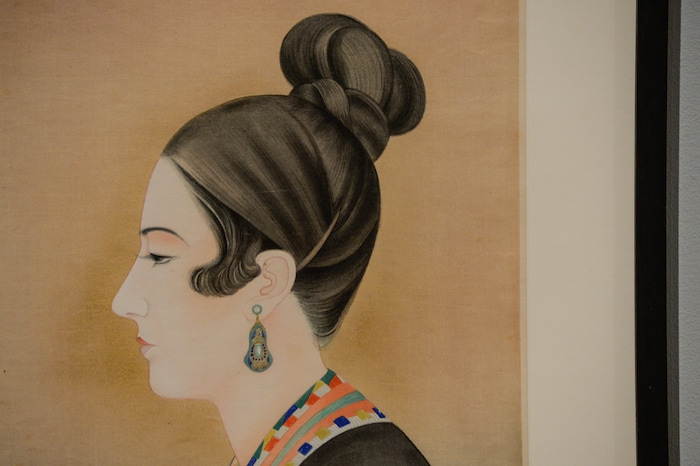
(Francisco Kjolseth | The Salt Lake Tribune) The Utah Museum of Fine Art hosts "Chiura Obata: An American Modern," major touring retrospective of Japanese-American artist (1885-1975), whose work captured Western landscapes and his time at the Topaz War Relocation Center (internment camp) during World War II. Exhibit opens Friday, May 25. Pictured is Before Singing (Madame Talia Savanieva), from World Landscape Series "America", 1930.
(Francisco Kjolseth | The Salt Lake Tribune) The Utah Museum of Fine Art hosts "Chiura Obata: An American Modern," major touring retrospective of Japanese-American artist (1885-1975), whose work captured Western landscapes and his time at the Topaz War Relocation Center (internment camp) during World War II. Exhibit opens Friday, May 25.
(Francisco Kjolseth | The Salt Lake Tribune) The Utah Museum of Fine Art hosts "Chiura Obata: An American Modern," major touring retrospective of Japanese-American artist (1885-1975), whose work captured Western landscapes and his time at the Topaz War Relocation Center (internment camp) during World War II. Exhibit opens Friday, May 25.
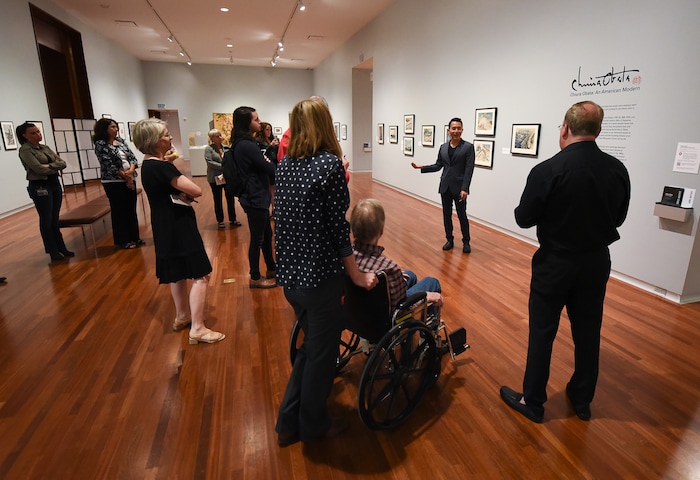
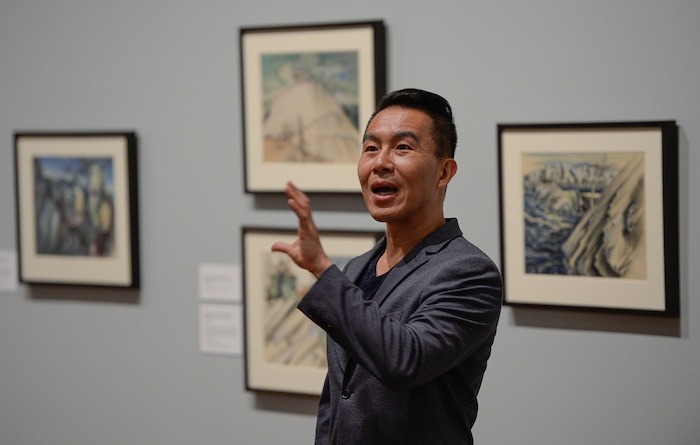
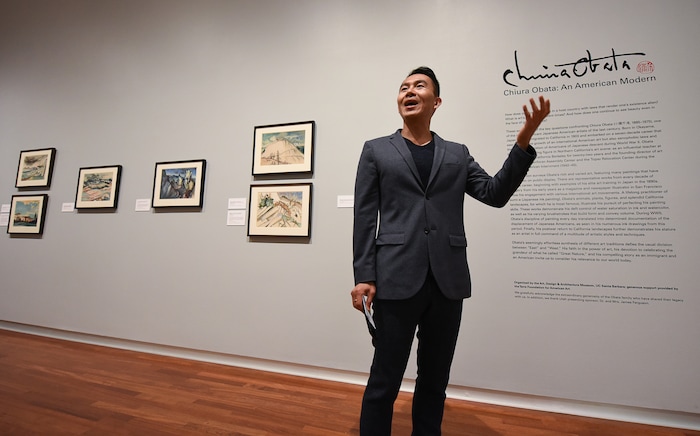
(Francisco Kjolseth | The Salt Lake Tribune) Curator ShiPu Wang, introduces a new exhibit at the Utah Museum of Fine Art, "Chiura Obata: An American Modern," major touring retrospective of Japanese-American artist (1885-1975), whose work captured Western landscapes and his time at the Topaz War Relocation Center (internment camp) during World War II. Exhibit opens Friday, May 25, 2018.
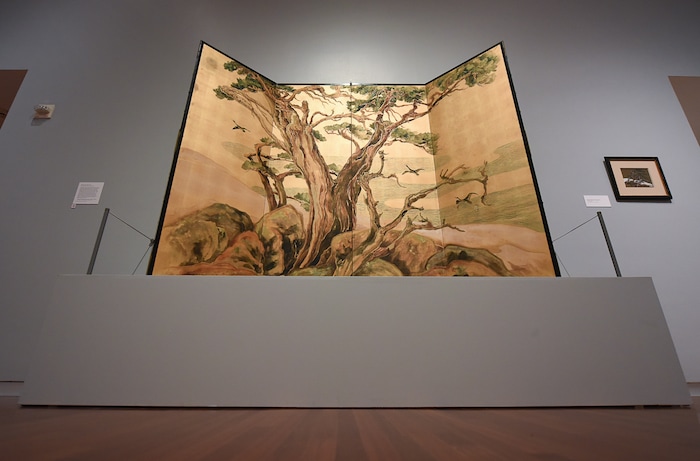
(Francisco Kjolseth | The Salt Lake Tribune) The Utah Museum of Fine Art hosts "Chiura Obata: An American Modern," major touring retrospective of Japanese-American artist (1885-1975), whose work captured Western landscapes and his time at the Topaz War Relocation Center (internment camp) during World War II. Exhibit opens Friday, May 25. Pictured is one of his early works celebrating Yosemite landscapes.
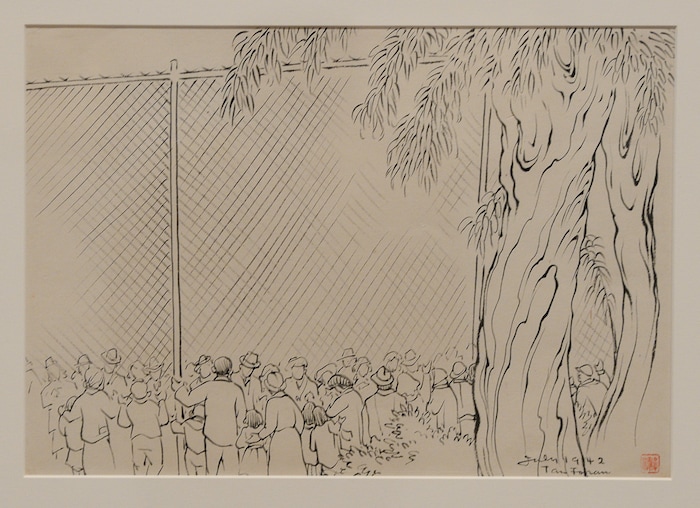
(Francisco Kjolseth | The Salt Lake Tribune) The Utah Museum of Fine Art hosts "Chiura Obata: An American Modern," major touring retrospective of Japanese-American artist (1885-1975), whose work captured Western landscapes and his time at the Topaz War Relocation Center (internment camp) during World War II. Exhibit opens Friday, May 25. Pictured is Talking Through the Wired Fence, July 1942, Ink on paper.
(Francisco Kjolseth | The Salt Lake Tribune) The Utah Museum of Fine Art hosts "Chiura Obata: An American Modern," major touring retrospective of Japanese-American artist (1885-1975), whose work captured Western landscapes and his time at the Topaz War Relocation Center (internment camp) during World War II. Exhibit opens Friday, May 25. Pictured is Rainbow Trout 12 1/2" May 18, 1939, at North Fork, Feather River, Color ink on paper.
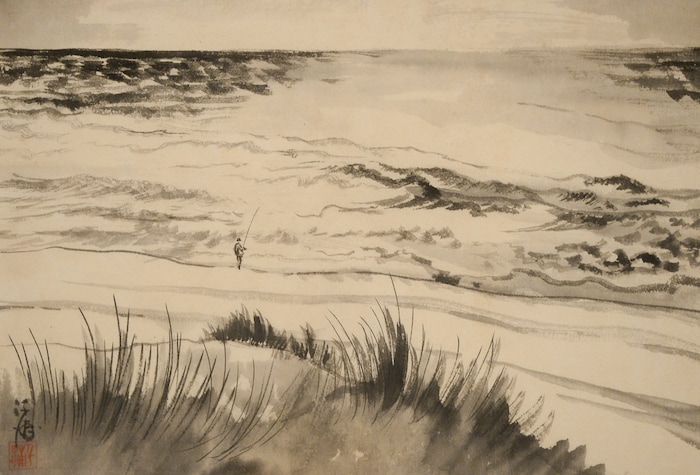
(Francisco Kjolseth | The Salt Lake Tribune) The Utah Museum of Fine Art hosts "Chiura Obata: An American Modern," major touring retrospective of Japanese-American artist (1885-1975), whose work captured Western landscapes and his time at the Topaz War Relocation Center (internment camp) during World War II. Exhibit opens Friday, May 25. Pictured is Surf Fishing, S.F. Ocean Beach, September 1927, Ink on paper.
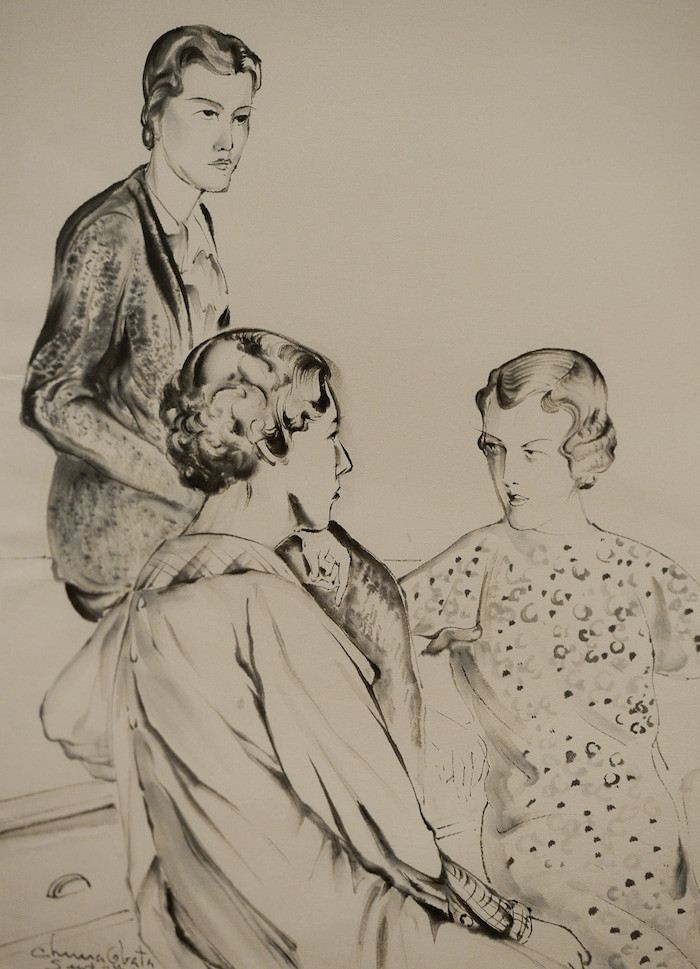
(Francisco Kjolseth | The Salt Lake Tribune) The Utah Museum of Fine Art hosts "Chiura Obata: An American Modern," major touring retrospective of Japanese-American artist (1885-1975), whose work captured Western landscapes and his time at the Topaz War Relocation Center (internment camp) during World War II. Exhibit opens Friday, May 25. Pictured is Untitled (Three students), September 7, 1934, Ink on paper.
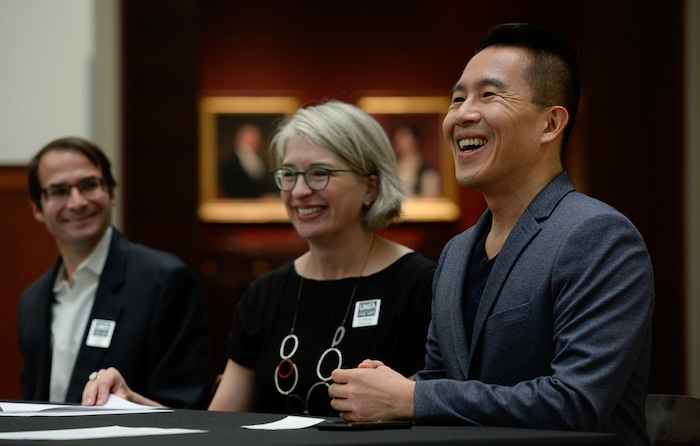
(Francisco Kjolseth | The Salt Lake Tribune) Curator ShiPu Wang, right, is joined by Utah Museum of Fine Art Assoc. Curator Luke Kelly and Executive Director Gretchen Dietrich as they introduce "Chiura Obata: An American Modern," major touring retrospective of Japanese-American artist (1885-1975), whose work captured Western landscapes and his time at the Topaz War Relocation Center (internment camp) during World War II. Exhibit opens Friday, May 25, 2018.
(Francisco Kjolseth | The Salt Lake Tribune) The Utah Museum of Fine Art hosts "Chiura Obata: An American Modern," major touring retrospective of Japanese-American artist (1885-1975), whose work captured Western landscapes and his time at the Topaz War Relocation Center (internment camp) during World War II. Exhibit opens Friday, May 25.
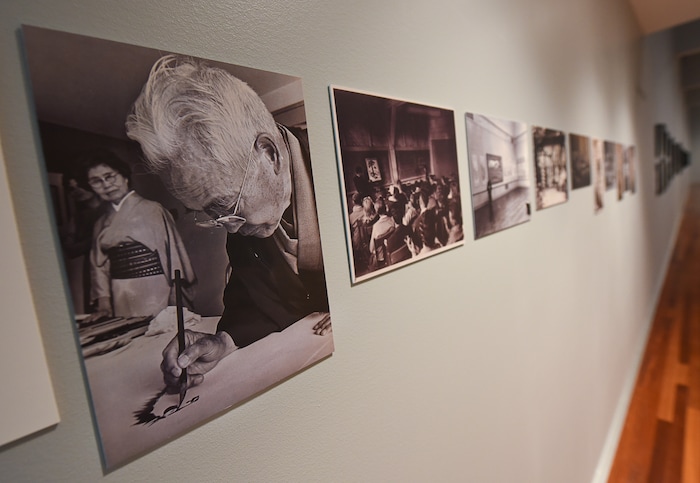
(Francisco Kjolseth | The Salt Lake Tribune) The Utah Museum of Fine Art hosts "Chiura Obata: An American Modern," major touring retrospective of Japanese-American artist (1885-1975), whose work captured Western landscapes and his time at the Topaz War Relocation Center (internment camp) during World War II. Exhibit opens Friday, May 25. Pictured is Chiura and Haruko Obata in St. Louis, June 1968.
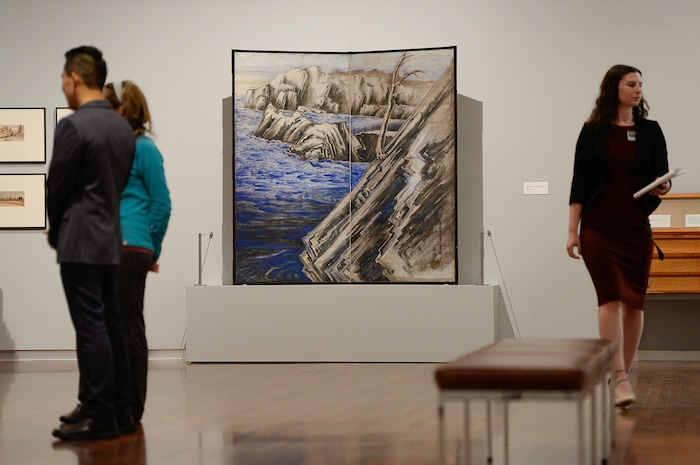
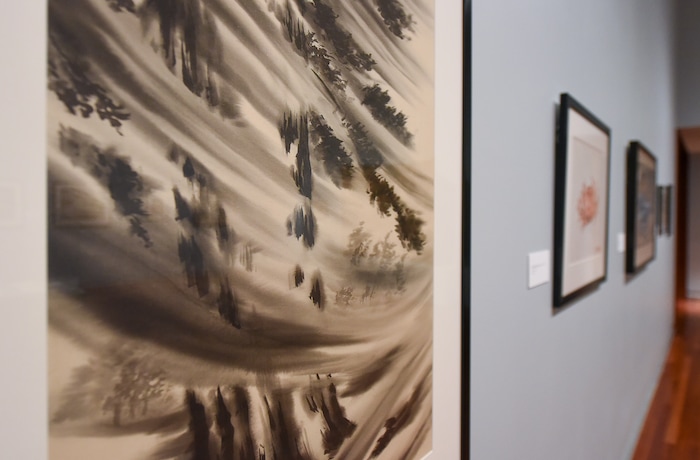
(Francisco Kjolseth | The Salt Lake Tribune) The Utah Museum of Fine Art hosts "Chiura Obata: An American Modern," major touring retrospective of Japanese-American artist (1885-1975), whose work captured Western landscapes and his time at the Topaz War Relocation Center (internment camp) during World War II. Exhibit opens Friday, May 25. Pictured is Glorious Struggle, 1965, Sumi on silk.
(Francisco Kjolseth | The Salt Lake Tribune) Curator ShiPu Wang, introduces a new exhibit at the Utah Museum of Fine Art, "Chiura Obata: An American Modern," major touring retrospective of Japanese-American artist (1885-1975), whose work captured Western landscapes and his time at the Topaz War Relocation Center (internment camp) during World War II. Exhibit opens Friday, May 25, 2018.
(Francisco Kjolseth | The Salt Lake Tribune) Curator ShiPu Wang, introduces a new exhibit at the Utah Museum of Fine Art, "Chiura Obata: An American Modern," major touring retrospective of Japanese-American artist (1885-1975), whose work captured Western landscapes and his time at the Topaz War Relocation Center (internment camp) during World War II. Exhibit opens Friday, May 25, 2018.
(Francisco Kjolseth | The Salt Lake Tribune) The Utah Museum of Fine Art hosts "Chiura Obata: An American Modern," major touring retrospective of Japanese-American artist (1885-1975), whose work captured Western landscapes and his time at the Topaz War Relocation Center (internment camp) during World War II. Exhibit opens Friday, May 25.
(Francisco Kjolseth | The Salt Lake Tribune) The Utah Museum of Fine Art hosts "Chiura Obata: An American Modern," major touring retrospective of Japanese-American artist (1885-1975), whose work captured Western landscapes and his time at the Topaz War Relocation Center (internment camp) during World War II. Exhibit opens Friday, May 25.
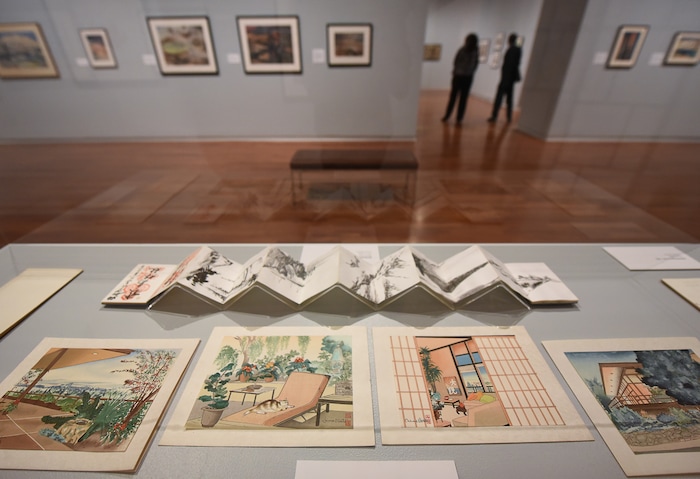
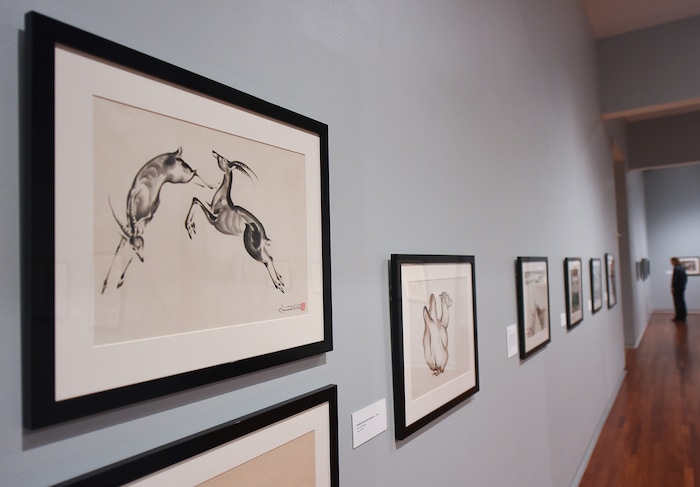
In a loosely chronological format, the exhibit begins with works inspired by his Japanese history. There are pictures of animals done in a brushstroke style reminiscent of Japanese calligraphy. And he painted still-life works of flower arrangements, which his wife, Haruko, made in the ikebana tradition.
“I call these paintings his love letters to his wife,” Wang said, adding that the Obatas would travel together giving demonstrations in flower arranging and drawing.
In the 1920s, Obata painted landscapes around California, most famously of Yosemite National Park. His Yosemite images were so striking, and so different from traditional landscape painting, that one jaded art critic of the era said “he fell in love with California landscape again,” according to Luke Kelly, a curator at UMFA who worked with Wang in displaying the exhibition.
Life for Obata, an art instructor at the University of California in Berkeley, was upended by the attack on Pearl Harbor and the government’s reaction in Executive Order 9066, which sent thousands of Americans of Japanese descent into internment camps.
“His response was to keep making art,” said Gretchen Dietrich, UMFA’s executive director.
“He brought his art materials with him,” Wang said. “He would have a pad, and every chance he got, he would be sketching.”
The Obatas were moved first to the Tanforan Assembly Center, a converted racetrack in California, and later to Topaz. At both locations, Chiura Obata organized art schools. The Topaz Art School had 16 instructors, teaching some 600 students.
He created watercolors of beautiful Utah skies above what was essentially a prison camp. And he drew in ink — or scratched into the paper with dry pens when ink ran out — dozens of sketches presenting an almost photojournalistic look at day-to-day life in the camps.
The images from his internment period “are very short, agitated, emotional, unsettled,” Wang said. “If you think about his physical being at the time, sitting on the train, on the bus, while still painting, which is a remarkable thing — that reflects his experience.”
The Obatas left Topaz in the spring of 1943 to live in the St. Louis area with their oldest son, Gyo, who was studying architecture at Washington University. (Gyo Obata and two of his Washington U. classmates, George Hellmuth and George Kassebaum, later founded Hellmuth Obata and Kassebaum, now called HOK, one of the world’s leading architecture firms.)
Some of the most striking works in the exhibition depict the nuclear devastation of Hiroshima in 1945. But even in those works, there are signs of hope. In one painting, Obata depicts green grass growing through the destruction.
His postwar landscapes reveal how Obata wrestled with the war and its aftermath — the word “struggle” appears in the titles of some paintings — but not with resentment, Wang said.
“It’s not turning dark, or getting depressed, but coming back to the vibrant colors” of his pre-war works, Wang said. “He learned from nature, telling him, ‘Don’t stay bitter. There’s no point in doing that.’”
Though Obata is considered a leading Japanese-American artist, Dietrich said, “We’re really looking at him as an American artist.”
Wang also rejects attempts to categorize Obata by his ethnicity. “I always get the question: Is he a Japanese artist or an American artist?” he said. “I always [say], ‘What a mistake it is to ask that question.’ What are we trying to do with those labels?”
‘Chiura Obata: An American Modern’<br>Where • Utah Museum of Fine Arts, 410 Campus Center Drive, Salt Lake City<br>When • On show Friday, May 25, through Sunday, Sept. 2<br>Hours • 10 a.m. to 5 p.m. Tuesdays through Sundays; open until 9 p.m. Wednesdays; closed Mondays<br>Admission • Part of UMFA general admission: $12.95 for adults, $9.95 for youth (6-18) and seniors (65 and up); free for children (5 and younger), UMFA members, University of Utah students, staff and faculty, students at all Utah public universities, Utah Horizon/EBT cardholders, and active-duty military families<br>Free days • Free admission on the first Wednesday and third Saturday of every month<br>Lecture • “Topaz: Our Stories,” in which Kimi Kodani Hill, Obata’s granddaughter, and other descendants of Japanese-American internees share their families’ experiences at the Topaz War Relocation Center near Delta, Utah; Thursday, May 31, at 6:30 p.m. at the Dumke Auditorium at UMFA; free.
Help The Tribune report the stories others can’t—or won’t.
For over 150 years, The Salt Lake Tribune has been Utah’s independent news source. Our reporters work tirelessly to uncover the stories that matter most to Utahns, from unraveling the complexities of court rulings to allowing tax payers to see where and how their hard earned dollars are being spent. This critical work wouldn’t be possible without people like you—individuals who understand the importance of local, independent journalism. As a nonprofit newsroom, every subscription and every donation fuels our mission, supporting the in-depth reporting that shines a light on the is sues shaping Utah today.