Robert Redford, the Hollywood golden boy who explored American life on film as an actor, director and producer, and made Utah a hub for independent filmmaking through his Sundance Institute, has died.
Redford died Tuesday morning at his home in Provo Canyon, according to his longtime publicist, Cindi Berger. In a statement, Berger said Redford died in his sleep but did not provide a cause of death, according to The New York Times. He was 89.
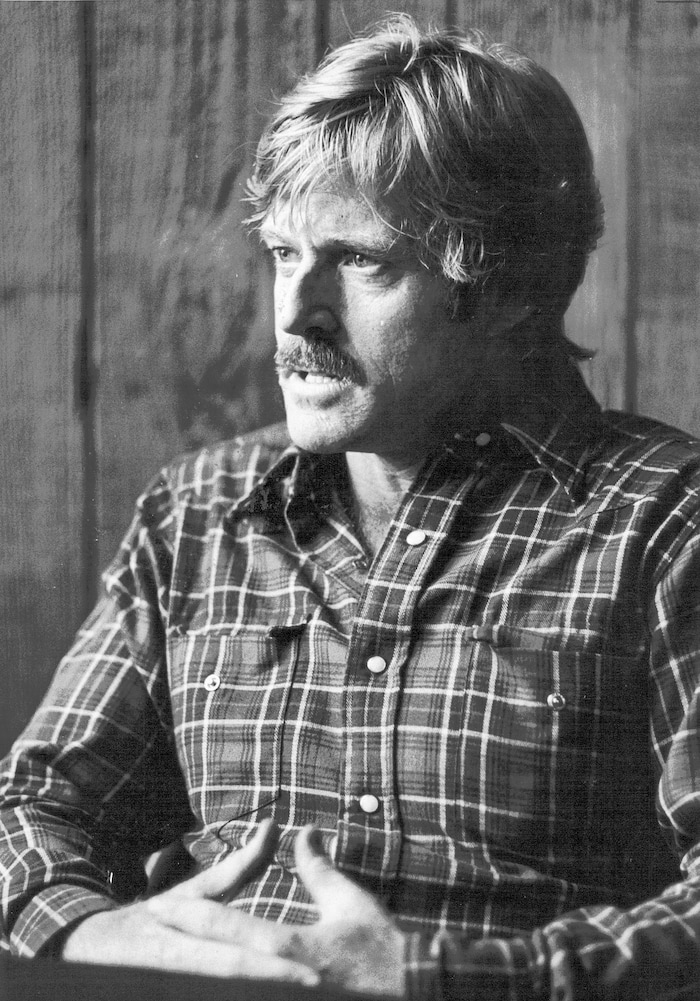
With his chiseled good looks and blond hair, Redford was the perfect embodiment of a movie star from the late 1960s through the 1970s. Those looks made him perfect to play patrician figures striving for acceptance, such as the screenwriter Hubbell Gardner in “The Way We Were” (1973) or the high-living title character in “The Great Gatsby” (1974).
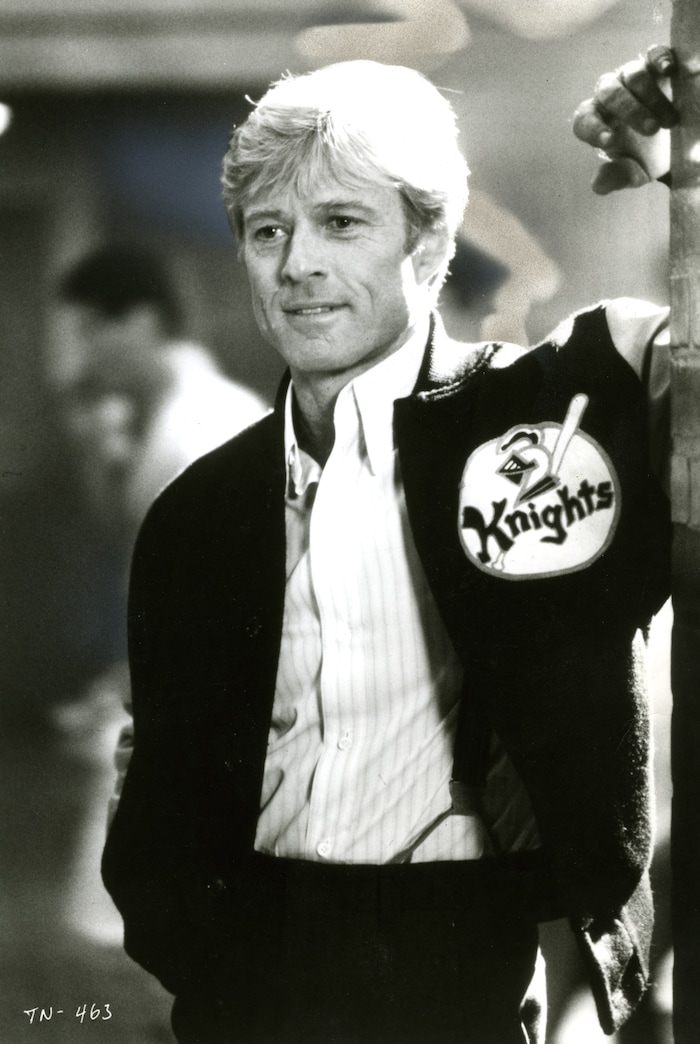
Redford’s best-known roles, though, were men challenging the norms of society: An outlaw in “Butch Cassidy and the Sundance Kid” (1969), an idealistic politician in “The Candidate” (1972), the grieving soldier turned backwoodsman in “Jeremiah Johnson” (1972), a reporter covering the Watergate break-in in “All the President’s Men” (1976), and an aging comeback baseball player in “The Natural” (1984).
A constant restlessness drove Redford beyond mere stardom to become an Oscar-winning producer and director, an environmental activist and a champion for outside-the-box storytelling.
For Redford, a college athlete who dropped out to pursue painting in Europe, becoming an actor was “kind of ironic.”
“I grew up in Los Angeles, near Hollywood, so there was no magic for me about Hollywood,” Redford said in a 2005 interview with The Salt Lake Tribune.
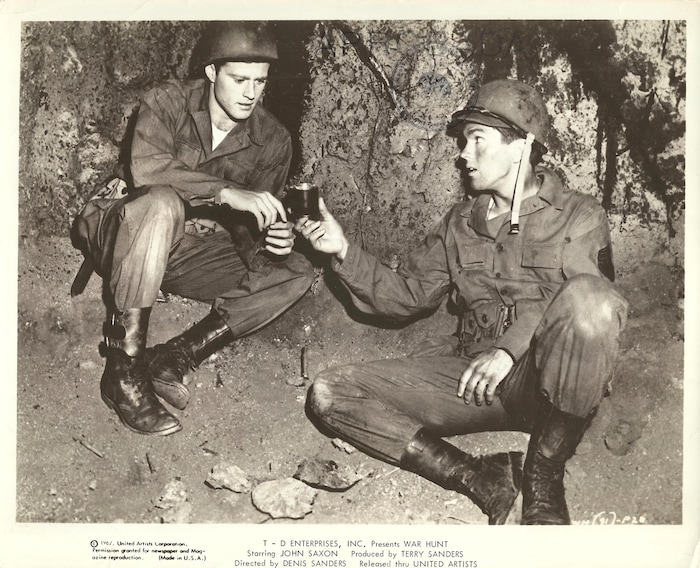
(United Artists) Robert Redford, left, and Tom Skerritt play U.S. soldiers fighting in Korea in the 1962 drama "War Hunt." It was the first movie for both actors.
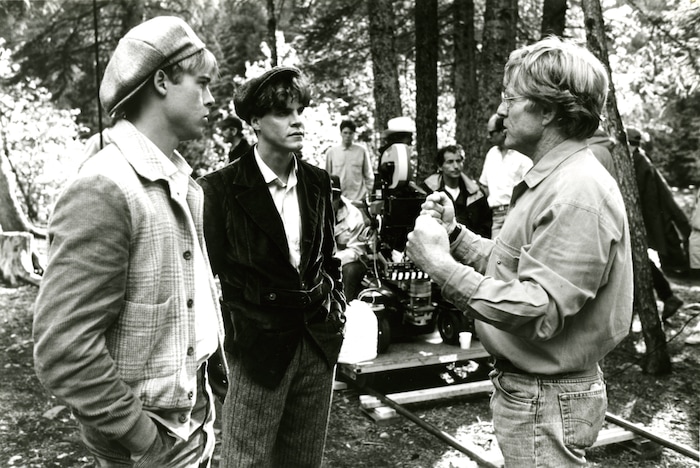


Early days in TV and theater
Redford’s acting career started in New York, split between the stage and television.
“I had such a great time in those early years,” Redford said in 2005. “Most of the characters I played in those years were killers, rapists, deranged people. … And they were so much fun.”
Redford played a Nazi officer on the final episode of the anthology “Playhouse 90,” and the handsome angel of death in a classic “Twilight Zone” episode. In a breakout role, he played a suicidal anarchist in a 1960 TV production of Eugene O’Neill’s “The Iceman Cometh,” directed by Sidney Lumet and starring Jason Robards — whom Redford, as a producer, would cast 16 years later as Washington Post Editor Ben Bradlee in “All the President’s Men.”
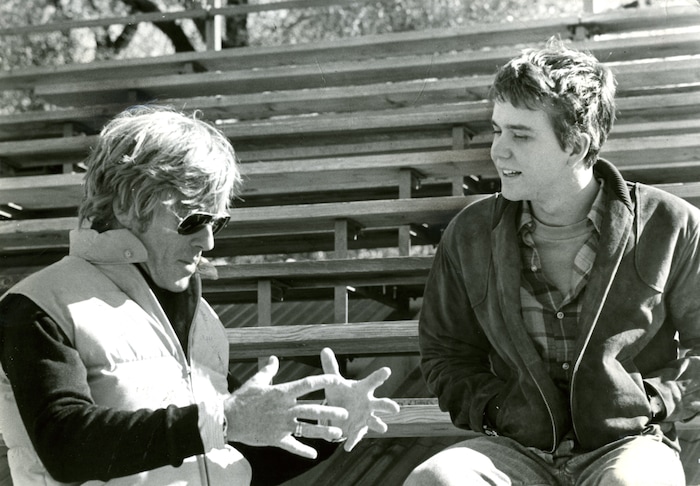
Redford’s career was marked with fortunate meetings. In his first movie, the 1962 Korean War drama “War Hunt,” Redford became fast friends with a fellow actor, Sydney Pollack. Pollack went on to direct Redford in seven movies, including “Jeremiah Johnson,” “The Way We Were” and the 1985 Best Picture Oscar winner “Out of Africa.”
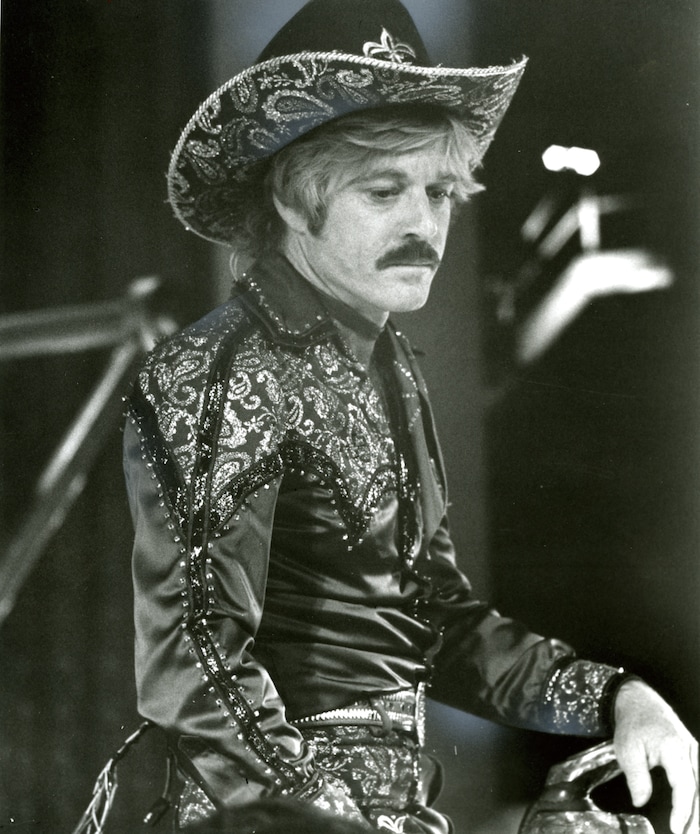
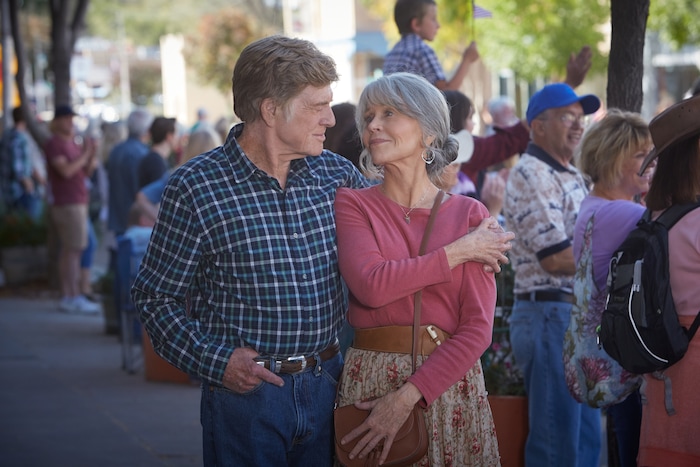
Redford’s star-making Broadway role came in 1963, when he was cast in Neil Simon’s comedy “Barefoot in the Park,” as Paul Bratter, the straitlaced young husband of the free-spirited Corie (Elizabeth Ashley). Redford reprised the role in the 1967 movie version, playing opposite Jane Fonda as Corie. Redford and Fonda paired again in “The Electric Horseman” (1978) and the late-in-life romance “Our Souls at Night” (2017), one of his last movies.
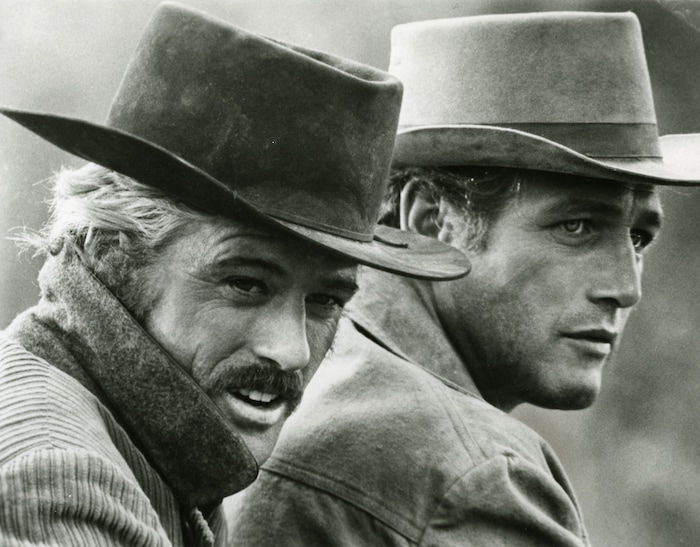
(Photo courtesy 20th Century Fox / Utah Film Commission) Paul Newman, front, plays outlaw Butch Cassidy, Robert Redford, top right, plays the Sundance Kid, and Katharine Ross plays Etta Place, in the 1969 Western "Butch Cassidy and The Sundance Kid."
Becoming the Sundance Kid
Though Redford was on Hollywood’s radar in the mid-1960s — winning a Golden Globe for Most Promising Newcomer for “Inside Daisy Clover” (1965) — he almost didn’t get the role that would make him a movie star: the Sundance Kid. The studio, Redford said, didn’t want to pair an established star like Paul Newman with a relative unknown.
“It was really the director, George Roy Hill, who fought for me, and then Paul himself, because he said, ‘I want to work with an actor,’ “ Redford said. “They had to fight the studio, [which] tried to do everything they could to keep me out of it.”
“Butch Cassidy and the Sundance Kid,” an anti-hero Western far removed from the John Wayne stereotypes, was a big hit. Audiences loved the easygoing camaraderie of Newman’s jokey Butch and Redford’s brooding Sundance, and the sexual tension brought by Katharine Ross as Etta Place, the woman who loved them both. In a move that was unusual at the time but now commonplace in movies, Hill incorporated a pop song into the mix: B.J. Thomas’ “Raindrops Keep Fallin’ on My Head.”
“Butch Cassidy and the Sundance Kid” began a friendship between Redford and Newman, which lasted until Newman’s death in 2008. They made only one other movie together: The con-man caper “The Sting” (1973), which won the Academy Award for Best Picture, and snagged Redford his only Oscar nomination for acting.
(Levy | AP) actor Robert Redford and director Sydney Pollack on the Croisette Boulevard in Cannes, before they presented their film 'Jeremiah Johnson' at the International Film Festival in Cannes, France, May 7, 1972.
Moving to Utah
“Butch Cassidy” also put Redford in front of the camera in the state he had adopted as his home: Utah.
Redford first came to Utah after meeting Lola Van Wagenen, who grew up in a Latter-day Saint family in Provo. They married in Provo in September 1958 — when he was barely 22 and she was a couple of months shy of turning 20.
The Redfords had four children. The eldest, Scott, was born Sept. 1, 1959, and was 11 weeks old when he died of sudden infant death syndrome. Their daughter Shauna was born in 1960, son Jamie was born in 1962, and the youngest, Amy, was born in 1970.
In 1961, the Redfords bought two acres in Provo Canyon, by the Timp Haven ski resort, and built a house there. Redford considered the state a refuge from Hollywood. He would often say, “Other people have analysis. I have Utah.”
In 1969, Redford bought the Timp Haven ski resort and renamed it after the character that had brought him success: Sundance.
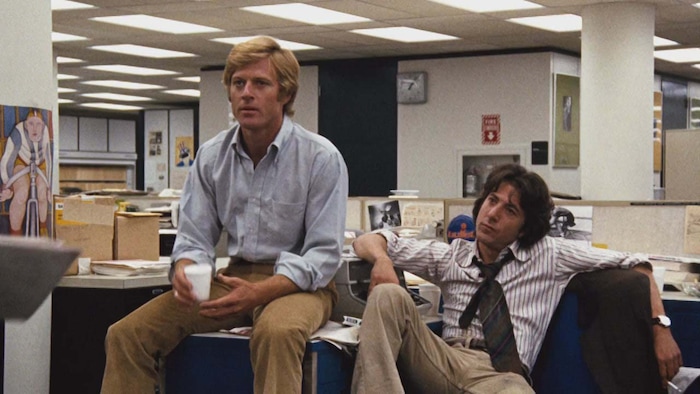
Courtesy photo Robert Redford (left) and Dustin Hoffman play reporters Bob Woodward and Carl Bernstein in the 1976 Watergate drama "All the President's Men." It screens Saturday, June 30, at Redford's Sundance resort.
Making his own kind of movies
The success of “Butch Cassidy” had Redford looking at opportunities not just to act but also to use his clout to make the movies he wanted to see.
The first was “Downhill Racer,” director Michael Ritchie’s character study in which Redford played an overly confident skier who joins the U.S. Ski Team and clashes with his coach (Gene Hackman).
“Downhill Racer” was the first of a series of films Redford envisioned about the American ideal of winning. It’s an idea Redford explored in “The Candidate” (also directed by Ritchie), “The Natural” and his directorial effort “Quiz Show” (1994), among other films.
When “Downhill Racer” proved to be a loser at the box office in 1970, Redford blamed a lack of support from the studio. The movie’s failure got him thinking about ways to foster filmmakers outside the Hollywood system.
Through the 1970s, Redford said in 2005, Hollywood was “moving toward more formulaic, higher-budget stuff,” with little room for more mature fare. “I guess you could say that I saw this coming,” he said, “so I started to focus on what kind of an alternative track could be developed.”
That alternative was the Sundance Institute, which Redford launched in 1981 with the first Filmmakers Labs, where directors and writers gathered with mentors at the Sundance resort to workshop their idiosyncratic scripts.
(The Salt Lake Tribune) Robert Redford in 1978.
Advocacy and controversy
Also in the 1970s, Redford started honing his skills and using his celebrity to advocate for the environment.
His first act of political activism came in 1969, when a group of Utah fishers asked him to intervene with Utah officials over a road being built in Provo Canyon that would disrupt the North Fork of the Provo River. Redford called his friend, then-Utah Gov. Calvin Rampton. “It got a little testy,” Redford recalled.
“I learned early that you’d better know what you’re talking about,” Redford said of his activism. “You’d better realize that certain issues are going to be so hot no matter what reason, what logic you apply to it you’re going to be met with an opposition just because their viewpoint is different, and there’s no way they’re going to accept your reasoning. Furthermore, they’re going to attack you because you will be portrayed as not being credible: ‘You’re an actor. What do you know?’”
Redford’s political battles with Utah lawmakers came to a head when he joined the opposition to a coal-fired power plant proposed in the Kaiparowits Plateau in southern Utah. Redford appeared on a segment of “60 Minutes” to voice his opposition — a move that led to him being burned in effigy by the plant’s supporters. The plant proposal was scrapped in 1975, and the Kaiparowits area now forms a large part of the Grand Staircase-Escalante National Monument, designated by President Bill Clinton in 1996.
‘Ordinary People’ and Sundance
In 1976, the year “All the President’s Men” was released, Redford acquired the film rights to a novel by first-time author Judith Guest, “Ordinary People.” Redford would make his directorial debut with this drama, about a dysfunctional suburban family in crisis after the eldest son drowns in a boat accident.
“Ordinary People,” starring Donald Sutherland and Mary Tyler Moore, was released in 1980. It was critically acclaimed and won four Academy Awards: Best Picture, a directing Oscar for Redford, and awards for Alvin Sargent’s screenplay adaptation and Timothy Hutton’s supporting performance.
After “Ordinary People,” Redford devoted more time, and his personal fortune, to keeping the Sundance Institute going.
“It was not easy to raise money for Sundance,” Redford said in 2005. “It was nonprofit and was a little bit off the grid. There was no support from my industry at all. So it was kind of a tough road, and I had underestimated how much of my personal energy it was going to take.”
During the 1980s, after “Ordinary People,” Redford acted in just four movies — “Brubaker” (1980), “The Natural” (1984), “Out of Africa” (1985) and “Legal Eagles” (1986) — and directed one, the southwestern land-war tale “The Milagro Beanfield War” (1988).
In 1985, the year “Out of Africa” was released, Redford and his wife, Lola, divorced after 27 years of marriage.
Also in 1985, the Sundance Institute made an important move to expand from developing independent movies to showcasing them. The institute took over operations of the U.S. Film Festival in Park City. In 1991, the festival officially changed its name to the Sundance Film Festival.
Through the decades, Sundance has become the country’s most influential film festival and Utah’s biggest cultural event, drawing some 125,000 visitors a year before the COVID-19 pandemic forced the festival into a virtual presentation in 2021 and 2022.
(Rick Egan | The Salt Lake Tribune) Sundance Film Festival director John Cooper and Founder Robert Redford, welcome the crowd to Opening night film of the 2020 Sundance Film Festival, "Crip Camp", at the Eccles Theatre in Park City, Thursday, Jan. 23, 2020.
A career resurgence in the ’90s
In the 1990s, Redford’s career flourished on both sides of the camera.
As director, he adapted Norman Maclean’s fly-fishing family remembrance “A River Runs Through It” (1992), the game-show scandal drama “Quiz Show” (1994) and Nicholas Evans’ Western romance “The Horse Whisperer” (1998), in which he played a rugged horse trainer.
As an actor, he courted controversy in the 1993 drama “Indecent Proposal,” playing a billionaire who offers a struggling young man (Woody Harrelson) $1 million for a night with the man’s wife (Demi Moore). The role showed Redford was willing to put some tarnish on his golden-boy image.
Redford’s off-camera interests grew. The Sundance resort launched a catalog business, and the Sundance Institute gave its name to a cable channel (now called SundanceTV). In 1997, Redford formed the North Fork Preservation Alliance to protect wild lands in Provo Canyon.
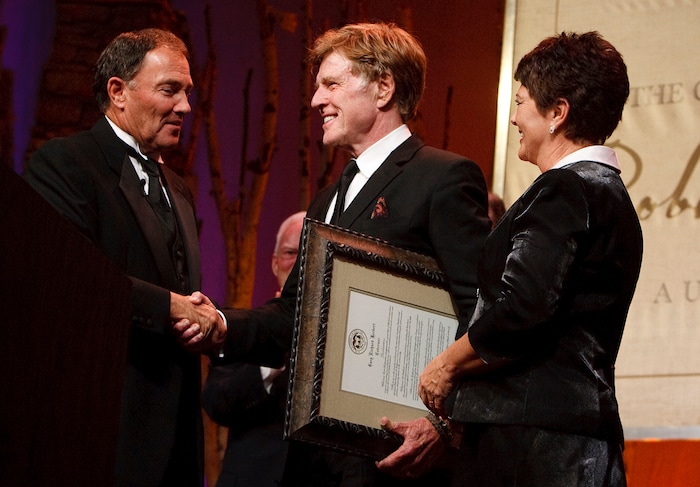
Lifetime accolades followed. Redford received an honorary Oscar for his career achievements in 2002 and was chosen for the Kennedy Center Honors in 2005.
At the Oscars ceremony, he acknowledged “my lady,” his longtime girlfriend Sibylle Szaggars, a German-born artist. The two married in 2009.
Into his late 70s, Redford enjoyed a career resurgence, using his elder status to pick offbeat, challenging roles.
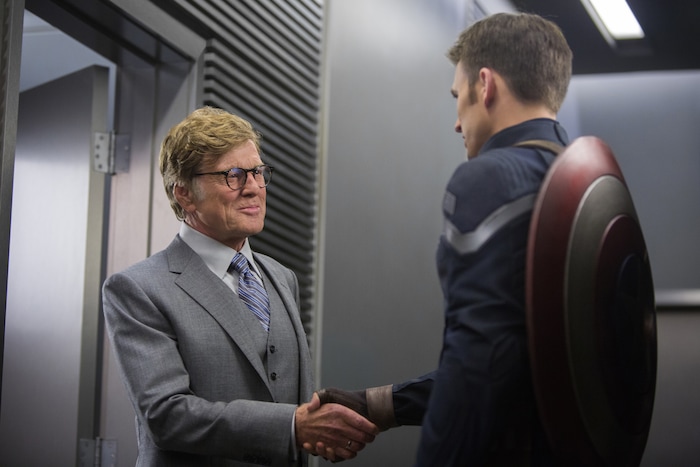
In “All Is Lost” (2013), he worked solo and with almost no dialogue, playing a lone sailor whose boat is taking on water. He stepped into the Marvel universe, playing a politically astute villain in “Captain America: The Winter Soldier” (2014). He played news anchor Dan Rather, caught in a partisan attack on his journalism, in “Truth” (2015). And he played author Bill Bryson, teaming up with an old friend (Nick Nolte) to hike the Appalachian Trail in “A Walk in the Woods” (2015), a project Redford had long hoped he could make with Paul Newman before his death.
(Eric Zachanowich | Fox Searchlight Pictures) Robert Redford, right, with Sissy Spacek in the 2018 movie "The Old Man and the Gun." Redford — who played an aged bank robber in David Lowery’s film based-on-a-true-story heist — said the film would be his last movie.
Retirement, and one last blockbuster
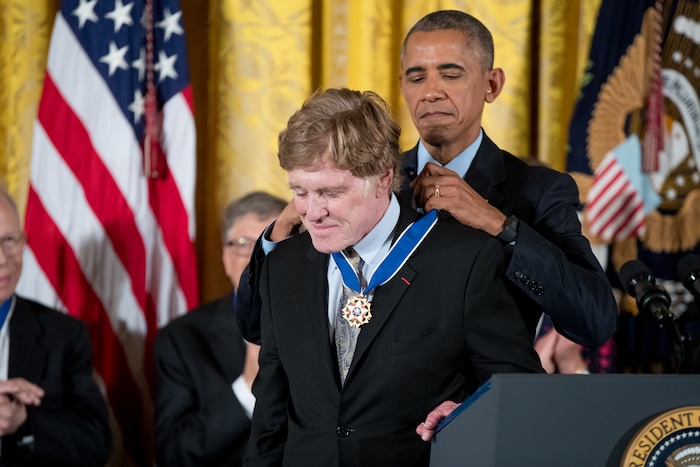
In 2016 — not long before he received the Presidential Medal of Freedom, the nation’s highest civilian honor, from President Barack Obama — Redford told an audience in Minneapolis that, at 80, he was looking to retire from acting to focus on directing. First, though, he had booked a couple of acting roles, including the lead of a heist film, “The Old Man and the Gun.”
In 2018, Redford confirmed that “The Old Man and the Gun,” which earned him a Golden Globe nomination, would be his last movie role. However, he told The Tribune he might reconsider “if something came along and was really powerful, like this film was.”
After officially retiring, Redford did sneak in one more movie role in 2019, reprising his Marvel villain role in “Avengers: Endgame,” which became the second-highest grossing movie of all time, behind only James Cameron’s “Avatar.”
In retirement, Redford became an accidental icon for the internet generation. A shot of Redford from “Jeremiah Johnson,” a slow close-up in which the title character gives a smile and a nod, became a meme, used to signify approval and admiration. Many of the young people using the meme had never seen the movie, and some didn’t know who Redford was; a few said they thought it was the comic actor Zach Galifianakis.
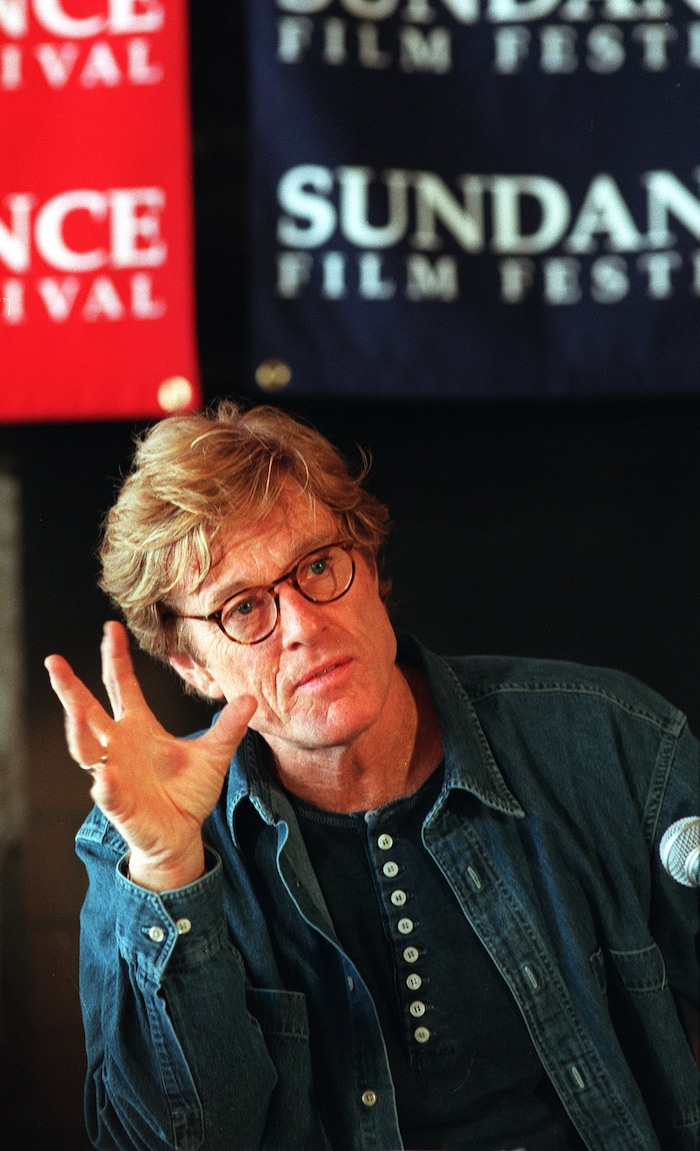
At the 2019 Sundance Film Festival, Redford reduced his public presence, making only a cameo appearance at the festival’s opening news conference — a chore he loathed. “I don’t think the festival needs a whole lot of introduction now,” he explained. He remained active behind the scenes, Sundance executives said, meeting filmmakers and watching their movies.
As Keri Putnam, then the institute’s executive director, said, “He wants to enjoy this thing that he built.”
In December 2020, Redford sold Sundance Mountain Resort to a pair of high-end firms, Broadreach Capital Partners and Cedar Capital Partners. The next year, the firms announced plans to upgrade the resort’s ski lifts and other services.
Owning the resort, Redford told The Tribune in 2020, “created a lot of weight for me to be carrying around. … I had been searching for years for the right people to take it to the next level, so that I could take that weight off my shoulders and enjoy my life.”
In March, Redford stepped briefly out of retirement for a cameo on the AMC series “Dark Winds,” based on Tony Hillerman’s detective novels, for which Redford held the film rights for decades. Redford and author George R.R. Martin, who are executive producers on the series, were shown playing chess in the jailhouse where the show’s main characters, Navajo Tribal Police officers Joe Leaphorn and Jim Chee, worked.
The Sundance Institute announced in March that it would move the Sundance Film Festival to Boulder, Colorado, starting in January 2027. Institute officials have maintained that the institute will continue to have roots in Utah. Plans were announced in July that Sundance would hold a gala celebration during the 2026 festival — the last to be held in Utah — dedicated to Redford’s “vision.”
On Saturday, the Sundance catalog store he founded and later sold — rebranded Sundance Living — closed both its online and brick-and-mortar stores.
Redford is survived by his wife, Sibylle Szaggars Redford, and his two children: Shauna Redford Schlosser, and Amy Redford August. His son Scott died as an infant; his son Jamie, a filmmaker and environmental activist like his dad, died in 2020 at age 58, from bile-duct cancer in his liver.
Memorial services for Robert Redford are pending.