Visitors mark the spring equinox among petroglyphs — reminders of ancient peoples and the geologic forces that laid history bare.
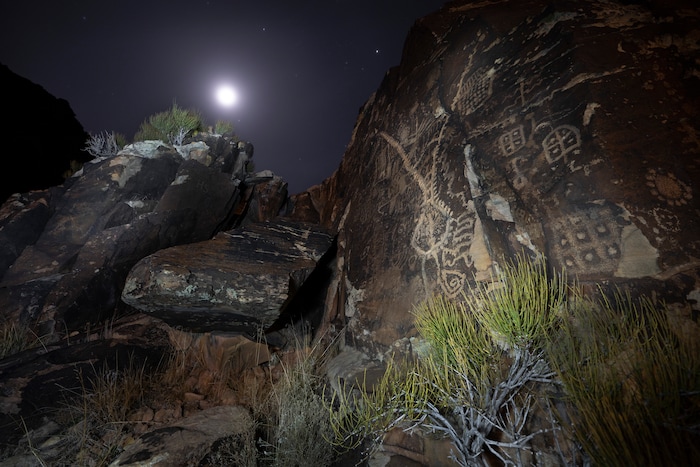
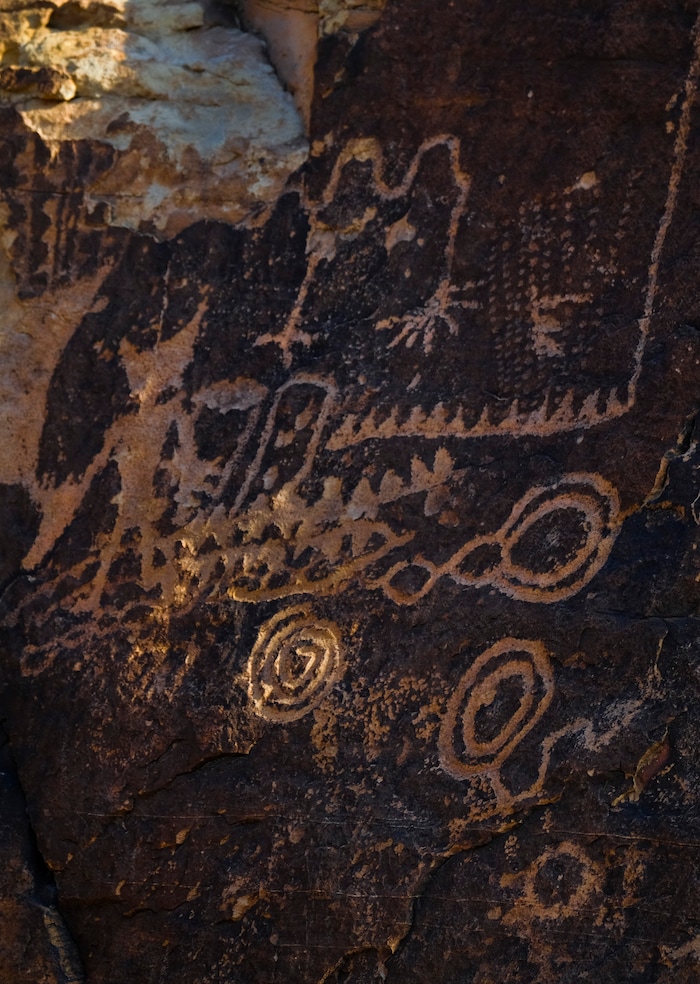
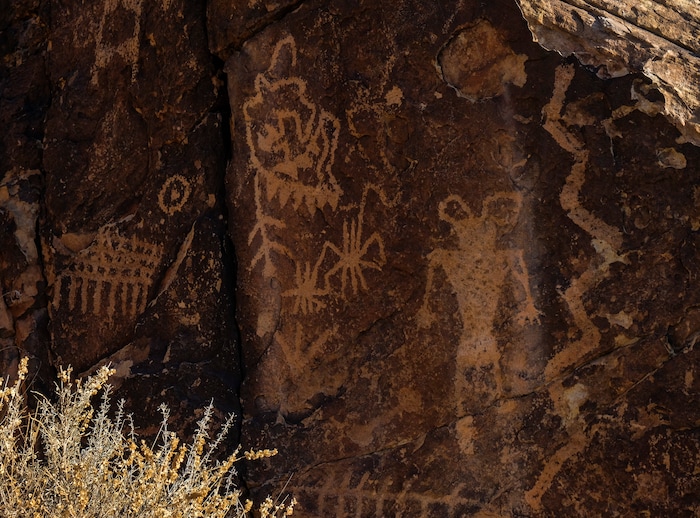
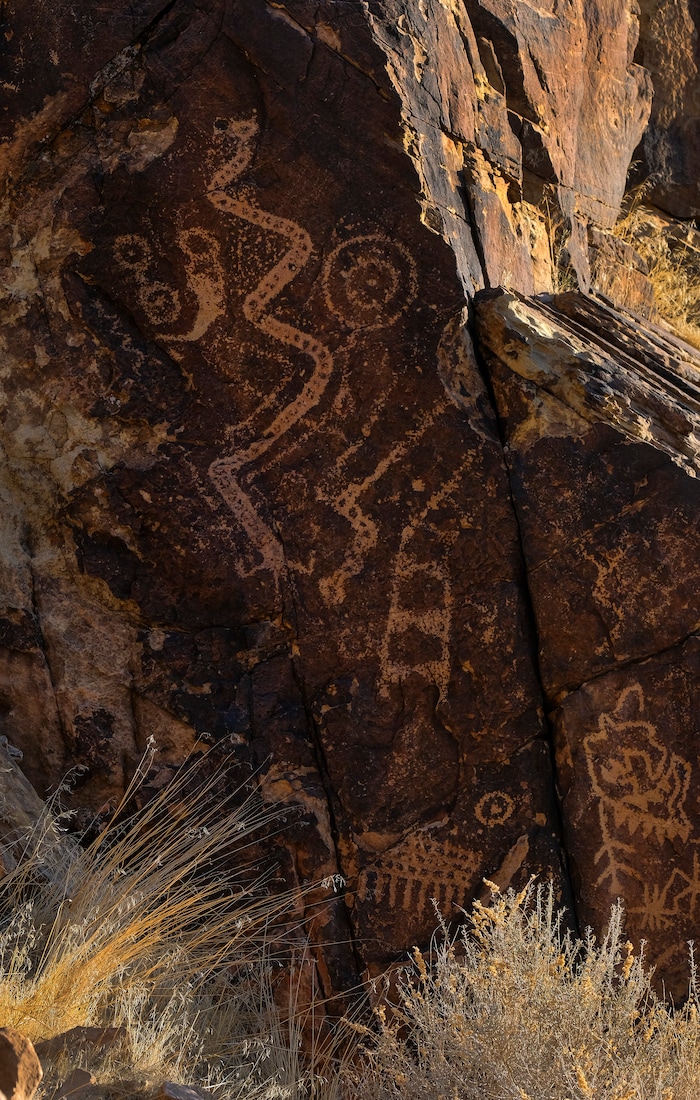
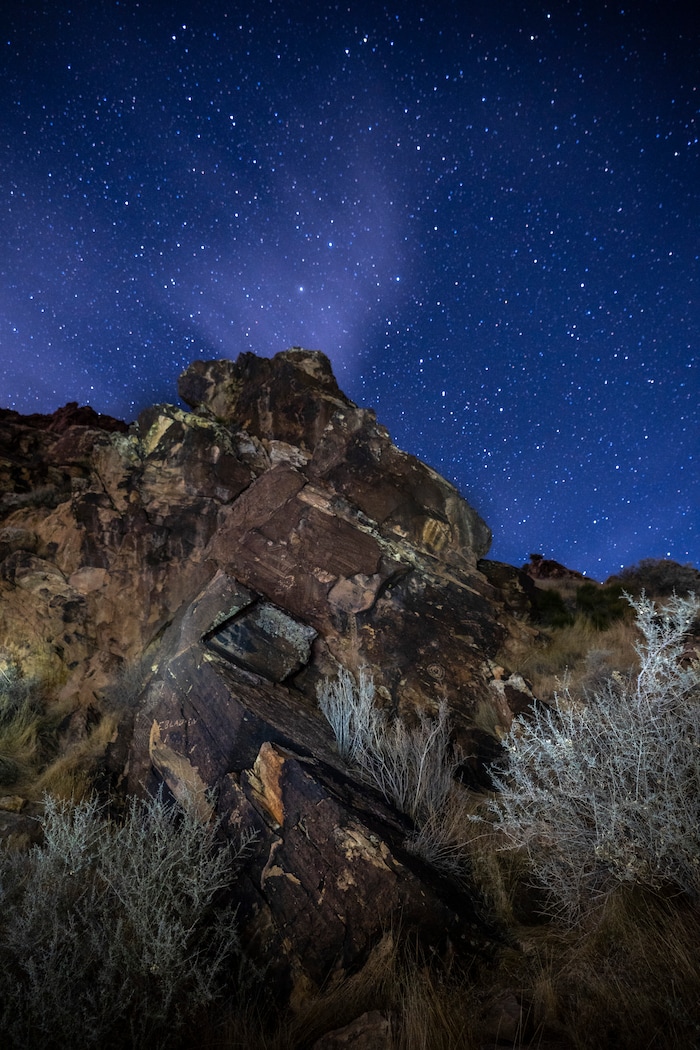
(Leah Hogsten | The Salt Lake Tribune) The Zipper Glyph, March 20, 2021 during the spring equinox, or one of the two times during the year the sun illuminates the northern and southern hemispheres equally. The Zipper Glyph is the largest petroglyph at the Parowan Gap and has been interpreted in different ways. The Paiute Indian Tribe of Utah believes the glyph depicts the story of a migration where many people experienced famine, drought, water crossings, cold, ice and hot sun and of a great Leader. The petroglyph also has been researched by an astronomer and archaeologist who believe the glyph is based on astronomical events, depicting the movement of the sun, moon and stars as a means to track and chart seasonal changes including the summer and winter solstices and the equinoxes among native people. Those theories are still under review by scientific and American Indian communities.
Millions of years ago, a river cut a 600-foot notch into the Red Hills of Iron County.
That cut, now known as the Parowan Gap, is believed to have the most concentrated collections of petroglyphs in the West, with over 90 panels featuring some 1,500 figures, dating back to 500 A.D. when the Fremont Indians roamed the region.
Located 11 miles west of the town of Parowan, the Navajo sandstone gap is covered in a patchwork gallery of American Indi-an rock carvings. Images of human figures, spirals, snakes, bear claws, lizards and geometric designs and the site holds sacred meaning for the Hopi and Paiute nations. The most interesting feature of the site is a large and deeply in-scribed petroglyph, the Zipper Glyph, aptly named because it resembles a giant zipper.
The glyph has been interpreted a number of ways, including a composite map of space and a numerical calendar, a planting guide, a map of travels and a story about a great leader. Although the writings have different meanings to Native Americans and have been theorized by astronomers and archaeologists, the true meaning of the petroglyphs remains a mystery. Interpretative events at the gap are offered in conjunction with the summer and winter solstices, spring and fall equinoxes, and lunar events. For more information on when these events will be scheduled, go online to www.scenicsouthernutah.com.
(Leah Hogsten | The Salt Lake Tribune) The Zipper Glyph, March 20, 2021 during the spring equinox, or one of the two times during the year the sun illuminates the northern and southern hemispheres equally. The Zipper Glyph is the largest petroglyph at the Parowan Gap and has been interpreted in different ways. The Paiute Indian Tribe of Utah believes the glyph depicts the story of a migration where many people experienced famine, drought, water crossings, cold, ice and hot sun and of a great Leader. The petroglyph also has been researched by an astronomer and archaeologist who believe the glyph is based on astronomical events, depicting the movement of the sun, moon and stars as a means to track and chart seasonal changes including the summer and winter solstices and the equinoxes among native people. Those theories are still under review by scientific and American Indian communities.
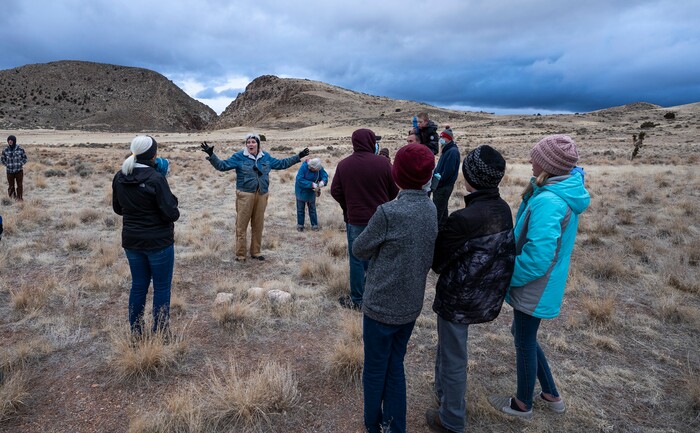
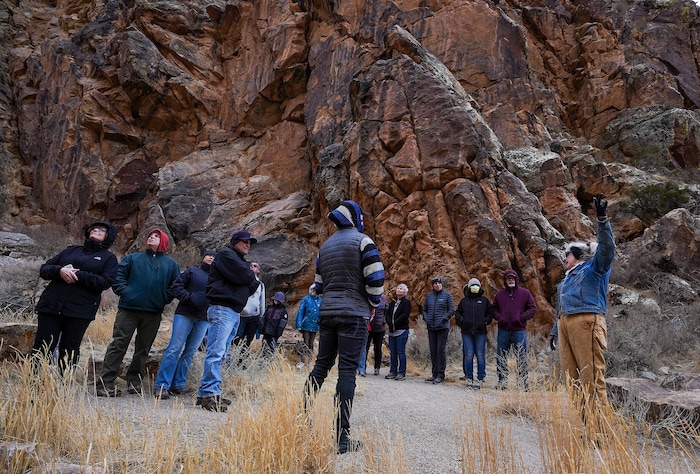
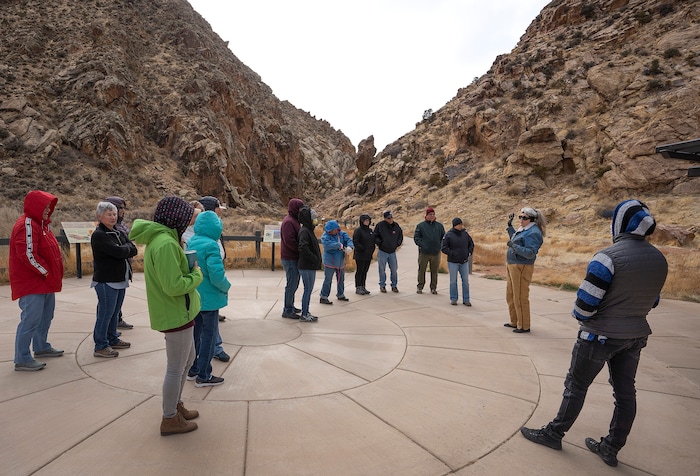
(Leah Hogsten | The Salt Lake Tribune) "We know that for 5,000 years, people have been passing through the Gap," said Nancy Dalton, a guide with the Parawon Heritage Foundation giving an interpretive talk for about 20 people Saturday, Mar. 20, 2021 at the Parowan Gap during the spring equinox observance. "It's fascinating, the information that's here." Dalton, center, took the group to the location of cairns where Dalton said was the perfect spot to view the setting sun as it rolled into the vee of the Gap.
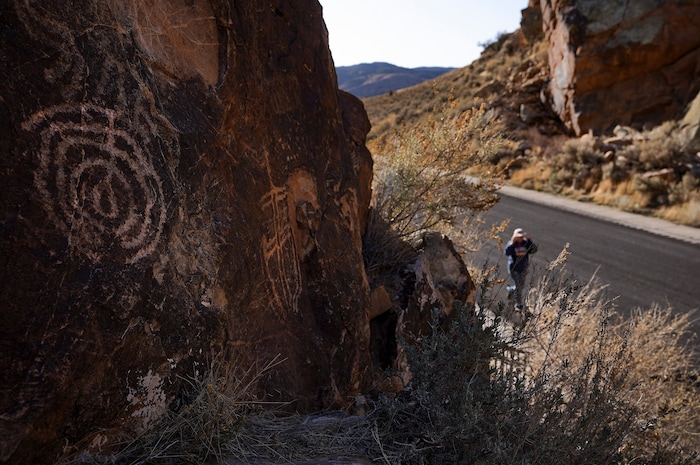
(Leah Hogsten | The Salt Lake Tribune) A visitor to the Parowan Gap, March 20, 2021. Researchers believe that the petroglyphs written into the Navajo sandstone at Parowan Gap were pecked and scratched by Native Americans who were living and farming in the Parowan Valley around 500 A.D., a time period archaeologists call the Fremont period. The Fremont Indians are closely related to the modern-day Hopi and Piute tribes and the Parowan Gap is a sacred site for both tribes.
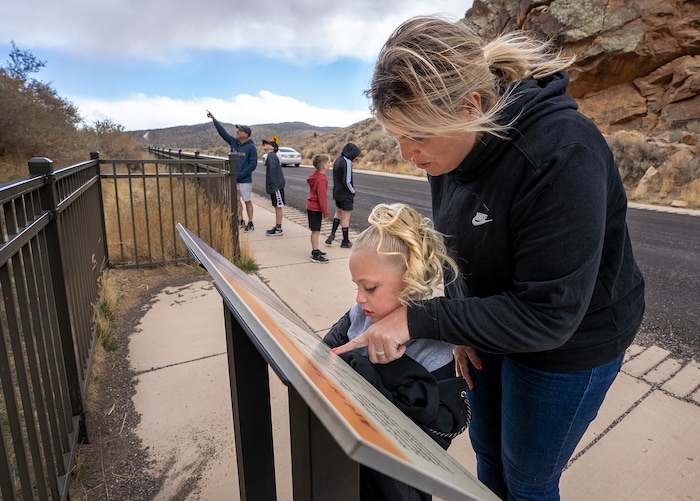
(Leah Hogsten | The Salt Lake Tribune) Annie Nielson helps her daughter Leah read the Parowan Gap information placard on a brief stop on their drive home to Spanish Fork, Mar. 20, 2021, while Jim Nielson points out petroglyphs to his son Jake while sons Alex and Ryan look at the south side of the gap.
(Leah Hogsten | The Salt Lake Tribune) According to the Bureau of Land Management, the Gap is believed to have the most concentrated collections of petroglyphs with over 90 panels featuring some 1,500 figures, possibly dating back 5,000 years. Although there are multiple theories about the petroglyphs intent, their true meaning remains a mystery.
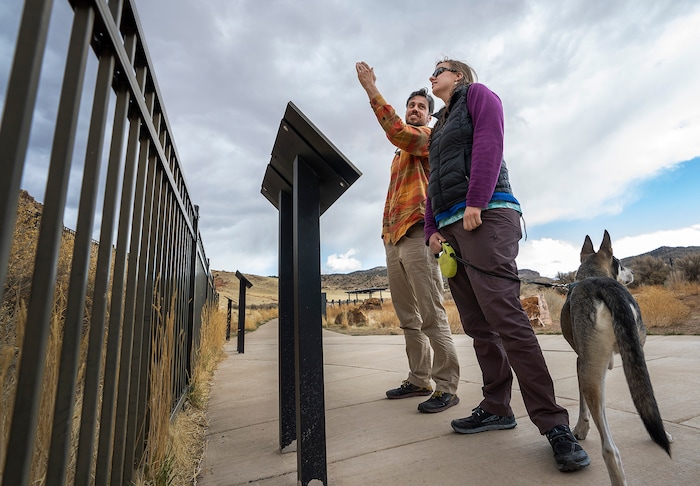
(Leah Hogsten | The Salt Lake Tribune) Garrett Colibri and Hayley Bahr discuss the Parowan Gap petroglyphs, Mar. 20, 2021 with Bahr's dog Niko.
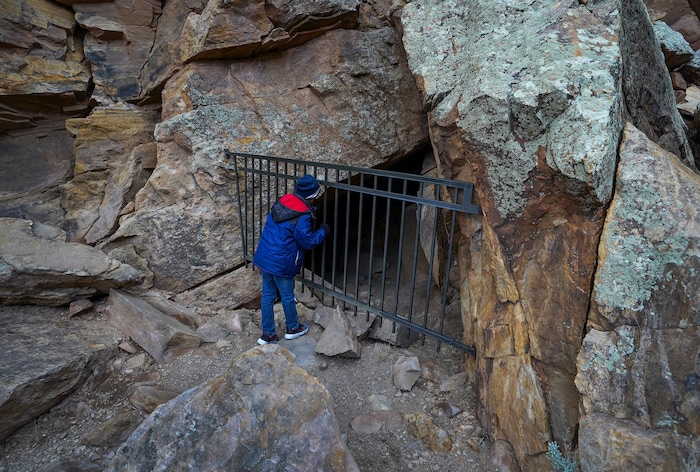
(Leah Hogsten | The Salt Lake Tribune) Donovan Brown, 10, peeks into the Parowan Gap cave where artifacts were discovered and dated during the spring equinox observance, Saturday, Mar. 20, 2021 while on an interpretive tour with a program guide from the Parowan Heritage Foundation.
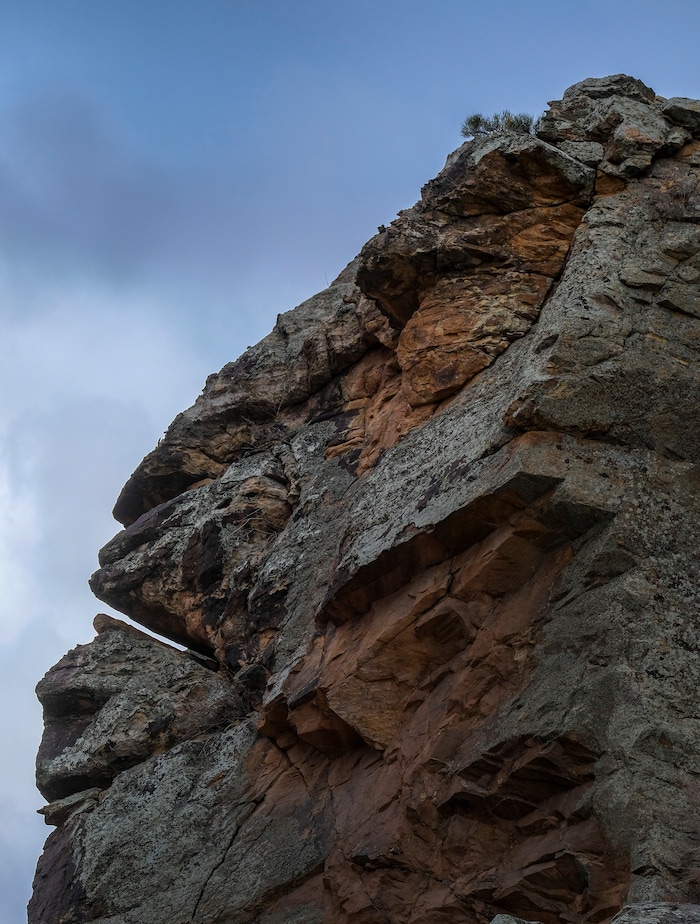
(Leah Hogsten | The Salt Lake Tribune) The face seen in the southeastern rock wall of the Parowan Gap, according to Nancy Dalton, a guide with the Parawon Heritage Foundation, resembles a human face, complete with a slit that looks like a mouth. "We call him the Overseer," said Dalton. "In November, the sun rolls into his mouth and he swallows it and then he spits the sun out of his mouth in February."
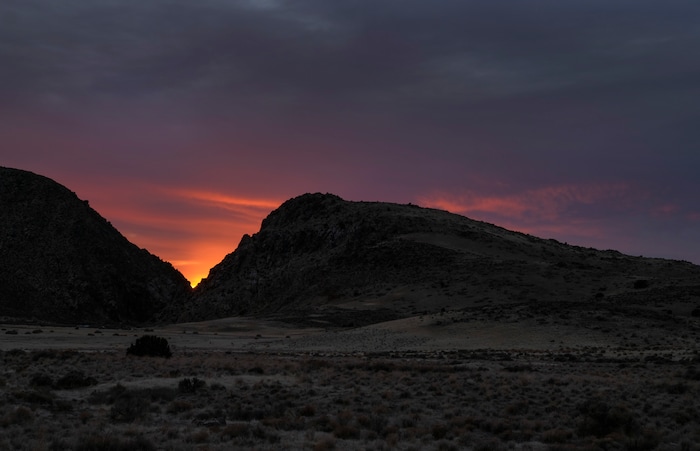
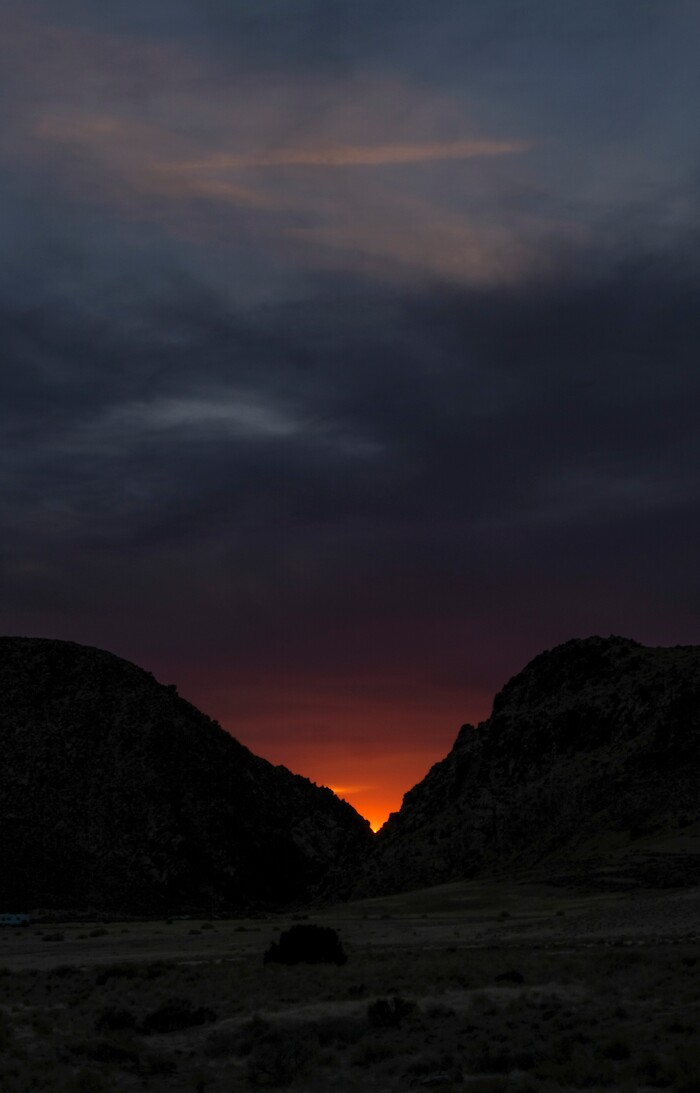
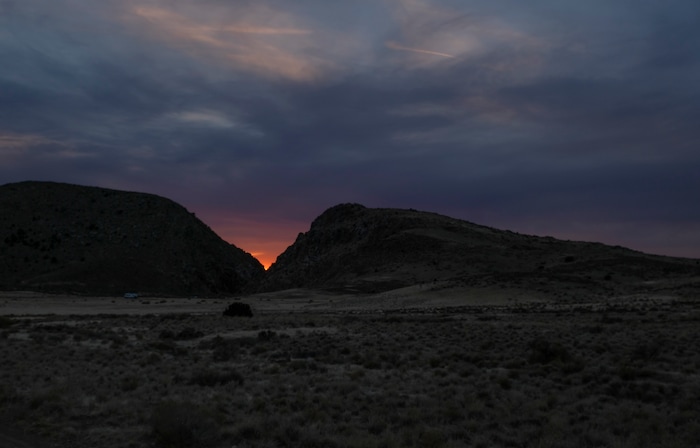
(Leah Hogsten | The Salt Lake Tribune) The sun is shown setting within the vee of the Parowan Gap, a day prior to the spring equinox observance, Saturday, Mar. 19, 2021.
(Leah Hogsten | The Salt Lake Tribune) The sun is shown setting within the vee of the Parowan Gap, a day prior to the spring equinox observance, Saturday, Mar. 19, 2021.
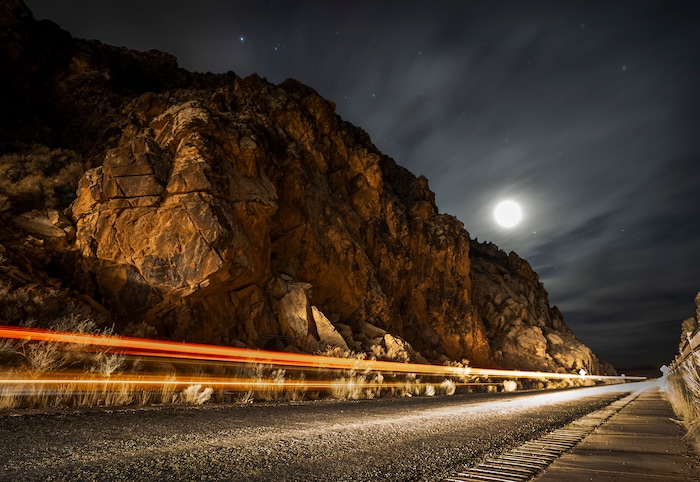
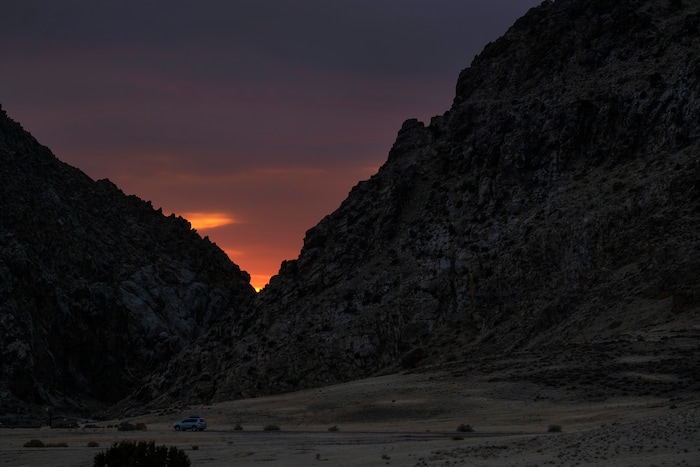
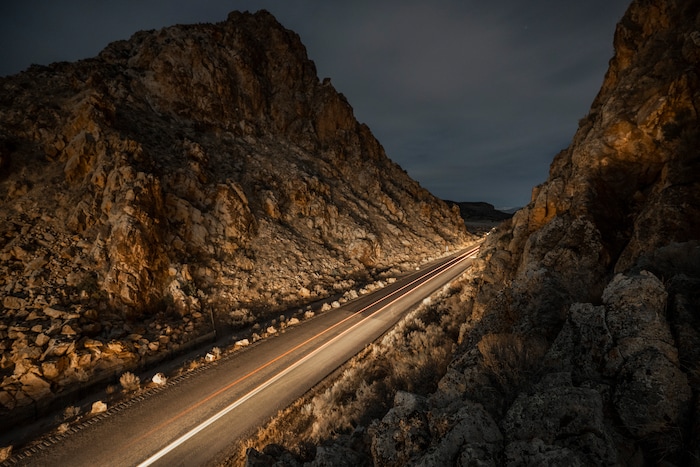
(Leah Hogsten | The Salt Lake Tribune) A car's headlights and break lights illuminate the Parowan Gap, the night before the spring equinox, Mar. 19, 2021. According to the Utah Geological Survey, the Parowan Gap, formed millions of years ago is a classic example of a wind gap, where an ancient river cut a 600-foot deep notch through the Navajo Sandstone of the Red Hills. The Gap is believed to have the most concentrated collections of petroglyphs in the West, dating back some 5,000 years with over 90 panels featuring some 1,500 figures.
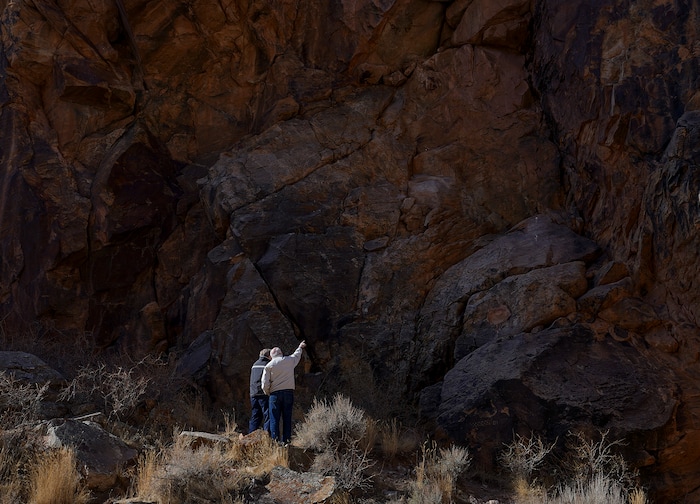
(Leah Hogsten | The Salt Lake Tribune) Morris Smith, left, of Lancaster, CA and Chris Chipping, right, of Levan discuss petroglyphs at Parowan Gap, March 20, 2021. Smith and Chipping, best friends since age 13 when they were neighbors in Salt Lake City, take trips to visit each other and their wives every chance they get.
(Leah Hogsten | The Salt Lake Tribune) The sun is shown setting within the vee of the Parowan Gap, a day prior to the spring equinox observance, Saturday, Mar. 19, 2021.
(Leah Hogsten | The Salt Lake Tribune) According to the Bureau of Land Management, the Gap is believed to have the most concentrated collections of petroglyphs with over 90 panels featuring some 1,500 figures, possibly dating back 5,000 years. Although there are multiple theories about the petroglyphs intent, their true meaning remains a mystery.
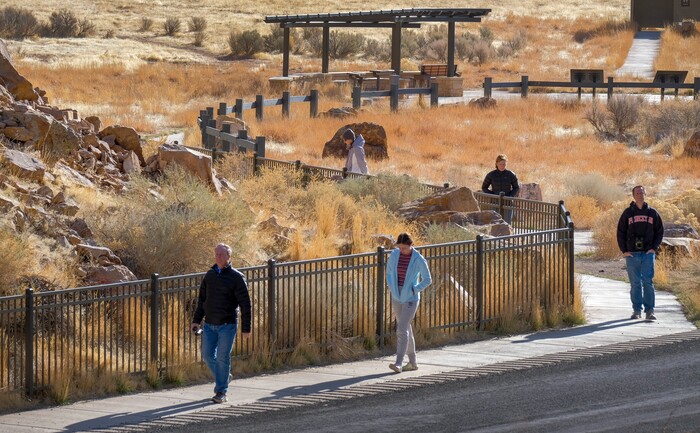
(Leah Hogsten | The Salt Lake Tribune) Visitors to the Parowan Gap, March 20, 2021 walk the path to view the many petroglyph panels. Researchers believe that the petroglyphs written into the Navajo sandstone at Parowan Gap were pecked and scratched by Native Americans who were living and farming in the Parowan Valley around 500 A.D., a time period archaeologists call the Fremont period. The Fremont Indians are closely related to the modern-day Hopi and Piute tribes and the Parowan Gap is a sacred site for both tribes.
(Leah Hogsten | The Salt Lake Tribune) The sun is shown setting within the vee of the Parowan Gap, a day prior to the spring equinox observance, Saturday, Mar. 19, 2021.
(Leah Hogsten | The Salt Lake Tribune) According to the Bureau of Land Management, the Gap is believed to have the most concentrated collections of petroglyphs with over 90 panels featuring some 1,500 figures, possibly dating back 5,000 years. Although there are multiple theories about the petroglyphs intent, their true meaning remains a mystery.
(Leah Hogsten | The Salt Lake Tribune) "We know that for 5,000 years, people have been passing through the Gap," said Nancy Dalton, a guide with the Parawon Heritage Foundation giving an interpretive talk for about 20 people Saturday, Mar. 20, 2021 at the Parowan Gap during the spring equinox observance. "It's fascinating, the information that's here."
(Leah Hogsten | The Salt Lake Tribune) According to the Utah Geological Survey, the Parowan Gap, formed millions of years ago is a classic example of a wind gap, where an ancient river cut a 600-foot deep notch through the Navajo Sandstone of the Red Hills. The Gap is believed to have the most concentrated collections of petroglyphs in the West, dating back some 5,000 years with over 90 panels featuring some 1,500 figures.
(Leah Hogsten | The Salt Lake Tribune) A car's headlights and break lights illuminate the Parowan Gap, the night before the spring equinox, Mar. 19, 2021. According to the Utah Geological Survey, the Parowan Gap, formed millions of years ago is a classic example of a wind gap, where an ancient river cut a 600-foot deep notch through the Navajo Sandstone of the Red Hills. The Gap is believed to have the most concentrated collections of petroglyphs in the West, dating back some 5,000 years with over 90 panels featuring some 1,500 figures.
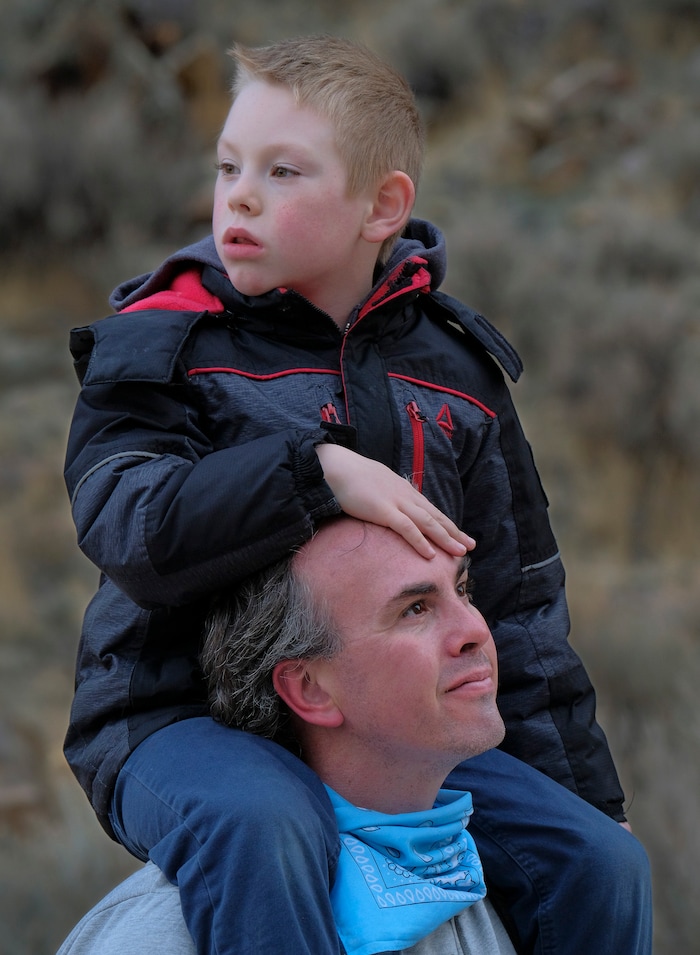
(Leah Hogsten | The Salt Lake Tribune) Wolf Balmanno from Cedar City carries his son Alex, 7, on his shouders during the spring equinox observance, Saturday, Mar. 20, 2021 while on an interpretive tour with a program guide from the Parowan Heritage Foundation.
(Leah Hogsten | The Salt Lake Tribune) The Parowan Gap has been researched by an astronomer and archaeologists who believe the petroglyphs are based on astronomical events, depicting the movement of the sun, moon and stars as a means to track and chart seasonal changes including the summer and winter solstices and the equinoxes among native people, Mar. 20, 2021.
(Leah Hogsten | The Salt Lake Tribune) "Water, wind and sand carved out the walls of the Gap," said Nancy Dalton, a guide with the Parawon Heritage Foundation giving an interpretive talk Saturday, Mar. 20, 2021 at the Parowan Gap during the spring equinox observance.
Help The Tribune report the stories others can’t—or won’t.
For over 150 years, The Salt Lake Tribune has been Utah’s independent news source. Our reporters work tirelessly to uncover the stories that matter most to Utahns, from unraveling the complexities of court rulings to allowing tax payers to see where and how their hard earned dollars are being spent. This critical work wouldn’t be possible without people like you—individuals who understand the importance of local, independent journalism. As a nonprofit newsroom, every subscription and every donation fuels our mission, supporting the in-depth reporting that shines a light on the is sues shaping Utah today.