






















This is an archived article that was published on sltrib.com in 2013, and information in the article may be outdated. It is provided only for personal research purposes and may not be reprinted.
Reared by a single mom in Ogden, Chris Quintana and his two brothers qualified for free breakfast and lunch at school — and some days, those were the only meals they had. As relatives struggled with mental illness, drug use and scrapes with the law,Quintana realized he had to make a change.
"If I continued down the same path as everyone else in my family," he said, " ... it would be not be in my best interest."At
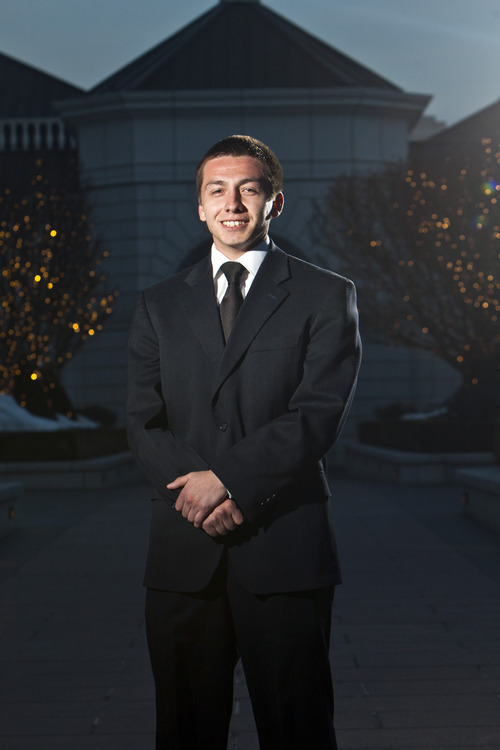
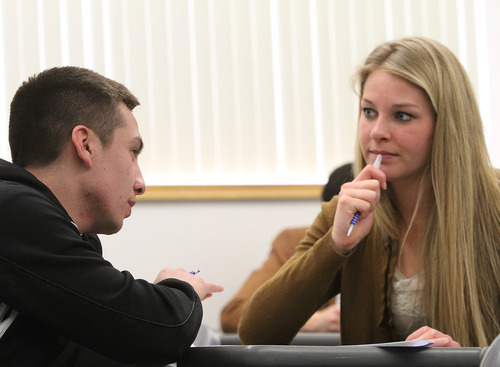
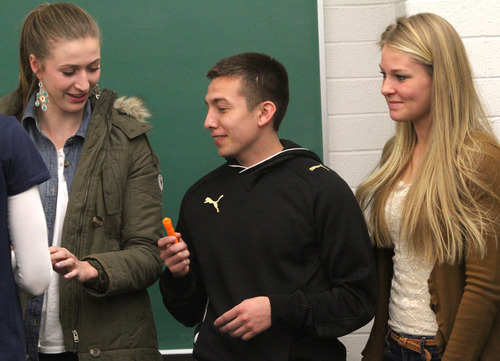
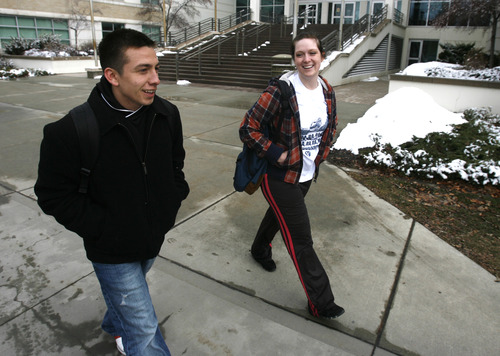
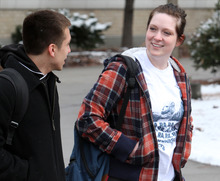
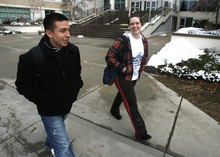
21, Quintana has just returned from a Mormon mission in the Philippines, is studying at Brigham Young University on an academic scholarship and hopes to teach high school math."
Knowing my background and how I grew up," Quintana said, "I think I can make a difference in that type of setting."
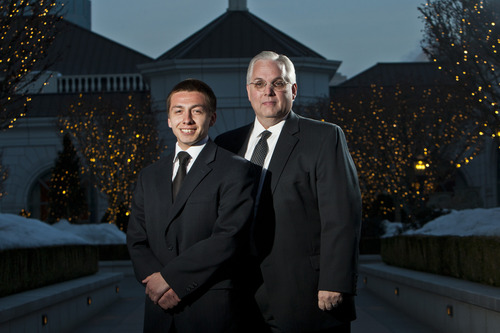
What made the difference? Quintana credits Stuart Reid, who was then his LDS bishop and surrounded him with a network of caring adults.
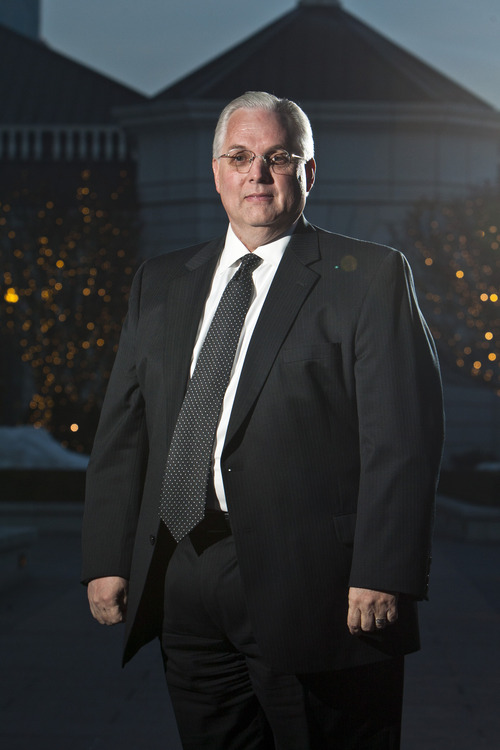
Now, as a Republican state senator from Ogden, Reid wants to find broader solutions for the 50,000 to 70,000 Utah youths from families caught in intergenerational poverty.
His SB53, which has passed the Senate and the House and awaits the governor's signature,will task state agency directors and community leaders with creating five- and 10-year plans for breaking the cycle.
While serving for nearly eight years as an inner-city church leader in Ogden, Reid became convinced that situational and intergenerational poverty have different causes and need differentremedies.
To fight intergenerational poverty, "We need to get the agencies collaborating to rescue these kids," said Reid, elected in 2010 to represent portions of Weber, Morgan and Davis counties.
'There is a failure' • Losing a job can lead to situational poverty, which the state Department of Workforce Services defines as generally traceable to a specific crisis and not continued to the next generation.
Programs aim to stabilize such families and get the adults back to work. But those efforts become "enabling" when provided to families that have spent two or more generations in poverty, Reid believes, by creating a culturethat freezes them in a welfare-dependent lifestyle.
Too often, he said, children "are unable or unwilling to escape as adults."
"There is a failure in the education process with these children," Reid recently told the House Economic Development and Workforce Services Committee.
"With everything else that's happening in their lives . . . they feel despair and they want to give up," Reid said, "and then they start sabotaging their own lives with crimes, drugs and alcohol."
That behavior, he said, can lead to teen pregnancy, which perpetuates the cycle of poverty and welfare dependency.Lawmakers questioned the lack of a sunset date and why it takes a commission for agencies to collaborate,
but those reservations did not prevent the bill from advancing.
Karen Crompton, president of Voices for Utah Children, spoke in favor ofSB53 but said she prefers solutions that lift parents as well as children. She suggests investing in early-childhood programs, responsible fatherhood and healthy marriage initiatives, a state Earned Income Tax Credit, expanding Medicaid and preserving safety-net programs.
Reid envisions the commission devising strategies similar to his involvement with Quintana, uniting parents, caseworkers, service providers and the justice system on behalf of the rising generation.
"If all adults responsible for helping children in poverty and welfare dependency coordinate their efforts and apply data-proven interventions," he said, "these children will succeed."
'Invested in his success' • Quintana believes that during childhood, his body "just adapted" to missing meals. "It became normal," he said.
His mother, diagnosed with a mental disorder, depended on Social Security disability payments. While relatives engaged in drug use and had run-ins with the law, Quintana managed to steer clear of such pitfalls. "I wanted to make something of my life," he said.At age 15, Quintana joined The Church of Jesus Christ of Latter-day Saints and met Reid, then serving as a bishop.
"I went over to his home to meet his mother," Reid said, "and realized her condition and that it wasn't a healthy situation."
Reid helped weave together a safety net of coaches, teachers, church leaders and Quintana's early employers and supervisors.
"They were all invested in his success," Reid said, "so it became difficult for him to fail."
That guidance was crucial, Quintana said. "I knew what I needed to do because of them and their plan and ideas to help me make the next step."
By 16, Quintana had moved into his aunt's house and through high school earned a 3.98 grade point average and lettered in cross-country track, football and soccer. The sports "helped me stay out of trouble," he said.
Surrounding at-risk youths with successful leaders is also key, Quintana said, because it "opens their eyes to the possibilities."
Reid and his wife are formally adopting Quintana, hoping to give him a nurturing place to bring his future wife and children. To Quintana, that makes perfect sense.
"They've played a big part in my life," he said, "and have really helped me in who I am now."
twitter: @catmck —
About SB53
Sen. Stuart Reid's bill would:
Unite the directors of the Departments of Workforce Services, Health, Human Services, public education and the juvenile courts system on a new commission to find solutions for children being raised in intergenerational poverty.Establish an advisory committee of up to 11 members representing nonprofit and faith-based organizations that assist people in poverty. One would serve as a non-voting member of the commission.
Charge the commission with meeting at least quarterly to create five- and 10-year plans to end intergenerational poverty, with goals and benchmarks for progress.
Set the boards' estimated costs at $2,100 per year, starting in 2014. —
Intergenerational poverty in Utah
Last year Reid successfully sponsored SB37, which generated Utah's first annual report on intergenerational poverty.
36,000 • The number of adults now on public assistance who received similar benefits as children between 1989 and 2008
50,000 • Third-generation children receiving public assistance as did their parents and grandparents
One in 20 • Teen girls who became pregnant in 2012 and are expecting the fourth generation of public assistance recipients
Source: Intergenerational Poverty in Utah 2012 Report compiled by the Department of Workforce Services