


This is an archived article that was published on sltrib.com in 2013, and information in the article may be outdated. It is provided only for personal research purposes and may not be reprinted.
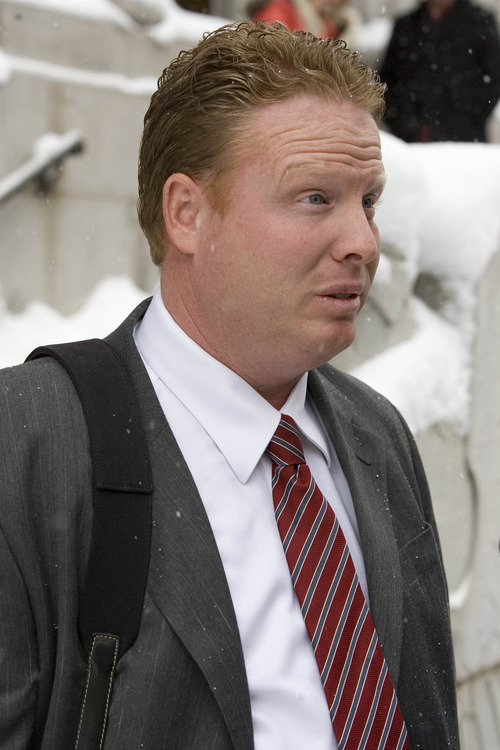
Indicted St. George businessman Jeremy Johnson is convinced it's legal to process online-poker payments in gambling-averse Utah.
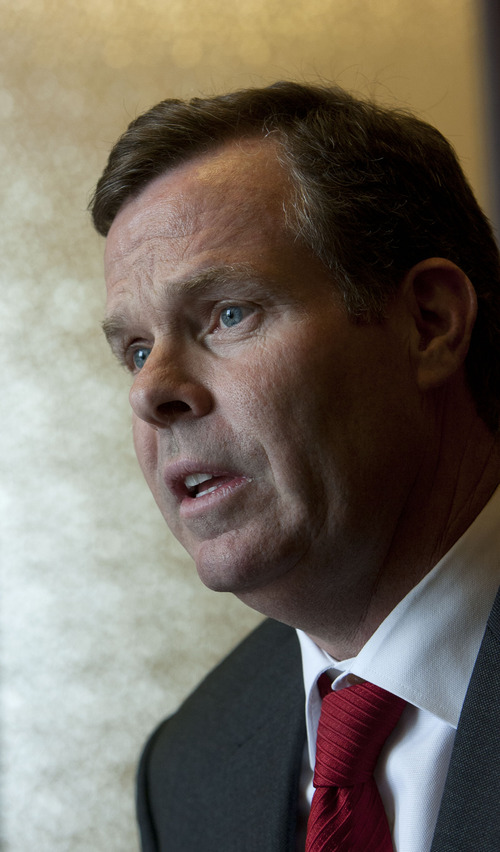
And he points to a 2010 email from John Swallow, the state's future attorney general, as proof.
The issue arose at the pair's now-famous — and secretly recorded — doughnut shop meeting in Orem last year during which Johnson is heard repeatedly asserting that Swallow had sent him an email signing off on the legality of such poker payments.
But Swallow, at the time Utah's chief deputy attorney general, maintains he had done no such thing.
Swallow: I said it's OK to process poker?
Johnson: Yeah.
Swallow: In Utah?
Johnson: Yes. And — and, John, it is — it is legal.
Swallow: No, it's not.
The Krispy Kreme audio includes Johnson speculating that federal investigators may think that Johnson paid Swallow in return for a favorable opinion in 2010 on the legality of processing poker payments, a practice Johnson had begun months before the two exchanged a series of emails about the issue.
Here's what Swallow wrote July 5, 2010: "Jeremy, I am not aware of any such law in Utah to prohibit what you are doing. I'll have one of our assistant attorneys general look into it tomorrow. Let's talk tomorrow."
Attorney General's Office spokesman Paul Murphy noted Thursday that Swallow "gave no definitive answer and believes that was the end of it."
The email was among those Johnson provided access to that highlight what happened in legal circles after his company started processing payments from online-poker players in late 2009.
That December, Johnson, through a company he formed with Las Vegas businessman Chad Elie, began processing those payments using SunFirst Bank of St. George.
Online-poker companies had sought a way to legally process payments after they were shut out of other banks and their funds seized by federal authorities for trying to hide the origin of the monies, a practice that violated federal laws.
So the companies tried a "transparent" approach, according to court documents, disclosing the origin of the payments and arguing that processing was legal for players who went online to compete against one another.
At the same time, the Poker Players Alliance launched an effort to persuade top legal officials — including Swallow's boss, then-Utah Attorney General Mark Shurtleff — that poker is largely a game of skill, not chance, a distinction that would make online betting more likely to be legal, at least in certain states.
According to emails, prominent gaming attorney Jeff Ifrah wrote to Johnson on March 4, 2010, with a "draft opinion" attached.
"We would like you to deliver this to the Utah AG and request that he meet next week, T-W or Th, with me and the executive director of the Poker Players Alliance (John Pappas), who he already knows," says the email that was forwarded to Swallow.
About three weeks later, Shurtleff and Swallow met with Pappas and others.
"The purpose of the meeting, from the PPA's perspective, was to get the attorney general to review the law and our analysis of the relevant case law and to consider issuing an opinion related to poker," Pappas wrote in an email.
But, Pappas said, it became clear that Shurtleff thought that poker was illegal in Utah — no matter whether it was a game of skill or chance — and thus would issue no such opinion.
"I told them straight up I didn't think that would be possible," Shurtleff said in an interview. "That's No. 1. No. 2, I said we don't give opinions to individuals."
After the meeting, Ifrah wrote to Johnson: "At this point, I am trying to figure out how Mark can help you. Also, he totally loves you, talked about how you were the top businessman with the most integrity etc."
Johnson replied, "Mark is a really great guy that will shoot straight with you."
At some point, the discussion in the Johnson-Swallow emails — which Swallow sent from a private account — shifts to whether Swallow could help bolster the contention that processing poker payments in Utah is legal.
On July 4, 2010, about seven months after they had started processing payments, Johnson pushed Swallow in an email to back his position.
"We have decided that the law is unclear on if poker is legal to play online if you are residing in Utah, so we are blocking transactions from anyone in Utah. But we still think it is legal to process the transactions for other states and countries. Let me know your thoughts."
That's when Swallow wrote back, saying he knew of no state law forbidding it but adding that the Attorney General's Office would have to check further.
That was the end of the emails to which Johnson provided access.
The Salt Lake Tribune filed an open-records request in 2011 for documents related to the processing of gambling payments and was told that none existed. It also inquired specifically about Shurtleff's meeting with Pappas and was told it was merely a courtesy call.
Murphy said Swallow did not use his state email account because Johnson likely contacted him on Swallow's personal account and he merely hit reply.
Johnson's attorney did not return a fax seeking comment. Ifrah said he could not comment without Johnson's consent.
In November 2010, the Federal Deposit Insurance Corp. ordered SunFirst Bank to stop processing poker payments and that ended Johnson's efforts.
Then, in April 2011, a U.S. attorney in New York announced the indictment of a number of those involved in poker processing in Utah and other places — including SunFirst Bank Vice Chairman John Campos and Elie, Johnson's business partner — for violations of federal law, which prosecutors contend prohibits processing poker payments.
Campos pleaded guilty to a minor charge and was sentenced to three months in prison. Elie also pleaded guilty and was sentenced to five months in prison.
Johnson was not charged in the case, though the Federal Trade Commission sued him and his online sales and marketing company I Works in December 2010 for allegedly violating federal consumer-protection laws. About six months later, he was indicted on a felony fraud charge.
Robert Gehrke contributed to this story. —
The Swallow case
Indicted St. George businessman Jeremy Johnson has alleged that Utah's new attorney general, John Swallow, helped broker payoffs to enlist the aid of Senate Majority Leader Harry Reid in derailing a Federal Trade Commission investigation of Johnson's I Works business.
Swallow and Reid have vehemently denied the allegations. The U.S. Attorney's Office is investigating.